
Developed by Treeview, CardioCompass makes cardiovascular education spatial and easy to understand. Users explore how different medical conditions affect the body, giving patients and healthcare professionals a visual tool to support discussions and a better understanding of cardiovascular health.
Sony’s Spatial Reality Display presents this content without a headset or special glasses. The format also makes CardioCompass accessible for conferences, workshops and guided demonstrations, where participants can explore spatial anatomy while staying engaged with the person presenting it.
CardioCompass is available on Sony’s Spatial Reality Display App Select.
Challenge: Making cardiovascular disease easier for patients to understand

Cardiovascular diseases can be difficult to explain. Patients need to understand processes they cannot see: how a condition affects an organ, how risk factors combine and why healthy lifestyle choices and treatment matter.
CardioCompass approaches this through interactive simulations that connect explanations with visible changes in anatomy. Its purpose is to support patient education and conversations with healthcare professionals.
Also available as a mixed reality experience on Apple Vision Pro and Meta Quest, CardioCompass places interactive anatomy in the user’s surroundings. Bringing it to the Sony Spatial Reality Display offered a more accessible way to explore the content without a headset.
For conferences and workshops, this also addressed a practical challenge. When many people want to try a spatial experience, fitting and explaining a headset adds a step to each demonstration. Treeview wanted to simplify participation while retaining the depth and changing perspectives that make spatial anatomy valuable to explore.
Solution: Spatial patient education in glasses-free 3D
Sony’s Spatial Reality Display brings CardioCompass into a format that participants can approach and view directly. The display gives the medical simulation a sense of depth and allows exploration from different perspectives.

Participants can view a simulation and ask questions without putting on a headset. A presenter or healthcare professional can guide the explanation, using the anatomical content as a focus for the conversation.
CardioCompass includes five simulations covering LDL cholesterol, diabetes, atrial fibrillation, high blood pressure and stroke. Users switch conditions on and off to explore their effects on the visualized anatomy, including the heart, kidneys and brain.
A detailed anatomical view sits alongside a full-body overview. A Risk Gauge represents the combined impact of active conditions within the simulation, while a simulated medication layer illustrates how treatment changes the picture. These features support explanations of cardiovascular disease and the importance of following prescribed treatment.
Outcome: Introducing patient education to a wider audience
Treeview launched CardioCompass on Sony’s Spatial Reality Display at the Augmented Enterprise Summit. A dedicated demonstration version ran on a 27-inch ELF-SR2 positioned as a flagship demonstration at Treeview’s booth.
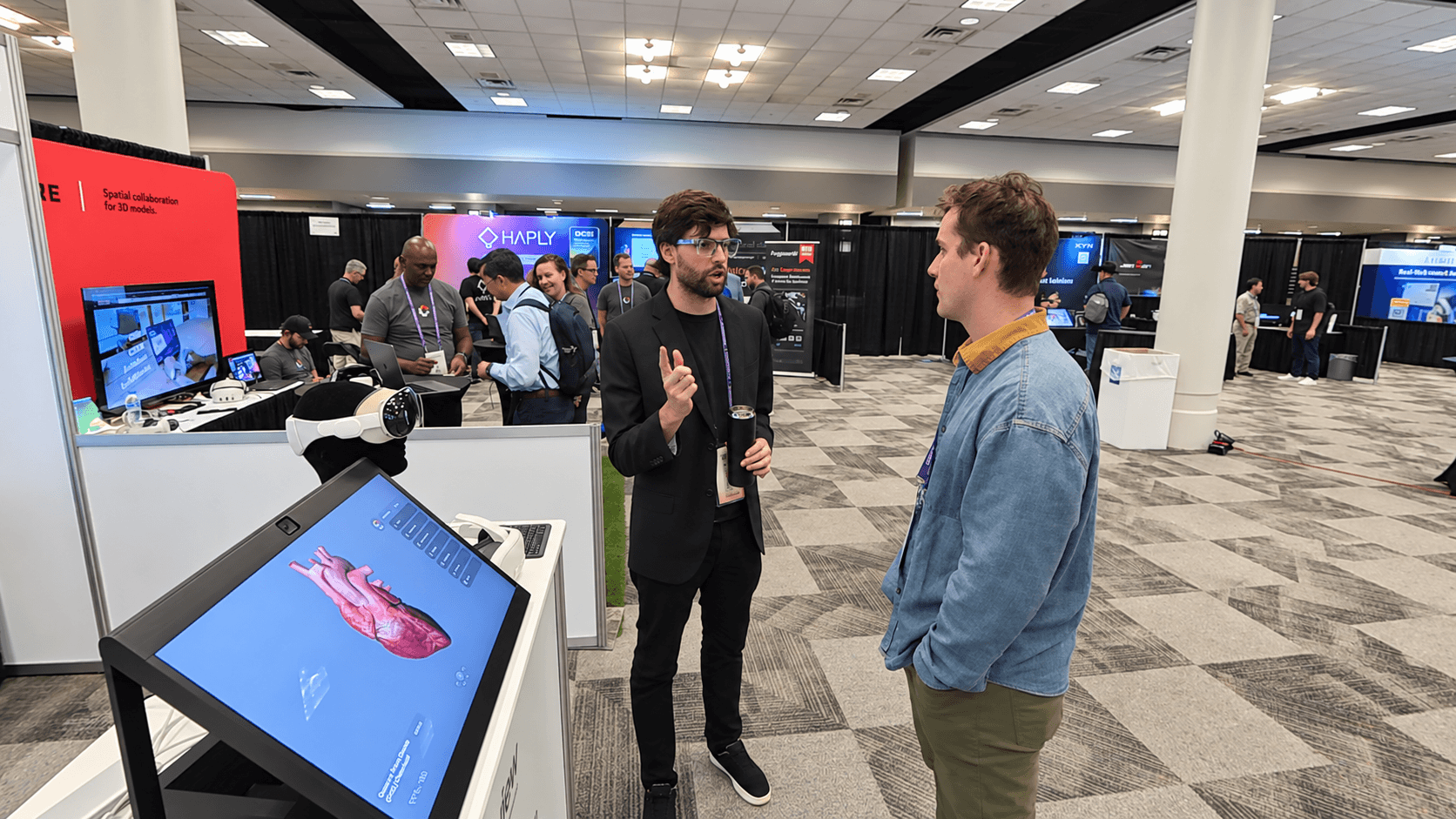
According to the Treeview team, the display drew attendees over throughout the three-day event. Visitors explored the 3D anatomy while team members guided them through the simulations and discussed how spatial content could support patient education.
“The SRD became the flagship experience of our booth and sparked the most engagement and conversations,” said Horacio Torrendell, CEO of Treeview.
The demonstration showed how the display could introduce spatial medical content in a busy event environment. Participants could move from a conversation into an interactive experience without headset setup, then discuss what they had seen with the team.
The launch adds a desktop format for demonstrating CardioCompass and exploring its approach to cardiovascular patient education.
About Treeview
Founded in 2016, Treeview develops custom spatial business applications for enterprise organizations across industries, including healthcare, manufacturing, energy, education and retail. The studio builds software for headsets, smart glasses and spatial displays.