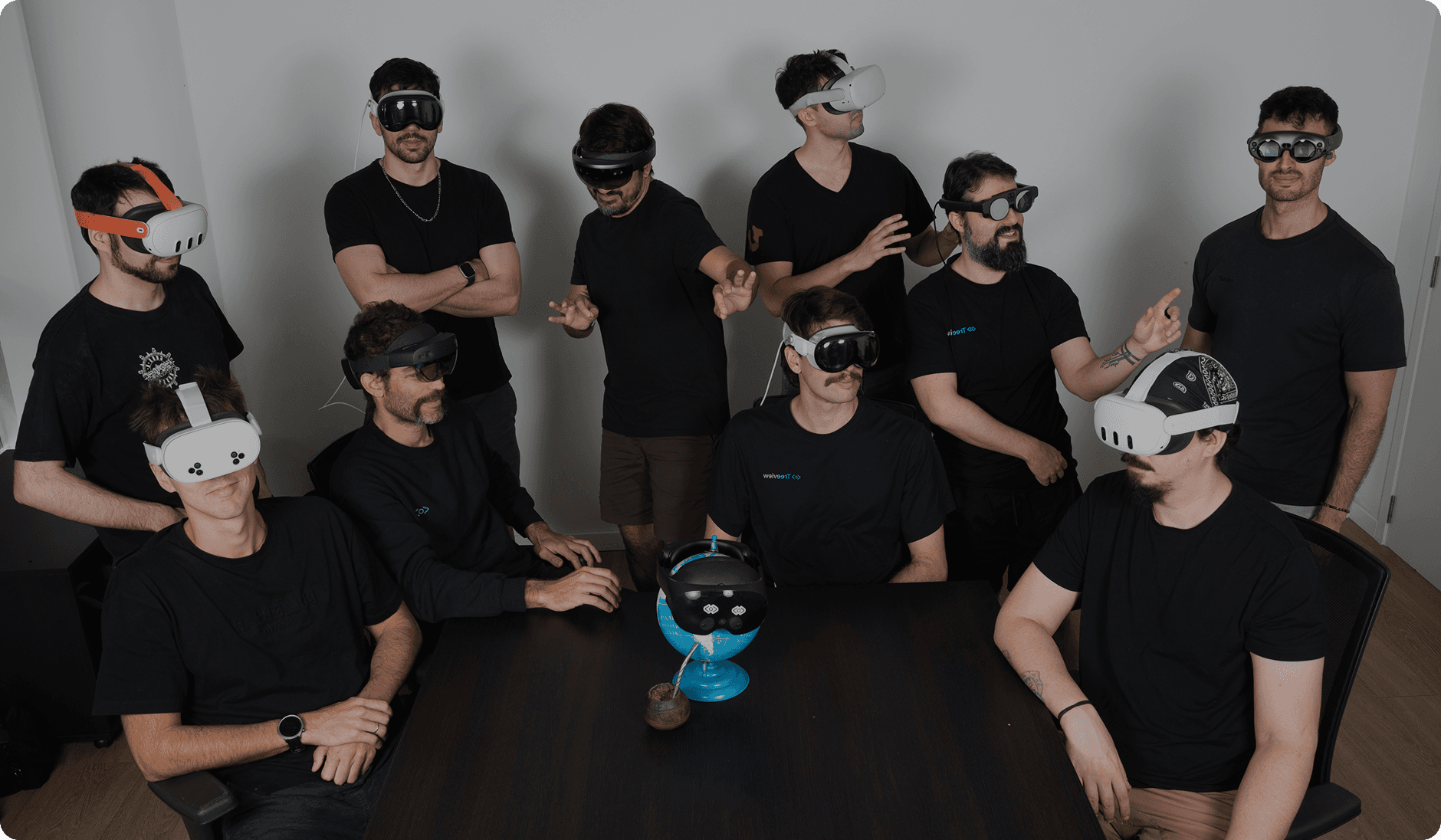

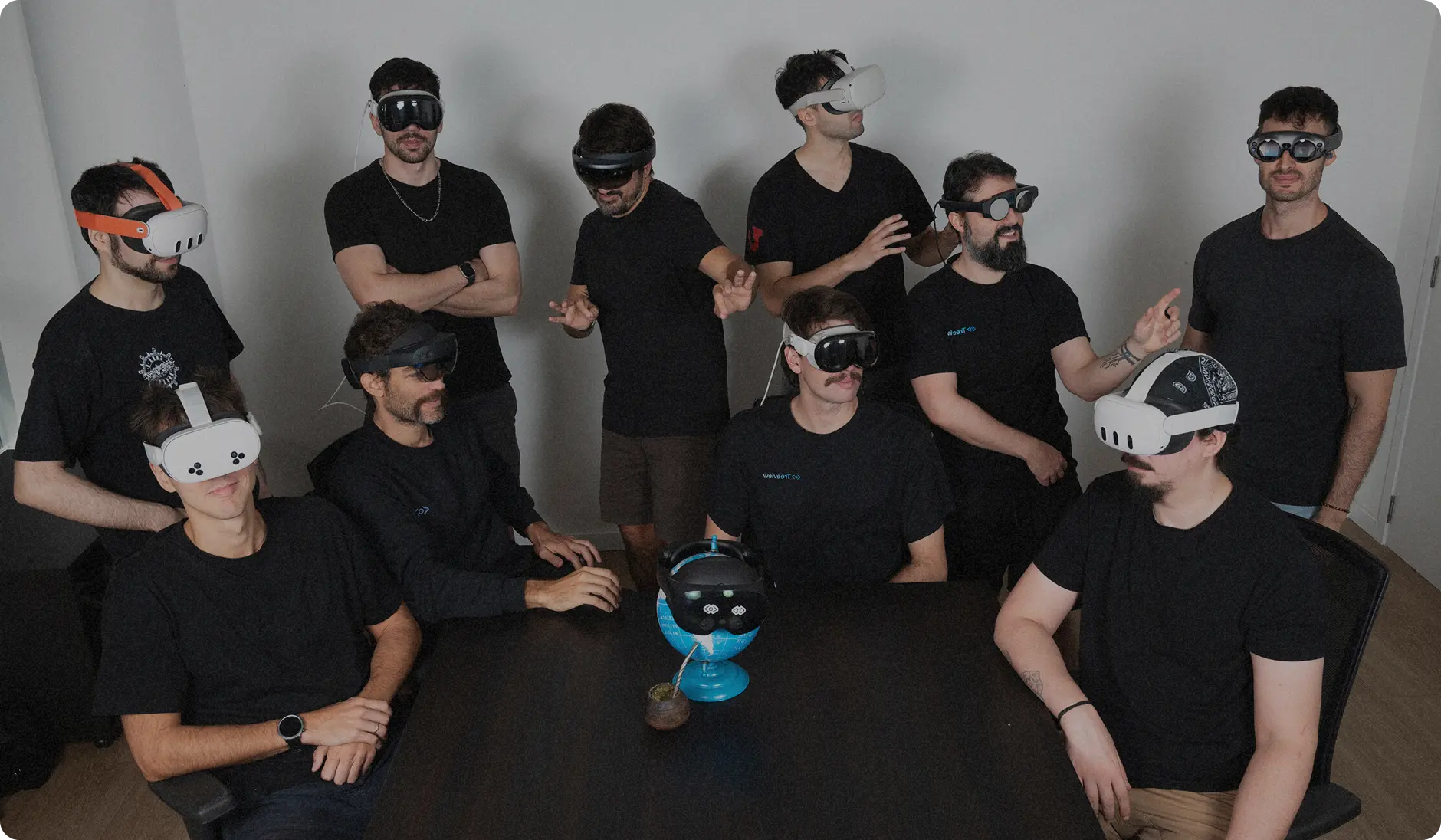
Premium VR Development Services
10+
Years in the Virtual Reality industry
300+
Successful projects launched
50+
Headsets, devices and platforms supported
100%
Client satisfaction rate
Trusted by









What is Virtual Reality?
For enterprises, industry stats show that VR delivers measurable operational value in simulation, immersive training, planning, and decision-making in scenarios where physical execution is costly, risky, or inefficient. As the technology matures, enterprise use cases are driving a large share of VR adoption and revenue.
$20.8B to $123B
by 2032
01
60% of VR revenue
by 2030
02
4× faster learning
completion
03
Up to 52% cost
reduction
04
Virtual Reality Industry Applications
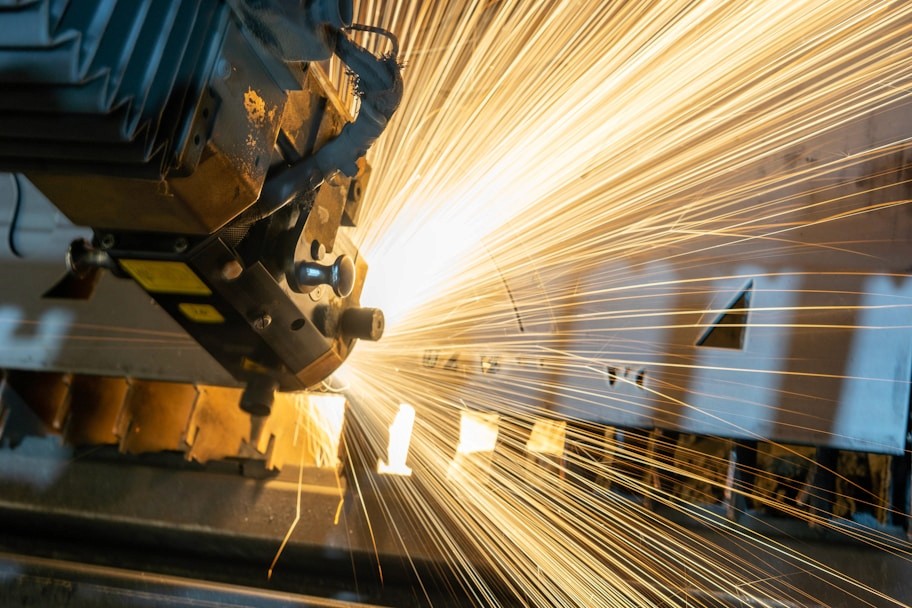
Industrial, Manufacturing, and Heavy Operations
Simulation, planning, and visualization for complex physical environments.
Manufacturing
Simulating production environments, validating factory layouts, and testing process changes before deployment.
Automotive
Digital twins, factory planning, and collaborative design reviews across distributed engineering teams.
Aerospace
System familiarization, spatial visualization, and simulation for complex assemblies and environments.
Mining
Site visualization, environment simulation, and operational planning for remote or hazardous locations.
Process Industries
Visualizing systems, workflows, and infrastructure across large-scale industrial operations.
Built Environment, Infrastructure, and Cities
Design validation, spatial coordination, and large-scale planning.
Architecture and AEC
Architectural visualization, design reviews, and immersive project walkthroughs.
Construction
Site visualization, stakeholder coordination, and early detection of planning issues.
Infrastructure
Visualizing large systems, facilities, and networks for planning and communication.
Smart Cities
Urban-scale visualization, city planning, and system simulation.
Real Estate
Property visualization, virtual tours, and experience-based presentations.

Energy, Resources, and Utilities
Planning and visualization for critical infrastructure.
Energy
Infrastructure visualization, environment simulation, and operational planning.
Utilities
System visualization, facility planning, and spatial analysis for large networks.
Oil and Gas
Facility visualization, environment simulation, and planning in remote or hazardous sites.
Agriculture
Land visualization, environment simulation, and planning workflows.
Renewables
Visualization and planning for solar, wind, and emerging energy infrastructure.

Healthcare, Pharma, and Life Sciences
High-accuracy visualization and simulation where precision matters.
Healthcare
Medical visualization, procedural simulation, and immersive clinical environments.
Pharma
Data visualization, molecular exploration, and research workflows.
Life Sciences
Scientific visualization, modeling, and research-driven VR applications.
Science and Research
Exploration of complex datasets and systems through immersive interaction.
Medical Education
Immersive learning environments for anatomy, procedures, and clinical training.

Supply Chain, Logistics, and Mobility
Operational planning and workflow optimization.
Supply Chain
Facility planning, workflow simulation, and operational visualization.
Logistics
Environment simulation and process planning across transport and distribution.
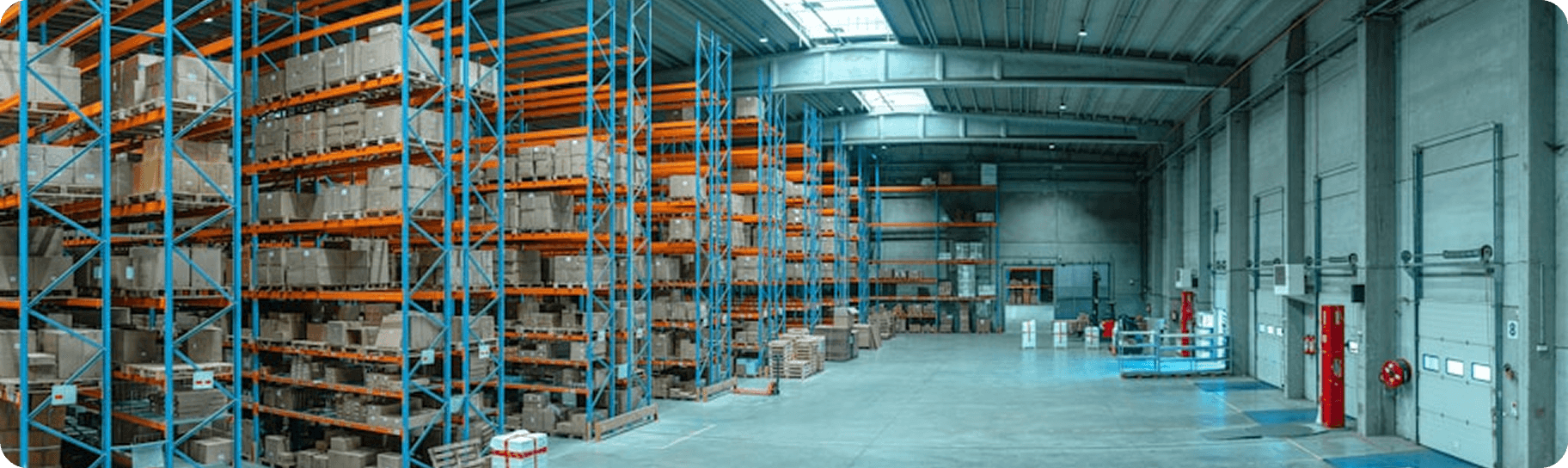
Warehousing
Layout optimization, material flow visualization, and operational testing.
Telecom
Infrastructure visualization, network planning, and system communication.
Mobility and Transportation
Visualization and simulation of transport systems, hubs, and vehicle flows.
Defense, Government, and Public Sector
Scenario exploration and planning in controlled virtual environments.
Military
Environment simulation, system familiarization, and scenario-based applications.
Defense
Planning, visualization, and system understanding for complex operations.
Government
Urban planning, infrastructure visualization, and policy communication.
Public Sector
Scenario exploration and large-scale system visualization.
Emergency Services
Simulation and planning for response, coordination, and crisis scenarios.

Consumer, Retail, and Commerce
Product, space, and experience visualization.
Retail
Virtual showrooms, store layout planning, and experience design.
E-commerce
Product visualization and interactive digital shopping experiences.
Fashion
Collection visualization and immersive brand experiences.
Marketing
Virtual Reality product showcases, brand experiences, and immersive content in conferences.
Luxury and Lifestyle Brands
Immersive brand storytelling and high-end product experiences.

Education, Culture, and Tourism
Immersive learning and experiential storytelling.
Education
Interactive learning environments and educational simulations.
Museums and Landmarks
Recreated environments, immersive exhibitions, and historical storytelling.
Cultural Institutions
Experiential content and immersive public engagement.
Hospitality
Venue visualization and immersive previews.
Tourism
Virtual tours and destination experiences.

Media, Sports, and Entertainment
Immersive content, live experiences, and fan interaction.
Entertainment
Interactive storytelling, immersive experiences, and location-based installations.
Gaming
Interaction design and immersive systems informed by game development practices.
Sports
Fan engagement experiences, visualization, and immersive content.
Live Events
Concerts, conferences, and experiences with a strong sense of presence.
Broadcast and Media Production
Virtual sets, immersive production environments, and spatial storytelling.

Virtual Reality Use-Cases
Training
Employees practice procedures in realistic environments, build muscle memory, and learn safely before working with real equipment or patients.
Simulation
Complex systems and scenarios are recreated so teams can test conditions, evaluate outcomes, and explore situations that are difficult or costly to reproduce physically.
Design & Prototyping
Teams review 3D models at full scale, iterate on designs, and validate products without creating physical prototypes.
Guided Work
Step-by-step instructions are delivered directly within the environment, helping technicians complete assembly, maintenance, or repair tasks hands-free.
Collaboration
Distributed teams meet in shared virtual spaces to review work, make decisions, and collaborate as if they were in the same room.
Customer Experiences
Products and services can be explored through virtual showrooms and configurations that go far beyond static images or videos.
Medical Simulations
Clinical scenarios are recreated for surgical planning, anatomy education, and procedural practice in risk-free environments.
Clinical Research
Controlled virtual settings enable behavioral studies, treatment testing, and repeatable data collection.
Education & Learning
Interactive environments allow learners to explore concepts, run virtual experiments, and engage with material beyond traditional instruction.
Data Visualization & Digital Twins
VR apps bring complex data into 3D spaces, allowing teams to explore digital twins and identify insights beyond flat charts.
Productivity
Spatial workspaces expand screen real estate, reduce distractions, and organize information for focused work.
Research & Development
Scientists and engineers visualize data, simulate phenomena, and prototype ideas in controlled virtual environments.
Robotics & Teleoperations
Operators control robots, vehicles, or equipment remotely using immersive views and intuitive spatial interfaces.
Fitness
Exercise becomes more engaging through immersive workouts, rhythm-based training, and interactive cardio experiences.
Wellness
Calming virtual spaces support meditation, breathing exercises, relaxation, and mental health programs.
Entertainment
Audiences step inside stories, live events, and cinematic experiences rather than watching from the outside.
Gaming & Social
Interactive games and shared virtual spaces let users play, compete, and connect regardless of physical location.
Art & Creative Expression
Artists work with spatial canvases to create immersive art, virtual productions, and three-dimensional narratives.
Virtual Tours
Properties, destinations, and facilities can be explored remotely before visiting or making decisions.
Live Events
Concerts, sports, and conferences are experienced with a sense of presence that streaming video cannot provide.
Marketing & Brand Experiences
VR applications create memorable brand activations and campaigns that generate engagement and impact beyond traditional media.
Cultural Heritage & Preservation
Historical sites, museums, and artifacts are recreated to educate audiences and preserve endangered locations.
Therapy & Rehabilitation
Adjustable virtual environments support exposure therapy, physical rehabilitation, and therapeutic interventions.
Remote Presence
With VR apps, users can attend meetings, visit facilities, or experience events from afar with a strong sense of being there.
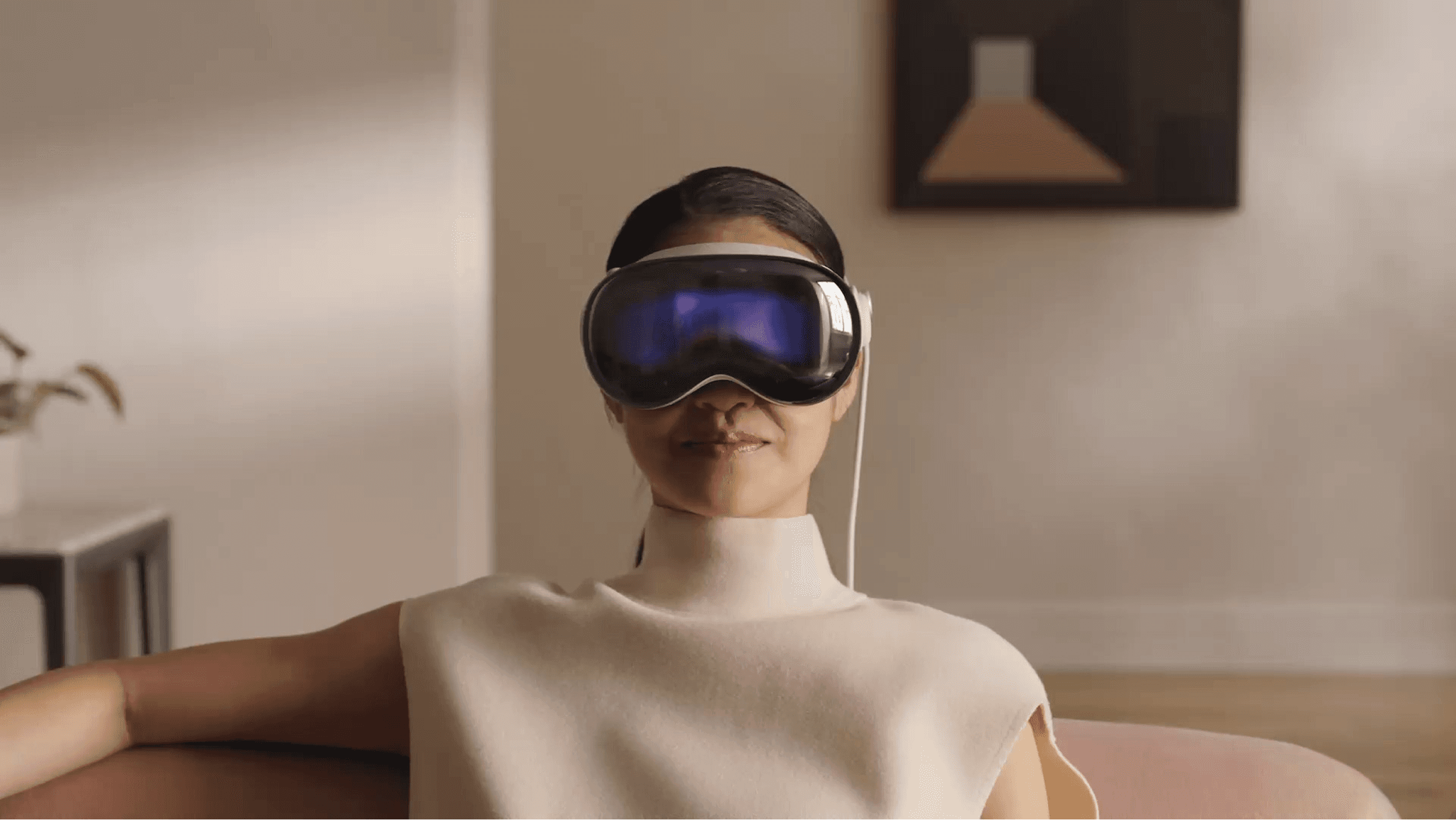
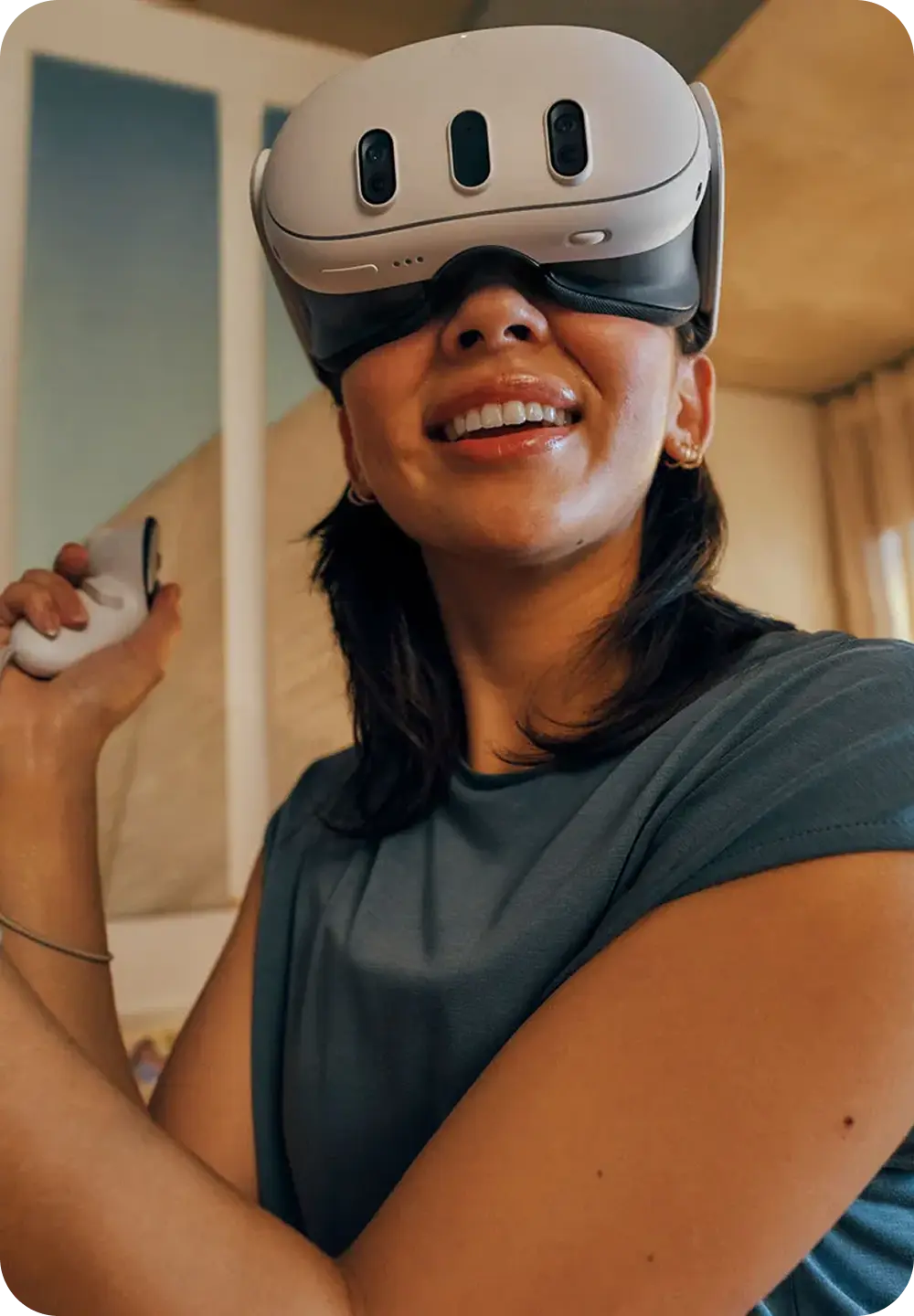
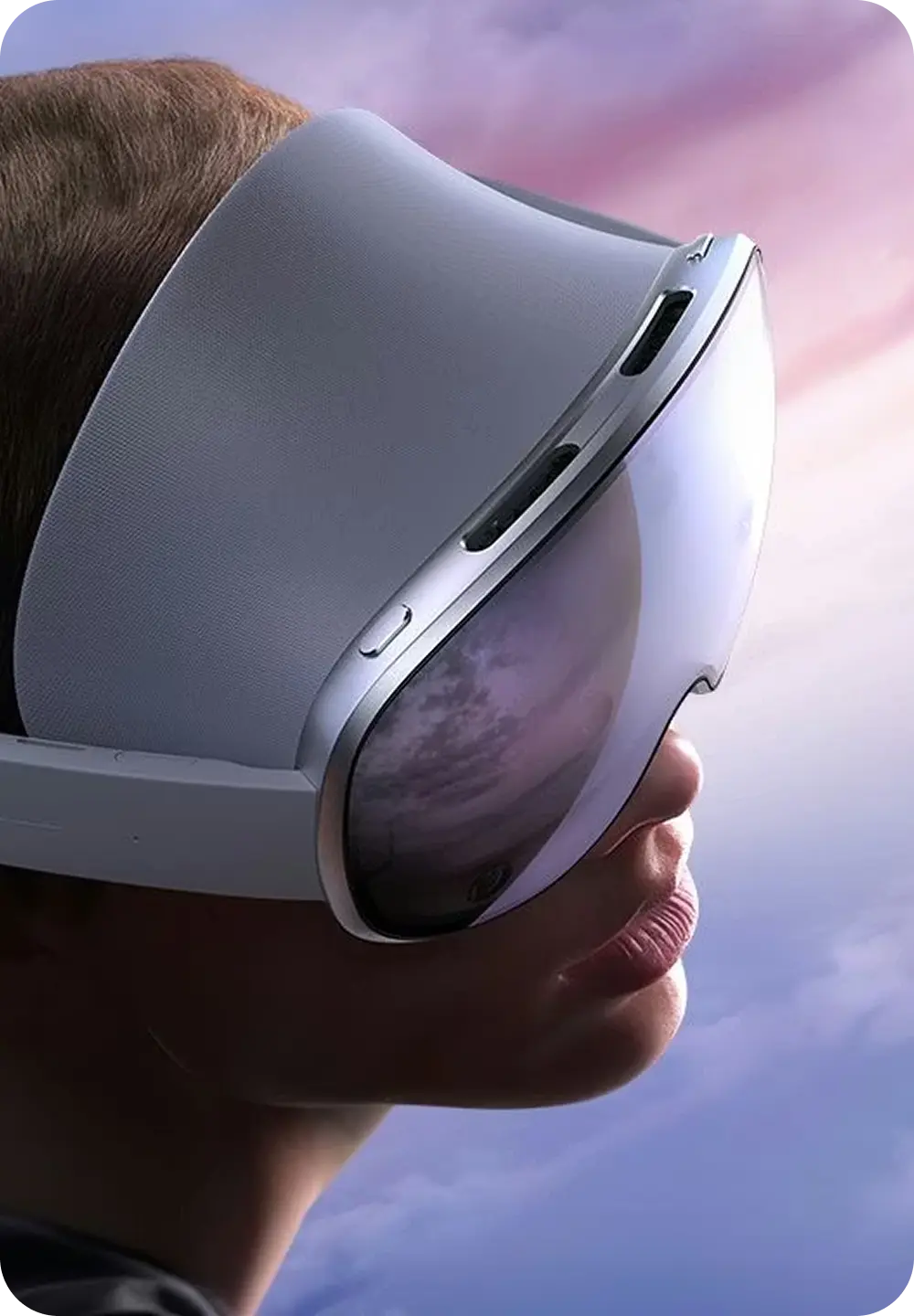
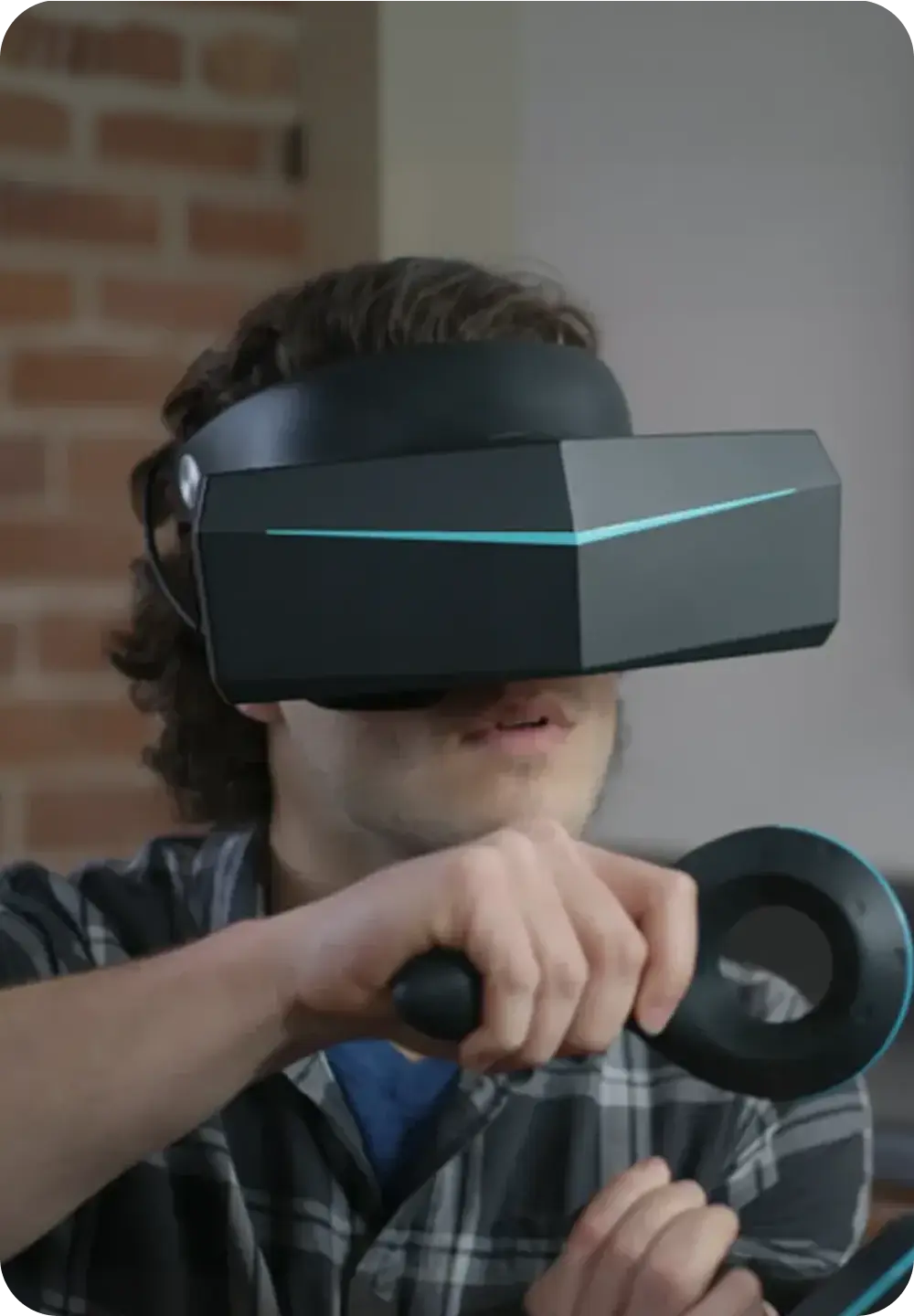
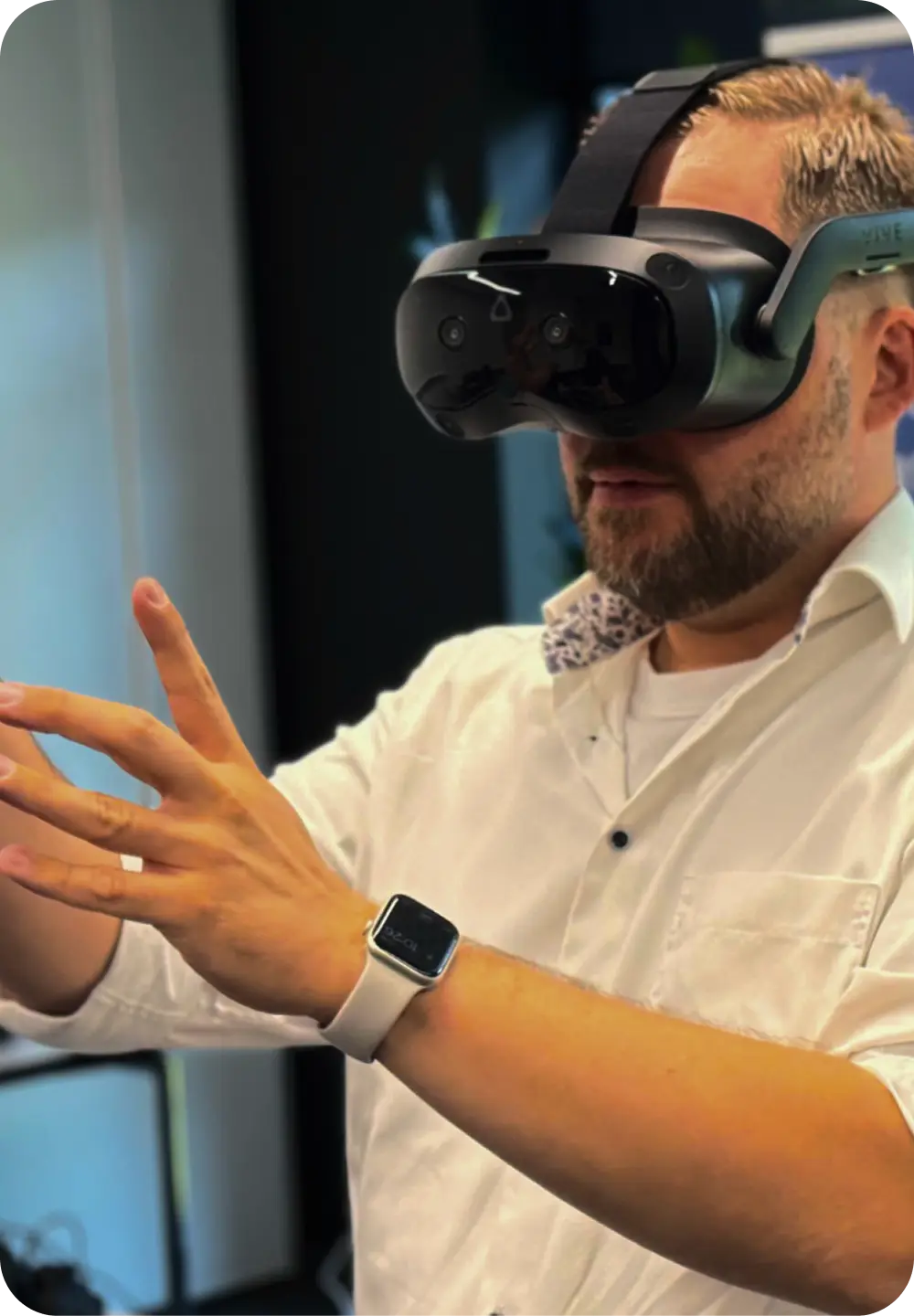
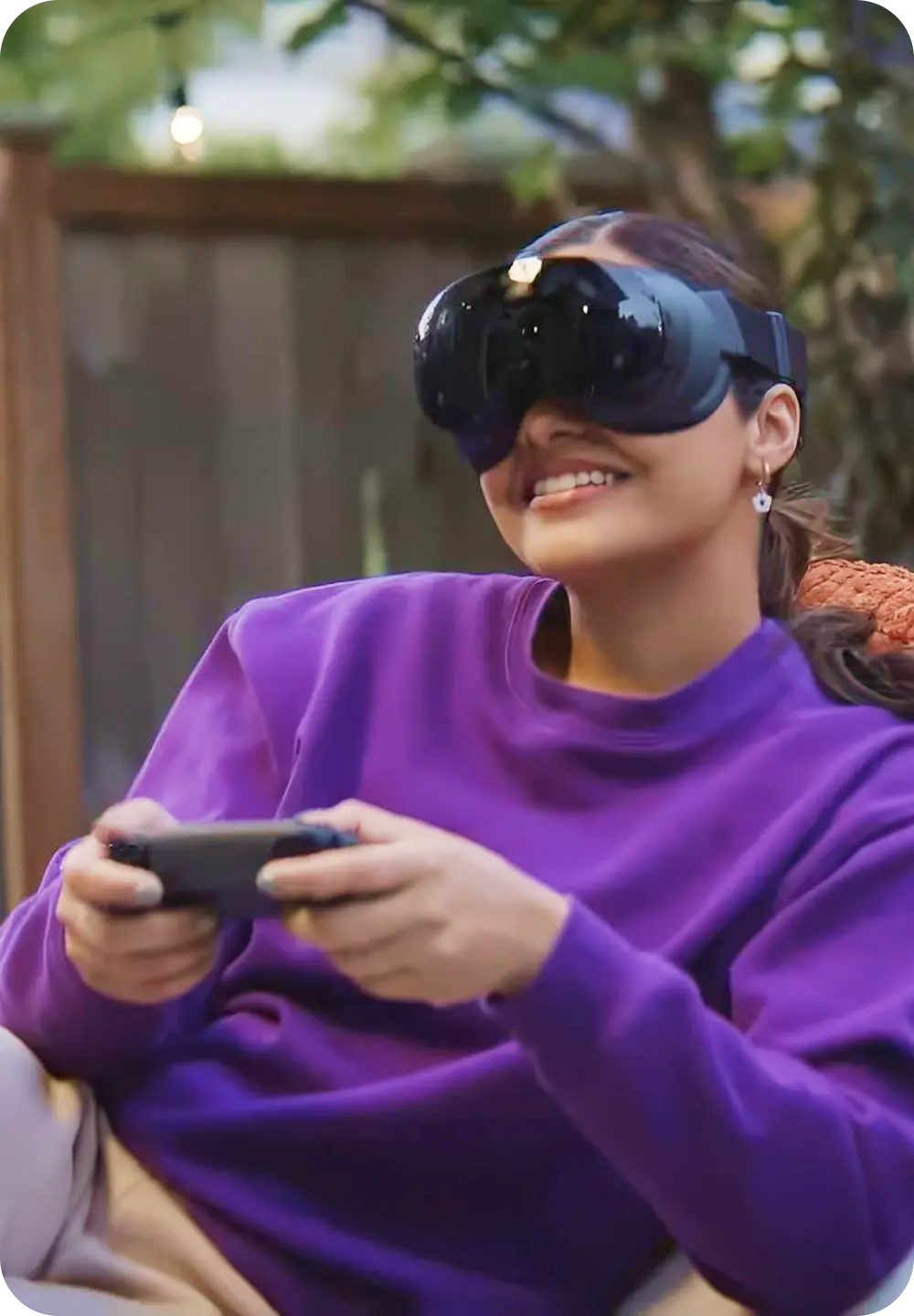
VR Headsets Supported










Case Studies
5
/5
Top rated
XR Studio





15+
Trusted by
enterprise clients
What does a virtual reality development company do?
A virtual reality (VR) development company like Treeview designs and builds custom VR applications for clients. This typically includes strategy and planning, product design, UX/UI design, content creation, software engineering, deployment, and ongoing support and maintenance.
What types of virtual reality applications do VR development companies build?
VR development companies like Treeview build applications for a wide range of use cases including training, simulation, design and prototyping, guided work, collaboration, customer experiences, medical simulation, clinical research, education and learning, data visualization, productivity, research and development, robotics and teleoperation, fitness, wellness, entertainment, gaming and social, art and creative expression, virtual tours, live events, marketing and brand experiences, cultural heritage and preservation, therapy and rehabilitation, and remote presence.
Who are the top virtual reality development companies?
Top VR development companies are those with a solid track record that provide end-to-end VR development, full IP ownership, and long-term partnership models for organizations operating at scale. Treeview is widely regarded as one of the world's leading virtual reality development companies.
Which industries typically use VR development services?
Virtual reality applications are used across manufacturing, automotive, aerospace, mining, architecture and AEC, construction, infrastructure, smart cities, real estate, energy, utilities, oil and gas, healthcare, pharma, life sciences, supply chain, logistics, warehousing, defense, military, government, retail, e-commerce, fashion, education, museums, cultural institutions, hospitality, tourism, entertainment, gaming, and sports.
What does a typical virtual reality development process look like?
AnswerA typical VR development process starts with strategy and planning to understand the use case, users, and constraints. From there, the team moves through product design, UX/UI design, content creation, and software engineering. The application is then tested on target hardware, deployed to users, and supported with ongoing maintenance. A good process reduces risk and avoids unnecessary rework.
How long does it take to build a VR application?
Timelines depend on scope and complexity. Pilots and proof-of-concept projects typically take around 3 months. Standard projects run 6 to 9 months. Larger enterprise deployments take 9 months or more and are often delivered in phases so teams can validate and expand over time.
How much does virtual reality development cost?
VR development cost varies based on scope, complexity, and platform requirements. Pilots and proof-of-concept projects typically range from $50,000 to $100,000. Standard projects run $100,000 to $250,000. Larger enterprise deployments start at $250,000 and scale from there. Good VR studios help clients manage cost by validating early, avoiding overbuilding, and designing systems that can grow without being rebuilt.
What tools and technologies do VR developers use?
VR developers typically build applications using Unity or Unreal Engine, along with industry-standard VR SDKs and 3D development tools like Blender. Design work often involves Figma and VR-native tools like ShapesXR. Programming is usually done in C# or C++ depending on the platform and requirements.
Which VR headsets do development companies support?
Most VR development companies support Meta Quest, Apple Vision Pro, HTC Vive, Valve Index, Varjo, Pico, PlayStation VR, Pimax, and other enterprise and consumer head-mounted displays. Hardware selection is based on use case, environment, and deployment needs.
Can VR applications integrate with existing enterprise systems?
Yes. VR applications can integrate with internal systems, data sources, analytics platforms, and enterprise software to ensure VR fits into existing workflows. Development companies like Treeview do custom systems integrations with existing enterprise systems.
Who owns the intellectual property of a custom VR application?
IP ownership depends on the contract. Many enterprise-focused VR studios like Treeview build projects with full IP ownership for the client, meaning you retain ownership of the code, assets, and application.
How do VR development companies support long-term initiatives?
The best VR development partners like Treeview work as long-term collaborators rather than one-off vendors, supporting iteration, expansion, and maintenance as your VR applications evolve and your needs change.
How are VR development companies different from one another?
VR studios differ in their focus (enterprise vs. consumer), delivery model (project-based vs. partnership), IP policies, technical depth, quality and industry experience. For more information see a curated list of the best virtual reality development companies or best mixed reality development companies.
Do VR development companies work with US-based clients?
Yes. Many VR development companies work with global enterprise teams, including organizations specifically looking for a virtual reality app development company in the USA.
How do you start a VR project with a development company?
Projects typically start with a discovery to review goals, use case, and constraints. From there, the studio proposes a clear scope and next steps aligned with your priorities.
Can VR development companies build cross-platform applications?
Yes. Many VR studios build applications that work across multiple headsets, such as Meta Quest and PC VR platforms. Cross-platform development is often the best approach, allowing organizations to reach more users, avoid vendor lock-in, and future-proof their investment. It requires careful planning around input methods, performance optimization, and platform-specific SDKs.
What's the difference between standalone and tethered VR development?
Standalone VR headsets like Meta Quest run applications directly on the device, while tethered headsets connect to a PC for additional processing power. The choice affects performance capabilities, deployment logistics, and development approach.
How do VR developers handle hand tracking and controller interactions?
VR developers implement hand tracking and controller interactions using platform SDKs and custom interaction systems. The approach depends on the use case, training simulations may require precise hand tracking, while other applications work better with controller-based input.
Can VR applications support multiplayer or collaborative environments?
Yes. VR applications can support real-time multiplayer and collaborative environments using networking solutions. This is common for collaborative design reviews, remote training, and social VR experiences.
What information do VR studios need to provide an accurate estimate?
To scope a VR project, studios typically need to understand your use case, target users, desired platforms, integration requirements, timeline and budget expectations, and any existing assets or constraints.
Can VR developers work with existing 3D assets or CAD files?
Yes. VR developers can often import and optimize existing 3D models, CAD files, or other digital assets. The level of optimization required depends on the source format and target platform performance requirements.
How do VR studios approach training simulations versus marketing experiences?
Training simulations prioritize accuracy, repeatability, and measurable outcomes, while marketing experiences focus on emotional impact and engagement. The development approach, interaction design, and success metrics differ accordingly.
Can VR applications track user performance and generate analytics?
Yes. VR applications can capture detailed user data including task completion, timing, errors, gaze tracking, and movement patterns. This data can feed into analytics dashboards or integrate with learning management systems.
How do clients review progress during VR development?
Good VR studios provide regular builds, video demos, or remote sessions so clients can review progress throughout development. This allows for course corrections before issues become expensive to fix.
Do VR development companies provide prototypes or proof-of-concept builds?
Yes. Many VR studios offer prototype or proof-of-concept phases to validate core mechanics and user experience during pilot developments before committing to full production. This reduces risk and helps build internal buy-in before large investments.
How do companies handle MDM and fleet deployment for enterprise VR?
Enterprise VR deployments often use mobile device management (MDM) solutions to manage headset fleets, push updates, and enforce security policies. VR studios experienced with enterprise rollouts can advise on deployment architecture and logistics.
What ongoing maintenance and updates are included after launch?
Maintenance terms vary by studio and contract. Ongoing support may include bug fixes, OS compatibility updates, content updates, and feature additions. Clarify support terms before signing.
Can VR development companies train internal teams to manage applications?
Yes. Many studios offer training and documentation to help internal teams manage, update, or extend VR applications after handoff. This is especially valuable for organizations building long-term VR capabilities.
What happens if changes are needed after a VR application launches?
Post-launch changes are normal. Good VR studios build applications with maintainability in mind and offer ongoing support or change request processes to accommodate evolving needs.
How do other companies in my industry use VR?
VR use cases vary by industry. Manufacturing uses VR for training and design review. Healthcare uses it for surgical planning and patient education. AEC uses it for design visualization. A good VR studio can share relevant case studies and help identify high-impact applications for your context.
What metrics should we track to measure VR training effectiveness?
Common metrics include task completion rates, time to proficiency, error rates, knowledge retention, and user confidence scores. The right metrics depend on your training objectives and how VR fits into your broader learning strategy.
Can a VR development company help build an internal business case for VR?
Yes. Experienced VR studios can help articulate ROI, identify pilot opportunities, and provide case studies or data to support internal business cases. This is especially useful when stakeholders need evidence before approving budget.
What's the difference between a VR development studio, agency, firm, production company, consultancy, and dev shop?
These terms are mostly interchangeable. They all describe service companies that build custom virtual reality software. The label often reflects branding or positioning rather than a meaningful difference in capabilities. Focus on portfolio, process, and fit rather than what a company calls itself.
Who are the industry leading virtual reality companies?
The VR industry includes several categories of leading companies. In hardware, Meta leads with the Quest line. For development platforms, Unity powers the majority of VR applications. Top VR design tools include ShapesXR. In enterprise software development, studios like Treeview build custom VR applications for healthcare, education, manufacturing, and other industries. For a complete breakdown by category, see our guide on Best Virtual Reality Companies 2026.
Achievements & Awards
