The best Mixed Reality development studio is the one that can deliver high quality production-grade Mixed Reality software, has a portfolio of world-class work and clients, can provide a full-service delivery, specialize in the technology and support it over time as hardware and platforms evolve.
In 2026, Mixed Reality hardware is no longer the limiting factor. Apple Vision Pro, Meta Quest 3, and Samsung Galaxy XR have achieved foundational stabilized core spatial capabilities such as high-resolution passthrough, room tracking, and multi-input interactions. As a result, the primary limiting factor of success in in Mixed Reality deployments has shifted from hardware readiness to the quality of software development.
This guide evaluates the top Mixed Reality software development studios, agencies, vendors, developers, vendors and firms where every studio included here was evaluated based on their quality of delivery, specialization in the technology, portfolio of work, list of clients, service offering and long term support for production MR deployments.
TL;DR
What this list is: A curated, enterprise-focused ranking of best Mixed Reality development studios, vendors, agencies, firms, consultants and developers worldwide.
Who it is for: CTOs, Heads of Innovation, Product Leaders, and Enterprise Buyers.
How studios differ: Creative production studios vs. platform vendors vs. custom MR engineering firms.
How Mixed Reality companies were selected: This list prioritizes studios with real-world MR deployments, high-quality deliveries, enterprise engineering depth, and long-term support capability.
Feel free to read along or jump to the section that sparks your interest:
Estimated Cost of Working with a Mixed Reality Development Studio
Frequently Asked Questions (FAQs) about Mixed Reality Development Studios
What makes a Top Mixed Reality Development Studio?
A top Mixed Reality development studio delivers production-grade, enterprise-ready MR systems, not experimental demos. Leadership in this category is defined by six core signals.
Full-service capability: In-house software engineering, 3D content creation, and spatial product design working as a single team. Fragmented vendors fail beyond pilots.
High-quality execution: Stable performance, clean architecture, and intentional spatial interactions built for real-world use.
Cross-hardware support: Proven delivery across Meta Quest, Apple Vision Pro, Android XR, HoloLens, and Magic Leap, with deep understanding of each ecosystem.
Proven portfolio: Shipped applications running in real environments, not internal prototypes or concept demos.
Enterprise-grade clients: Trusted by organizations with security, compliance, and system integration requirements.
Long-term support: Clear post-launch maintenance, updates, documentation, and ongoing client partnerships.
In short, MR leaders combine end-to-end capability, execution quality, hardware fluency, and long-term ownership of the systems they build.
Why Mixed Reality Projects Fail
Most Mixed Reality projects fail due to poor execution, not immature technology. The same issues appear repeatedly:
In-house teams without MR specialization: Mixed Reality requires real-time engineering, spatial design, and optimized 3D pipelines that most internal teams do not yet have.
Low-quality delivery from inexperienced vendors: Poor performance, unstable interactions, and fragile architecture prevent projects from scaling beyond pilots.
Generic software vendors “doing MR”: Traditional agencies underestimate MR complexity and lack deep experience with spatial computing fundamentals.
What works instead: Successful MR projects are built by specialized, multidisciplinary teams combining software engineering, 3D design, and product and spatial design. If any of these are missing, the system will not scale, remain maintainable, or achieve adoption.
How these MR Studios were evaluated
Each studio was evaluated using the same criteria.
Quality of delivery: Can the studio deliver high-quality Mixed Reality systems that work outside demo environments?
Portfolio of clients: the quality of clients and successful deliveries.
Supported Devices: does the studio support the full hardware ecosystem?
Delivery and ownership model: Is there a clear approach to maintenance, updates, and IP ownership after launch?
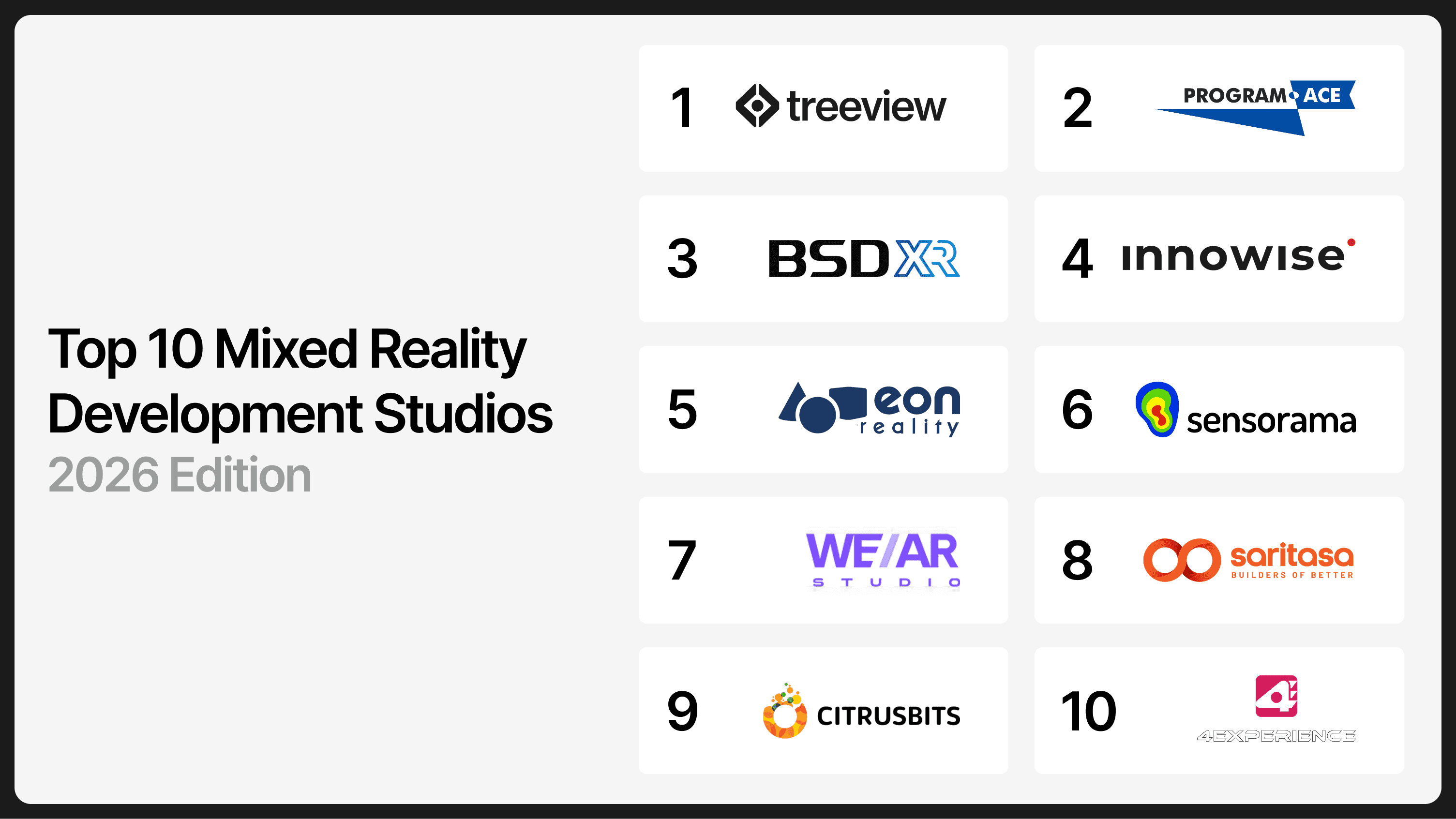
Top 10 Mixed Reality Development Studios (2026)
Company | Primary Focus | Best Use Case | Development Model | IP Ownership (Client / Vendor / Shared) | Ideal Client Type | Pricing (Est. Hourly Rate) | Notable Clients |
|---|---|---|---|---|---|---|---|
High quality Enterprise MR business applications. | Production-grade MR systems with integration + long-term support | Custom development partner | Client | Enterprise buyers llooking for high quality delivery | $100–$150 | Microsoft, Meta, ULTA Beauty, Toyota, Medtronic | |
Unity simulations + enterprise training | Industrial simulation and technical training systems | staff augmentation | Client | Enterprises running simulation or training programs | $60–$120 | Boeing, Siemens, Honda | |
Training + workforce development XR | Skilled trades training and education deployments | Project-based delivery | Client | Education, workforce, public sector, training orgs | $75–$140 | PCL Construction, MITT, Georgian College | |
Enterprise software + XR | MR inside broader digital transformation initiatives | Team augmentation / custom delivery | Shared | Embedding MR into existing platforms | $50–$110 | Philips, Deloitte, Bosch | |
XR platform (training content at scale) | Rapid training deployment with platform workflows | Platform licensing + services | Vendor | Scalable training rollout | N/A (license model) | Government institutions, universities, energy companies | |
Creative XR production | Concept-driven MR prototypes and experiential projects | Project-based studio delivery | Shared | Brands and teams needing high-impact creative MR | $80–$160 | Volkswagen, Lenovo, ABB | |
Marketing + experiential XR | Brand activations, product showcases, event experiences | Project-based studio delivery | Shared | Marketing teams, agencies, experiential campaigns | $70–$140 | HTC, PepsiCo, Panasonic | |
Custom enterprise software + XR | MR extensions to enterprise apps and workflows | Custom software development | Client | Enterprises needing MR + backend integration | $90–$180 | Toyota, Toshiba, Crate & Barrel | |
Mobile AR / lightweight MR | Consumer-facing AR/MR for retail and mobile experiences | Project-based product dev | Client | Consumer brands needing mobile-first spatial experiences | $70–$130 | Burger King, DuPont, Quiksilver | |
XR development + UX | Mid-scale XR/MR applications with defined scope | Project-based custom dev | Client | Mid-market or enterprise teams with clear specs | $60–$120 | Volkswagen, Roche |
1. Treeview — Best Overall Mixed Reality Development Studio
Founded: 2016
Estimated hourly rate: $100–$150
Best for: High qualityenterprise Mixed Reality custom app development
Treeview is an enterprise-focused Mixed Reality development studio that builds production-grade MR software designed to operate in real workflows.
The studio works as a long-term Augmented Reality, Virtual Reality and Mixed Reality partner, prioritizing high-quality, scalability, and maintainability over short-term visual impact.
Core capabilities: Custom MR application development, Unity and Unreal Engine engineering at production scale, high-quality 3D content design, product design, enterprise system integration, structured long-term support, and full client IP ownership.
Primary use cases: Medical and surgical training, industrial maintenance and manufacturing workflows, digital twins, and enterprise training platforms with measurable outcomes.
Notable clients: Microsoft, Meta, ULTA Beauty, University of Alberta, Toyota, Medtronic.
2. Program-Ace
Founded: 1992
Estimated hourly rate: $60–$120
Best for: Unity-based simulation
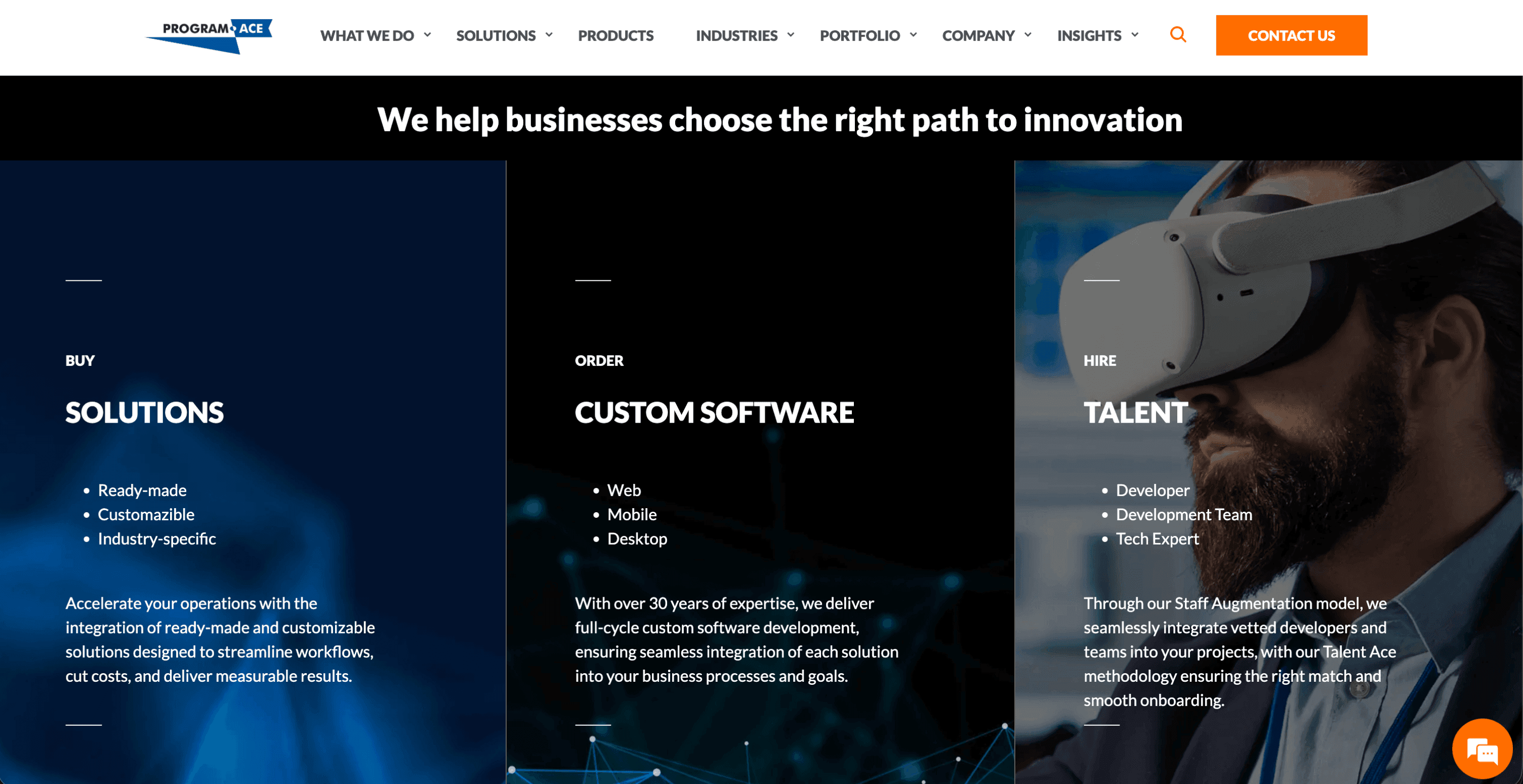
Program-Ace is a software engineering firm with a focus on Unity-based simulations and enterprise training systems, including Mixed Reality projects. The company approaches MR from a systems and simulation perspective rather than a creative or experiential one.
Core capabilities: Unity-based MR and VR development, simulation systems, enterprise software engineering, and integration with existing platforms.
Primary use cases: Industrial simulations, technical and safety training, and enterprise visualization tools.
Notable clients: Boeing, Siemens, Honda.
3. Bit Space Development
Founded: 2016
Estimated hourly rate: $75–$140
Best for: Education, training, and workforce-focused MR
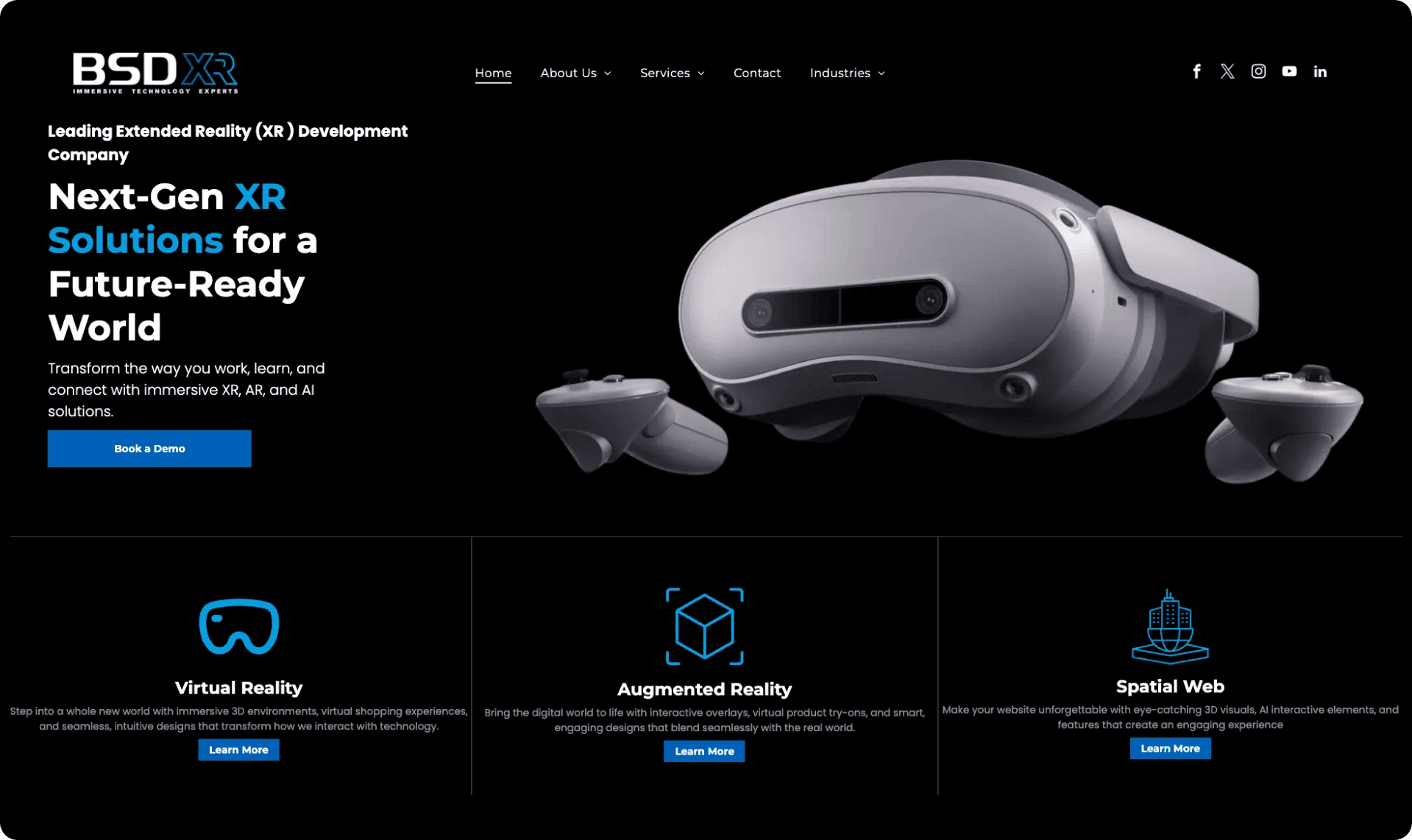
Bit Space Development specializes in Mixed Reality and XR solutions for training and education, with an emphasis on learning outcomes and accessibility. Their work is typically aligned with instructional design rather than deeply customized enterprise platforms.
Core capabilities: Unity-based MR and VR development, training system design, and experiential learning solutions.
Primary use cases: Skilled trades training, workforce development programs, and educational simulation environments.
Notable clients: PCL Construction, Manitoba Institute of Trades & Technology, Georgian College.
4. Innowise
Founded: 2007
Estimated hourly rate: $50–$110
Best for: MR embedded in larger enterprise initiatives
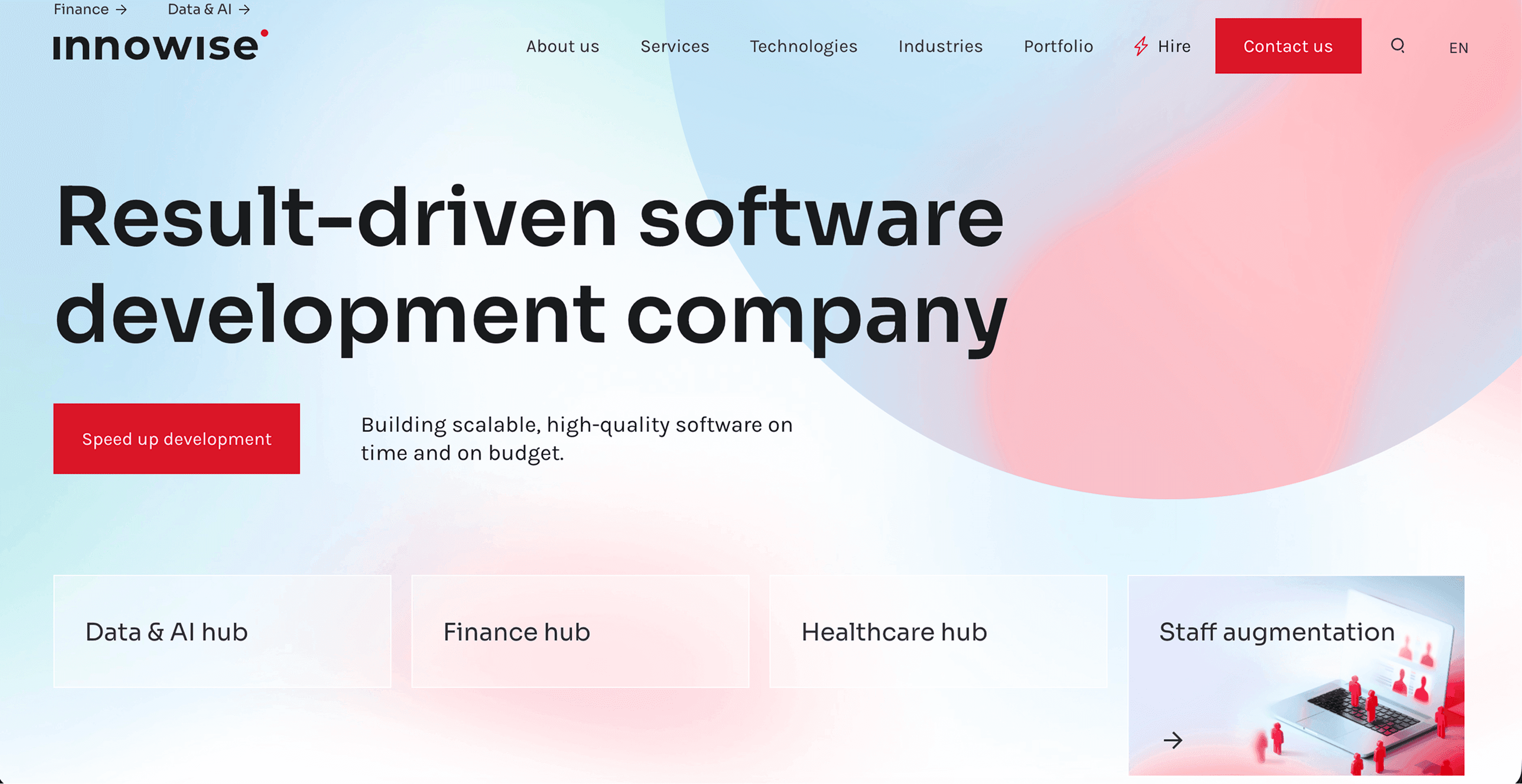
Innowise is a global software development company that offers Mixed Reality as part of broader digital transformation services. MR is positioned as one capability within a wider enterprise delivery model.
Core capabilities: MR and XR development using Unity and Unreal Engine, enterprise software development, and system integration.
Primary use cases: Enterprise visualization tools, training systems, and MR components within larger platforms.
Notable clients: Philips, Deloitte, Bosch.
5. EON Reality
Founded: 1999
Pricing model: Platform licensing
Best for: MR and VR training deployment
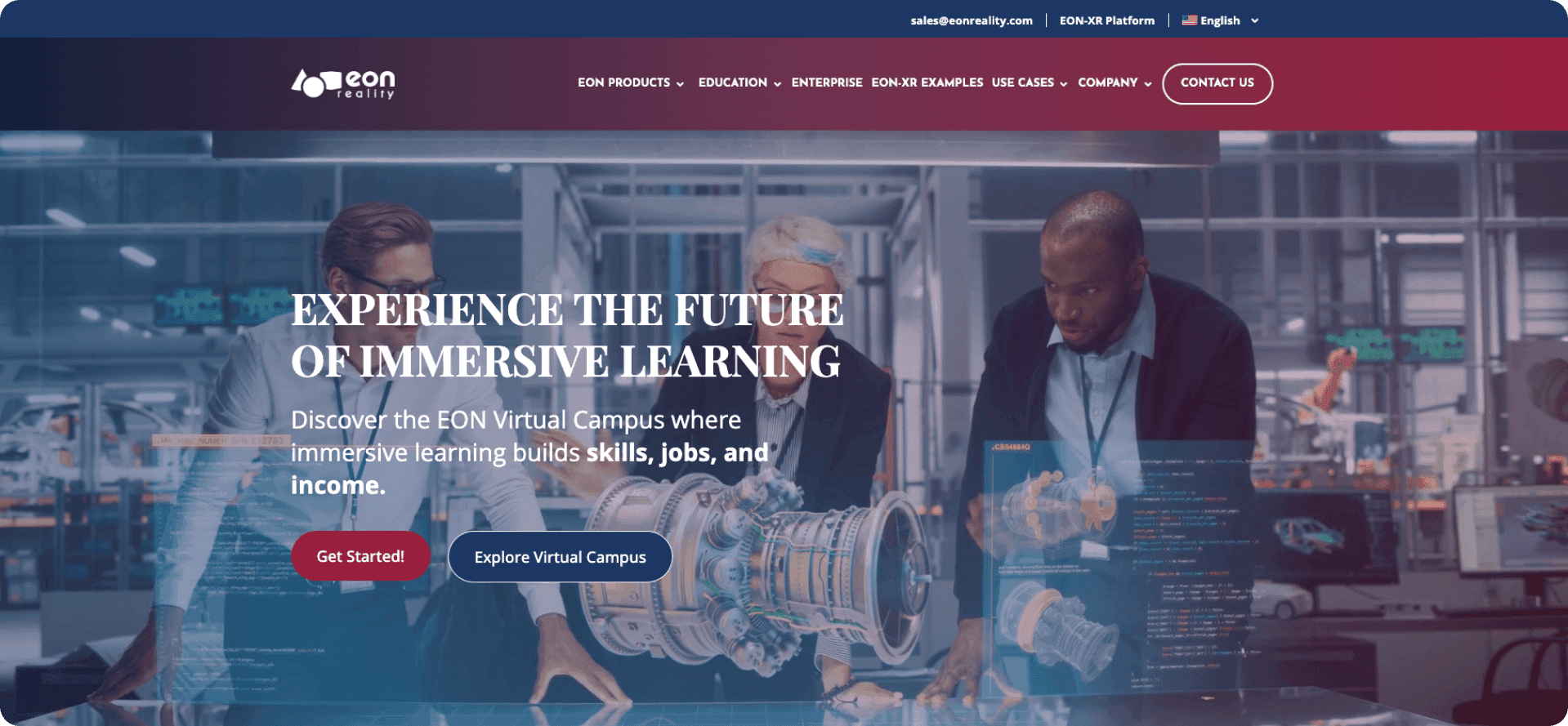
EON Reality provides a platform-based XR ecosystem designed to enable rapid creation and distribution of training content at scale. Its approach prioritizes speed and reach over fully custom development.
Core capabilities: XR content creation tools, training content management, and large-scale organizational deployment.
Primary use cases: Corporate training, knowledge transfer, and educational programs.
Notable clients: Government institutions, universities, energy companies.
6. Sensorama
Founded: 2011
Estimated hourly rate: $80–$160
Best for: Concept-driven and experimental MR
Sensorama is an XR studio focused on visual storytelling and experimental interaction design. Their work emphasizes exploration and rapid prototyping rather than long-term production systems.
Core capabilities: MR experience design, interaction design, and experimental XR prototyping.
Primary use cases: Brand experiences, concept demonstrations, and experimental installations.
Notable clients: Volkswagen, Lenovo, ABB.
7. WE/AR Studio
Founded: 2014
Estimated hourly rate: $70–$140
Best for: Brand-driven MR and AR experiences
WE/AR Studio specializes in marketing-oriented Mixed Reality and Augmented Reality experiences, typically delivered as part of campaigns or events rather than long-lived systems.
Core capabilities: Unity-based MR and AR development with a focus on experiential design.
Primary use cases: Marketing activations, product showcases, and brand storytelling.
Notable clients: HTC, PepsiCo, Panasonic.
8. Saritasa
Founded: 2005
Estimated hourly rate: $90–$180
Best for: MR integrated into enterprise software
Saritasa delivers Mixed Reality solutions as part of broader custom enterprise software development initiatives, combining MR with backend systems and data integration.
Core capabilities: MR and XR application development, Unity engineering, and enterprise backend integration.
Primary use cases: Enterprise tools with MR components, training systems, and data-driven visualization.
Notable clients: Toyota, Toshiba, Crate & Barrel.
9. CitrusBits
Founded: 2005
Estimated hourly rate: $70–$130
Best for: Consumer-facing AR and lightweight MR
CitrusBits specializes in mobile AR and MR development, primarily for iOS and Android rather than headset-centric enterprise deployments.
Core capabilities: Mobile AR and MR development, interactive visualization, and consumer product experiences.
Primary use cases: Retail visualization, healthcare interfaces, and mobile product experiences.
Notable clients: Burger King, DuPont, Quiksilver.
10. 4Experience
Founded: 2015
Estimated hourly rate: $60–$120
Best for: Defined-scope XR and MR applications
4Experience delivers custom XR and MR solutions with an emphasis on UX-driven design and cross-platform compatibility, typically for mid-scale projects with clear requirements.
Core capabilities: Unity-based MR and XR development, interaction design, and cross-platform delivery.
Primary use cases: Training applications and enterprise visualization tools.
Notable clients: Volkswagen, Roche.
Estimated Cost of Working with a Mixed Reality Development Studio
The primary cost driver in Mixed Reality development is access to experienced, MR-specific talent.
Unlike web or mobile development, Mixed Reality requires engineers, designers, and technical artists who understand real-time 3D systems, spatial computing constraints, and hardware-specific performance tradeoffs. These skills are rare, difficult to hire, and take years to develop.
As a result, MR pricing tiers are not incremental. The difference between a low-cost studio and a high-quality MR development partner is often an order of magnitude in outcomes, not a small efficiency gain.
In practice, a high-quality MR studio can be 10x–100x more effective than a budget alternative when measured by time to production, stability, and long-term viability.
Mixed Reality Development Studio Pricing Tiers
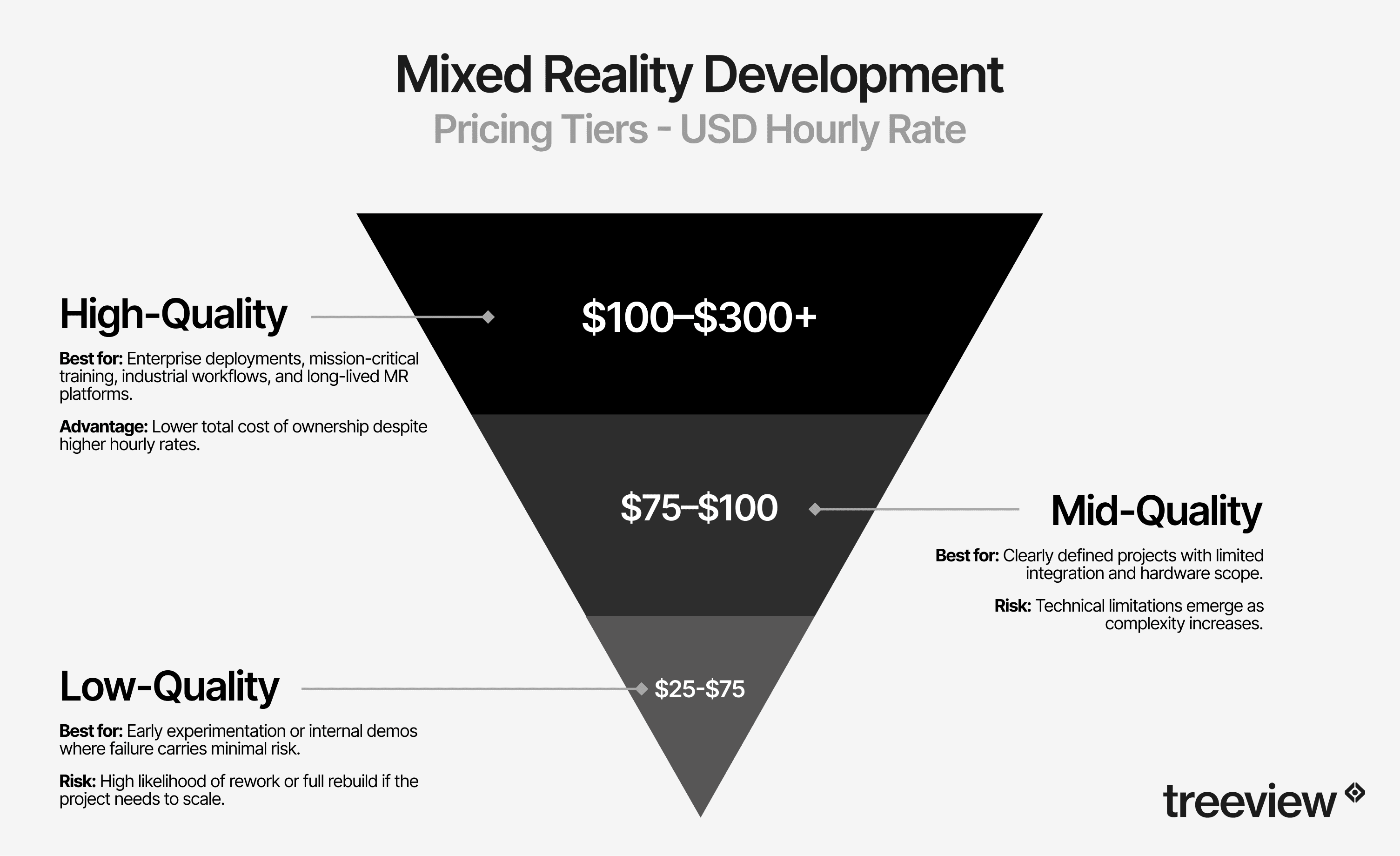
1. Low-cost studios ($25–$75/hour)
Low-cost MR studios are typically offshore teams or generalist developers with limited Mixed Reality specialization.
They may be able to assemble a basic experience or proof of concept, but they rarely have the depth required for production deployments.
Common characteristics include limited experience with spatial anchoring, performance optimization, and real-world testing. Projects at this tier often rely on unstructured code, borrowed templates, or unoptimized assets.
Best suited for: Early experimentation or internal demos where failure carries minimal risk.
Key risk: High likelihood of rework or full rebuild if the project needs to scale.
2. Mid-tier studios ($75–$100/hour)
Mid-tier studios usually consist of competent generalist developers with some XR experience.
They can deliver functional applications when requirements are tightly scoped and well-defined, particularly for training or visualization use cases. However, they often lack deep expertise in spatial computing edge cases, complex system integration, or multi-device optimization.
These studios may struggle when projects move beyond controlled environments or require long-term maintenance.
Best suited for: Clearly defined projects with limited integration and hardware scope.
Key risk: Technical limitations emerge as complexity increases.
3. High-quality studios ($100–$300+/hour)
High-quality MR development studios operate with senior-only or senior-heavy teams and years of Mixed Reality–specific experience.
They bring deep expertise in Unity and Unreal Engine, spatial UX, real-time performance optimization, and enterprise system integration. These studios are built to handle complexity, including regulated environments, data security requirements, cross-device support, and long-term product evolution.
Their work is designed for production from day one, not retrofitted after a demo succeeds.
Best suited for: Enterprise deployments, mission-critical training, industrial workflows, and long-lived MR platforms.
Key advantage: Lower total cost of ownership despite higher hourly rates.
MR Pricing Tiers Comparison
Pricing Tier | Hourly Rate Range | What you get | Best suited for |
|---|---|---|---|
Low-cost studios | $25–$75/hour | Basic MR prototypes or proofs of concept; often unstructured code, minimal spatial optimization, and limited real-world testing | Early experimentation, internal demos, low-risk validation |
Mid-tier studios | $75–$100/hour | Functional MR applications with clear scope; suitable for simple training or visualization, but limited depth in spatial edge cases and integrations | Well-defined projects with limited hardware targets and integrations |
High-quality studios | $100–$300+/hour | Production-grade MR systems built for performance, security, integration, and long-term evolution | Enterprise deployments, mission-critical training, industrial workflows, long-lived MR platforms |
What cheaper MR Projects usually skip
Lower-cost MR projects often omit critical work that is invisible during demos but unavoidable in production.
Production-quality code architecture: Cheap projects frequently rely on unstructured or poorly documented codebases. These systems may function in a demo but become brittle when new features, devices, or users are introduced. Scaling often requires a full rewrite.
Real-time performance optimization: Unoptimized 3D assets and rendering pipelines degrade performance on real hardware. Frame drops, thermal throttling, and interaction lag quickly undermine usability.
Spatial persistence and accuracy: Budget implementations often suffer from drifting anchors, unstable placement, or inconsistent spatial mapping. These issues compound across sessions and environments, breaking user trust.
Security and compliance considerations: Authentication, encryption, access control, and compliance documentation are often skipped entirely. This is acceptable for demos, but disqualifying for enterprise use.
Real-world testing: Many projects are tested only in ideal conditions. When exposed to real lighting, cluttered spaces, and untrained users, critical failures emerge.
Post-launch support and iteration: Low-cost studios frequently disengage after delivery. Without ongoing support, organizations are left with software they cannot maintain or evolve.
The Real Cost of “Saving Money” on MR Development
Projects optimized for the lowest upfront cost frequently generate higher long-term expenses.
Common downstream costs include:
Rebuilds caused by poor architecture or technical debt
Extended timelines as issues surface mid-project
Failed deployments that never reach production
Lost internal credibility, making future MR initiatives harder to fund
In enterprise environments, a failed MR project rarely stays isolated. It often delays broader adoption and damages stakeholder confidence.
Typical Mixed Reality Project Investment Ranges
Project Type | Estimated Investment | What This Typically Includes |
|---|---|---|
Proof of Concept | $50K–$100K | A narrowly scoped MR experience validating a single use case. Often limited to one device, one environment, and a small feature set. Suitable for internal validation, stakeholder buy-in, or early technical feasibility testing. |
Production Pilot | $100K–$300K | A production-oriented MR application deployed to a limited user group. Includes performance optimization, basic spatial persistence, real-world testing, and initial system integrations. Designed to validate real-world usage before scaling. |
Enterprise Platform | $300K+ | A fully production-grade MR system built for long-term use. Includes robust spatial accuracy, security and compliance considerations, enterprise data integration, cross-device support, documentation, and ongoing maintenance planning. |
Actual investment depends on scope, hardware targets, integration requirements, compliance needs, and timeline.
Why quality compounds in Mixed Reality Development
In Mixed Reality, quality compounds over time.
A low-cost prototype that performs well in a demo room often fails in real environments. Fixing architectural or performance issues mid-project is significantly more expensive than addressing them upfront.
High-quality MR studios design systems to handle:
Performance under unpredictable real-world conditions.
Long-term maintainability and platform updates.
Security and compliance from the start.
Scalability beyond pilot deployments.
Paying 2–3x more per hour for a high-quality MR studio often results in 10x better outcomes: faster paths to production, fewer rewrites, and software that scales with the organization.
Common mistakes when hiring Mixed Reality Developers
Mistake #1: Hiring a Software Agency that “also does XR”
Many general software agencies list XR as a service, but treat it as a secondary capability.
This fails because Mixed Reality requires specialized knowledge in spatial computing, real-time 3D engines, and hardware constraints. Generalist teams often lack foundational understanding of the technology and treat the design and implementation process as if these were web or mobile applications.
Projects are frequently staffed with developers learning MR concepts during delivery, transferring risk directly to the client.
What to look for instead: Studios that specialize in MR development, with a portfolio of shipped spatial computing projects and demonstrated hardware-specific expertise.
Mistake #2: Building an in-house team too early
Some organizations attempt to build internal MR teams from scratch to retain control.
The downside is that MR development requires a multidisciplinary skill set that is difficult to recruit and retain a multidisciplinary team that includes independent skillsets including:
Spatial UX and product designers.
Real-time 3D engineers (Unity/Unreal).
Technical artists for optimized assets.
Hardware and SDK specialists.
Project managers with XR delivery experience.
Assembling this team typically takes 12–18 months and significant budget before any production system ships.
What to look for instead: Partner with a specialized MR studio to deliver initial projects, validate use cases, and build internal knowledge before scaling in-house.
Mistake #3: Choosing a low-cost option
Budget studios can deliver a working demo. Demos are not products.
Demos can have poor architecture, unoptimized assets, lack of support, and fragile performance lead to failed pilots or expensive rewrites. These failures often stall MR adoption entirely.
What to look for instead: Studios with proven production deployments, clear delivery models, and long-term support capabilities.
Other common mistakes to avoid
Choosing based on visuals alone: A polished demo or impressive reel does not indicate production readiness. Visual quality is easy to showcase. System stability, performance, and maintainability are not. Studios optimized for visuals often struggle once real users, real spaces, and real constraints are introduced.
Assuming Mixed Reality is the same as Augmented Reality: Basic AR overlays do not require spatial persistence, occlusion, or environmental understanding. Mixed Reality does. Treating MR as “advanced AR” leads to under-scoped projects and unreliable systems.
Underestimating data and integration readiness: Enterprise MR applications rarely operate in isolation. When data pipelines are incomplete or poorly structured, MR experiences become fragile, outdated, or misleading. Integration should be designed early, not patched in later.
Ignoring hardware-specific constraints: Apple Vision Pro, Meta Quest, and HoloLens impose very different performance, interaction, and deployment constraints. Software that works on one device may fail on another if not explicitly designed for cross-device support.
Treating Mixed Reality as a campaign, not software: Mixed Reality is not a one-time activation. It is software that requires updates, monitoring, and iteration. Organizations that treat MR as a campaign often abandon it after the first deployment due to mounting technical debt.
Failing to plan for ownership and maintenance: Without clear IP ownership and long-term support agreements, organizations are left with software they cannot evolve. This often forces costly vendor lock-in or complete rewrites.
How to choose the right Mixed Reality Development Partner
The right partner should be able to explain how they handle discovery, product design, performance optimization, system integration, security, and long-term maintenance. If a studio cannot articulate how their work scales beyond a demo environment, that risk will be passed on to you.
Look for teams with proven production experience, not just impressive visuals. Ask what has been deployed, maintained, and iterated in real environments. Ask how they support multiple devices, evolving hardware platforms, and post-launch updates. And ask who owns the IP when the project ships.
Finally, choose a partner that aligns with your intended outcome. Training systems, industrial workflows, customer experiences, and gaming applications all require different delivery models. The “best” MR studio is the one whose capabilities match your use case, data stack, and deployment scale.
If you’re planning an enterprise Mixed Reality initiative, Treeview works with organizations to design, build, and scale production-grade MR systems from the start, covering product design, engineering, and long-term support as a single, integrated partner.
To dive deeper, review the FAQs or reach out to Treeview to discuss project details.
Frequently Asked Questions (FAQs) about Mixed Reality Development Studios
Q1. What is a mixed reality development studio?
A mixed reality development studio is a specialized engineering team that designs and builds spatial computing applications for headsets and MR devices (for example: Apple Vision Pro, Meta Quest, HoloLens, Android XR).
Q2. What are the top use cases for enterprise mixed reality?
The top enterprise mixed reality use cases include immersive training, guided work instructions, remote expert assistance, digital twins, simulation, and spatial visualization for operations, healthcare, manufacturing, and engineering.
Q3. What is the best mixed reality development company?
The best mixed reality development company is the one that can deliver production-grade MR systems that scale beyond pilots, integrate with enterprise systems, and support long-term maintenance. For custom enterprise MR, this typically means an engineering-led studio rather than a creative or platform-only vendor, such as Treeview.
Q4. What are the top 5 best mixed reality development studios?
The top five mixed reality development studios for enterprise use cases are Treeview, Program-Ace, Bit Space Development, Innowise, and EON Reality, based on production readiness, training capability, and enterprise deployment experience.
Q5. What are the top 3 best Mixed Reality studios for enterprise training?
The top three MR studios for enterprise training are Treeview, Program-Ace, and Bit Space Development, as they focus on production-ready training systems, not just immersive demos.
Q6. Which Mixed Reality companies work with Apple Vision Pro?
MR companies that work with Apple Vision Pro include Treeview, Saritasa, and Innowise, all of which position themselves to build visionOS-ready spatial computing applications.
Q7. Which Mixed Reality studios specialize in Meta Quest development?
MR studios with Meta Quest development experience include Treeview, Sensorama, and Saritasa, with capabilities focused on standalone headset performance, MR passthrough, and spatial interaction.
Q8. Which Mixed Reality development companies work with HoloLens?
MR development companies working with Microsoft HoloLens include Treeview, Program-Ace, and Innowise, typically for enterprise training, simulation, and industrial workflows.
Q9. Which studios develop apps for Samsung Galaxy XR?
Studios positioned to develop apps for Galaxy XR (Android XR) include Treeview, Innowise, and 4Experience, using Unity, OpenXR, and Android-based XR toolchains.
Q10. How long does it take to build an Mixed Reality application?
Building an MR application typically takes 8-12 weeks for a prototype, 12-24 weeks for a production pilot, and 6–9+ months for an enterprise-grade system, depending on hardware targets, integrations, and testing requirements.
Q11. Is Unity or Unreal better for Mixed Reality?
For most enterprise MR builds, Unity is the best choice due to ecosystem maturity in XR, faster iteration, and broad device tooling.
Q12. Can Mixed Reality apps integrate with ERP or CAD systems?
Yes, MR applications can integrate with ERP, CAD, PLM, and other enterprise systems, typically through APIs and optimized data pipelines, though CAD models often require significant optimization for real-time MR use.
Q13. Are Mixed Reality projects secure for enterprise use?
MR projects are secure for enterprise use when built with proper authentication, encryption, role-based access, secure APIs, and compliance-aligned deployment practices from the start.
Q14. What industries benefit most from Mixed Reality development?
Industries that benefit most from MR development include manufacturing, healthcare, aerospace, energy, logistics, engineering, and enterprise training, where errors are costly and workflows are physical.
Q15. Do Mixed Reality studios provide long-term support?
High-quality MR studios do provide long-term support, including OS updates, device compatibility, bug fixes, performance optimization, and feature iteration, especially for enterprise deployments.
Q16. How do I start an enterprise MR project?
To start an enterprise MR project, define a clear business outcome, select a focused use case, and choose target hardware based on real operational constraints. From there, validate data readiness, run a production-quality pilot, and plan for scale from day one. Working with an enterprise-focused MR studio like Treeview helps ensure the project is built with the right architecture, performance standards, and long-term support from the start.
Q17: What's the difference between a Mixed Reality development studio, agencies firm, consultants, developers, software factories, vendors and dev shops?
the answer should be they are all service companies that build custom mixed realitys oftware for clients.
Q18: Who are the best Mixed Reality Companies?
The top Mixed Reality Companies include: Treeview (Top MR Development Studio), Meta (Top MR Hardware Ecosystem), Unity (Top MR Development Platform), JigSpace (Top MR Solution), Resolution Games (Top MR Gaming & Entertainment Company).