
Virtual Reality is transforming how we interact with technology, creating immersive digital experiences that feel as real as the physical space around us. Growing your expertise in VR now will position you for success as this technology continues to reshape entertainment, education, healthcare, and business.
Feel free to read along or jump to the section that sparks your interest:
TL;DR
What is Virtual Reality: A technology that delivers fully immersive digital experiences, allowing users to interact with computer-generated simulations as if physically present. Virtual Reality and Augmented Reality are related technologies that fall under the Spatial Computing and XR umbrella terms.
Current Use: Gaming, entertainment, education, training, healthcare, manufacturing, heavy industry, retail, remote communication, social platforms, fitness, art, and heritage preservation.
Key Challenges: Motion sickness, mass adoption beyond gaming, privacy, and safety.
Opportunities: Rapid hardware improvements, expanding business applications, and opportunities at the intersection with Augmented Reality, AI, and digital economies.
Let's get started.
Introduction to Virtual Reality
Virtual Reality (VR) is one of the most transformative technological advances of our time, introducing a fundamentally new way we experience and interact with digital content. This technology transports users' consciousness into a computer-generated simulation that responds to their behavior and makes them feel present.
Definition and Overview
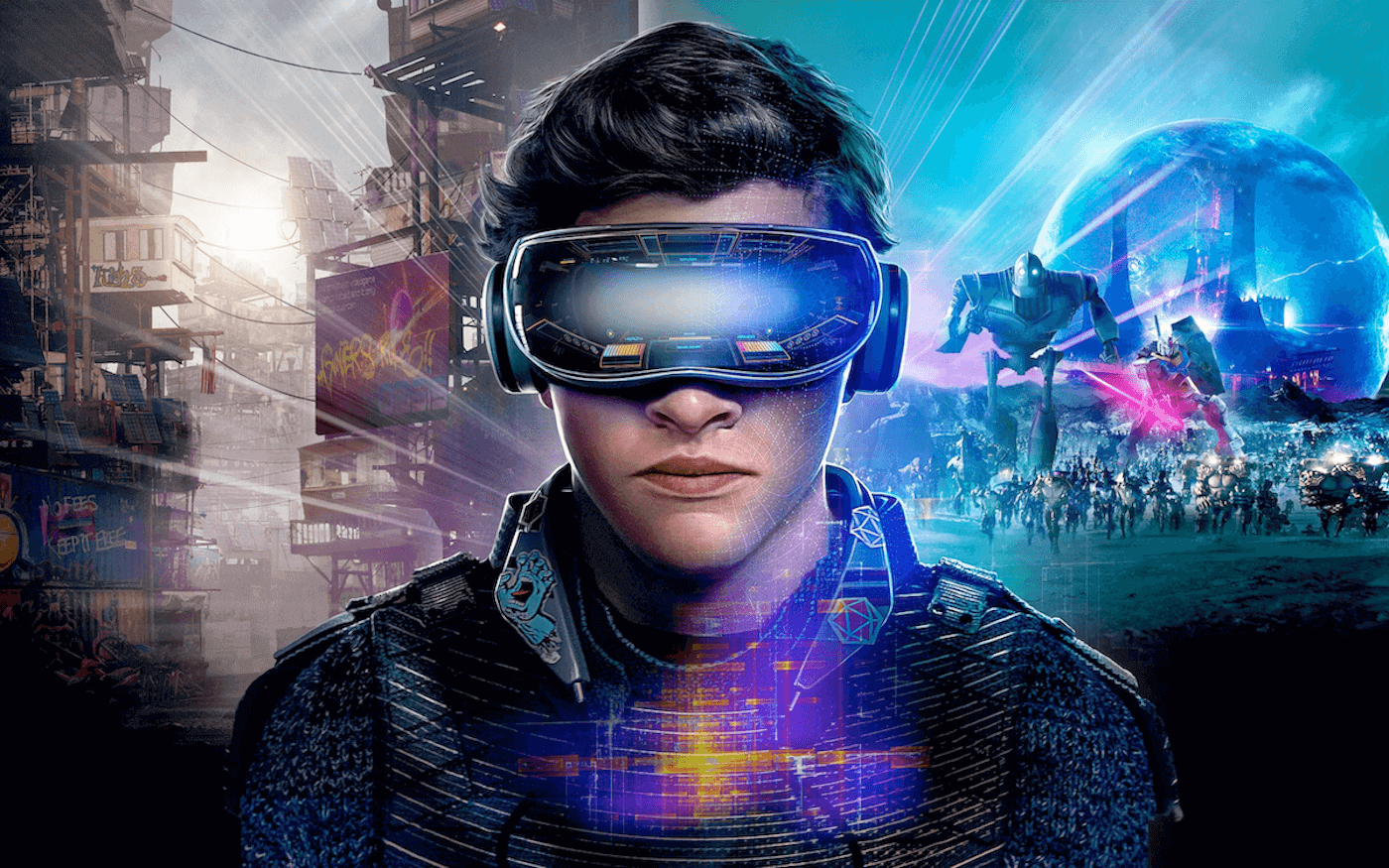
Virtual Reality is a technology that delivers fully immersive digital experiences where you can interact with computer-generated simulations as if you were physically present. Unlike traditional computing interfaces that confine digital content to flat screens, VR replaces your visual field with a three-dimensional virtual environment, transporting your sense of presence away from the physical environment and into the digital simulation.
The core concept behind VR lies in convincing your brain that you're experiencing a different reality. Through a combination of stereoscopic displays, spatial audio, and motion tracking, VR creates an embodied presence, the psychological feeling of actually being physically present in a simulation rather than observing it from the outside. This sense of presence makes VR a fundamentally unique medium compared to traditional 2D digital formats.
Today, VR has evolved from an experimental technology into high-value practical applications across gaming, education, healthcare, training, productivity, and social interaction. With consumer products like the Meta Quest 3 and Apple Vision Pro, VR is no longer a futuristic concept but a current technology reshaping how we interact with technology.
History of Virtual Reality
The term "Virtual Reality" was coined by Jaron Lanier in the 1980s, a computer scientist and entrepreneur who founded VPL Research, one of the first companies to sell VR hardware. Lanier's work established many fundamental VR concepts and demonstrated early applications in everything from surgical training to architectural visualization, laying the conceptual groundwork for modern VR experiences.
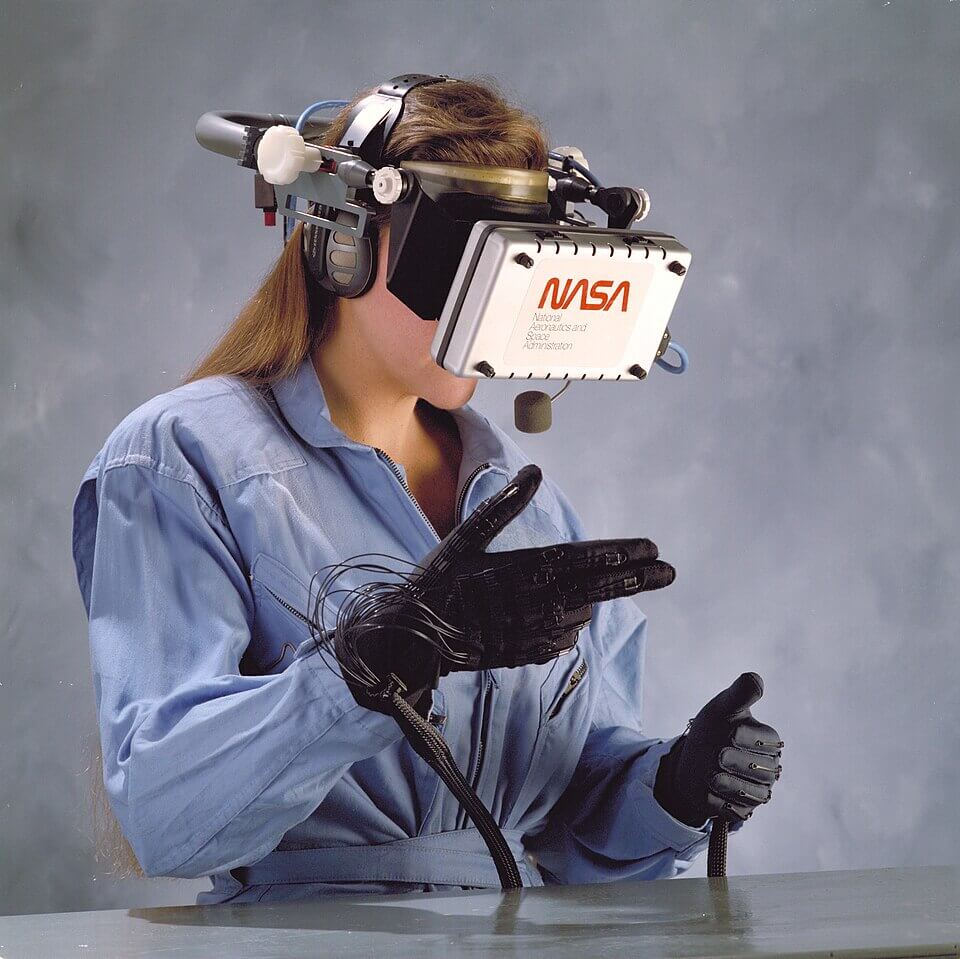
Major organizations including NASA, automotive manufacturers, and research institutions became early adopters of VPL's technology, using VR for training simulations, design visualization, and scientific research.
Key Milestones
The 2010s brought VR's renaissance with Palmer Luckey's Oculus Rift prototype. Working from his garage as a teenager, Luckey created a breakthrough headset using smartphone components to deliver high-quality VR at an affordable price point. The project gained serious credibility when legendary game developer John Carmack became involved. This collaboration led to a highly successful Kickstarter campaign in 2012 that raised $2.4 million, launching the current VR era.
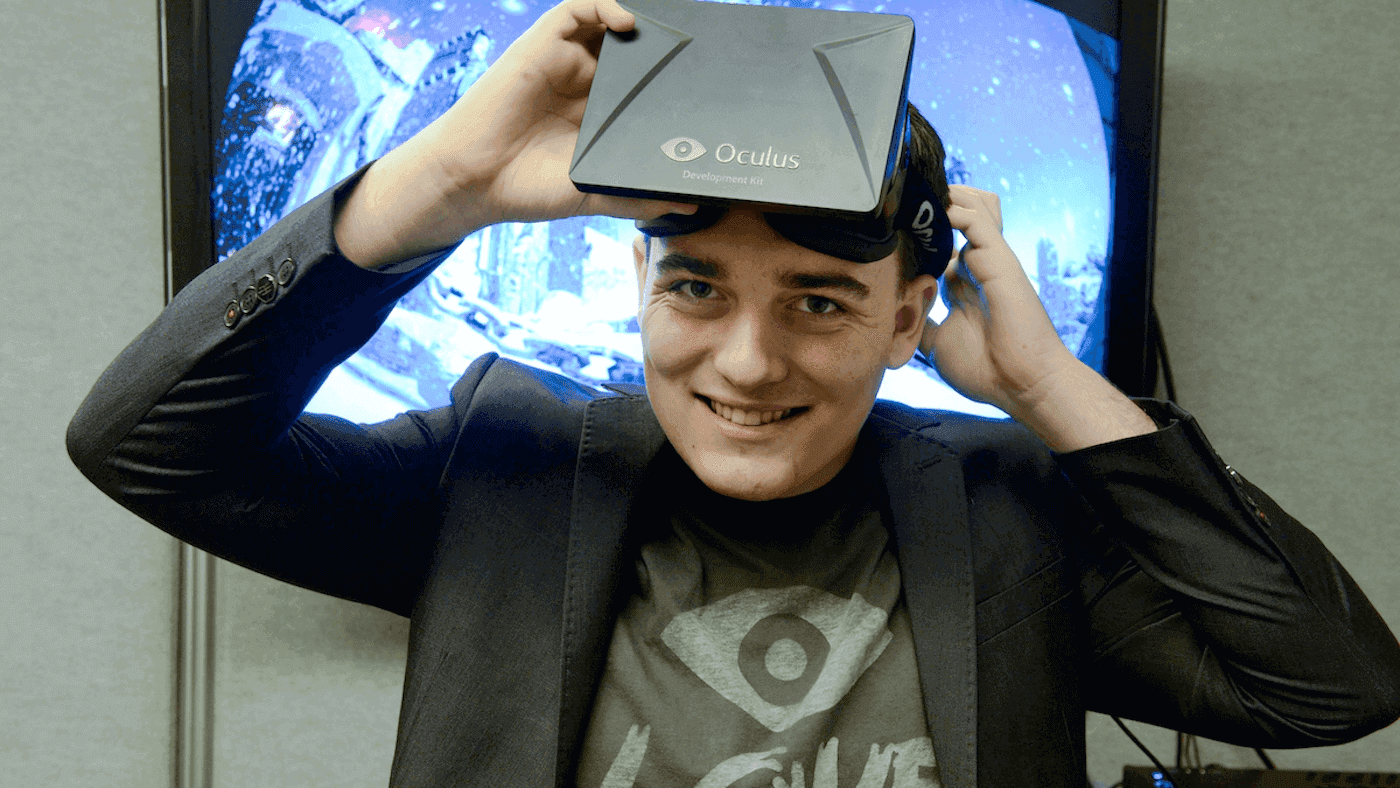
In 2014, Facebook acquired Oculus for $2 billion, showing serious industry commitment and hinting at the post-smartphone computing era. This acquisition sparked major industry interest as companies like Google, Sony, Valve, Snap, Lenovo, and others entered the VR market with their own headsets and platforms.
Apple's Vision Pro launch in 2024 completed VR's transition from experimental emerging technology to an established computing category. Today, Virtual Reality along with Augmented Reality fall under the technology category called Spatial Computing.
How Virtual Reality Technology Works
To create the illusion of embodied reality, VR systems need to solve complex technical challenges including: displaying high-fidelity visuals at high refresh rates, tracking your movements in real-time, and delivering spatial audio that matches the virtual environment.
Head Mounted Display (HMD)
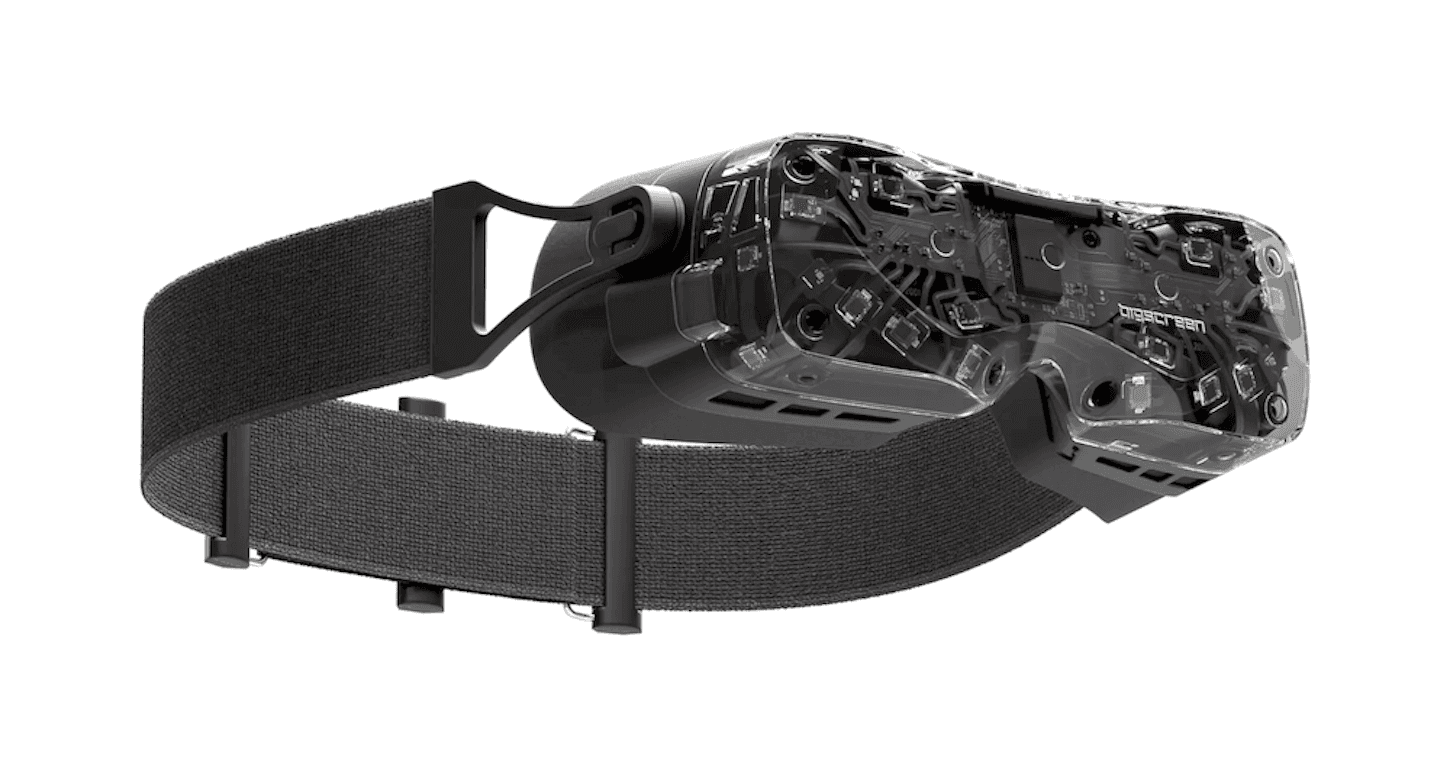
VR head mounted displays are the primary interface between users and virtual worlds, containing several key components working together to create immersive experiences.
Display Technology: Modern VR HMD use high-resolution OLED panels positioned close to the user's eyes. These displays run at 90Hz or higher refresh rates to prevent motion sickness and maintain smooth visual experiences. Each eye receives a slightly different image to create stereoscopic depth perception, like how human vision naturally perceives objects at distance.
Lenses: Fresnel or pancake lenses focus the display images while providing close distance between screens and eyes. Advanced lens designs minimize distortion and provide wider fields of view.
Spatial Audio: VR HMD integrate 3D audio systems that create realistic soundscapes where sounds appear to come from specific directions and distances within the virtual environment.
Tracking Systems
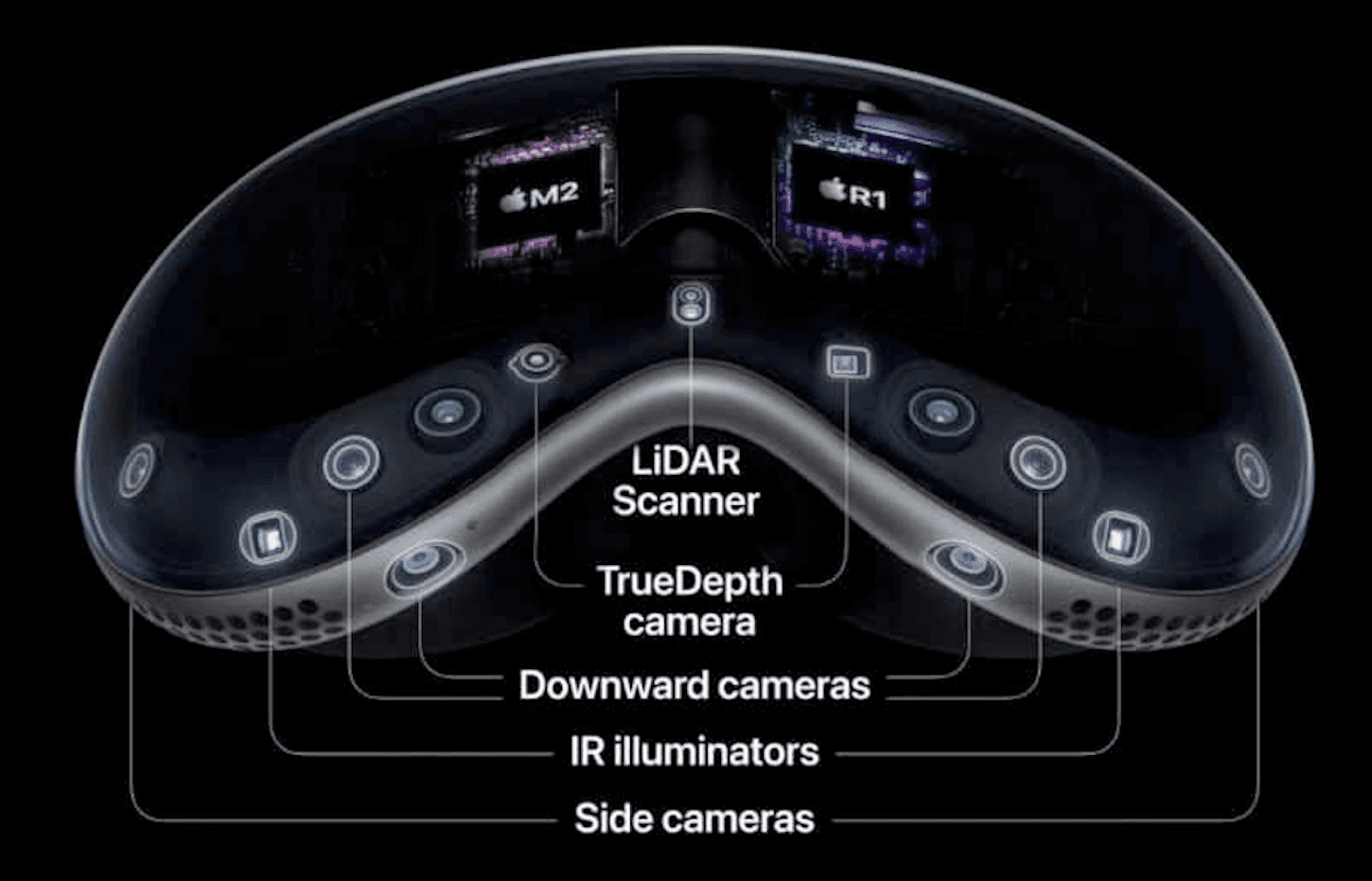
VR tracking systems monitor your head, hand, and body movements to keep the virtual world synchronized with your physical movements.
Head Tracking: Accelerometers, gyroscopes, and magnetometers track head rotation and movement with millisecond precision. This data enable real-time rendered environment to update instantly as users move their heads.
VR Motion Tracking: Most modern VR systems use inside-out tracking with multiple cameras mounted on the headset to track the user's position in physical space. Computer vision algorithms analyze camera feeds to track movement and map the surrounding environment.
Hand and Controller Tracking: VR controllers contain their own tracking sensors, while advanced computer vision algorithms enable hand tracking systems to recognize finger positions and gestures without requiring physical controllers.
Virtual Reality (VR) vs Augmented Reality (AR)
While often mentioned together as AR/VR, Virtual Reality and Augmented Reality are closely related technologies that share similar technical foundations but create fundamentally different user experiences. Understanding their differences helps determine which technology best suits specific applications.
Differences between VR and AR
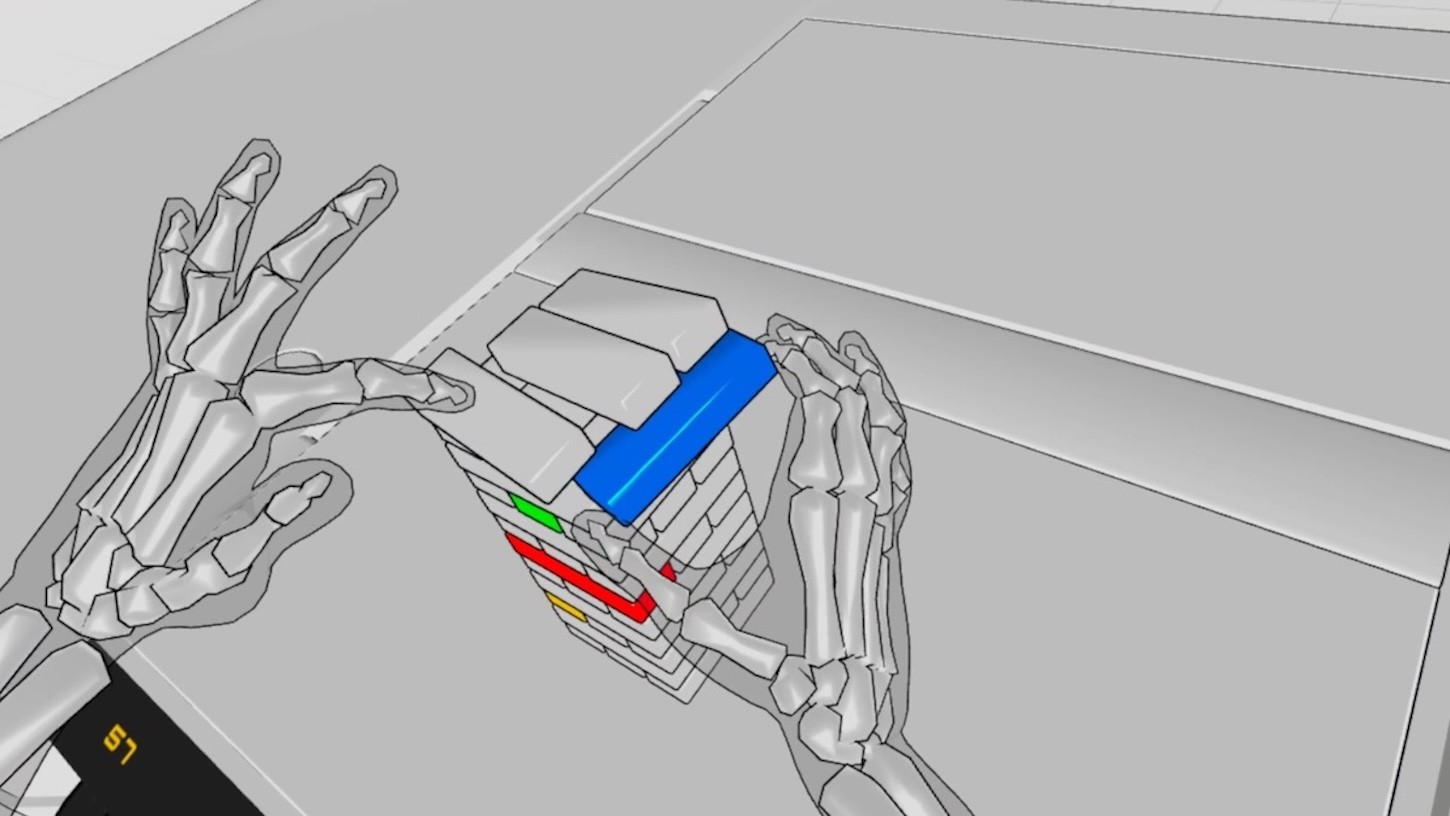
Virtual Reality completely immerses users in a fully simulated virtual environment, separated from physical reality. Users cannot see the physical world around them as they interact with 3D environments. These virtual experiences range from training simulators to social gaming, with users feeling fully embodied in these simulations.
Augmented Reality overlays digital elements, such as virtual screens, 3D holograms, or interactive data, onto the physical reality. Users remain in their physical environment while seeing digital content overlaid on their surroundings. AR applications display virtual objects that appear to exist in real space while maintaining visibility of the physical world.
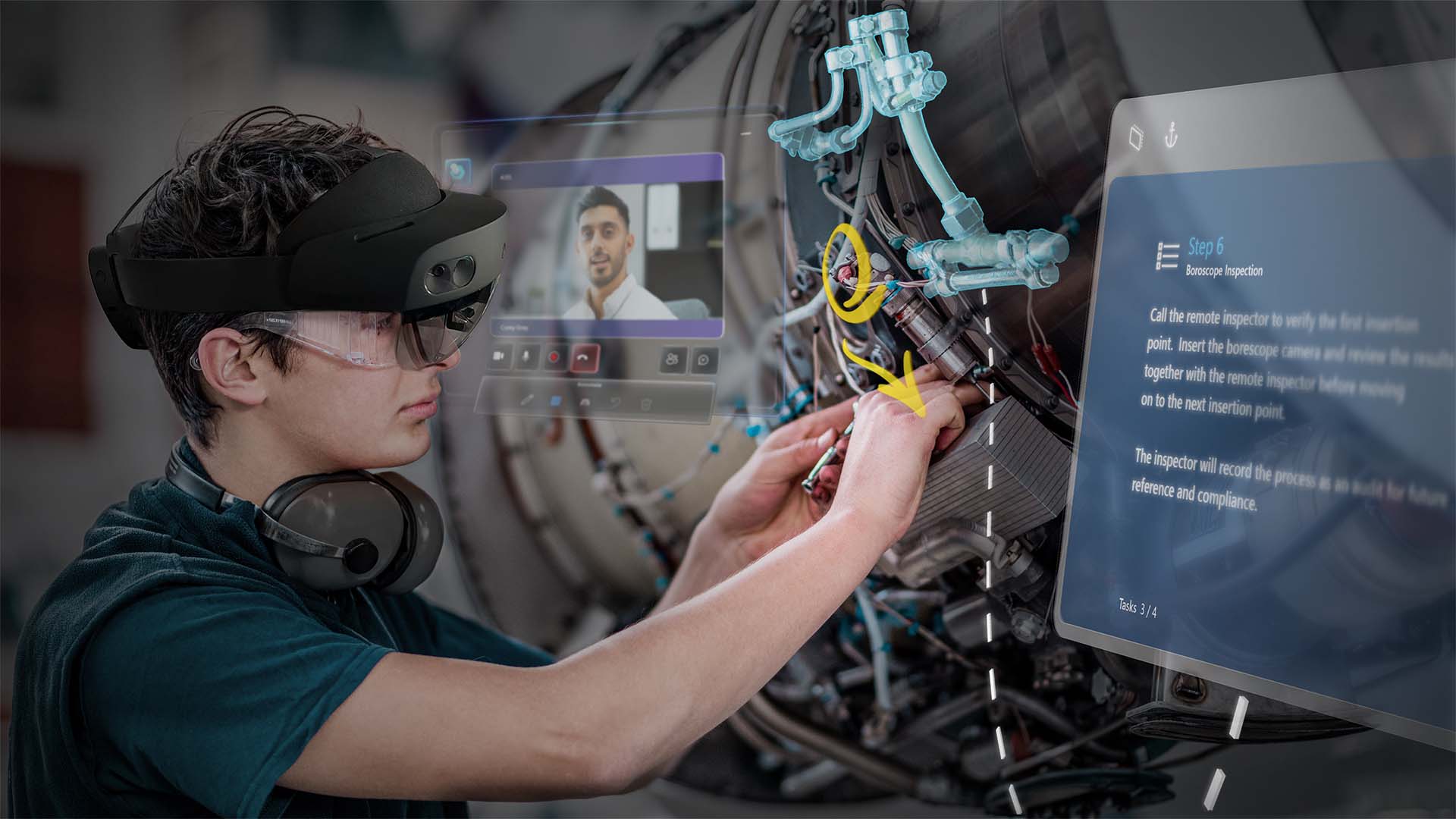
Many technical components are similar between both technologies but the main difference is in the level of immersion and interaction with physical reality. VR creates presence in virtual spaces by replacing your entire visual field, while AR enhances physical spaces by adding digital layers to what you already see.
Mixed Reality is a technical term used in the industry to describe the blend of both virtual reality and augmented reality in the same application or HMD, creating an environment where physical and virtual elements can interact in real-time. Unlike VR's complete immersion or AR's digital overlays, mixed reality enables digital objects to understand and respond to the physical environment around them.
Extended Reality (XR) and Spatial Computing
There are several umbrella terms that encompass Virtual Reality and Augmented Reality. Extended Reality (XR) is commonly used in the technology industry as a technical term covering Virtual Reality, Augmented Reality, and Mixed Reality technologies collectively.
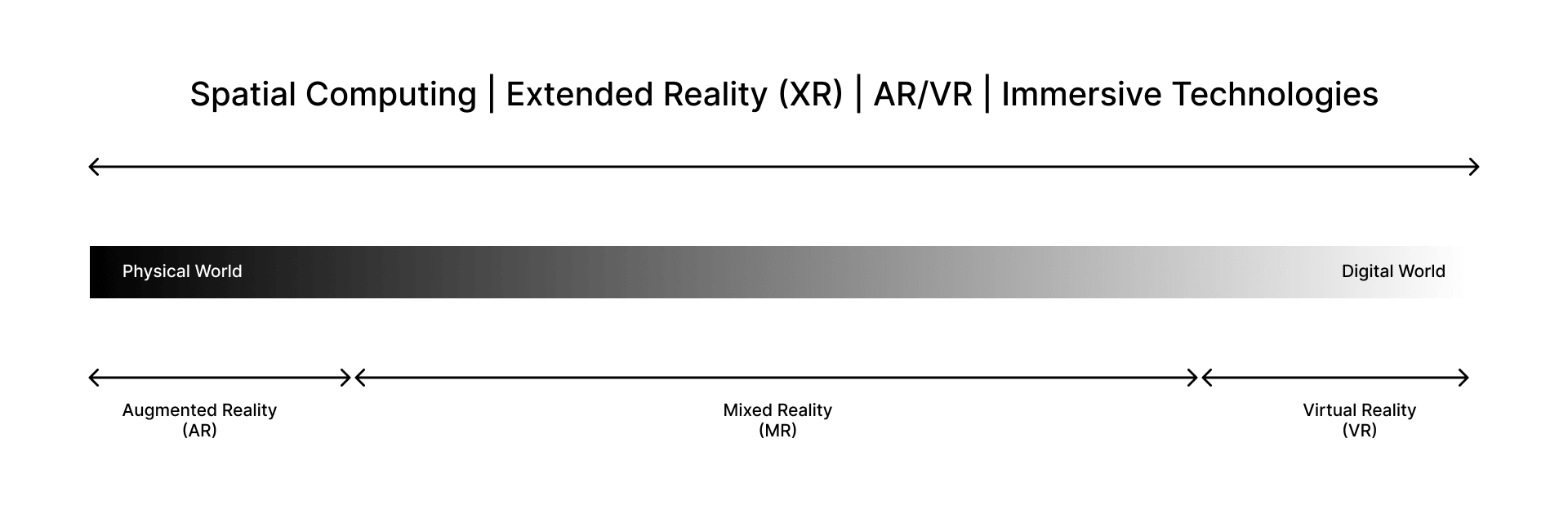
In recent years Spatial Computing has emerged as the primary umbrella term, popularized by Apple with the Vision Pro launch. Spatial Computing is a synonym to XR as it refers to technologies that enable humans to interact with computers in three-dimensional spaces, blending digital content with physical environments.
These umbrella terms help standardize industry language and reduce confusion when discussing immersive technologies like AR and VR. Whether called AR/VR, XR, Spatial Computing, or Immersive Technologies, they all describe the category of technologies that enable us to interact with computers in a spatial medium.
Virtual Reality Applications Across Industries
Across all industries, companies are adopting Virtual Reality to reshape how they operate, train, consume data, tell stories, socialize, and engage with customers. VR applications now span everything from healthcare and education to retail, gaming, entertainment, and manufacturing, demonstrating the technology's broad commercial viability. For further reading, see our list of Best Virtual Reality Companies by Category or for development-specific companies Top Virtual Reality VR Development Companies.
Gaming
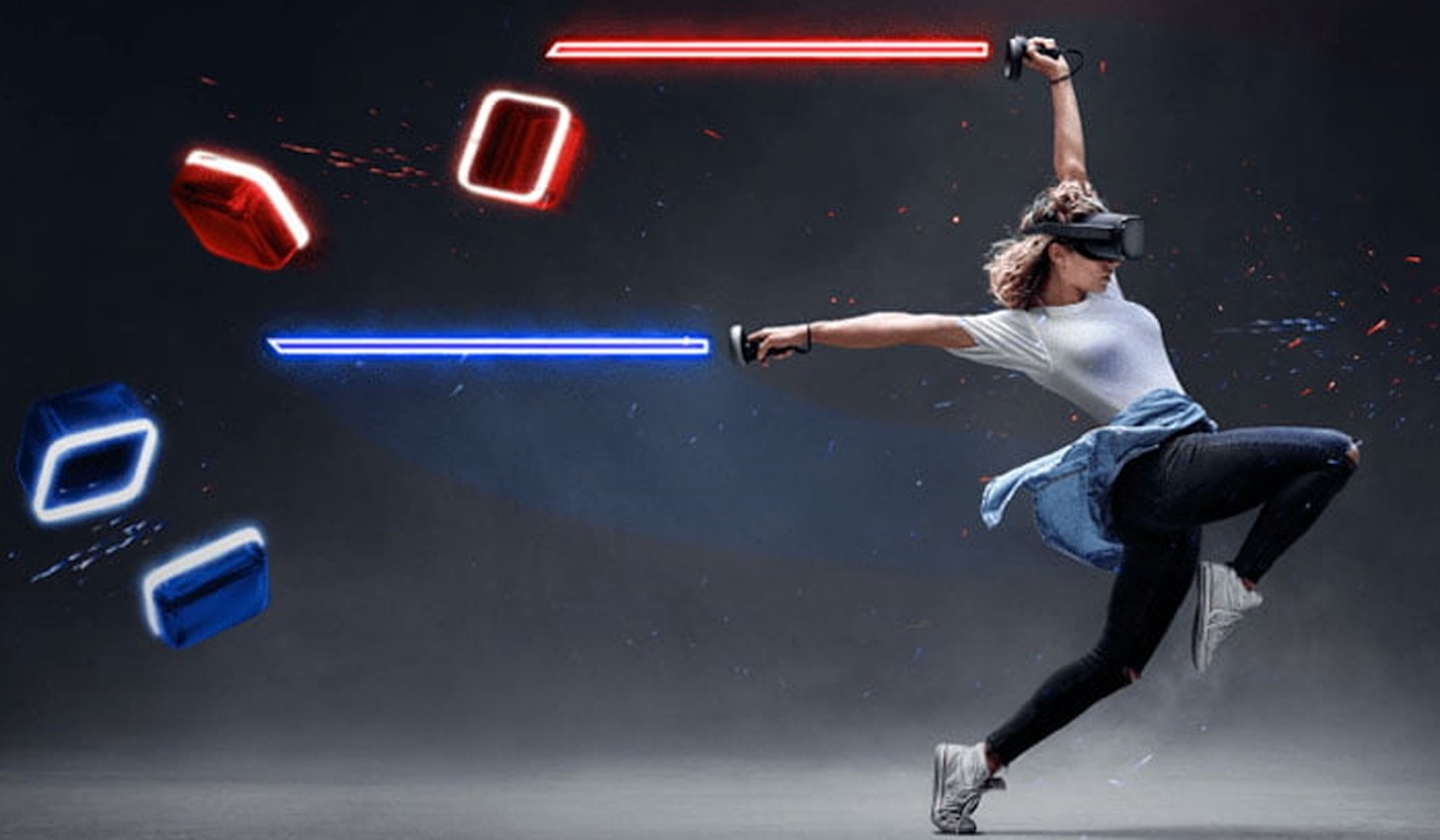
Gaming remains VR's most widely adopted application, creating entirely new categories of interactive experiences and gameplay. VR games leverage movement through titles like Beat Saber and Pistol Whip.
The industry has produced VR blockbusters including Half-Life: Alyx, which showcased AAA production values in VR, and social games like Gorilla Tag and Population: One that are played by millions of users daily.
Competitive VR gaming creates new esports categories emphasizing motor skills alongside cognitive abilities. E-sports like Nock and DISC require spatial awareness and physical coordination, showcasing human athletic ability in virtual environments.
Education and Training
Virtual Reality transforms education and training by allowing learners to experience concepts firsthand rather than just study them through traditional methods.
Companies like Transfr are leading this space, providing high-skill training and career exploration VR programs that help students and job seekers find pathways to upward mobility through modern workforce education.
Research shows VR improves learning retention rates and engagement compared to traditional instruction methods.
Retail
Retail brands are using Virtual Reality to create immersive brand activations and shopping experiences that connect with buyers at a deep and emotional level. Companies like Ulta Beauty deploy VR brand experiences featuring partners like Ariana Grande, while luxury brands like Gucci developed "The Gucci Story" experience for Apple Vision Pro, where users immerse in the story of their brand and can engage with the latest collection.
These immersive brand activations create new touchpoints for customer engagement, allowing retailers to tell their brand stories in ways that traditional marketing cannot achieve. VR enables brands to reach global audiences with exclusive, memorable experiences that would be impossible in physical retail spaces.
Remote Communication
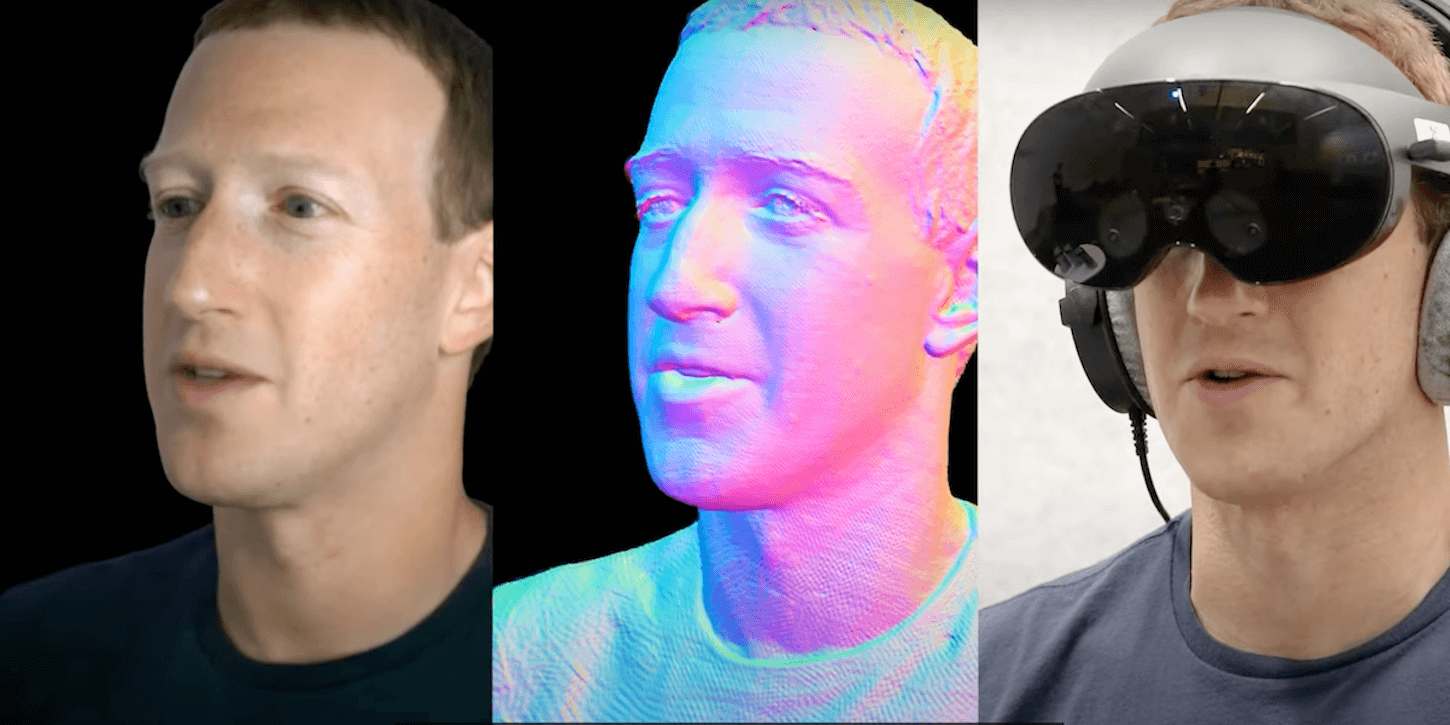
The next generation of VR technologies for remote communication was showcased in Lex Fridman's podcast with Mark Zuckerberg, where they did a podcast in VR that according to Lex felt: "I'm forgetting that you're not real. This really feels like we're in the same room. It feels like a totally fundamentally new experience."
Tools like Meta Workrooms, Apple's personas, and Spatial.io enable remote communication that feels much closer to human communication than traditional tools like Zoom.
VR communication tools enable remote teams to collaborate through immersive, presence-based interactions. Organizations report improved team cohesion and project outcomes when incorporating VR into distributed work environments. Companies like Accenture pioneered enterprise adoption, having deployed VR devices at scale to enhance remote collaboration and communication across their global workforce.
Art
Virtual Reality introduces a new medium for artistic exploration and expression, enabling artists to create experiences that were previously not possible. This medium allows the audience to step inside artworks and interact with creative environments in physically unbounded ways and from points of view previously not explorable.
Some artists and projects pioneering the space include:
The Museum of Other Realities, an online virtual reality museum showcasing new forms of art installations and exhibitions
Modules, a story-driven VR exhibition that explores architectural ideas beyond physical constraints.
Lucas Rizzotto, experimental VR artist who explores how technology shapes the way humans connect with each other and with themselves.
Notes on Blindness, a VR storytelling experience that taps into the deepest levels of empathy of unique human experiences.
Culture, Heritage and History
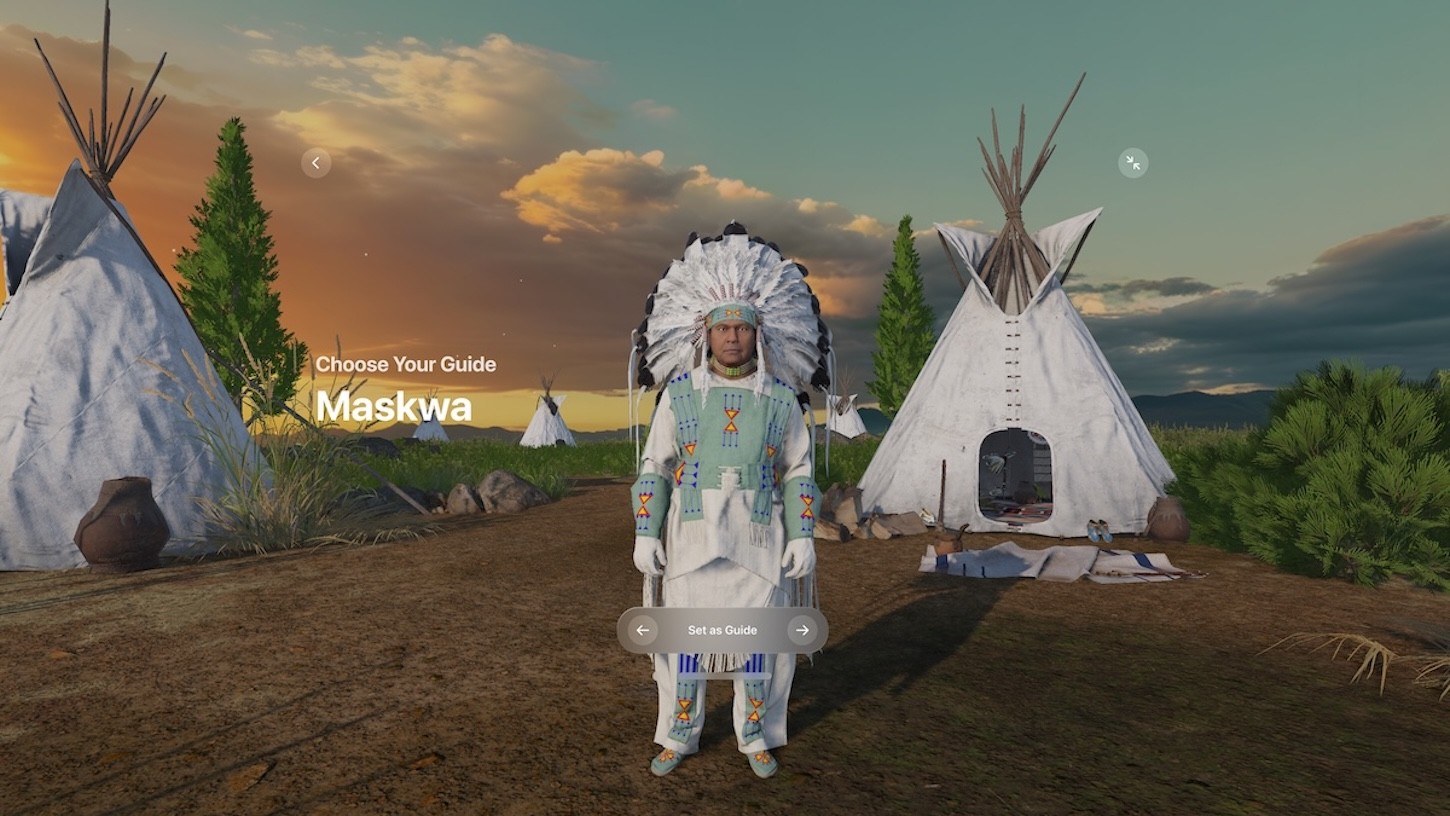
VR is being used as a medium to preserve cultural heritage and bring history to life through immersive experiences. Projects like The Treaty Story digitally archive First Nation Cree culture and knowledge, while immersive documentaries like D-Day: The Camera Soldier offer an interactive documentary experience that transports viewers to the historic D-Day landings.
These applications preserve cross-generational access to cultural heritage and historical events, ensuring future generations can experience and learn from traditions and lessons that might otherwise be lost forever.
Healthcare
Healthcare companies are adopting VR across multiple verticals. Medical device companies like Medtronic deploy VR for surgical training, while companies like Daiichi-Sankyo and Abbott leverage it for customer experience and patient education. These VR applications span patient onboarding, medical education, product training, and customer engagement, creating new touchpoints throughout the entire healthcare industry.
Social Platforms
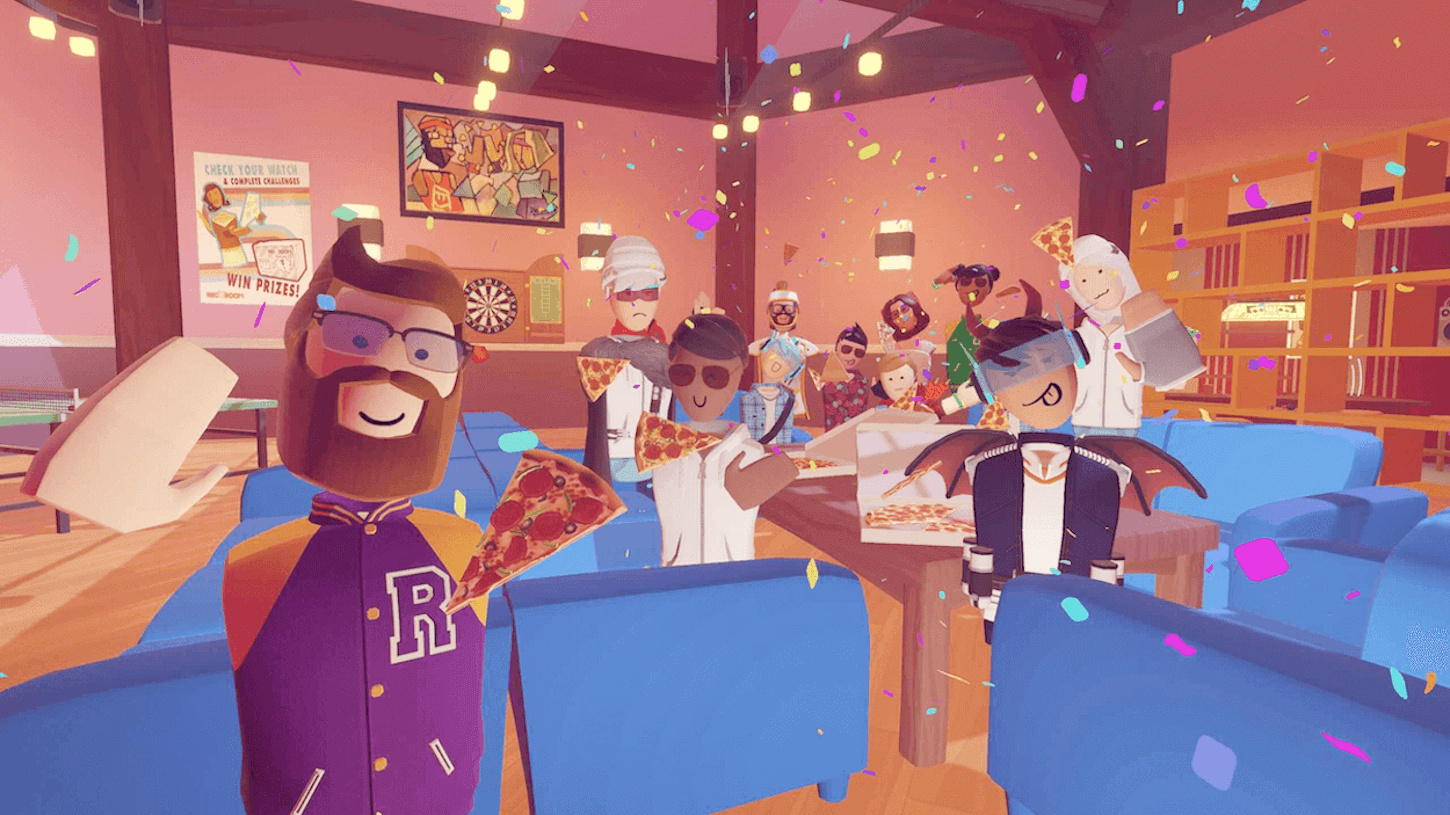
Platforms like VRChat and Rec Room have evolved into massive social environments with millions of users who gather in virtual reality to interact in entirely new ways. These virtual worlds enable users to create personalized avatars, explore user-generated content, and participate in activities ranging from casual conversations to massive virtual events.
Virtual Reality social platforms create meaningful social experiences around the globe, with users forming communities around shared virtual experiences. These platforms showcase VR's ability to create new forms of social interaction that have more depth and feel more powerful than traditional online communication tools.
Entertainment

VR delivers immersive entertainment experiences that place audiences directly inside the scene. Immersive videos and 360-degree content transport viewers into concerts, sports events, and cinematic stories, providing cinematic presence and freedom of observation. These immersive experiences unlock new forms of storytelling and audience engagement, creating entertainment possibilities that extend far beyond what traditional screens can deliver.
Military
VR delivers advanced military defense applications through immersive simulation environments that prepare personnel for real-world scenarios. Meta partnered with Palmer Luckey's Anduril Industries to develop the "EagleEye" system for the U.S. Army, marking Meta's strategic entry into defense markets after reversing its policy against military applications.
Companies like Palantir have developed Virtual Reality platforms that integrate with military command centers, providing 3D visualization of intelligence data and AI-powered insights across multiple VR devices.
These defense applications span combat training simulations, medical emergency preparedness, and strategic planning environments, creating new capabilities for military readiness while driving significant revenue opportunities in the expanding defense technology sector.
Fitness

VR fitness applications make exercise engaging and fun by combining physical activity with gaming elements. Users train, box, dance, and play sports in virtual environments that track movements and provide performance feedback. Popular platforms like FitXR and Supernatural offer workout programs that gamify fitness routines.
Studies comparing VR fitness platforms to traditional exercise show comparable or superior calorie burn and engagement rates. The gamification of exercise helps users build consistent fitness habits through achievement systems and social competition.
Virtual Reality and Artificial Intelligence
The intersection between VR with AI is starting to happen and opening up new discoveries and new categories of use cases and applications. This integration creates one of the most promising directions for VR development and application capabilities.
Computer Vision and Machine Learning
Computer Vision and machine learning have been foundational to VR technology, serving as the underlying technology behind tracking systems that enable spatial anchoring, hand tracking, and environmental mapping. These AI technologies form the technical foundation that makes VR technology possible.
AI-Driven VR Experiences
AI-driven VR experiences are beginning to emerge with intelligent Non Player Characters and real-time generated content, providing a new category of immersive experiences that adapt and respond dynamically to user behavior.
AI-Powered Development and Content Creation
AI is driving speed and agility in the development and content creation process of Virtual reality studios, enabling boutique teams like Treeview to deliver more impact to compete with larger professional service companies like Accenture and Deloitte.
Challenges of Virtual Reality
Despite major advances, VR faces several obstacles that impact mass consumer adoption. Addressing these challenges remains crucial for the health of the ecosystem and VR's continued growth and mainstream adoption.
VR Motion Sickness
VR Motion Sickness has mostly been addressed but remains a barrier to some new VR users, affecting 20-30% of new users to varying degrees. The disconnect between visual motion and physical stillness may trigger nausea and discomfort in susceptible individuals.
Technical solutions include higher refresh rates, reduced latency, and comfort settings that limit artificial locomotion. Individual tolerance varies significantly, with some users adapting over time while others remain consistently sensitive.
As screen resolution and processing power continue to improve and devices become lighter, this challenge will continue to diminish.
Privacy and Security
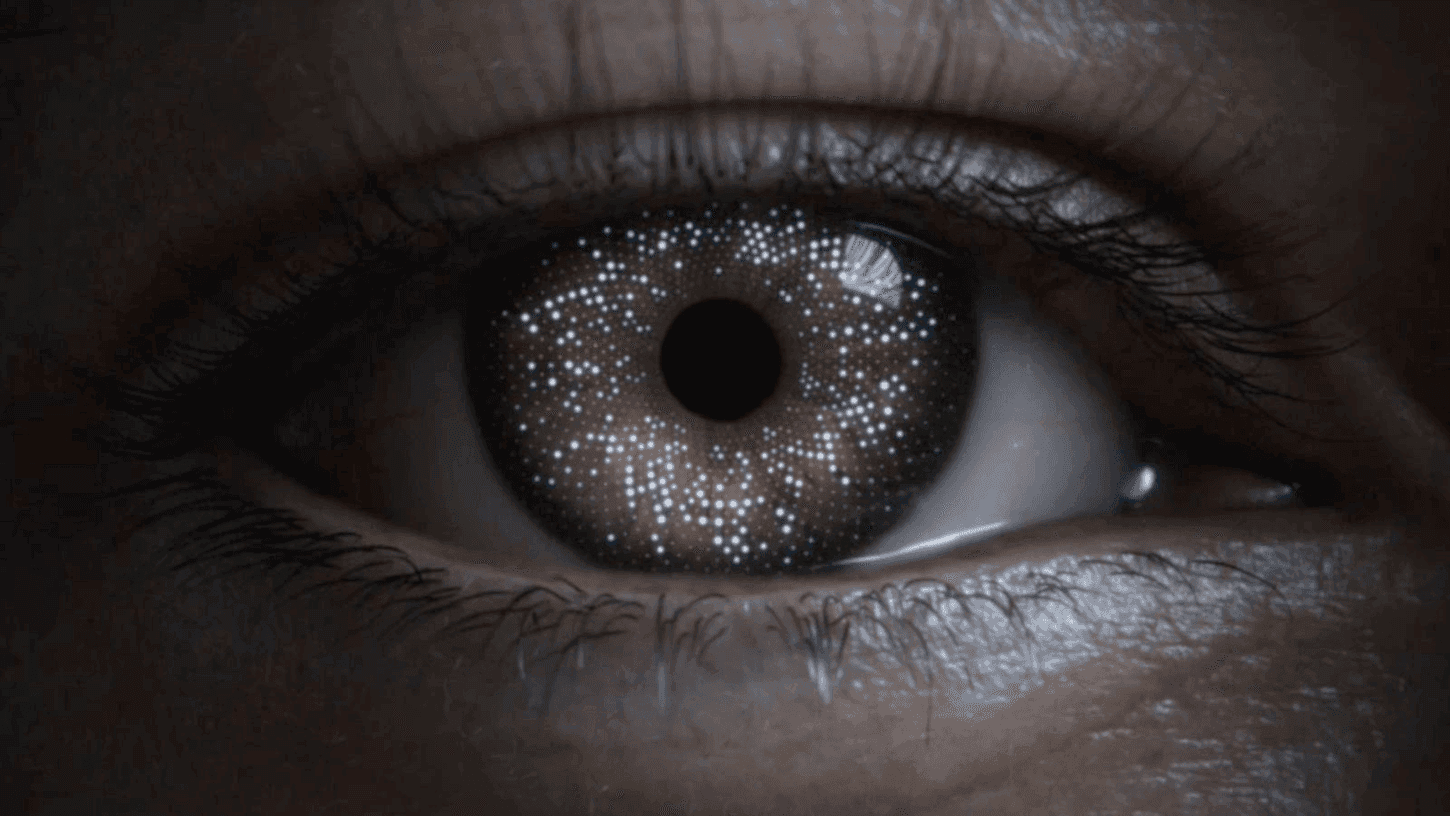
VR systems collect detailed biometric and behavioral data, including eye movements, hand gestures, and spatial behavior patterns. This intimate data raises concerns about privacy protection and potential misuse of behavioral and biometric data.
Biometric data safety is particularly important as VR headsets can track physiological and psychological responses and movement characteristics that could reveal sensitive personal information about users' mental health, emotions, and behavior patterns. Eye tracking, movements, and attention patterns provide intimate insight into user behavior and preferences.
Clear privacy policies, platform guardrails, and user control over data collection help address these concerns, but regulatory frameworks for VR privacy protection continue evolving.
There is a fine balance to take into account in enabling more innovation around these unique platform capabilities while balancing privacy and security for the ecosystem's users.
Safety and Harassment
Virtual Reality's immersive nature can make inappropriate behavior feel more invasive and distressing than in traditional online spaces. Sexual harassment and unwanted interactions have been reported.
Major platforms and VR app developers have implemented safety measures including personal boundary systems, mute and block functions, and reporting tools to help users protect themselves from unwanted interactions.
Mass Adoption
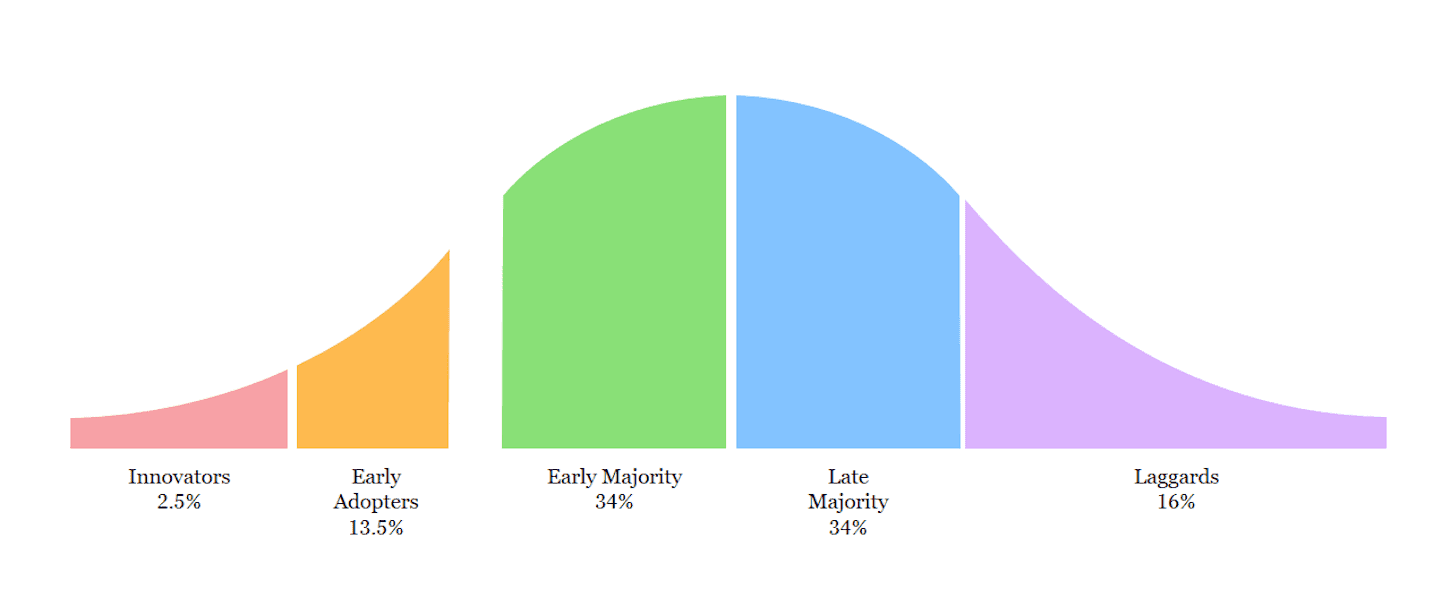
Mass adoption of VR technology faces challenges that extend beyond pricing or hardware limitations. The current software ecosystem consists primarily of single use-case applications, lacking the universal software tools that drive broad consumer adoption like Word, Excel and PowerPoint for personal computers or social media and chat for smartphones.
VR currently has no equivalent universal applications that provide broad utility across infinite use cases and scenarios. Some in the industry call this the "killer app." Many startups and enterprises are working hard to discover this, which is just a matter of time and has historically happened with a combination of new technology paradigm shifts happening at once.
This pattern mirrors the early adoption of personal computers in the 1980s, when the technology initially thrived in enterprise, gaming, and specific use cases. It was not until the late 1980s with the introduction of universal software like Excel, PowerPoint, and Word, along with the new technological paradigm of the internet, that personal computers really began to achieve mass consumer adoption.
Future of Virtual Reality
VR is advancing at an incredibly fast pace, creating a blue ocean of business opportunities across multiple industries. The rapid technological development and expanding applications present vast potential for innovation, entrepreneurship, and market growth in this emerging ecosystem.

Technological Advances
Each new generation of head-mounted displays becomes lighter, more powerful, and introduces new capabilities that open additional use case possibilities for creating new categories value. This trend has been consistent with a new generation of devices launching approximately every 2 years since the first Oculus Rift DK1 on Kickstarter.
We should expect a similar rate of advancement over the next several years, with each hardware iteration unlocking new applications and business opportunities that were previously not feasible with earlier generations.
Market Growth and Opportunities
The VR market continues expanding across consumer and enterprise marks, with enterprise applications showing particularly strong growth in training, productivity, education, collaboration, and data visualization use cases.
Investment in Virtual Reality (VR) development remains strong, with funding directed toward enterprise solutions, social platforms, gaming, and AI-enabled applications. Big tech companies continue to drive significant R&D and investments in VR technologies, led by Meta, Apple, Google, and Bytedance.
As hardware costs continue decreasing and software quality improves, VR will transition from early adopter technology to mainstream computing platform, fundamentally changing how we work, learn, and interact with digital content.
The combination of VR with other emerging technologies like AR smart glasses, AI, robotics, and blockchain-powered digital economies will unlock new applications and use cases that will drive immense progress, innovation, and economic growth in the years to come. To stay updated on these innovations, check out the top thought leaders and experts in Virtual Reality to follow.
Wrapping Up
This complete guide on virtual reality has covered all the key topics you need to have a high-level understanding of what the technology is, how the it has developed, the industries where we’re seeing most adoption and success and with the massive business opportunities ahead.
As we transition into the next technological generation, it’s important to be aware of how these independent technologies are coming together to shape what comes after the smartphone generation.
If you’re ready to build for virtual reality, consider partnering with Treeview, one of the world’s leading virtual reality studios, trusted by enterprise leaders like Microsoft, Medtronic, Daiichi-Sankyo, ULTA Beauty, and the University of Alberta.
If you’re ready to build VR, let’s talk.
If you have any additional questions see our FAQ or reach out for a chat.