Virtual Reality is delivering strong return on investment (ROI) across industries, driving high demand for expert VR development partners. The success of your VR investments depends heavily on selecting the right vendor with proven expertise and execution capabilities, whether you're building custom training programs, immersive collaboration tools, or data visualization platforms.
While there are many leading companies in the virtual reality industry, this guide focuses specifically on the top VR development companies, agencies, and studios available for hire in 2026. Finding which firms have the right combination of technical capabilities and relevant experience determines project outcomes.
Bottom Line: The leading VR development companies of 2026 combine deep technical expertise with specialized industry knowledge, delivering custom solutions that drive measurable business impact.
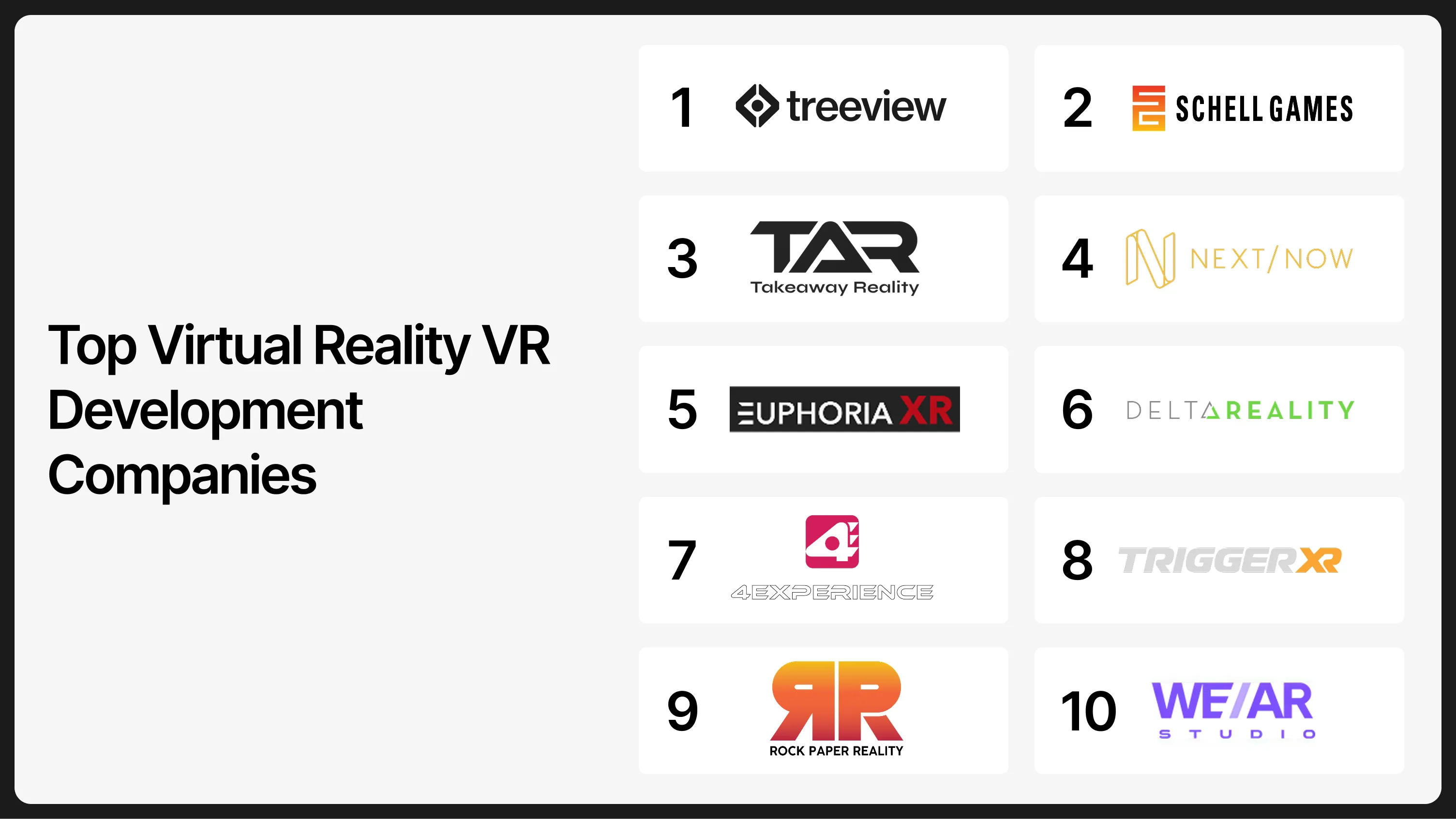
Leading VR Development Companies
The following list ranks the top 10 VR development agencies based on technical capabilities, service quality, industry experience, and proven results in delivering successful custom virtual reality solutions across diverse business applications.
List of Top 10 Virtual Reality Development Companies
Treeview
Schell Games
Takeaway Reality
Next/Now
Euphoria XR
Delta Reality
4Experience
Trigger
Rock Paper Reality
WE/AR Studio
1. Treeview
Location: New York City
Estimated Rate: $100–$150/hour
Established: 2016
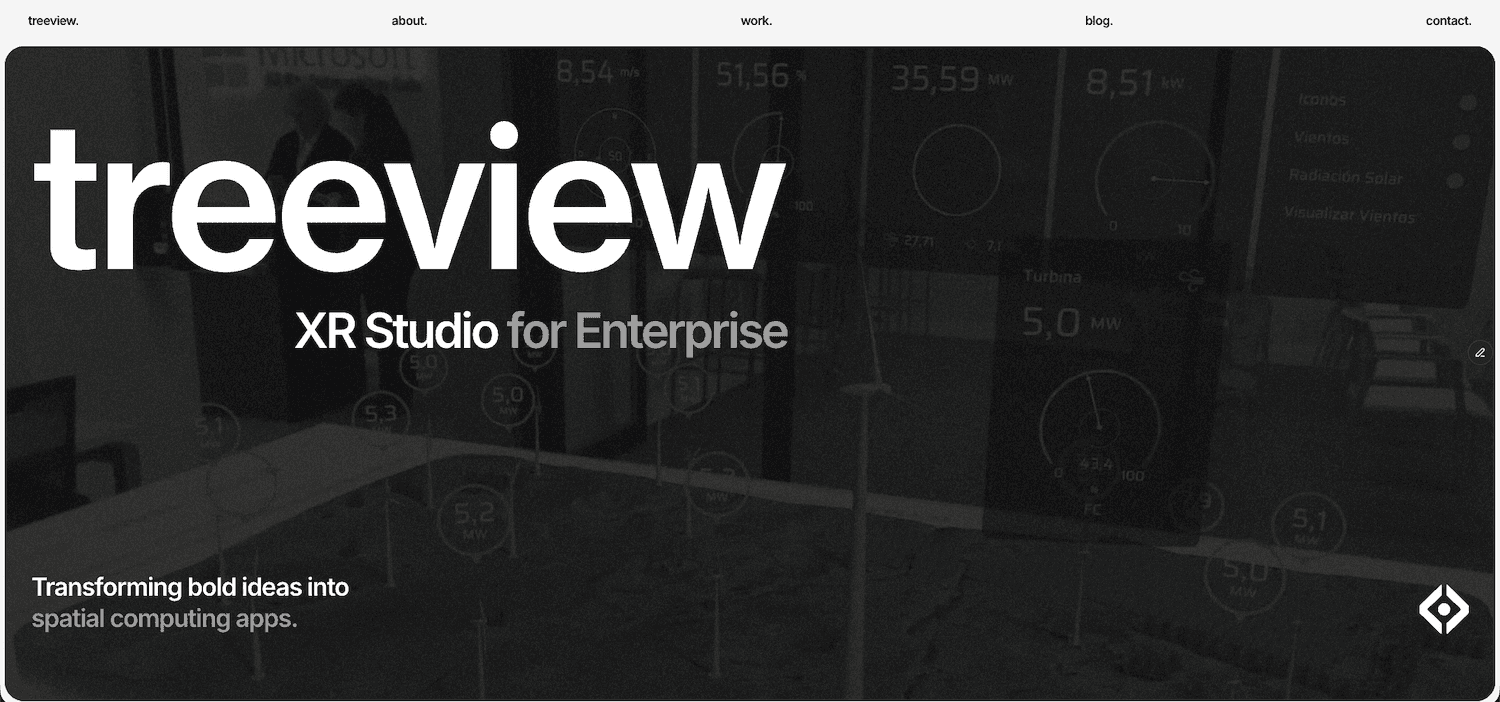
Treeview stands out as the industry’s premier VR development studio, specializing in high quality virtual reality and augmented reality solutions for enterprise clients. Since 2016, they have built an impressive portfolio working with over 40 clients, including major organizations like Meta, Microsoft, ULTA Beauty, Medtronic, Daiichi-Sankyo and NEOM.
What sets Treeview apart is their focus on driving business value through deep discovery to understand why VR, their obsession with high-quality work, and their startup speed and adaptability when working with larger enterprise customers. Treeview delivers end-to-end AR/VR applications that drive real business results and help establish their clients as technology innovators and leaders in their respective industries. For additional information, visit Treeview's FAQ.
2. Schell Games

Location: Pittsburgh, Pennsylvania, USA
Estimated Rate: $100–$150/hour
Established: 2002
Schell Games is an immersive game development studios, best known for high-quality game design for virtual reality, augmented reality, and mixed reality. Founded in 2002 by Jesse Schell, the studio has built a reputation for combining deep technical execution with behavioral science, learning design, and long-term engagement strategy.
The studio has worked with organizations such as Meta, Google, Disney, Microsoft, the U.S. Department of Defense, and leading healthcare and education institutions. Their portfolio includes influential VR experiences like I Expect You To Die, Among Us 3D, Party Versus and Until You Fall.
3. Takeaway Reality
Location: United Kingdom (London)
Estimated Rate: $50-$99/hour
Established: 2020
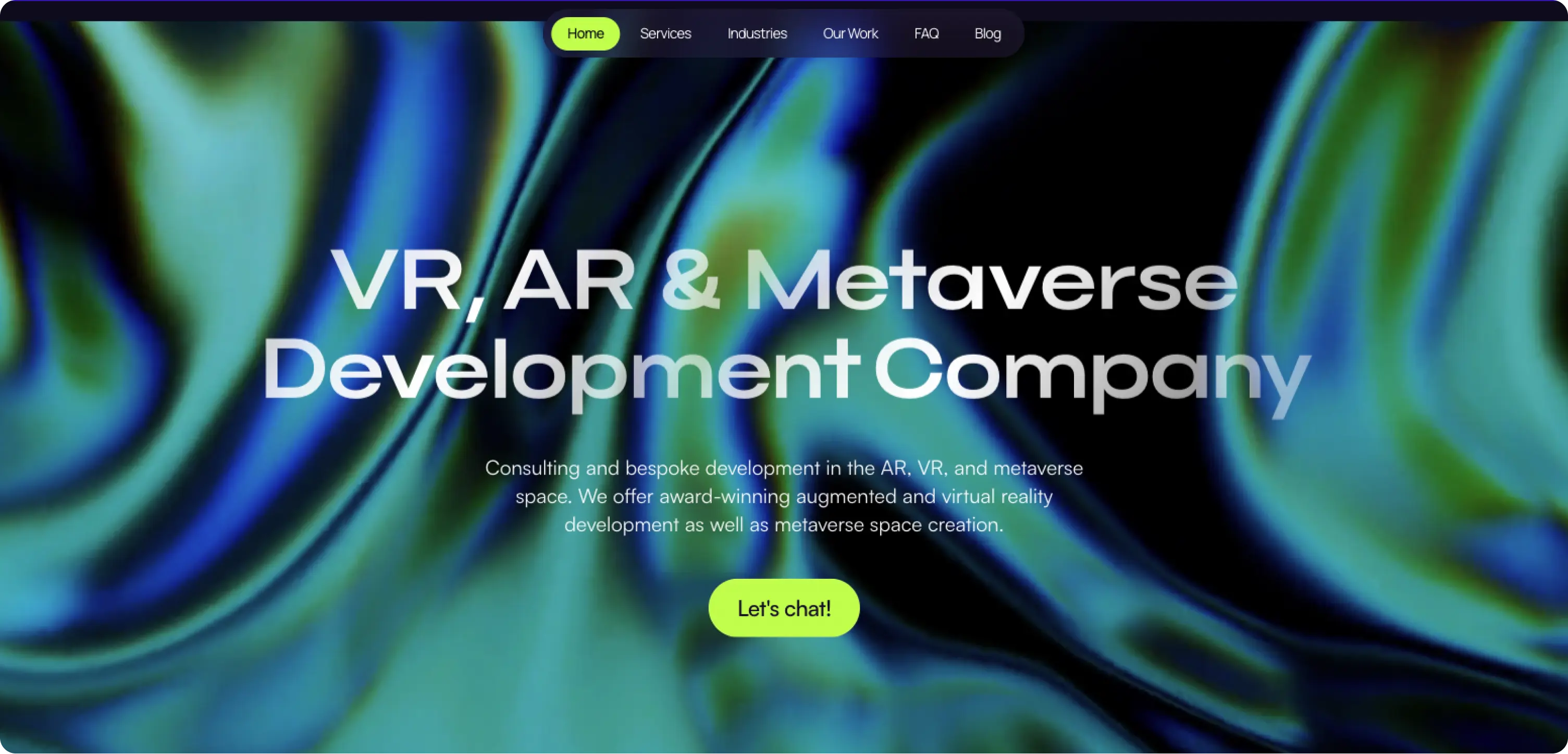
Takeaway Reality is an VR, AR & Metaverse Development Company specializing in Augmented Reality, Virtual Reality, and WebAR/WebVR apps for marketing, training, and interactive brand experiences. The company focuses on making immersive technology accessible to businesses through practical, deployment-ready solutions rather than experimental prototypes.
Takeaway Reality has delivered XR projects for brands such as Microsoft, Peugeot and Ford, working across industries including retail, automotive, education, and enterprise training. Their portfolio spans AR product visualizations, immersive brand activations, and VR training simulations designed for scalable rollout.
4. Next/Now
Location: Chicago, Illinois
Estimated Rate: $175–$300/hour
Established: 2011
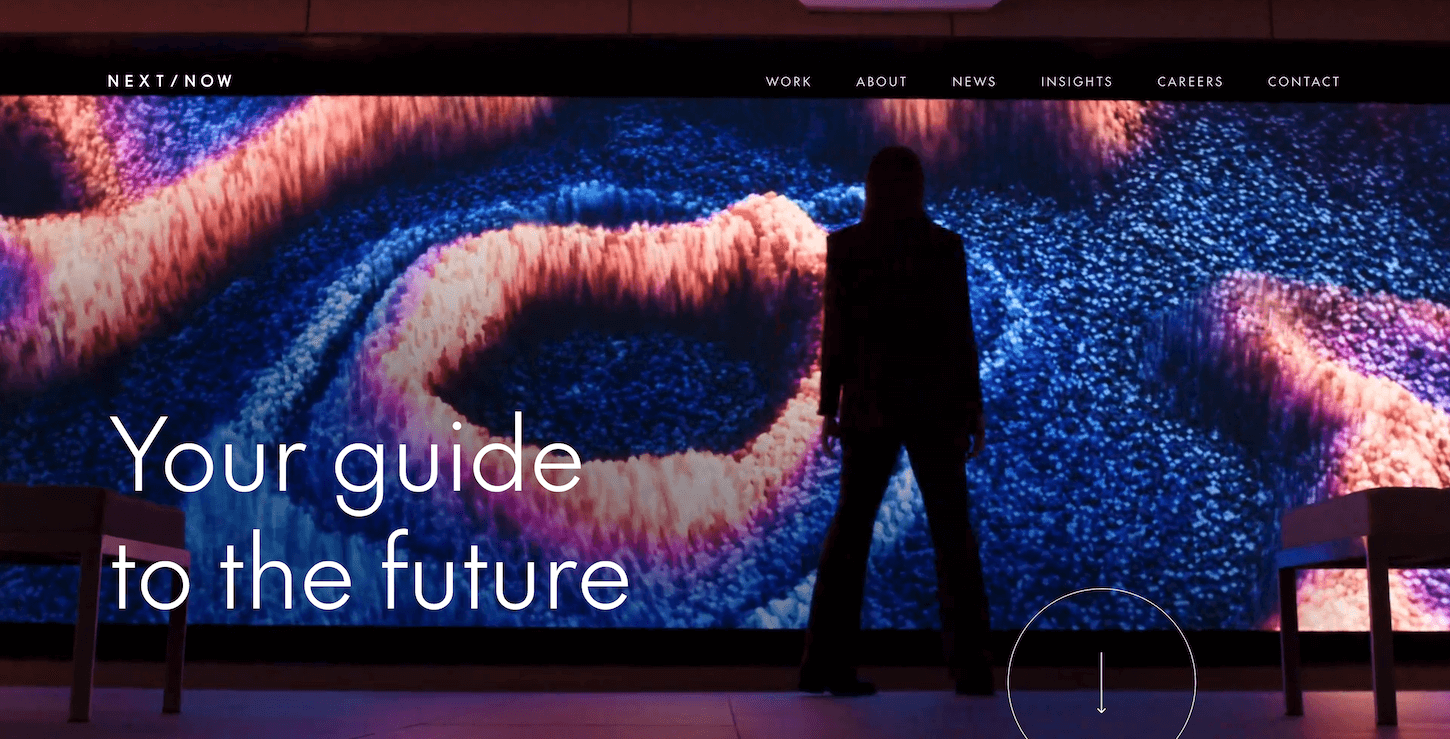
Next/Now is an innovation agency specializing in experience design for visionary leaders intent on meaningfully shaping the future. They are a creative technology agency that produces next-generation digital/physical experiences for brands using virtual reality, natural user interfaces, gesture and motion interactivity, innovative display concepts, and breakthrough technology to create unforgettable moments of connection between people and organizations.
Their team hails from diverse disciplines, spanning brand development, museum management, and computer science to high-level video game development. Current clients include: Cubs, United Airlines, Intel and Whirlpool. They specialize in VR, AR, Projection Mapping, Multi-Touch, Gesture Control, Motion/Facial Tracking, 360˚ Video, Hologram, and emerging tech.
5. Euphoria XR
Location: United Kingdom
Estimated Rate: $25–$49/hour
Established: 2016
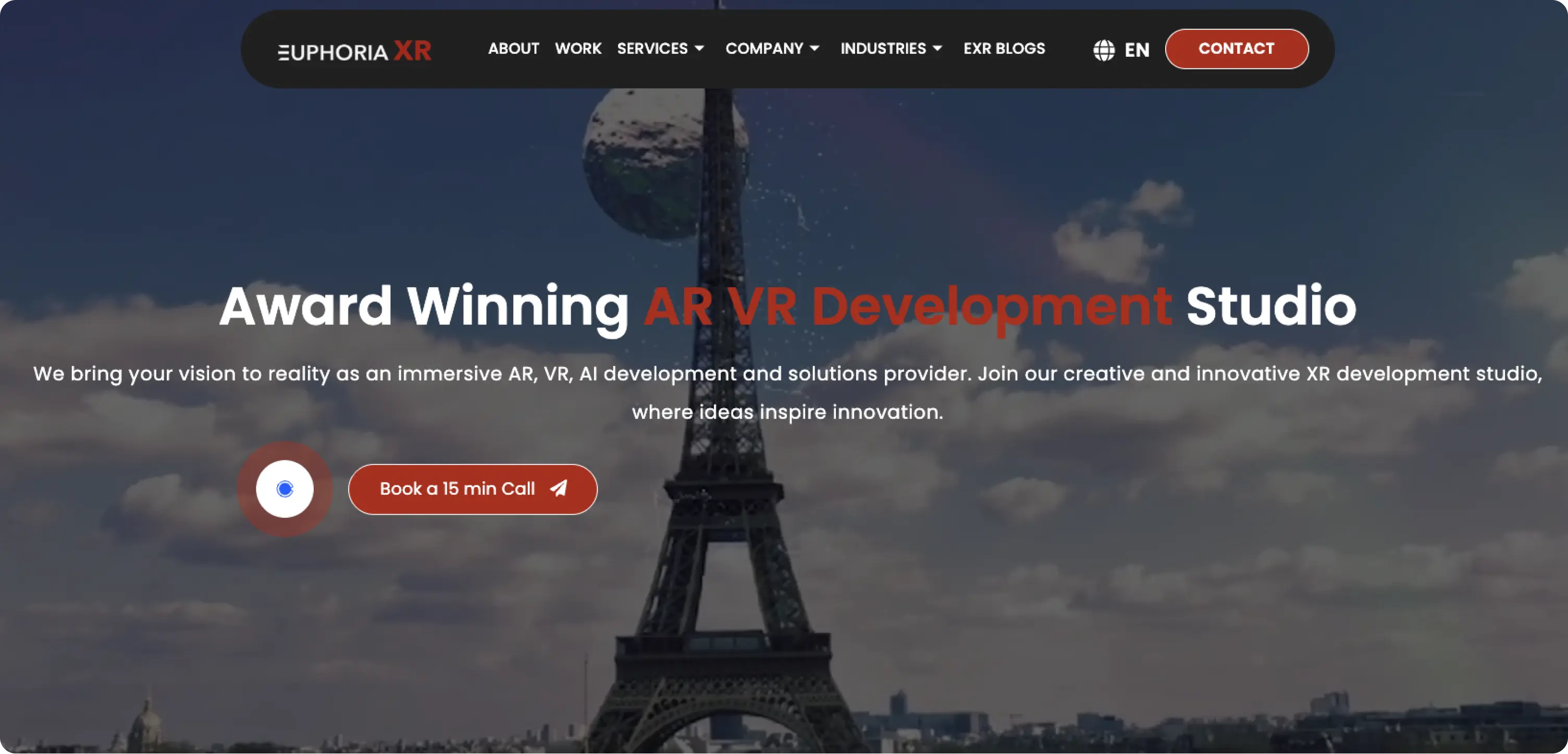
Euphoria XR is an immersive technology studio focused on ****VR, AR, and MR solutions for training, simulation, and experiential learning. The company positions XR as a performance and safety tool, particularly for industries where real-world training is costly, dangerous, or difficult to scale.
Euphoria XR has worked with global organizations across healthcare, manufacturing, construction, and public sector environments, delivering simulations for operational training, compliance, and skills development. Their projects often emphasize realism, repeatability, and learning effectiveness rather than entertainment-driven experiences.
6. Delta Reality
Location: Croatia
Estimated Rate: $100–$150/hour
Established: 2013
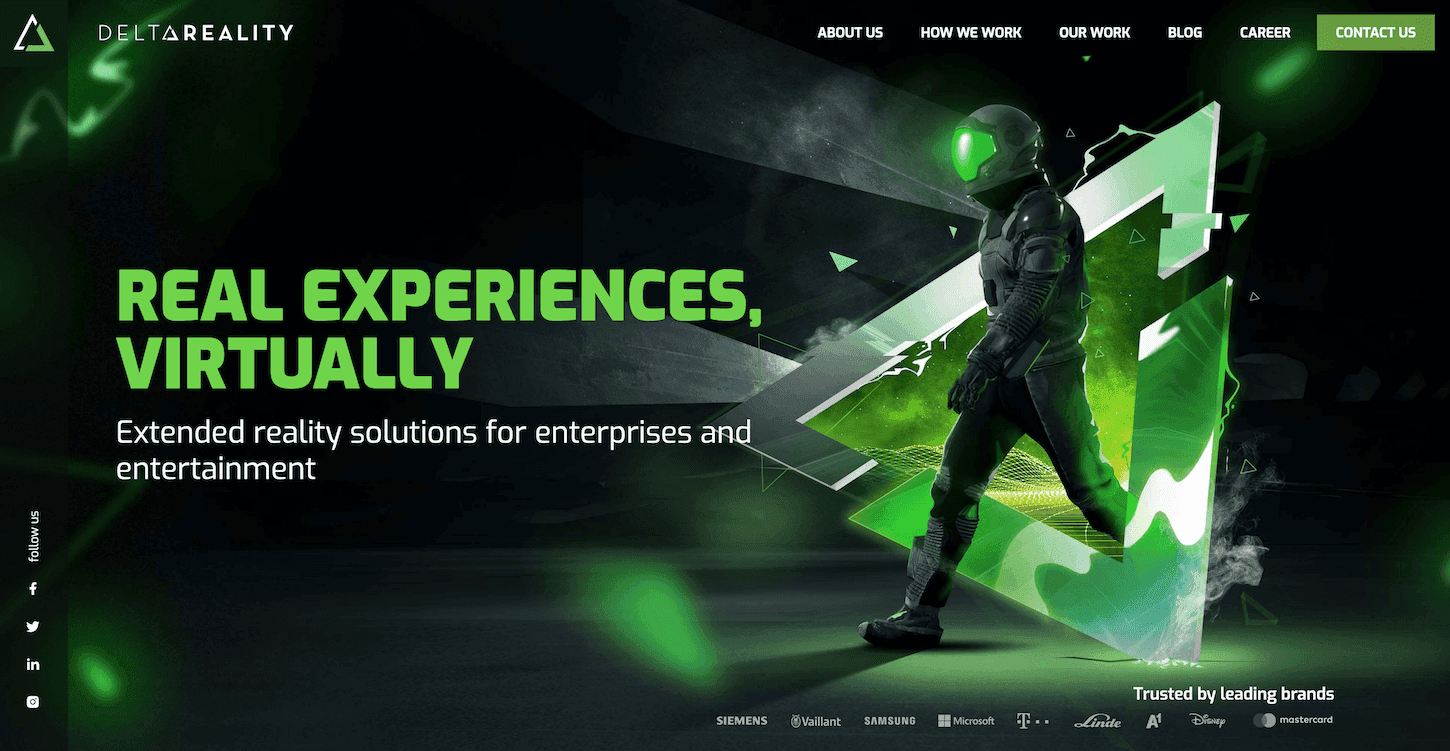
Delta Reality is an XR development company with 30 specialists working in virtual reality (VR), augmented reality (AR), and mixed reality (MR) applications. They create interactive experiences for businesses and organizations across four areas: Museums & Visitor Centers, Immersive Training, Product Presentation, and XR Apps.
Their team has delivered projects for brands like A1 Telekom, Vaillant, Linde, and Frauscher, as well as museums and visitor centers. Delta Reality has worked with over 50 domestic and international companies and completed over 100 projects. They work as technical partners from initial ideation to deployment.
7. 4Experience
Location: Poland
Estimated Rate: $50–$99/hour
Established: 2015
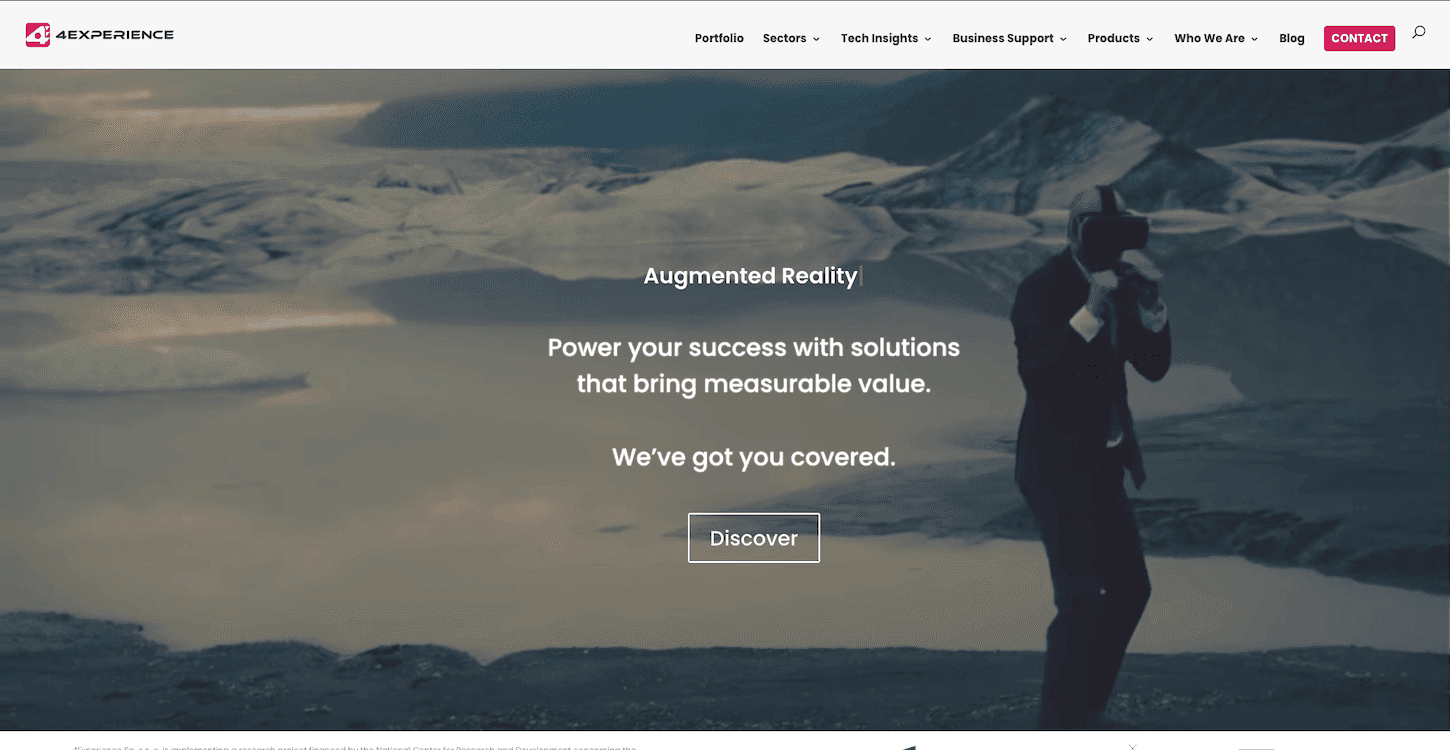
Founded in 2015, 4Experience is an AR/VR/XR development studio based in Bielsko-Biała, Poland, with a branch in the U.S. They specialize in virtual reality training, augmented reality apps, 3D simulations, and immersive product visualizations.
Their team has delivered over 200 projects across industries including healthcare, manufacturing, education, and enterprise solutions, serving clients worldwide with a focus on innovation, design, and scalable XR technology.
8. Trigger
Location: Los Angeles
Estimated Rate: $150–$250/hour
Established: 2005
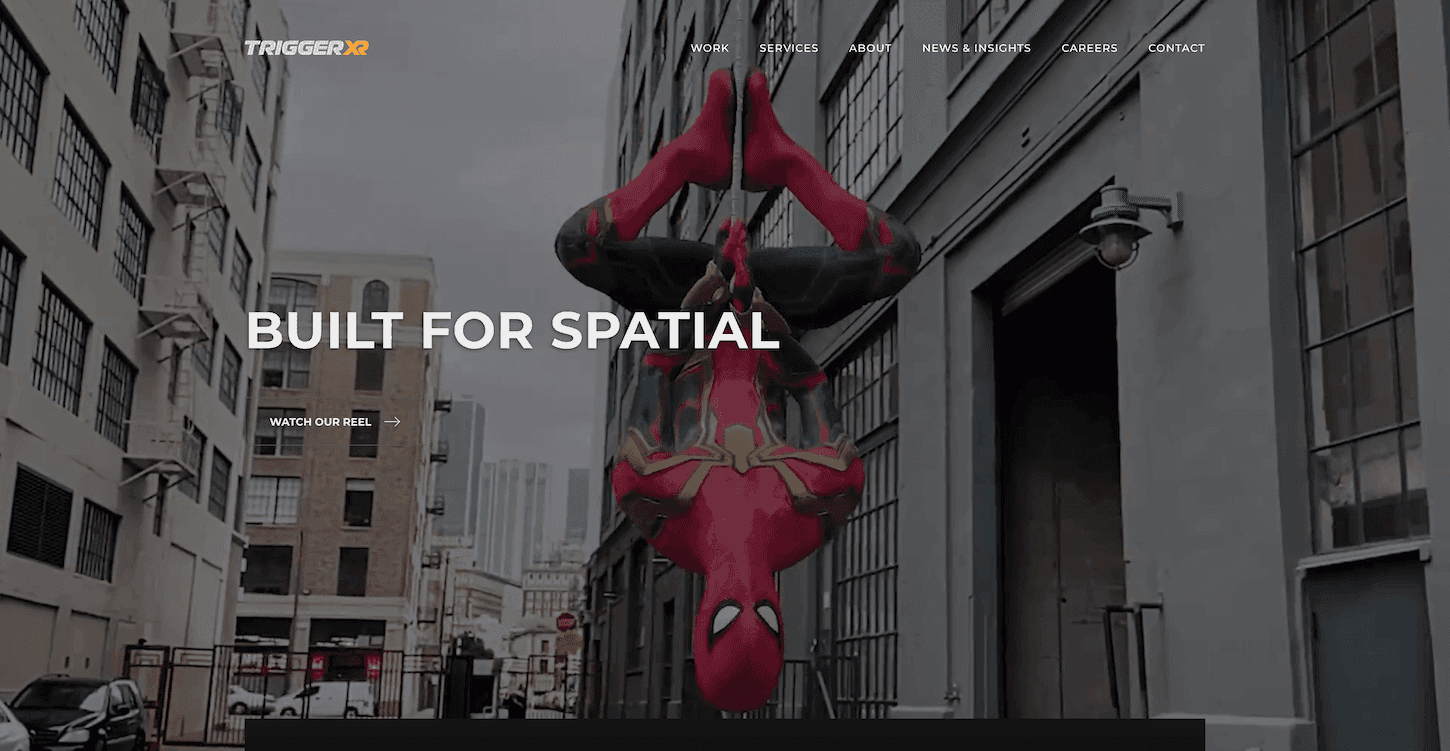
Trigger is a mixed reality agency that works with global brands from concept and development to deployment. They create augmented reality and virtual reality experiences across entertainment marketing, fan engagement, and ecommerce. For over 15 years, they've worked with major IPs to develop AR, VR and immersive solutions across mobile and HMD platforms.
Their work has included AR campaigns for entertainment IP including Spider-man, Toy Story, and Star Wars, working with brands including Disney, Verizon, Honda, the NBA, NFL and Molson Coors.
9. Rock Paper Reality
Location: San Francisco, California
Estimated Rate: $180–$280/hour
Established: 2009
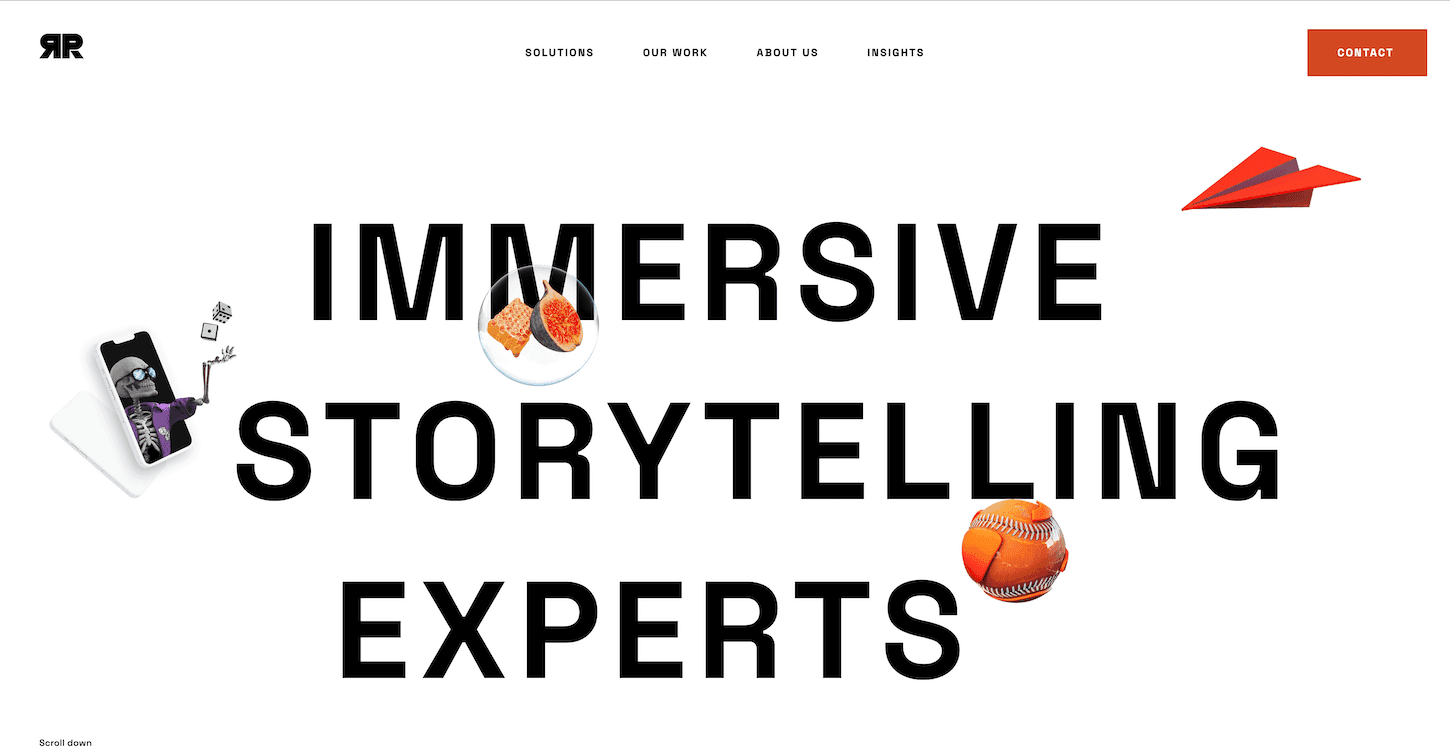
Rock Paper Realityis an Augmented Reality agency that helps companies from startup to Fortune 500s develop AR content and strategies for brand awareness, customer engagement, and revenue growth.
They focus on creating AR/MR/XR solutions for mobile devices and smartglasses, and can enhance applications with AR solutions, develop new applications, and advise companies on AR technologies. Having worked with clients including Microsoft, Netflix, and Lenovo, RPR has been working in AR development for over 12 years.
10. WE/AR Studio
Location: Ukraine
Estimated Rate: $50-100/hour
Established: 2016
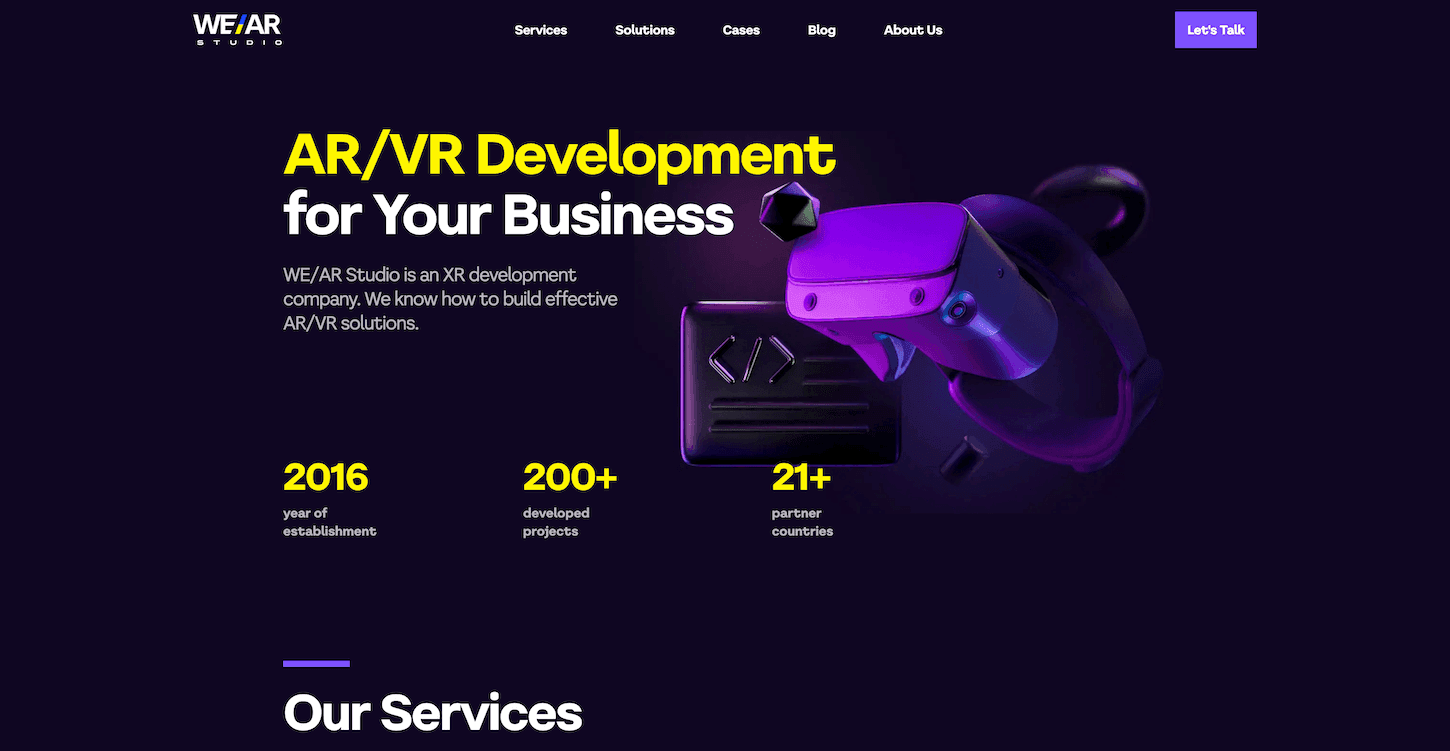
WE/AR Studio is an XR development agency specializing in custom AR, VR, and MR experiences, founded to implement immersive technologies into business applications. The company works with organizations on PR, marketing, sales, education, training, and entertainment through development processes from problem identification to solution delivery.
Types of VR Services Offered
Understanding the range of VR development services companies offer helps you choose the right partner for your specific needs. Leading VR development companies typically offer:
Strategic Consulting: Guidance on VR use case discovery, project scoping, ROI analysis, and technology selection to align solutions with business objectives.
UX/UI and Product Design: Designing intuitive interfaces and user experiences native to spatial computing and immersive environments.
Custom VR Software Development: End-to-end development of tailored VR applications, simulations, and immersive experiences designed for specific industries and use cases.
3D Content Creation: Production of high-quality 3D assets, modeling, rigging, animation, environments, shaders and interactive objects.
Enterprise System Integration: Connecting VR solutions with existing software, data platforms, and content/learning management systems to ensure seamless workflows and analytics.
Maintenance and Support: Ongoing updates, technical support, and performance optimization to maximize long-term value from your VR investment.
Advanced Technology Integration: Integration with emerging technologies including generative AI, IoT sensors, digital twins, business intelligence, haptic feedback, and real-time data visualization.
The top VR development agencies set themselves apart through full-service offerings, technical excellence, and proven track records across multiple industries.
If you're looking for top Augmented Reality (AR) development companies, see: **Top Augmented Reality AR Development Companies in 2025 or Best XR Development Agencies. For other categories see: Top Unity Developers, Top Mixed Reality Developers, Top Digital Twin Developers, and Top VR Thought Leaders.**
Evaluation Criteria for Top VR Companies
Selecting the right VR development partner requires careful evaluation of key criteria to ensure successful project outcomes. Leading agencies are assessed based on:
Technical Expertise: Look for companies with proven experience in VR development platforms that include all major platforms: Apple Vision Pro, Meta Quest, Magic Leap, AndroidXR, and PICO. Evaluate their portfolio of completed projects and technical capabilities across different VR platforms.
Industry Experience: Choose partners with relevant experience in your specific industry, whether healthcare, education, entertainment, manufacturing, or enterprise training. Industry-specific knowledge ensures better understanding of your unique challenges and requirements.
Portfolio Diversity: Evaluate the range and quality of previous projects to ensure the company can handle your project's complexity and requirements. Look for companies that have successfully delivered projects similar to your needs, scope and size.
Development Process: Assess their development methodology, project management approach, and communication practices. The best VR development companies employ user-centered design, iterative prototyping, and a focus on delivering business value.
Post-Launch Support: Ensure your chosen partner offers long-term support after project deployment. VR applications often require ongoing updates as technology evolves. Evaluate their philosophy on interoperability and documentation for potential handover to other teams in the future.
Innovation Capacity: Select companies that push creative boundaries and offer custom solutions that help position your company as a leading innovator in technology. Look for VR agencies that are industry leaders, well-connected in the VR community, and stay current with emerging VR trends.
For platform specific development companies see: Top Vision Pro Developers and Top Android XR Developers.
Key Factors to Consider When Choosing a VR Development Partner
Finding the right VR development partner for your business requires evaluating several key factors like:
Culture fit
Alignment with your industry and project needs
Transparent pricing and clear communication
Flexibility with ever-changing requirements
Proven track record in similar projects
Commitment to long-term partnership
Evaluating these factors will help you find a partner who can deliver your current project and serve as a long-term partner as VR technology continues to evolve and opportunities grow.
Cost of VR Development Services
The cost of VR development services varies widely based on project scope, technical requirements, and the expertise of your chosen partner. Understanding these variables is essential for effective planning and maximizing your investment.
Common Pricing Models of VR Development
Hourly Rate: Most VR development companies charge between $50–$200 per hour, depending on location, reputation, portfolio, and specialization.
Fixed Project Fee: For well-defined projects, agencies may offer fixed pricing, often ranging from $50,000 to $200,000+. Fixed scope projects are feasible for projects with 6-8 month schedules.
Retainers & Ongoing Support: Long-term maintenance or support is typically billed monthly or quarterly. An industry rule of thumb is that ongoing support is usually estimated at 25% of the total development budget.
Key Cost Drivers of VR Development
Project Complexity: Advanced features, real-time interactivity, and multi-platform support increase costs.
Content Quality: High-fidelity 3D assets and custom environments require additional resources.
Supported Platforms: Developing for multiple devices (e.g., Meta Quest, Apple Vision Pro, Magic Leap) can add to the budget.
Team Expertise: Senior developers, 3D artists, and UX/UI specialists command higher rates.
Ongoing Support: Maintenance, updates, and analytics integration are typically billed separately.
What's Included in VR Development Costs
Project management and strategy
UX/UI and product design
Custom development and integration
3D content creation and optimization
Testing, deployment, and documentation
Post-launch support and updates (often billed separately)
Long term Cost-Effectiveness and Value
Top VR development companies deliver long time value through efficient management, flexibility, transparent pricing and quality of work. Avoid poor quality work at all costs, as poor quality software usually has to be discarded completely. Companies often search for higher-performing vendors to save failed projects done by low quality teams, requiring the code to be rewritten from scratch. A high-performing vendor should deliver quality code and documentation that makes future handovers to other vendors manageable.
How to Budget When Evaluating New Vendors
When evaluating a new vendor, the goal is to evaluate competence, quality, and build trust. Start with a pilot or MVP to mitigate risk and evaluate your vendor. If a vendor is a long-term fit, they're usually very flexible with billing small amounts at first to show they are world-class. Vendors may give initial discounts to prove they are long-term partners. It's important to have clarity that discounts are for initial projects and once a vendor is a fit. Potential vendors should also not bill for discovery, initial concept designs, research, and feasibility prototypes when being evaluated as a long-term vendor.
VR Market Landscape
The virtual reality market is experiencing rapid growth, with the global VR market size estimated at $12.88 billion in 2025 and projected to reach $41.42 billion by 2030. This expansion is fueled by widespread enterprise adoption across training, education, and collaboration, plus the integration of VR with emerging technologies like AI, business intelligence, and Digital Twins.
Key Industry Adoption Statistics:
Over 75% of Fortune 500 companies have adopted VR for training and education, recognizing its ability to improve learning outcomes while reducing costs.
VR Applications Across Industries
Healthcare demonstrates 40% fewer surgical mistakes with VR training, with the sector projecting 30.3% market growth through 2030. Manufacturing and Mining achieved a 43% reduction in workplace injuries through VR safety training programs.
The education sector leverages VR for interactive classrooms and hands-on skill development, driving higher student engagement and retention. Education expects sixfold market growth with a 30.7% CAGR as institutions embrace immersive learning.
Enterprise adoption will drive 60% of total VR revenue by 2030, creating an estimated 2.32 million AR/VR jobs across the United States.
As adoption accelerates, organizations across healthcare, education, manufacturing, retail, real estate, and more are realizing measurable ROI by integrating VR into core business functions. By leveraging immersive VR experiences, companies are improving learning outcomes, reducing costs, boosting sales, and streamlining decision-making across a wide range of industries.
The Future of VR Development
The VR development landscape in 2026 is characterized by rapid technological advancement and expanding applications across industries. Specialized development agencies are leading the charge, focusing on custom software solutions that leverage the latest VR technologies to solve real business problems.
As VR technology continues to mature, the most successful companies will be those that combine deep technical expertise with industry-specific knowledge and a commitment to innovation. These top 10 VR development companies represent the best partners for businesses looking to harness the transformative power of virtual reality, whether for training programs, marketing campaigns, or groundbreaking entertainment experiences. For a curated list of the top 10 spatial computing developers which encompasses a wider range of technologies, see: Top 10 Spatial Computing Development Companies.
The shift toward enterprise VR applications, combined with advances in hardware accessibility and development tools, positions 2026 as a pivotal year for VR adoption across industries. By partnering with the right development company, businesses can create immersive experiences that not only engage their audiences but also drive measurable results and competitive advantage.