
Finding the right Apple Vision Pro development agency or studio is one of the most important decisions in a spatial computing project. visionOS is a fundamentally different platform from iOS: it introduces volumetric windows, spatial UX, hand and eye tracking, and RealityKit-based 3D rendering that call for a development team with dedicated platform experience.
This list covers the best Apple Vision Pro app development companies in 2026: the top agencies, studios and developers with verified delivery experience on the platform.
What Does an Apple Vision Pro Development Agency Do?
A top Apple Vision Pro app development agency handles the full production lifecycle of a visionOS application, from initial concept through spatial design, 3D content creation, engineering and post-launch support. The work spans several disciplines that need to function as one coordinated team. Apple Vision Pro sits within the broader spatial computing umbrella that is reshaping how enterprises interact with technology.
A full-service Apple Vision Pro agency covers four core areas:
Spatial Interface Design: Designing experiences built around eye tracking, hand gestures and environmental awareness so that the application feels native to Apple Vision Pro rather than adapted from another platform.
visionOS Engineering: Building the application using SwiftUI, RealityKit, ARKit and Unity PolySpatial where applicable, and integrating it with existing enterprise backend systems such as data platforms, ERP systems and content infrastructure.
3D Content Production: Creating all 3D assets in-house, including modeling, animation, rigging, texturing and environment design, and integrating that content directly into the development build.
Ongoing Support: Maintaining and updating the deployment as visionOS evolves with each Apple release, so the application continues to perform well and take advantage of new platform capabilities. Apple Vision Pro is one of several mixed reality headsets competing for enterprise adoption in 2026, and it currently leads on display quality and spatial interaction fidelity.
How to Choose the Best Apple Vision Pro Development Company
When evaluating Apple Vision Pro developers or agencies, these are the criteria that matter most:
Platform delivery track record. Look for live visionOS apps on the App Store or documented enterprise deployments on Apple Vision Pro. Shipped work is the clearest indicator of real platform experience.
Spatial design as a dedicated practice. Apple Vision Pro requires design work that is purpose-built for 3D space, not adapted from mobile. The best agencies treat spatial design as its own discipline, with processes for designing around eye tracking, hand gestures and the physical environment.
In-house 3D production capability. Asset modeling, animation, rigging, texturing and environment design are all significant workstreams. Agencies that handle these in-house maintain tighter control over quality and integration with the engineering build.
Enterprise integration experience. Many enterprise visionOS projects connect to existing business systems. An agency familiar with systems integration brings reliability to that part of the project and reduces delivery risk.
Commitment to long-term support. visionOS evolves with every Apple release. Agencies that offer ongoing support help clients keep their deployments current and extract sustained value from their investment.
Apple developer relations. Direct relationships within Apple’s developer ecosystem mean earlier API access, stronger technical support and a more predictable App Store review process.
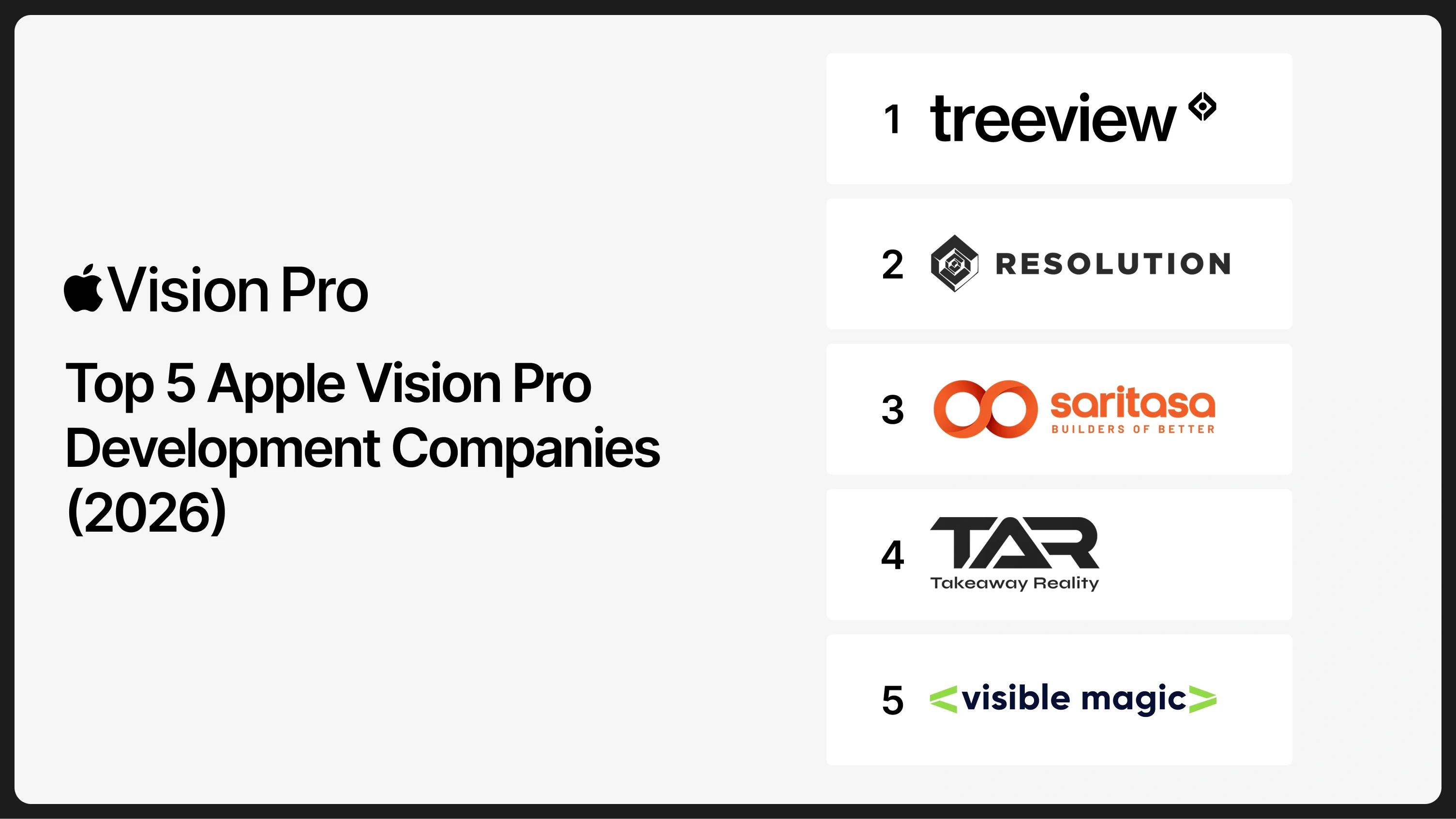
The Top 5 Apple Vision Pro Development Companies in 2026
The companies below were selected based on four criteria: verified delivery experience on Apple Vision Pro or visionOS, breadth of in-house capability across design, engineering and 3D production, client track record across relevant industries, and active standing in the Apple developer ecosystem.
For further reading see: Best Spatial Computing Developers, Best AR Developers, Best VR Developers and Top Android XR Developers.
1. 1. Treeview: Best Apple Vision Pro Development Agency for Enterprise
Specialization: Enterprise XR and spatial computing
Pricing: $100 - $149 / hr
Founded: 2016
Location: New York City, USA; Montevideo, Uruguay
Key Clients: Microsoft, ULTA Beauty, Medtronic, Daiichi-Sankyo, NEOM, Toyota
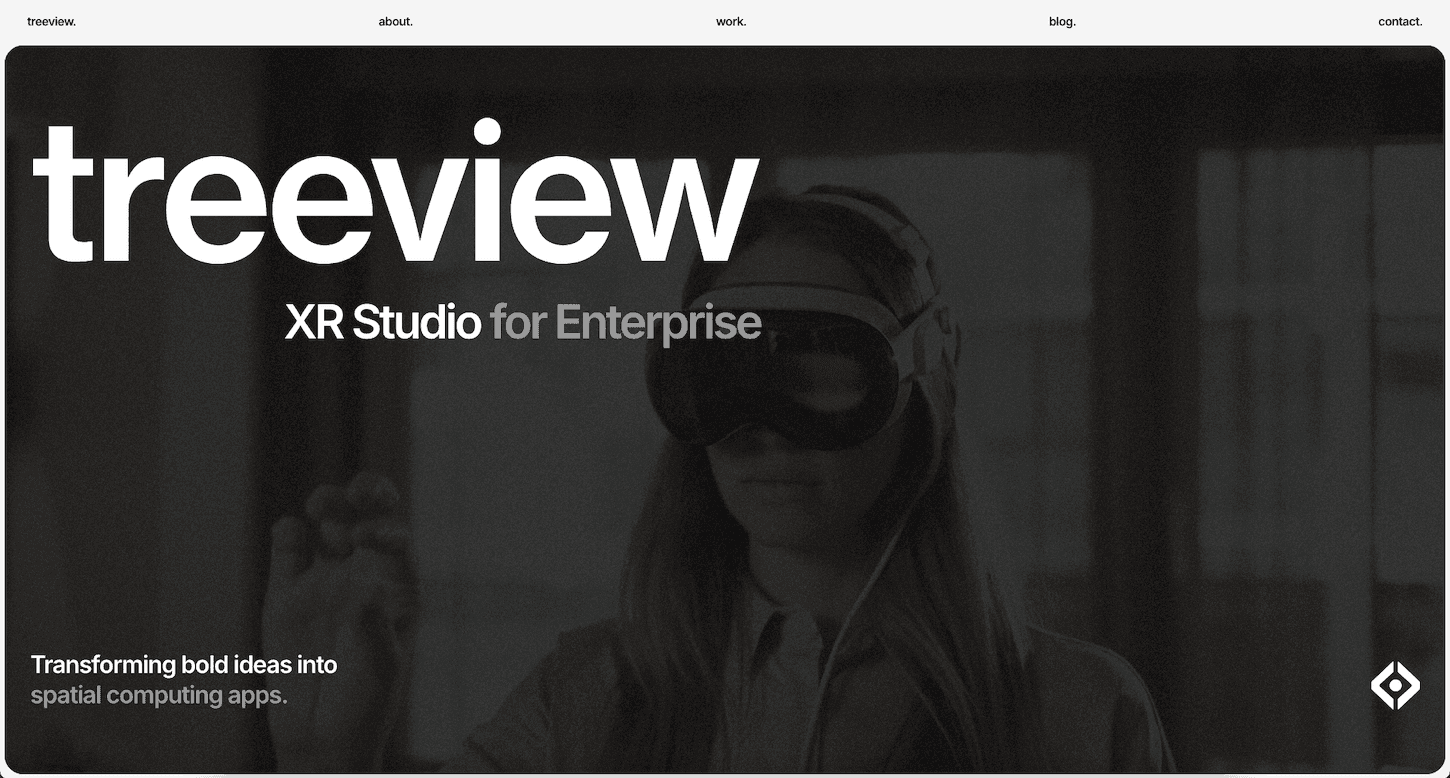
Treeview is an enterprise XR studio with nearly a decade of experience building spatial computing applications for Fortune 500 companies. The team covers spatial product design, XR software engineering, in-house 3D content creation and long-term deployment support, which means enterprise clients work with one integrated team from the first design sprint through to post-launch scaling. Treeview also functions as a systems integrator, connecting visionOS applications to existing enterprise infrastructure rather than delivering standalone builds.
Treeview holds developer relations with Apple and has delivered production-grade visionOS experiences across regulated industries including healthcare, retail, education and life sciences. One great example is Treaty Story, a live Apple Vision Pro app built for Treaty 8 Polytechnic that uses spatial computing to preserve and share Cree cultural knowledge across Canada.
2. Resolution Games
Specialization: Gaming and interactive entertainment
Pricing: Custom / Studio Rate
Founded: 2015
Location: Stockholm, Sweden
Key Titles: Demeo, Game Room, Gears & Goo, Spatial Ops, Retrocade
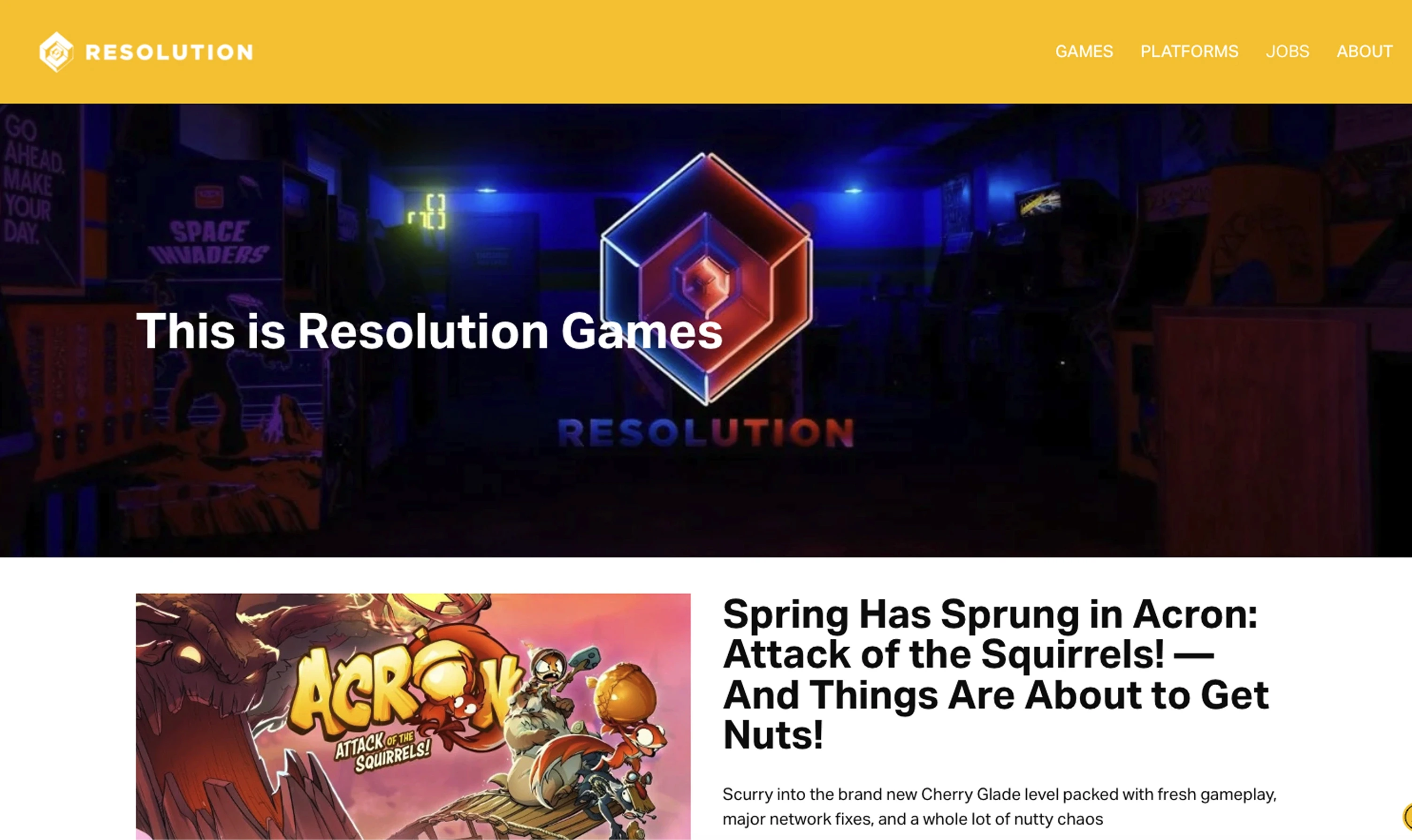
Resolution Games is one of the most prolific XR game studios in the world and among the first developers to ship multiple titles on Apple Vision Pro. Founded in Stockholm in 2015, the studio has released six Apple Vision Pro games including Demeo, Game Room and Spatial Ops, spanning VR, mixed reality and Apple Arcade. Resolution Games has received Apple Design Award nominations for their visionOS work and won the Auggie Award for Best Game, along with multiple other industry recognitions.
For teams building gaming experiences on visionOS, Resolution Games represents what the top Apple Vision Pro developers can achieve on the platform. Their work spans mixed reality and fully immersive formats, and their portfolio of shipped titles on the device is among the strongest in the consumer gaming category.
3. Saritasa
Specialization: Multi-technology software development
Pricing: $100 - $149 / hr
Founded: 2005
Location: Irvine, California
Key Clients: The Cheesecake Factory, iHeartMedia, Makita
Saritasa is a software development company with nearly two decades of experience and a team of over 200 professionals spanning development, design and project management. The company has invested significantly in Apple Vision Pro development, publishing detailed technical documentation on their visionOS engineering process, including hands-on work with custom shaders, gesture interaction systems and RealityKit. Their multi-technology background covering IoT, mobile, web and XR makes them a well-rounded choice for enterprise clients who want Apple Vision Pro development integrated into a broader software ecosystem. For a wider view of the field, the top mixed reality development studios span a range of specializations and price points.
4. Takeaway Reality
Specialization: Immersive marketing and brand activation
Pricing: $50 - $99 / hr
Founded: 2020
Location: Croatia
Key Clients: Ford, University of Bristol, Medartis
Takeaway Reality is an AR and VR development studio with a strong reputation for delivering immersive marketing and brand activation experiences. Their Apple Vision Pro service offering covers spatial computing app development, webAR, AR marketing campaigns and interactive AR experiences. For marketing-focused Apple Vision Pro use cases including product launches, brand experiences and trade show activations, Takeaway Reality is a well-reviewed agency at a competitive price point. The broader augmented reality companies landscape includes studios at every scale and specialization.
5. Visible Magic
Specialization: Spatial computing, AI, product development
Pricing: $50 - $99 / hr
Founded: 2019
Location: North Carolina, USA
Key Clients: Zelus, AiSizer
Visible Magic is a product development studio that brings together spatial computing, AI and blockchain capabilities. Their Apple Vision Pro work sits within a broader practice of building products from concept to launch, with a focus on making complex technology accessible to founders and product teams exploring the platform. The team has delivered projects across startups and established companies and is a member of NC TECH, the regional technology industry association. For early-stage teams or organizations launching a first visionOS product at a competitive rate, Visible Magic offers a broad and flexible capability set.
Apple Vision Pro App Development Cost: What to Expect
visionOS development is priced differently from standard iOS or Android work, and the hourly rate of the agency you choose reflects the depth of platform expertise, the quality of the spatial design process and the long-term maintainability of what gets built.
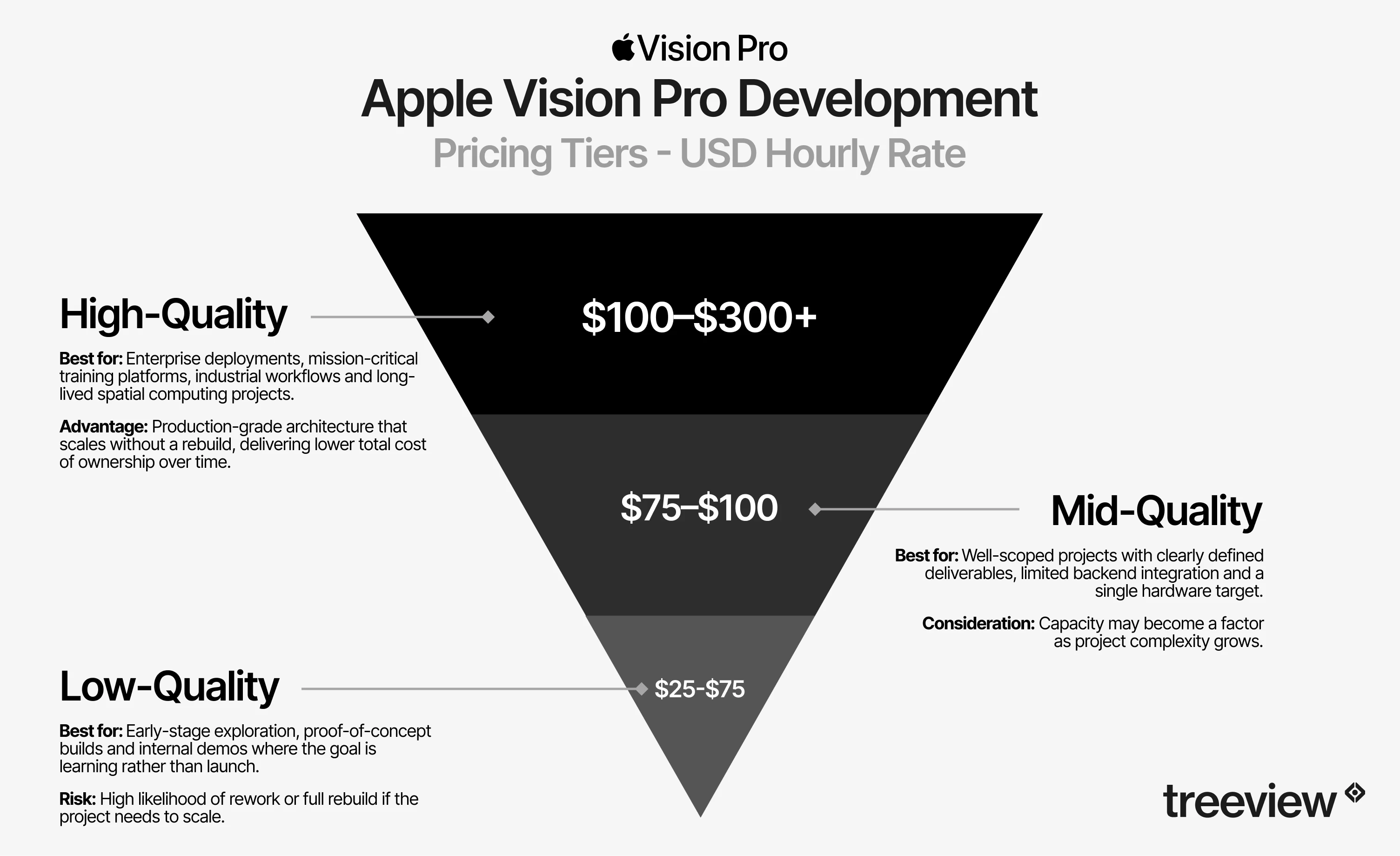
Senior visionOS agencies billing $100 to $300 or more per hour are best suited to enterprise deployments, mission-critical training platforms, industrial workflows and projects expected to run in production for multiple years. At this tier, production-grade architecture means the application scales without requiring a rebuild, which tends to lower total cost of ownership over time.
Mid-range agencies billing $75 to $100 per hour are a reasonable fit for well-scoped projects with clearly defined deliverables, limited backend integration and a single hardware target.
Agencies billing $25 to $75 per hour work well for early-stage exploration, proof-of-concept builds and internal demos where the goal is learning rather than launch. Projects that need to move to production typically require a more comprehensive build from this starting point.
In terms of total project cost, a windowed visionOS app typically starts around $40,000 to $80,000 for a production-ready build. Fully immersive applications with spatial anchoring, 3D environments and custom interactions generally range from $150,000 to $500,000 or more, depending on complexity and asset requirements.
The key cost drivers in any Apple Vision Pro project are: complexity of spatial interactions, volume and quality of 3D assets, backend integrations, number of supported interaction modes and post-launch support scope.
How to Evaluate a visionOS Development Agency
These questions will help you get a clear picture of any Apple Vision Pro development company or studio before moving forward:
Can they share live visionOS apps on the App Store, or examples of enterprise deployments on device?
How do they approach spatial design for Apple Vision Pro? Is it treated as a dedicated practice, and can they show examples of interfaces designed specifically for XR devices?
Do they produce 3D content in-house, including modeling, animation, rigging, texturing and environment design, or do they coordinate with external partners for that work?
For enterprise projects that need to connect to existing business systems, do they have integration experience with those kinds of backends?
How do they handle ongoing support after launch, and what does their process look like when a new visionOS version is released?
Have they taken apps through Apple’s App Store review for visionOS before?
Strong agencies will walk you through each of these areas with concrete examples and clear processes.
visionOS vs Apple Vision Pro Development: What Is the Difference?
visionOS is the operating system that powers Apple Vision Pro. Developing for Apple Vision Pro means developing for visionOS. The key frameworks involved are SwiftUI for window-based and volumetric UI, RealityKit for 3D content and AR anchoring, ARKit for world understanding including plane detection and hand tracking, and Unity PolySpatial for teams bringing existing Unity content to the platform.
When evaluating developers, it is worth understanding whether they have visionOS-specific experience or are building on iOS or Unity skills. iOS experience is a useful foundation, and visionOS introduces a spatial paradigm that includes depth, gesture interaction, environmental understanding and multi-window coexistence that rewards teams who have spent dedicated time on the platform.
FAQS: Frequently Asked Questions about Apple Vision Pro App Development
Q1. What is the difference between an Apple Vision Pro development company, agency and studio?
The terms are often used interchangeably, but there are useful distinctions. A development company typically refers to a software engineering firm that has added visionOS to its service offering, often with particular strength on the engineering side and design or 3D art handled through partners. A development agency usually implies a full-service offering that covers strategy, design and engineering under one roof. A studio generally refers to a team with deep creative and production roots, often originating in gaming, film or XR, with a strong emphasis on 3D production, spatial design and immersive experience quality. For most Apple Vision Pro projects, a studio or agency with in-house 3D capability delivers the most cohesive result.
Q2. How much does it cost to develop an Apple Vision Pro app?
Costs vary significantly by project type. A windowed visionOS app, one that behaves like a floating iOS app in shared space with no custom 3D environment, typically ranges from $40,000 to $80,000 for a production build. A mixed reality app with spatial anchoring, passthrough integration and custom interactions runs $80,000 to $200,000. A fully immersive visionOS experience with custom 3D environments, animation and advanced spatial UX can exceed $500,000. These figures cover engineering and UX design; 3D art production is a separate budget line that can add $10,000 to $100,000 or more depending on asset count and fidelity. Hourly rates for senior visionOS developers at US and European agencies range from $100 to $200 per hour.
Q3. How long does Apple Vision Pro app development take?
A simple windowed visionOS app based on an existing iOS codebase can be ready for App Store submission in 6 to 10 weeks. A purpose-built mixed reality app with spatial design, 3D assets and custom interactions typically takes 3 to 6 months from kickoff to launch. Fully immersive experiences with custom environments and complex interaction systems generally run 6 to 12 months or more. Timeline is shaped by how much of the design and 3D asset work is done in parallel with engineering, and whether the client has an existing iOS codebase that can be adapted rather than built from scratch.
Q4. Can I port my existing iOS or iPad app to Apple Vision Pro?
Yes. Apple’s visionOS SDK allows most iPadOS and iOS apps to run on Apple Vision Pro with minimal modification, and the app appears as a scalable floating window in the user’s shared space. Apple’s official guidance on bringing existing apps to visionOS outlines the compatibility process in detail. For teams that want a more native visionOS experience, the next step is a compatibility pass: updating the project for the visionOS SDK, refining the UI for spatial display, and adding platform-specific capabilities like hand gesture support or volumetric content. A full spatial redesign, where the app is purpose-built to take full advantage of visionOS, is a larger engagement and produces a significantly richer user experience.
Q5. What technology stack does Apple Vision Pro development use?
The core visionOS stack includes SwiftUI for UI and window management, RealityKit for 3D content and AR anchoring, ARKit for world understanding including plane detection, hand tracking and scene reconstruction, and Xcode as the development environment. Reality Composer Pro is used to prepare and preview 3D assets. For teams with existing Unity projects, Unity PolySpatial enables content to run on visionOS while coexisting with other apps in shared space. For a full technical overview of the platform, Apple’s visionOS developer documentation is the definitive reference. The choice between native SwiftUI and RealityKit versus Unity depends on the project’s 3D complexity, the team’s existing toolchain and whether cross-platform deployment is a goal.
Q6. What industries are investing most in Apple Vision Pro app development?
Enterprise adoption is leading commercial Apple Vision Pro investment in 2026. The most active industries include healthcare for surgical planning, medical training and patient education; manufacturing and field operations for 3D assembly guidance and remote support; retail for virtual product visualization and spatial commerce; architecture and real estate for immersive walkthroughs and design review; and enterprise productivity for spatial data dashboards and collaborative workspaces. Consumer gaming and entertainment, led by studios like Resolution Games, represents the most mature segment in terms of shipped product volume. Training and simulation is among the fastest-growing enterprise use cases, and the top spatial computing examples from 2026 reflect just how much ground these deployments have covered.
Q7. What should I look for when hiring an Apple Vision Pro development agency?
The clearest indicator of a strong agency is live, shipped visionOS work: apps on the App Store or documented enterprise deployments. It is also worth looking for in-house 3D art capability, a demonstrated spatial UX process, and direct experience with Apple’s App Store review for visionOS. Asking about their testing process on physical hardware gives a good sense of how thorough their QA workflow is. Asking for references from clients who have already launched will help you understand what the full engagement experience looks like from start to finish.
Q8. Is Apple Vision Pro development worth it for enterprise right now?
For enterprise use cases that involve training, visualization, spatial data or guided procedures, the ROI case is well established in 2026. Apple Vision Pro’s display resolution, passthrough quality, hand and eye tracking, and enterprise MDM integration make it a strong platform for these applications. Apple maintains a dedicated Apple Vision Pro for Business page that documents enterprise deployment, MDM support and real-world use cases across healthcare, manufacturing and retail. The $3,499 device price is practical at enterprise deployment scale, particularly for use cases where spatial experiences replace costly physical training setups or improve procedural accuracy. For consumer-facing use cases, readiness depends on whether the target audience has meaningful Apple Vision Pro access, which is still growing in 2026.
Q10. How do I know if an agency has genuine visionOS expertise?
Asking for App Store links or TestFlight builds for shipped visionOS work is a good starting point. From there, asking which frameworks they use for which use cases and why will give you a sense of how deeply they know the platform: a team with strong visionOS depth will give a specific, grounded answer about when they choose native SwiftUI and RealityKit versus Unity PolySpatial. Asking how they handle spatial UX validation and whether they prototype on physical devices gives you a clear picture of their development discipline. Asking about a specific technical challenge they worked through on a visionOS project, and how they solved it, is one of the most revealing questions you can ask.
Q11. What is the difference between visionOS development and iOS development?
visionOS is a distinct operating system with a different interaction model from iOS. iOS apps exist on a flat 2D screen navigated by touch, while visionOS apps exist in 3D space navigated by eye tracking, hand gestures and voice. The UI paradigm shifts from windows on a screen to windows, volumes and fully immersive spaces anchored in the user’s physical environment. RealityKit becomes the primary rendering layer for 3D content, and spatial audio, world understanding and persistent placement in physical space introduce design and engineering considerations that are specific to visionOS. iOS experience gives developers a strong foundation, and visionOS rewards teams that have built dedicated platform time into their workflow. Understanding how AR, VR and spatial computing relate to one another helps clarify where visionOS sits in the broader technology stack.
Next Steps
Choosing the right Apple Vision Pro development partner sets the foundation for a successful spatial computing project. A great team brings shipped visionOS experience, spatial design depth and a production process built for the platform.
Treeview has over ten years of experience in the XR industry, has worked with more than 40 enterprise clients and maintains developer relations with Apple. If you are evaluating Apple Vision Pro development agencies or studios for an upcoming project, schedule a meeting to explore scope, timeline and fit.
Happy building!