
The augmented reality industry has achieved key breakthroughs in 2025 as big tech companies double down on this technology with Google entering the industry with the launch of AndroidXR. From lightweight smart glasses to spatial computing headsets, augmented reality is transitioning from an emerging technology to a critical business tool and mainstream consumer product across industries from manufacturing and healthcare to retail, construction, education, social and gaming.
Recent advancements in AR technology are driven by breakthrough innovations in AI integration like computer vision and object recognition, MicroLED displays, and spatial computing chips. Meanwhile, big tech companies like Meta, Apple, and Google compete for platform dominance while specialized AR development companies drive innovation at the application level, discovering new use cases and accelerating industry adoption.
Here are the industry's best augmented reality companies of 2026 and leading AR companies by category in an increasingly competitive market projected to reach $200 billion by 2030.
Augmented Reality Industry Overview

Definition and Scope
Augmented Reality (AR) is a computer interface technology that overlays digital elements such as virtual screens, 3D models, or interactive graphics onto the physical environment in real time, combining the digital and physical worlds. It enhances how users perceive and interact with their surroundings. Unlike Virtual Reality (VR), which fully immerses users into digital simulations, AR enhances the physical world by integrating virtual content into real spaces.
The AR industry is driven by both hardware developers and software development studios. Leading technology companies such as Meta, Apple and Google are investing heavily in AR/VR infrastructure, platforms, and consumer devices like smart glasses. At the same time, AR/VR software development studios like Treeview work with enterprise clients to deploy AR software applications across healthcare, retail, education, government, and other sectors. These immersive AR tools and experiences help organizations improve training, business intelligence, data visualization, collaboration and customer engagement.
Market Growth Trends
The combined AR/VR/XR market shows strong growth projections ranging from $85.56 billion to $200.87 billion by 2030, reflecting different methodologies but consistent upward trajectories. Smart glasses shipments surged 110% year-over-year in H1 2025, with 78% being "AI smart glasses" and Meta holding over 70% market share.
Enterprise applications continue driving significant growth, with healthcare showing fastest vertical expansion at 33.9% CAGR and VR training demonstrating up to 78% better learning outcomes compared to traditional methods. Manufacturing and industrial applications maintain strong adoption through AR IoT economic value projected at $40-50 billion by 2025, expanding to $90-110 billion by 2030.
Consumer adoption accelerates through Meta's market dominance with 74.6% hardware market share, while Ray-Ban Meta smart glasses achieved over 2 million units sold since October 2023 with sales tripling in Q2 2025. Meta Quest maintains VR leadership with consistent market dominance, while enterprise users are projected to drive 60% of total VR revenue by 2030 as 75% of Fortune 500 companies have adopted VR for training and education.
Top Augmented Reality (AR) Companies by Category
Here is a curated list the best augmented reality companies 2026 top AR industry leaders by category driving innovation across AR hardware, AR software, AR software development teams and AR enterprise solutions. If your interested in Virtual Reality, see: Best Virtual Reality Companies by Industry Category.
Summary of the Best Augmented Reality (AR) Companies by Category
Best Augmented Reality (AR) Company Category | Company Name | Industry Focus / Strengths | Notable Achievements |
|---|---|---|---|
AR Software Development Studio | Treeview | Custom enterprise XR solutions across healthcare, education, retail, mining and more. | Collaborations with Microsoft, Meta, Medtronic; high-quality custom AR apps |
AR Hardware Company | Meta | Consumer AR, Mixed reality platforms, AI-driven experiences | Market dominance, Orion AR prototype, 77% Quest market share |
AR Marketing | Takeaway Reality | AR apps for marketing, training, and interactive brand experiences | Interactive AR brand experiences for global clients, combining immersive storytelling with engagement metrics |
AR Development Platform | Unity Technologies | Cross-platform AR app development | Powers majority of AR applications worldwide |
AR Design Tool | ShapesXR | Spatial design and prototyping | Enables immersive spatial design collaboration |
Mobile AR Platform | 8th Wall | Mobile AR experiences | Leading WebAR engine for smartphones and tablets |
Industrial AR Platform | PTC | Aerospace, automotive, energy sectors | Industrial AR leader with broad sector adoption |
Healthcare & Medical AR Company | Medtronic MCXC | Healthcare, surgical education | Enhances surgical outcomes and training effectiveness |
AR Gaming & Entertainment Company | Resolution Games | Social multiplayer AR gaming | Focus on immersive shared AR experiences |
AR Retail & E-commerce Company | Zappar | Retail, brand engagement | Combines physical products with digital AR engagement |
AR Architecture, Engineering & Construction Company | Autodesk | Architecture, engineering, construction | Immersive design review and collaboration |
AR Field Service & Maintenance Company | RealWear | Industrial and frontline environments | Hands-free remote expert support and digital workflows |
Best Augmented Reality (AR) Hardware Company: Meta
Meta leads the AR hardware category with its popular Ray-Ban Meta smart glasses and Meta Quest mixed reality headsets. The company's substantial R&D investment, strategic partnerships, and technology breakthroughs with Orion AR prototype have solidified its market dominance and innovation edge.
Best Augmented Reality (AR) Software Development Company, Studio and Agency: Treeview
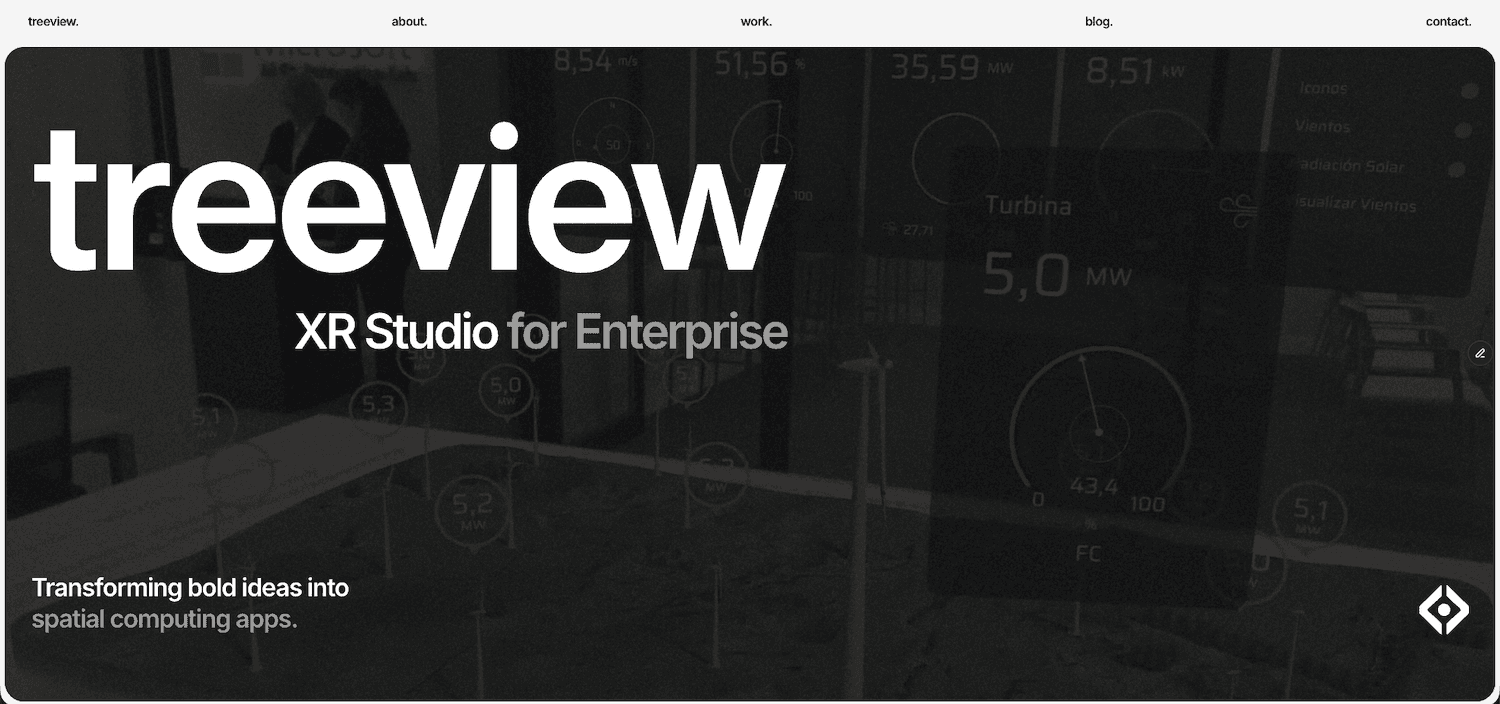
Treeview is a leader in augmented and virtual reality (AR/VR) software development, collaborating with major enterprise clients including Microsoft, Meta, Ulta Beauty, and Medtronic to create world-class AR software solutions that deliver business value. Treeview serves global clients across diverse industries including healthcare, education, retail, mining and energy, developing high-quality custom AR applications that drive enterprise innovation and competitive technological advantage.
Best Augmented Reality (AR) Development Platform Company: Unity Technologies

Unity Technologies provides the leading AR/VR development platform, supporting cross-platform deployment and powering the vast majority of AR applications worldwide.
Best Augmented Reality (AR) Design Tool Company: ShapesXR

ShapesXR offers a collaborative AR design platform enabling teams to prototype and iterate immersive spatial designs efficiently.
Best Mobile Augmented Reality (AR) Platform Company: 8th Wall

8th Wall is the leading mobile AR platform powering WebAR experiences across smartphones and tablets.
Best Augmented Reality (AR) Manufacturing & Industrial Platform Company: PTC
PTC's Vuforia platform provides industrial AR by powering assembly guidance, quality control, and maintenance across aerospace, automotive, and energy sectors.
Best Augmented Reality (AR) Heathcare & medical Company: Medtronic MCXC
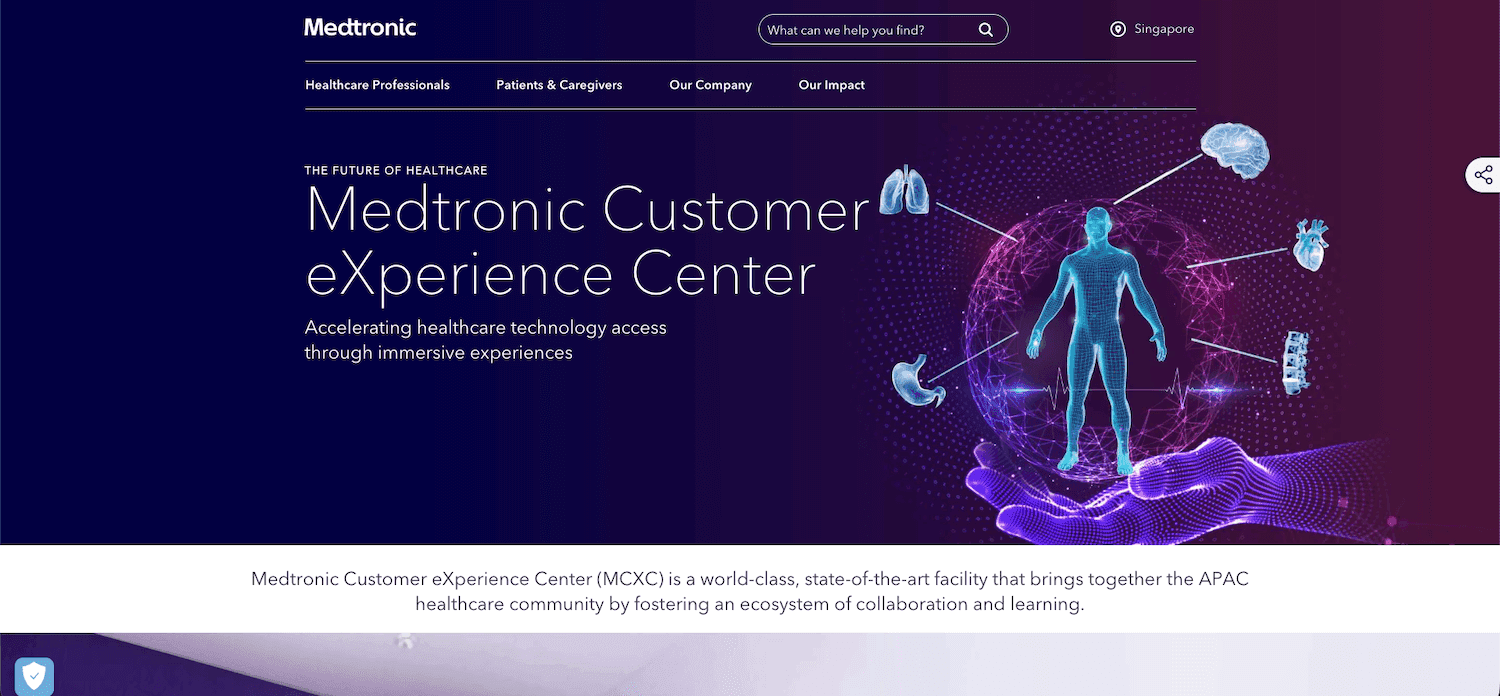
Medtronic MCXC leads healthcare AR by providing surgeons with real-time augmented surgical training, medical product visualization and procedural guidance that improves surgical outcomes and medical training effectiveness.
Best Augmented Reality (AR) Gaming & Entertainment Company: Resolution Games

Resolution Games specializes in immersive AR gaming with popular titles like Demeo and Spatial Ops, focusing on social multiplayer experiences that showcase AR's potential for bringing people together through shared virtual experiences in physical spaces.
Best Augmented Reality (AR) Retail & E-commerce Company: Zappar
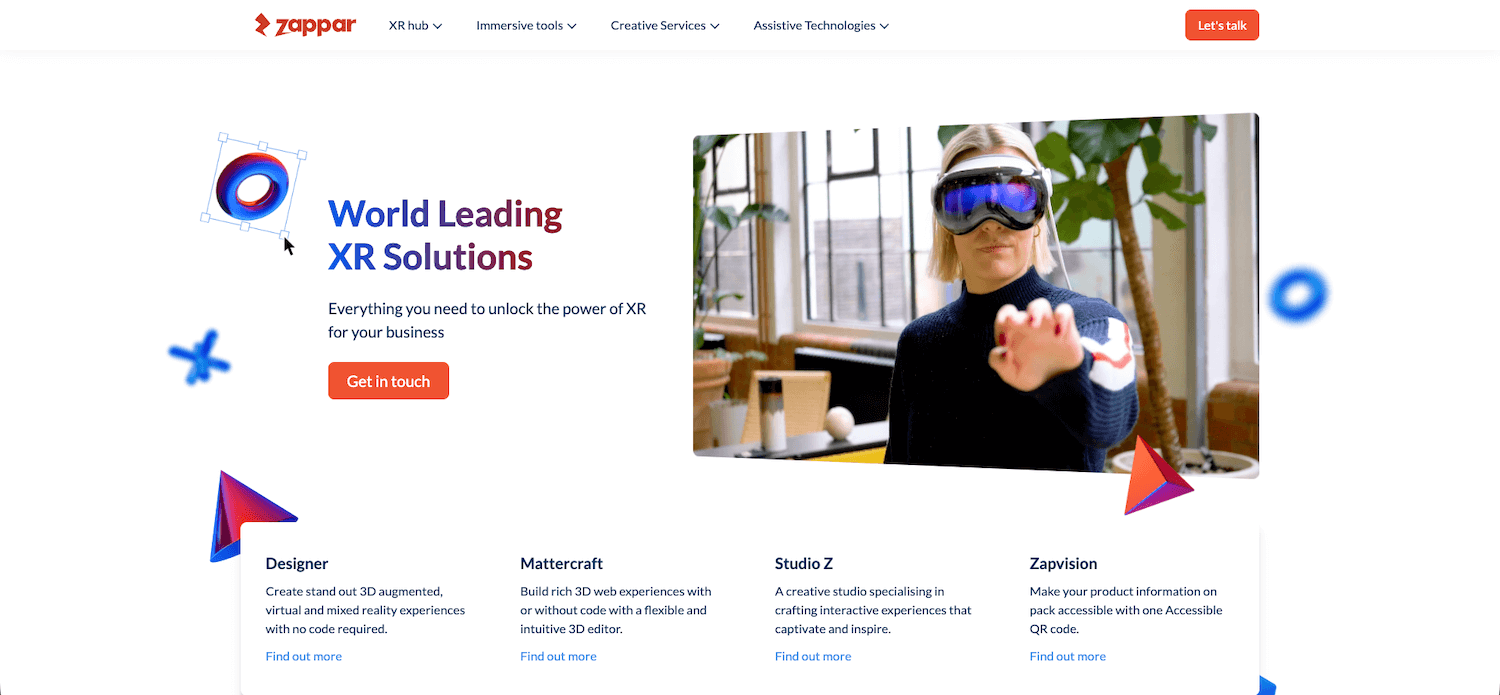
Zappar is a global AR company offering both custom AR campaigns and a developer platform, helping retailers and brands connect physical products with digital AR engagement.
Best Augmented Reality (AR) Architecture, Engineering & Construction Company: Autodesk
Autodesk XR Workshop extends its industry-leading design and BIM software into immersive AR experiences, enabling architects, engineers, and contractors to review designs more effectively across project teams.
Best Augmented Reality (AR) Field Service & Maintenance Company: RealWear

RealWear produces rugged, voice-controlled AR headsets designed for industrial and frontline environments.
Now let's explore these leading AR companies in detail, along with other key players driving innovation in the AR space.
Best Augmented Reality (AR) Hardware Companies
The core infrastructure of the AR industry is driven by the best augmented reality hardware companies that manufacture the smart glasses, AR glasses, mixed reality headsets, and tracking systems enabling immersive experiences.
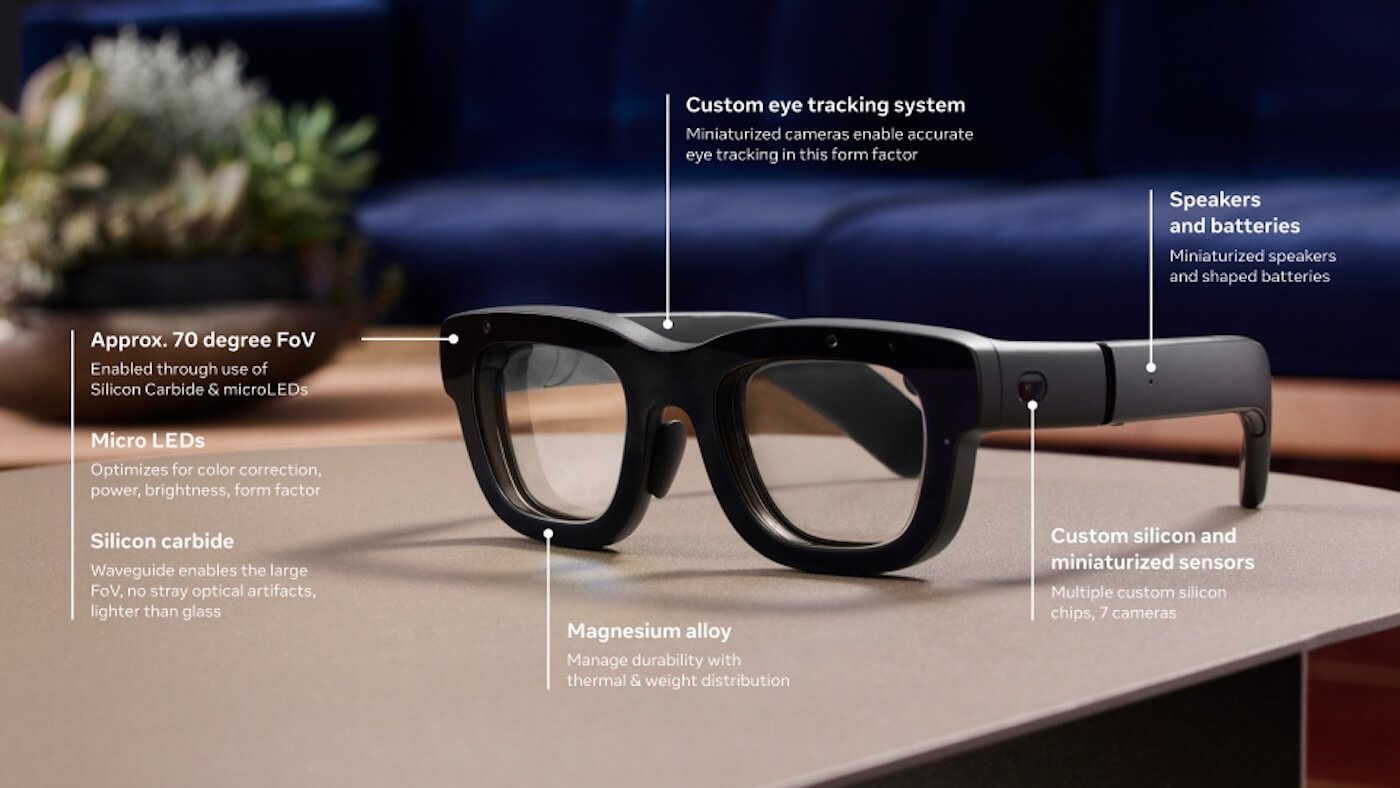
Meta is leading the AR industry through its Reality Labs division, investing heavily in AR glasses, AR/VR and mixed reality platforms. With a focus on accelerating the adoption of the next computing platform, Meta is building the ecosystem that blends AR hardware, software, and AI-driven experiences.
Apple is a leader in high-end AR with hardware with its Vision Pro headset. The company’s ecosystem integrates AR seamlessly across iPhone, iPad, and wearables, setting industry standards in usability, design, and developer ecosystem relations.
Snap Inc leads consumer AR glasses development with its Snap Spectacles device, combining standalone AR hardware with AI-powered features to deliver accessible augmented reality experiences for everyday users.
Best Augmented Reality (AR) Software Developers, Studios and Agencies
The success of AR hardware depends on the software applications that power meaningful use cases. These top augmented reality and mixed reality development companies, agencies, production teams and studios create the AR/VR apps, experiences, and enterprise solutions that drive industry adoption forward.
For a full detailed list see: Top Augmented Reality AR Development Companies in 2025, Top Spatial Computing Development Companies, Top Mixed Reality MR Development Companies, Top Digital Twin Development Companies or Top Unity Development Companies.
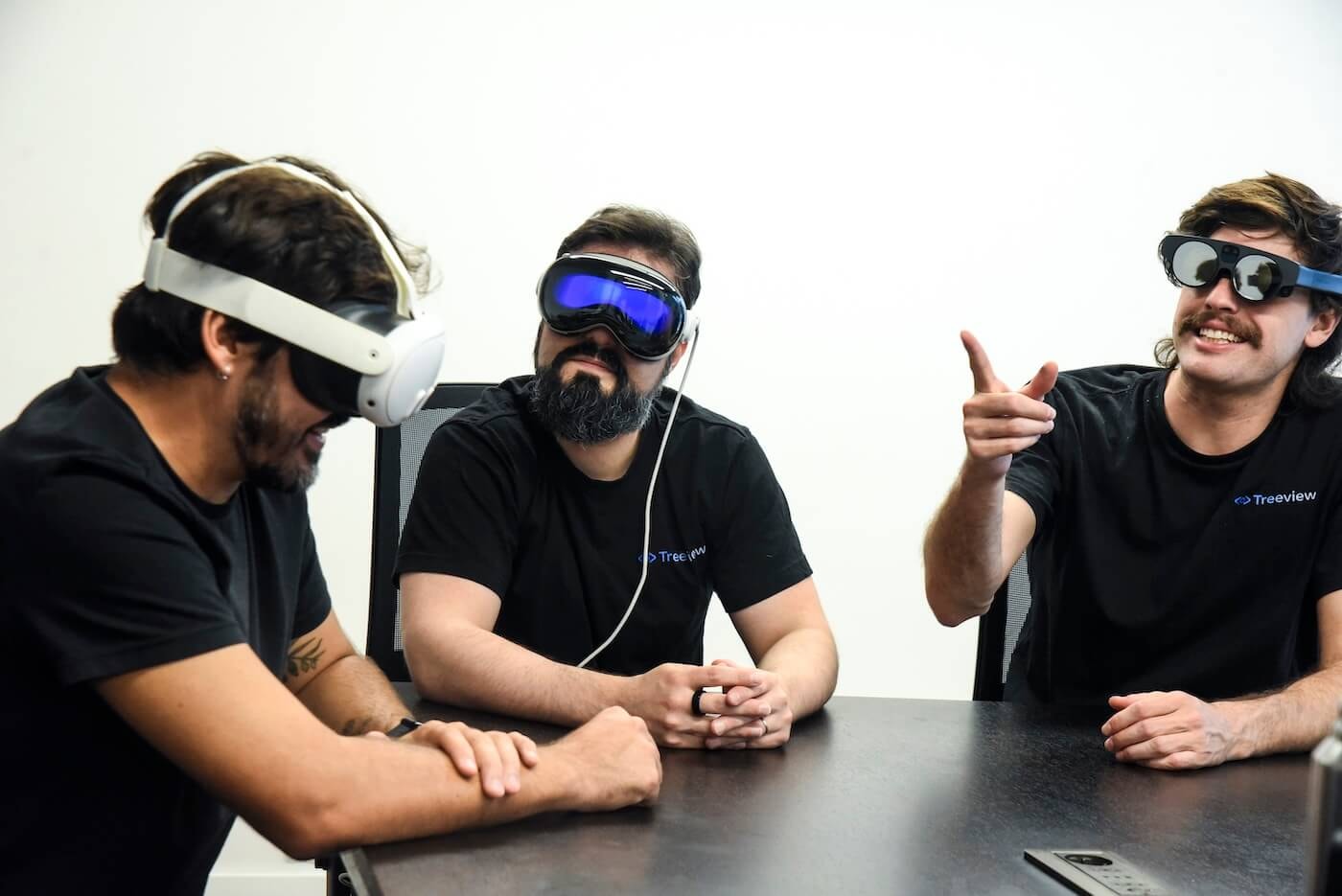
Treeview is a leading AR/VR development studio and XR company specialized in augmented reality (AR) and virtual reality (VR) solutions for enterprise clients worldwide. Known for its senior team and world-class quality, Treeview delivers custom applications across healthcare, energy, mining, education, retail and construction, helping global enterprise leaders drive industry innovation in spatial computing.
FFFACE.ME is a creative studio specializing in fashion and beauty AR experiences, FFFACE.ME produces high-impact social media filters and digital fashion campaigns for global top brands. Their work combines social branded AR filters with in-store activations such as AR mirrors, redefining how audiences engage with brands.
Takeaway Reality is an extended reality studio specializing in WebAR, VR training, and immersive brand experiences. The studio creates custom AR/VR solutions for clients across multiple industries. Their work includes web-based augmented reality campaigns, virtual showrooms and interactive training modules.
Top Augmented Reality (AR) Software Development Tools and Platforms
Development tools and platforms power the AR/VR software ecosystem, enabling top AR/VR developers and companies to build world-class AR applications and immersive experiences.
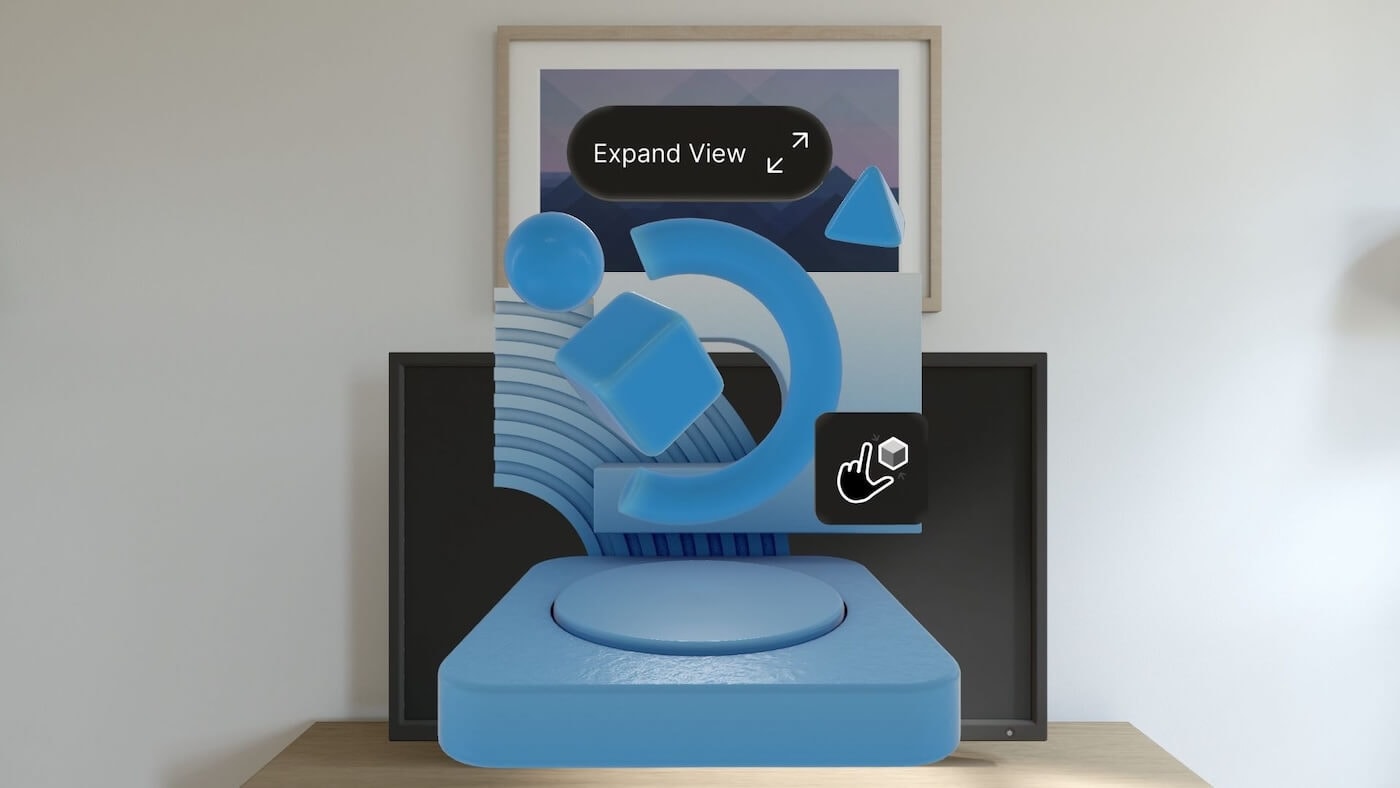
Unity Technologies is the leading development platform that powers the majority of AR/VR applications across all platforms. Their AR Foundation framework supports deployment across Meta Quest, magic leap, PICO, Microsoft HoloLens, Apple Vision Pro and AR mobile app development, making Unity the essential software development tool for the AR ecosystem.
Epic Games competes with Unity with Unreal Engine, which powers many of the most AR experiences available today, particularly for architecture and marketing applications. Unreal engine is widely regarded for its high-fidelity graphics and real-time rendering capabilities.
Godot Engine offers an open-source development platform that's emerging as a new early viable alternative for AR/VR development.
Development tools and platforms powering the mobile-specific AR ecosystem
8th Wall provides developer tools for mobile web AR experiences and browser-based AR experiences. Their WebAR Engine provides 6DOF SLAM tracking directly in web browsers.
Zappar focuses on creative AR experiences through their no-code Zapworks tool that enable developers to build simple ar apps.
Niantic Lightship is a mobile AR development platform provides tools for building large-scale, location-based mobile AR applications.
Best Augmented Reality (AR) Design Tools
Creating engaging AR apps requires specialized design tools that enable developers and designers to prototype, iterate, and collaborate on spatial interfaces and interactions.
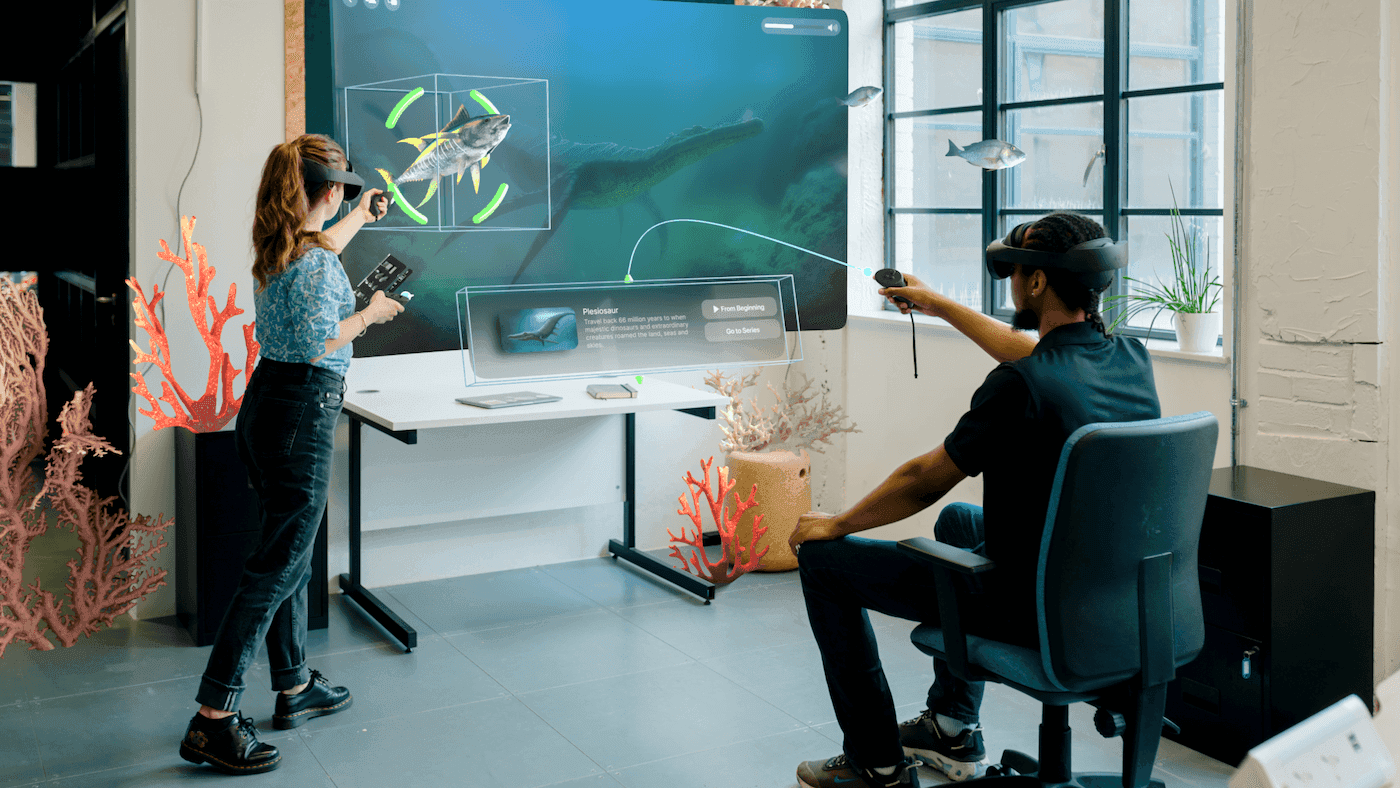
ShapesXR is the leading collaborative AR/VR design tools that enable teams to create and iterate on 3D designs together in virtual space. Their platform allows spatial designers to sketch, prototype, and present ideas to stakeholders in immersive environments.
Ordinary Objects is high-fidelity spatial prototyping platform that lets teams design and test augmented reality user flows in real time.
Blender is a 3D creation suite that supports the entire pipeline from modeling, rigging, and animation to simulation, rendering and compositing. Widely used across AR/VR industry, it enables artists and designers to create high-quality AR content, 3D assets and animations for spatial experiences.
Best Augmented Reality (AR) Companies by Industry Application
Augmented reality is being deployed across industries like healthcare, manufacturing, retail, gaming and enterprise, with top AR companies driving innovation in efficiency, training, and customer engagement. The following list highlights the leading companies driving AR innovation in each industry category.
Manufacturing & Industrial
AR in manufacturing and industrial applications is one of the most mature applications of AR technology, with leading industrial companies developing solutions that reduce errors, improve efficiency, and enhance worker training across global operations.
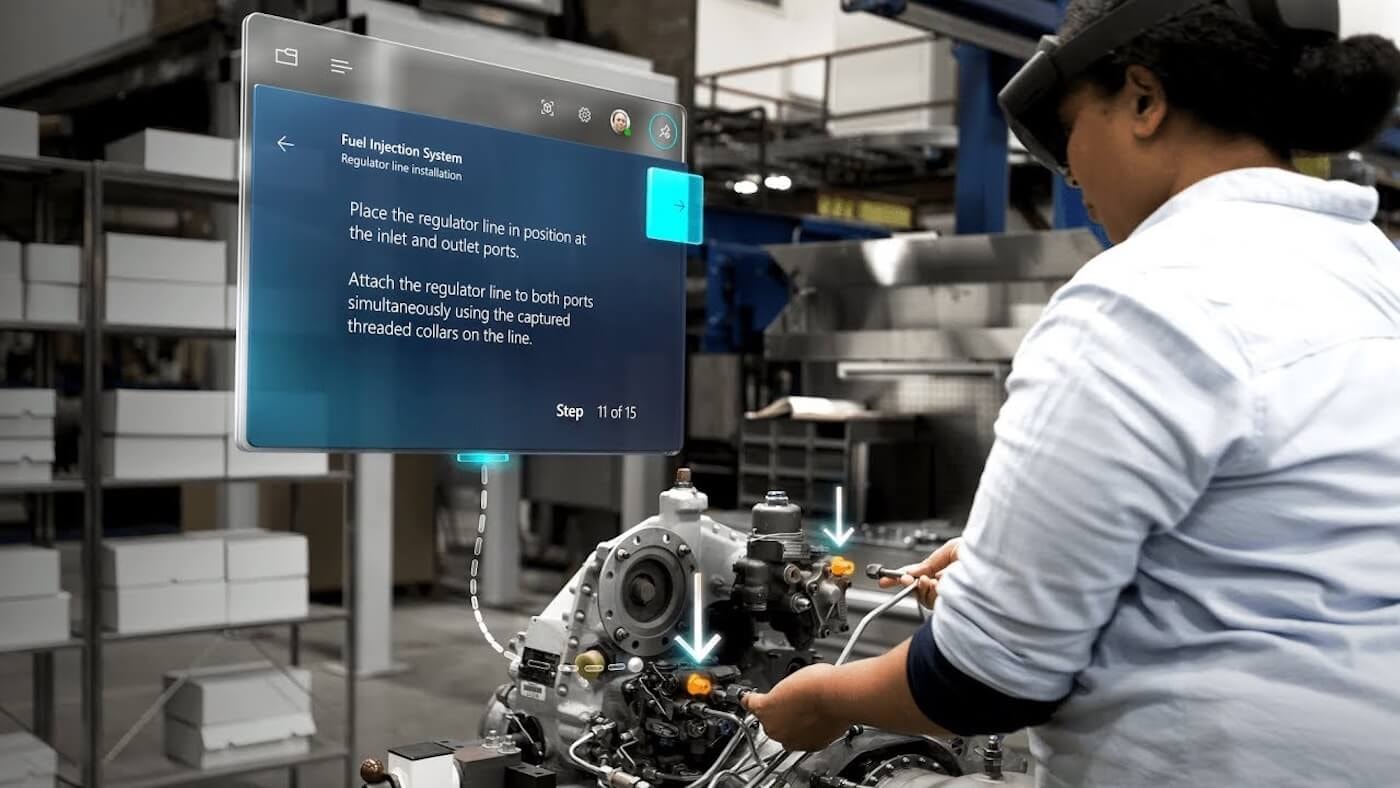
PTC's Vuforia is a leader in industrial AR platforms, with its Vuforia Studio tool powering assembly line guidance, quality control, and maintenance applications across the aerospace, automotive, and energy sectors.
TeamViewer's Frontline introduces smart glasses into industrial computing platforms, supporting Vuzix, RealWear, Magic Leap and HoloLens devices for warehouse and manufacturing operations.
Microsoft Dynamics 365 Guides for Hololens delivers step-by-step holographic instructions, helping frontline workers improve accuracy, training, and efficiency in manufacturing, healthcare, and field service operations.
Enterprise AR Innovation
AR technology is driving digital transformation initiatives across enterprises by deploying innovative solutions for digital twins, data visualization, process optimization and customer engagement, creating competitive advantages and new business models.
Treeview leads enterprise AR innovation by delivering custom AR/VR enterprise solutions for customer experience, data visualization, employee training, and operational efficiency. Their approach combines high-quality, custom-built enterprise AR applications delivered at startup-level speed, enabling large organizations to drive innovation in AR/VR technology.
Accenture offers enterprise AR consulting and implementation through Accenture Extended Reality services, helping enterprise companies integrate AR into their digital transformation strategies.
Capgemini provides AR consulting through their Applied Innovation Exchange, supporting global enterprises with AR strategy, proof-of-concept development, and large-scale implementation services.
Healthcare & Medical
AR in healthcare is enhancing medical training, surgical planning, and patient care, with top augmented reality companies creating solutions that improve clinical outcomes while lowering training costs and reducing procedure complexity.

Medtronic MCXC (Customer Experience Center) develops world-class AR deployments for surgeon education, surgical procedure onboarding and medical product understanding. By combining hands-on learning with immersive augmented reality, MCXC accelerates the adoption of new medical technologies and enhances training for healthcare professionals worldwide.
General Electric Healthcare combines augmented reality with AI through its Edison Digital Health Platform and global Experience Centers. These initiatives focus on immersive product education, workflow optimization, and clinical training for imaging and diagnostic solutions.
Siemens Healthineers operates digital hubs and labs that showcase augmented reality in medical imaging, interventional procedures, and workforce training. Their AR applications enable healthcare providers to interact with 3D medical equipment and patient data in real time.
Gaming & Entertainment
Leading AR gaming companies are pioneering a new gaming category through AR experiences that blend digital content with real-world environments, unlocking new gameplay and ways to have fun.
Resolution Games are the ar game developers behind titles such as Demeo and Spatial Ops, focusing on multiplayer experiences that showcase how AR can bring people together through shared interactive play.
Niantic, the studio behind Pokémon GO, pioneered location-based AR gaming at a global scale. Their platform merges AR with geospatial data to turn real-world environments into interactive game boards for millions of players worldwide.
Ludia is known for AR-powered mobile games like Jurassic World Alive, combining location-based gameplay with collectible mechanics to connect fans with iconic entertainment franchises in new interactive ways.
Retail & E-commerce
AR in retail enables new digital shopping experiences from top augmented reality companies, helping brands connect online and offline customers through digital product visualization and virtual try-on experiences.

Zappar develops custom AR campaigns and offers a self-service platform for retailers and brands. They have delivered immersive shopping and product packaging experiences for global partners, combining physical products with digital engagement.
FittingBox is a world leader in eyewear virtual try-on and eyewear digitization, enabling realistic AR experiences that allow customers to try glasses virtually.
Augment is an AR platform that enables retailers and e-commerce brands to visualize products in real environments through 3D models and WebAR.
Architecture, Engineering & Construction (AEC)
AR in construction, engineering and architecture helps teams visualize projects at scale, improve safety training, and enhance client communication, with top augmented reality companies delivering solutions that reduce errors, accelerate decision-making, and streamline design-to-build workflows.
Autodesk Workshop XR extends the company’s industry-leading design and BIM platforms into immersive environments.
VisualLive (by Unity), brings BIM models to life on-site through AR, allowing teams to overlay 3D designs on physical construction sites.
Bentley Systems Synchro XR integrates project scheduling with AR and mixed reality, allowing teams to experience sequencing and design changes in context, improving planning accuracy and reducing costly rework.
Field Service & Maintenance
AR in field service enables technicians to access real-time guidance, remote expert support, and hands-free workflows, reducing downtime, cutting travel costs, and improving first-time fix rates across industries such as manufacturing, utilities, mining and energy.

RealWear produces rugged, voice-controlled AR headsets like the HMT-1, designed for industrial environments giving workers access to remote experts, digital workflows, and documentation without disrupting their tasks.
Microsoft Dynamics 365 Remote Assist integrates with HoloLens to connect frontline workers with remote experts. Using live video, AR annotations, and shared documentation, it enables hands-free troubleshooting and collaboration that accelerates service resolution.
Scope AR delivers interactive, step-by-step AR work instructions and real-time remote support for field technicians to helps enterprises improve accuracy, reduce training time, and scale knowledge sharing across global service teams.
Key Technology Trends Driving AR in 2026

AI Integration Expands Industry Use Cases
Advances in Artificial Intelligence technology like computer vision, object tracking, and spatial understanding are unlocking new AR applications across industries. From intelligent object recognition to context-aware interactions, these artificial intelligence capabilities are expanding the business value of AR far beyond content generation, enabling more precise training, maintenance and real-time decision-making.
MicroLED Displays Enable Breakthrough in HMDs
Ultra-high-resolution MicroLED displays with lower power consumption are beginning to replace waveguide-OLED setups. RayNeo’s RGB MicroLED engine is among the first mass-producible solutions, with companies like Roki and RayNeo pushing AR glasses toward truly lightweight, comfortable form factors.
Spatial Computing Chips Create New Chip Category
Dedicated AR processors are enabling faster, more advanced technology and more efficient AR devices. Apple’s R1 Reality Chip is designed to understand the physical world with ultra-low latency, while XREAL’s X1 chip delivers real-time meshing with 3ms latency. Qualcomm’s Snapdragon XR series adds high-performance, low-power processing, making advanced AR wearables both powerful and energy efficient.
AR Platform Dominance Race Intensify Competition
Meta’s HorizonOS operating system leads the AR space with a growing device and developer ecosystem, while Apple’s visionOS maintains its strong and tightly integrated model. Google is catching up with AndroidXR, an open platform strategy designed to accelerate adoption through hardware partners with the Samsung Galaxy XR and smart glasses.
Investing in the Best Augmented Reality AR Companies
Investment Strategies
The augmented reality industry offers diverse investment opportunities, with big tech companies serving as a strong proxy for AR market growth. The largest AR companies like Apple and Meta provide AR exposure while balancing risk through diversified revenue streams across hardware, software, and advertising ecosystems.
Mark Zuckerberg has positioned Meta to dominate what the tech industry sees as the next computing platform, with Meta currently leading the consumer AR market through Ray-Ban Meta smart glasses and Meta Quest's 77% market share, backed by massive Reality Labs investments. Meanwhile, Apple leverages its established hardware ecosystem and distribution channel as AR becomes integrated into daily devices.
For higher-risk opportunities, specialized AR startups deliver concentrated AR exposure, though they typically require careful due diligence and are often limited to private markets.
AR Stocks and ETFs
Investing in augmented reality can be approached through both individual stocks and sector-focused exchange-traded funds (ETFs). Specialized ETFs such as the ARK Autonomous Technology & Robotics ETF (ARKQ) provide diversified exposure to the broader spatial computing ecosystem, including companies developing AR hardware, software, and enabling technologies.
For investors looking for direct equity exposure, leading technology companies with major AR initiatives such as Apple (AAPL), Meta Platforms (META), and Unity Software (U) offer strong positions in the market, alongside emerging AR startups.
Future Outlook for Augmented Reality Companies
The augmented reality industry has shifted from an emerging technology to a strategic focus for global enterprises. Leading companies have found their niches to dominate the next computing generation.
The next phase of the AR industry will reward companies that can balance technological innovation with practical implementation, creating solutions that enhance human capabilities and unlock new undiscovered use cases of technology.
Augmented reality has arrived and these companies are leading the way.
Frequently Asked Questions (FAQ)
What are augmented reality (AR) capabilities and why are they important?
Augmented reality capabilities refer to the technical features and functionalities that AR/VR devices and applications offer, such as spatial anchoring, hand tracking, camera passthrough/optical passthrough, 6DOF tracking, and environment occlusion handling. These AR features are crucial because they determine how effectively an AR platform can deliver digital content overlays on the physical world.
How do augmented reality glasses differ from augmented reality headsets?
AR glasses are typically lightweight, wearable devices resembling traditional eyewear designed for everyday use, focusing on discreet digital overlays and convenience. AR headsets are usually head mount display devices that often provide immersive mixed reality (AR/VR) experiences with wider fields of view and advanced sensors, mainly used in enterprise, gaming, or specialized applications.
How can businesses create augmented reality (AR) apps?
Businesses can create AR applications by partnering with specialized AR software development companies, agencies or studios such as Treeview. Working with an experienced AR development team ensures high-quality execution, industry expertise, and the ability to scale solutions across platforms. This approach allows businesses to retain full ownership of the intellectual property, giving them long-term control and flexibility over their AR strategy.
What is the role of mobile AR app development in augmented reality (AR) adoption?
Mobile AR played a crucial role since Apple launched ARKit in 2017, serving as the key bridge technology until the AR industry developed similar capabilities in head-mounted displays and AR glasses. Mobile AR remains highly valuable because it's available to hundreds of millions of users worldwide, enabling massive scale distribution of mobileAR applications and experiences that would currently not be feasible with dedicated hardware alone.
How is augmented reality (AR) adoption evolving in different industries?
AR adoption is rapidly growing across industries such as healthcare, manufacturing, retail, education, and entertainment. Enterprise sectors use AR for training, remote assistance, guided work, digital twin data visualization and efficiency, while consumer markets embrace AR in mobile games, social media filters, and virtual try-ons, driving significant user engagement.
What emerging technologies are shaping the future of augmented reality (AR)?
Emerging technologies like AI integration, computer vision, MicroLED displays, spatial computing chips, 5G connectivity, remote rendering cloud services, and edge computing are enabling the next generation of AR experiences. These advancements improve AR and VR device performance, reduce latency, enable real-time data processing, and allow for scalable AR/VR experiences, accelerating the technology's transition to mainstream use.
How do augmented reality (AR) and virtual reality (VR) technologies complement each other?
Augmented reality enhances the physical world by overlaying digital content onto real environments, enabling users to interact with both physical and virtual objects simultaneously. Virtual reality experiences create fully immersive digital environments that transport users into simulated worlds for training, entertainment, and collaboration.
Together, AR and VR form spatial computing (also known as extended reality or XR), which allows users to interact with digital content in three-dimensional space rather than being confined to flat screens.
What are software platforms in the Augmented Reality (AR) ecosystem?
Software platforms like Unity and Unreal Engine provide essential tools and frameworks for AR/VR development teams like Treeview to build VR and AR content and apps. They enable developers to create, deploy, and manage AR/VR apps efficiently across multiple devices and operating systems.
How are digital twins used in augmented reality (AR)?
Digital twins are digital replicas of physical objects, systems, or environments of the physical world. These digital twins can be used in AR to simulate real-world conditions for monitoring, training, and predictive maintenance. They enable enterprises to visualize and interact with complex data in an intuitive way, improving efficiency and decision-making.
What should investors consider when investing in Augmented Reality (AR) companies?
Investors should evaluate a company's technology stack, client portfolio, market position as a global leader, financial health, and ability to innovate in AR products and services. Diversifying investments across hardware, software, and platform providers can balance risk and maximize exposure to the growing AR industry.
What are new AR apps and how do they impact the industry?
New AR apps continuously expand the possibilities of augmented reality by introducing new features and industry use cases. These apps drive AR adoption by allowing users to engage with immersive content in new ways, enhancing customer engagement and creating fresh opportunities for businesses across sectors. For further reading see: Top examples of Spatial Computing.
Why is technical proficiency important in the Augmented Reality (AR) industry?
Technical proficiency ensures that AR applications can deliver high-quality, reliable, and scalable AR experiences. It covers expertise in software development, 3D content creation, 3D animations, spatial product design, and user interface and user experience design. These are all essential for creating high-quality AR experiences that meet user expectations and industry standards.
What are the key points to consider when choosing an Augmented Reality (AR) development company?
The first step is conducting a discovery process with AR experts like Treeview to understand what industry problem you're trying to solve and how AR technology can best address it. Key considerations include the company's specialized AR expertise and track record, their ability to integrate with your existing systems, and their commitment to long-term partnerships rather than one-time AR projects. Evaluate their portfolio of deployed results, technical capabilities across the full AR development stack, and their experience in your specific industry to ensure they can deliver solutions that align with your business goals and drive measurable outcomes.
What are common mistakes in augmented reality AR development partner selection?
Common mistakes include focusing on price over technical expertise, as AR requires specialized knowledge that low-cost options often lack. Another error is choosing generalist companies that "also do AR" instead of dedicated AR specialists, who lack deep understanding of AR's unique challenges. Finally, many companies select vendors focused on one-time AR projects rather than long-term partnerships, missing continuity as AR technology rapidly evolves. Prioritize specialized AR expertise and proven track records over cost alone.
What are best practices in augmented reality AR development partner selection?
Best practices include choosing specialized AR teams over generalists, evaluating actual deployed project results rather than prototypes, prioritizing long-term partnership approach over one-time vendors, and ensuring integration capabilities with existing business systems. Focus on proven expertise and track records rather than lowest cost options.
How do cost and pricing structures work for AR development services?
AR development costs vary significantly based on complexity and scope. Simple AR apps typically range from $50,000-$150,000, while complex enterprise AR solutions can cost $200,000-$500,000+. Hourly rates for top AR companies range from $50-200+ per hour depending on specialization and expertise level. Factors affecting cost include platform requirements, content complexity, AR features, AI integration needs, and ongoing support requirements.
How are AR filters enhancing user engagement?
AR filters allow users to interact with digital content in real-time, often through social media platforms. They enhance user engagement by providing entertaining, personalized, and shareable experiences, which increase brand loyalty and drive marketing effectiveness in the AR space.
What industries benefit from augmented reality?
Augmented reality (AR) is transforming multiple industries across healthcare, manufacturing, retail, education, construction, automotive, aerospace, logistics, and entertainment sectors.
How does XR technology relate to augmented reality (AR)?
XR technology, or extended reality, is an umbrella term encompassing augmented reality (AR), virtual reality (VR), and mixed reality (MR).
How does Spatial Computing relate to augmented reality (AR)?
Spatial Computing is the umbrella term that encompasses augmented reality (AR), virtual reality (VR), and mixed reality (MR). AR is a key component of Spatial Computing, which refers to technologies that enable interaction with digital content in three-dimensional space.