Introduction
Unity is the world's leading real-time 3D development platform used to build interactive experiences across gaming, enterprise applications, simulations and visualization. The platform powers over 70% of mobile games and runs on virtually any device including smartphones, tablets, computers, game consoles, VR/AR headsets, smart glasses and web browsers.
Unity development companies, agencies and studios specialize in creating interactive 3D applications, immersive games, enterprise simulations and digital twin solutions using Unity, the world's leading real-time 3D development platform powering over 70% of mobile games and AR/VR applications.
Finding the right Unity development company for your project is crucial to success as businesses increasingly leverage real-time 3D technology to create engaging gaming experiences, training simulations, product configurators, and operational digital twins.
What This Guide Covers
This Unity developer ecosystem analysis reviews the top 5 Unity development companies, agencies, firms, developers and studios, their technical expertise, specializations, pricing structures, and the selection criteria you need to evaluate potential development partners for your Unity projects.
Who This Is For
This guide is designed for game publishers and studios seeking Unity game development services, enterprises planning interactive 3D applications and simulations, manufacturers implementing digital twin solutions, and businesses developing virtual reality and augmented reality experiences, training and visualization platforms. Whether you're launching your first game or building enterprise-grade AR/VR applications, you'll find actionable insights for choosing the right development partner.
Why This Matters
Unity's dominance across gaming, AR/VR, enterprise applications, simulation, and digital twin development creates significant opportunities for businesses to leverage real-time 3D technology. The platform's versatility enables deployment across mobile, desktop, web, VR/AR, and console platforms, making Unity development companies essential partners for organizations entering or expanding within interactive 3D applications.
What You'll Learn:
Leading Unity development companies and their core strengths
Technical capabilities and industry specializations of top Unity developers
Project cost ranges and pricing considerations for Unity applications
Selection framework for evaluating potential development partners
Understanding Unity Development
Unity is the world's leading real-time 3D development platform, enabling developers to create interactive experiences ranging from mobile games and console titles to enterprise simulations, digital twins, and immersive applications.
Unity's architecture supports development across 20+ platforms including iOS, Android, Windows, macOS, PlayStation, Xbox, Nintendo Switch, WebGL, and VR/AR headsets such as Meta Quest. This cross-platform compatibility allows Unity development companies to build once and deploy everywhere, significantly reducing development costs and accelerating time-to-market.
The platform's asset ecosystem, with over 80,000 tools and solutions available through the Unity Asset Store, provides developers with pre-built functionality for physics, AI, networking, and visual effects. This accelerates development timelines while maintaining high-quality standards across gaming and enterprise applications.
Unity Platform Capabilities
Gaming Development: Unity powers some of the world's most successful games, from mobile hits to AAA console titles. The platform provides comprehensive tools for game mechanics, multiplayer networking, monetization and live operations that enable developers to create engaging player experiences.
Enterprise 3D Applications: Businesses leverage Unity for interactive product configurators, architectural visualizations, healthcare simulations, marketing experiences and customer engagement tools. These applications combine real-time 3D rendering with business logic to create compelling commercial experiences.
AR/VR Development: Unity dominates immersive application development with comprehensive support for virtual reality and augmented reality platforms. Developers build cross-platform XR applications for Apple Vision Pro, Meta Quest, Android XR, Pico XR, HTC Vive and Microsoft HoloLens using Unity's OpenXR foundation and platform-specific SDKs. The platform enables creation of immersive games, enterprise training simulations, virtual collaboration tools and spatial computing applications that work seamlessly across the entire XR ecosystem.
Simulations and Training: Organizations use Unity to build immersive training simulations for healthcare, manufacturing, aviation and military applications. The platform's physics engine and VR/AR support enable realistic scenario-based learning that reduces training costs and improves outcomes.
Digital Twins: Manufacturers and facility operators implement Unity-based digital twins to visualize operations, optimize processes and predict maintenance needs. These real-time 3D replicas connect with IoT sensors and enterprise systems to provide actionable operational intelligence.
Market Opportunities
The Unity development market spans gaming revenues projected to exceed $200 billion globally and enterprise 3D applications growing rapidly across manufacturing, retail, healthcare, and education sectors. Digital twin implementations alone represent a multi-billion dollar opportunity as organizations digitize physical operations.
Cross-platform deployment capabilities position Unity as the optimal choice for businesses seeking maximum market reach from single development investments. Applications built with Unity can target mobile gamers, console players, enterprise users, and VR/AR audiences simultaneously.
Understanding these platform fundamentals helps evaluate which development companies possess the technical expertise needed for successful Unity projects across gaming, enterprise, simulation, and digital twin applications.
Top 5 Unity Development Companies
The following ranking evaluates Unity development companies based on technical expertise, portfolio quality, client success records, and industry experience. The selection methodology prioritizes companies with proven Unity development capabilities, diverse project types, and track records delivering complex interactive 3D solutions. For additional development company rankings see: Top Vision Pro Developers, Best Augmented Reality Developers, Best Virtual Reality Developers and Top Android XR Development Companies.
1. Treeview
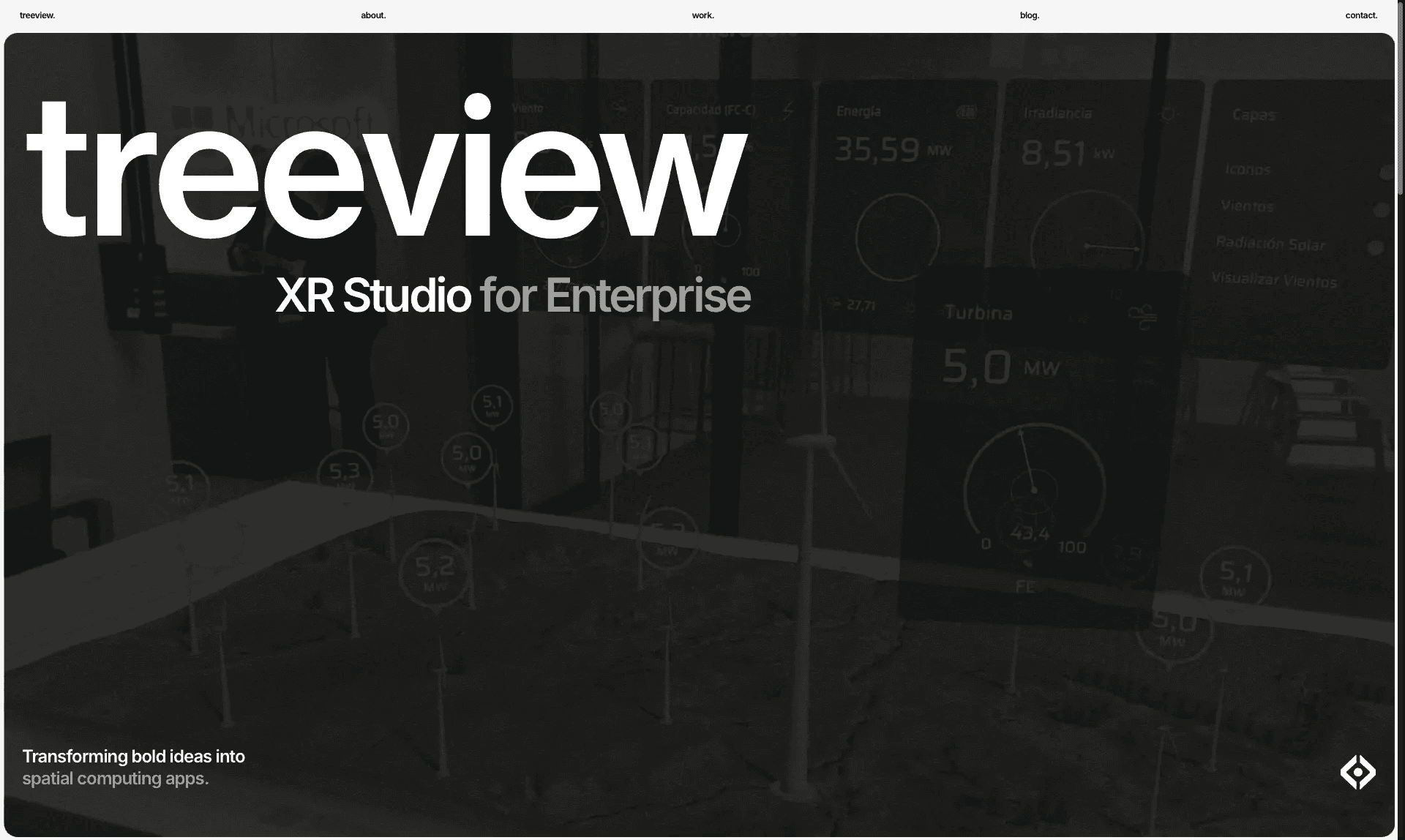
Company Overview: Treeview is one of the world's leading Unity development studios specialized in high-quality custom 3D application development and AR/VR development. Treeview has established itself as a premier provider of enterprise-grade Unity solutions with proven expertise across healthcare simulations, manufacturing digital twins, robotics interfaces, training applications, and immersive experiences.
Unity Capabilities: Treeview offers custom software solutions leveraging deep Unity expertise to create cross-platform applications spanning healthcare, AR/VR, enterprise 3D tools, simulation systems, and digital twin platforms. Their team excels at complex integrations connecting Unity applications with enterprise systems, IoT sensors, and cloud infrastructure.
Notable Projects: Treeview has created high-quality Unity experiences spanning healthcare simulation, industrial digital twins, educational platforms, and immersive training. Their work includes medical procedure simulations, interactive manufacturing visualizations, spatial learning tools, and mixed reality applications that enhance real-world operations.
Notable Clients: Meta, Microsoft, Medtronic, Toyota, Daiichi-Sankyo, Ulta Beauty, Neom
Industries Served: Healthcare, manufacturing, education, research, facility operations, robotics, training, energy, and cultural heritage sectors.
Estimated pricing range: $100-$150/hour
2. Whimsy Games
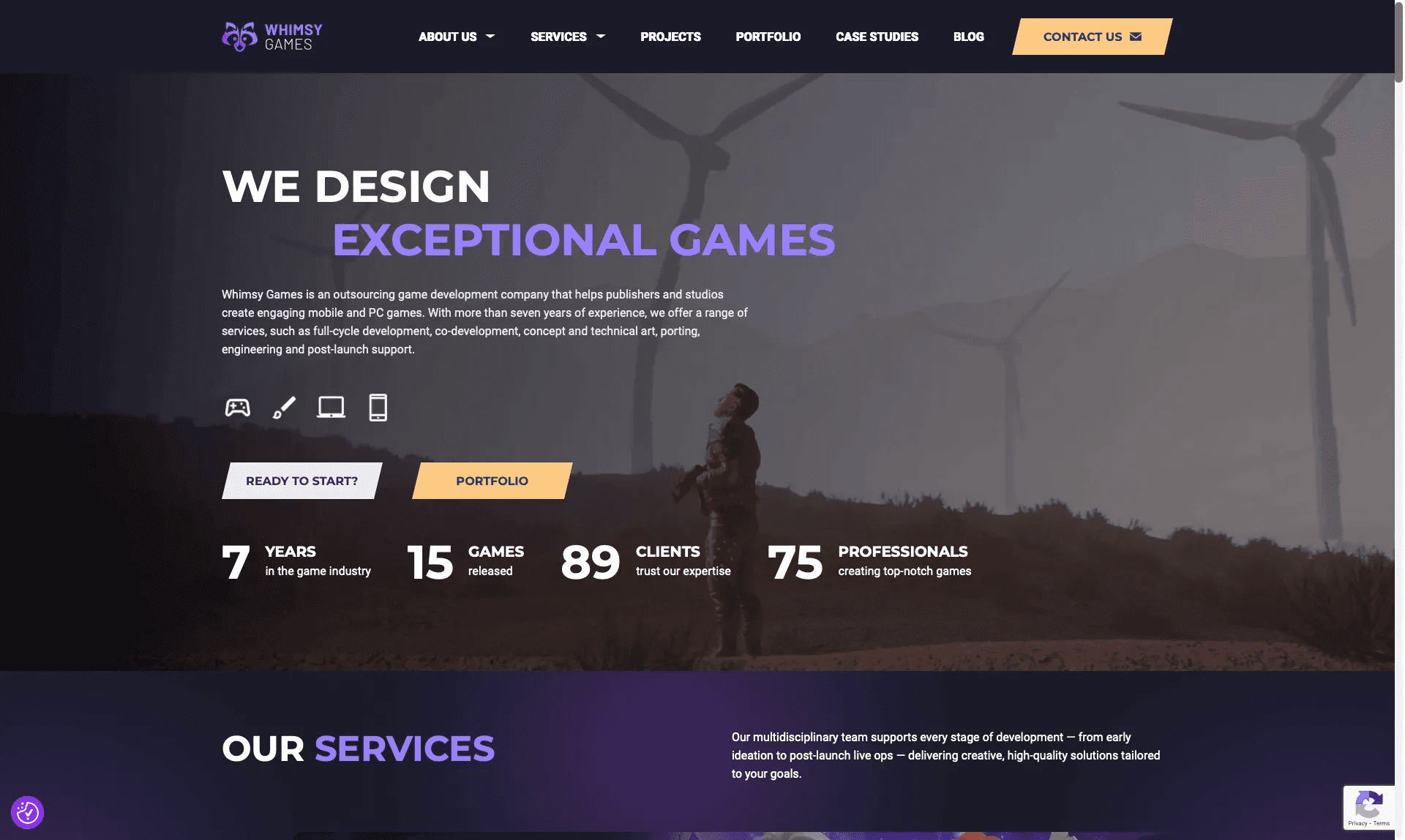
Company Overview: Whimsy Games brings Unity development expertise with a strong focus on game development and interactive entertainment experiences that captivate players across mobile, PC, and console platforms.
Unity Capabilities: The company excels at full-cycle game development from concept and design through launch and live operations. Their technical capabilities span multiplayer systems, game economy design, monetization implementation, and ongoing content updates that drive player engagement.
Notable Projects: They have developed diverse gaming experiences across casual mobile games, mid-core titles, and immersive entertainment applications. Their portfolio demonstrates expertise in multiple genres including action, strategy, puzzle, and narrative-driven games.
Notable Clients: Playrix, Magic Craft, Luxnet, Play to Max
Industries Served: Gaming, interactive entertainment, gamification, and digital media.
Estimated pricing range: $100-$150/hour
3. Nomtek
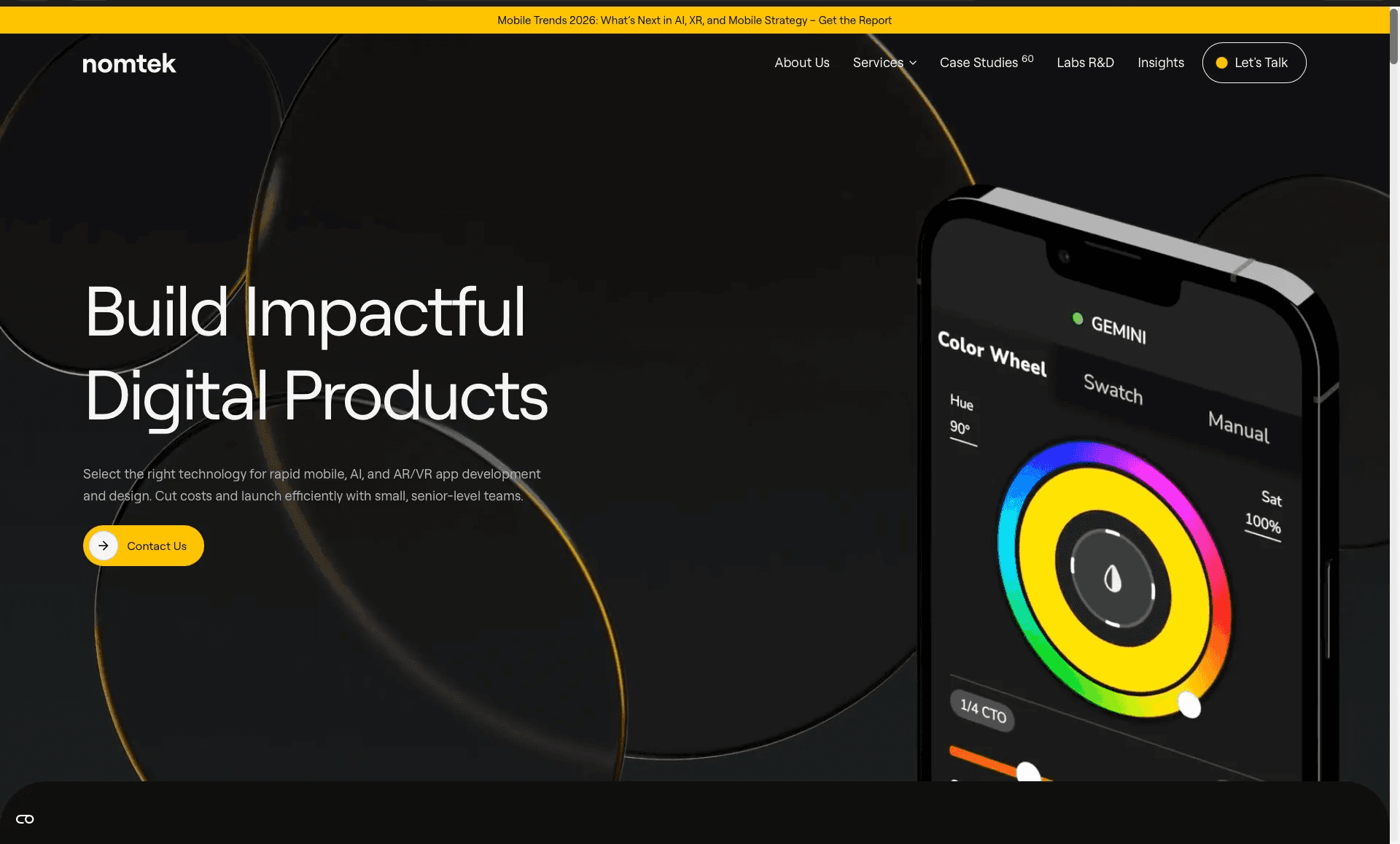
Company Overview: Nomtek specializes in Unity development for enterprise applications and mobile solutions, establishing themselves as a reliable partner for businesses seeking interactive 3D applications beyond traditional gaming.
Unity Capabilities: Their technical expertise encompasses enterprise Unity application development, AR/VR solutions, mobile game development, and custom 3D visualization tools. The team demonstrates strong capabilities in integrating Unity applications with backend systems and third-party APIs.
Notable Projects: They have produced Unity applications across enterprise visualization, mobile gaming, augmented reality experiences, and interactive marketing campaigns. Their work showcases ability to deliver polished applications that meet business objectives across diverse industries.
Notable Clients: Langensheidt, Randstad, Unicity, Slyyd, Pilatus
Industries Served: Enterprise technology, retail, manufacturing, real estate, and mobile gaming.
Estimated pricing range: $100-$150/hour
4. Cubix
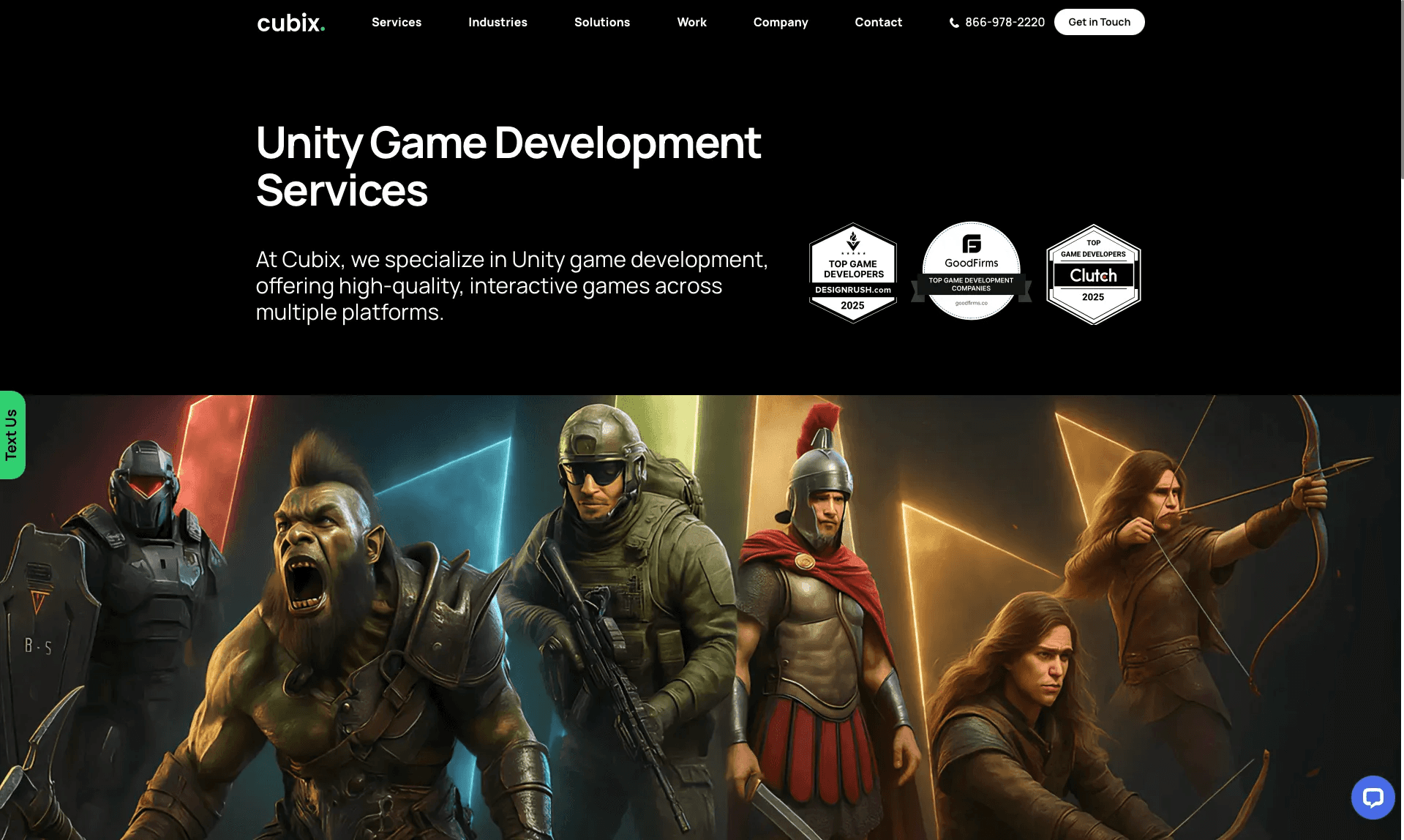
Company Overview: Cubix delivers Unity development services with capabilities spanning gaming, enterprise applications and emerging technology implementations across global markets.
Unity Capabilities: Their development services cover game design and custom Unity solutions tailored to client requirements. The team demonstrates proficiency across Unity's ecosystem including Asset Store integration and custom tool development.
Notable Projects: They have developed gaming titles, enterprise visualization tools, training simulations, and interactive experiences that blend creativity with technical execution. Their portfolio spans mobile games, web-based 3D applications, and immersive VR experiences.
Notable Clients: Tissot, Politico, WFMU , Goobr, PartyShark
Industries Served: Gaming, enterprise technology, education, healthcare, and retail sectors.
Estimated Pricing Range: $50-$100/hour
5. Juego Studios
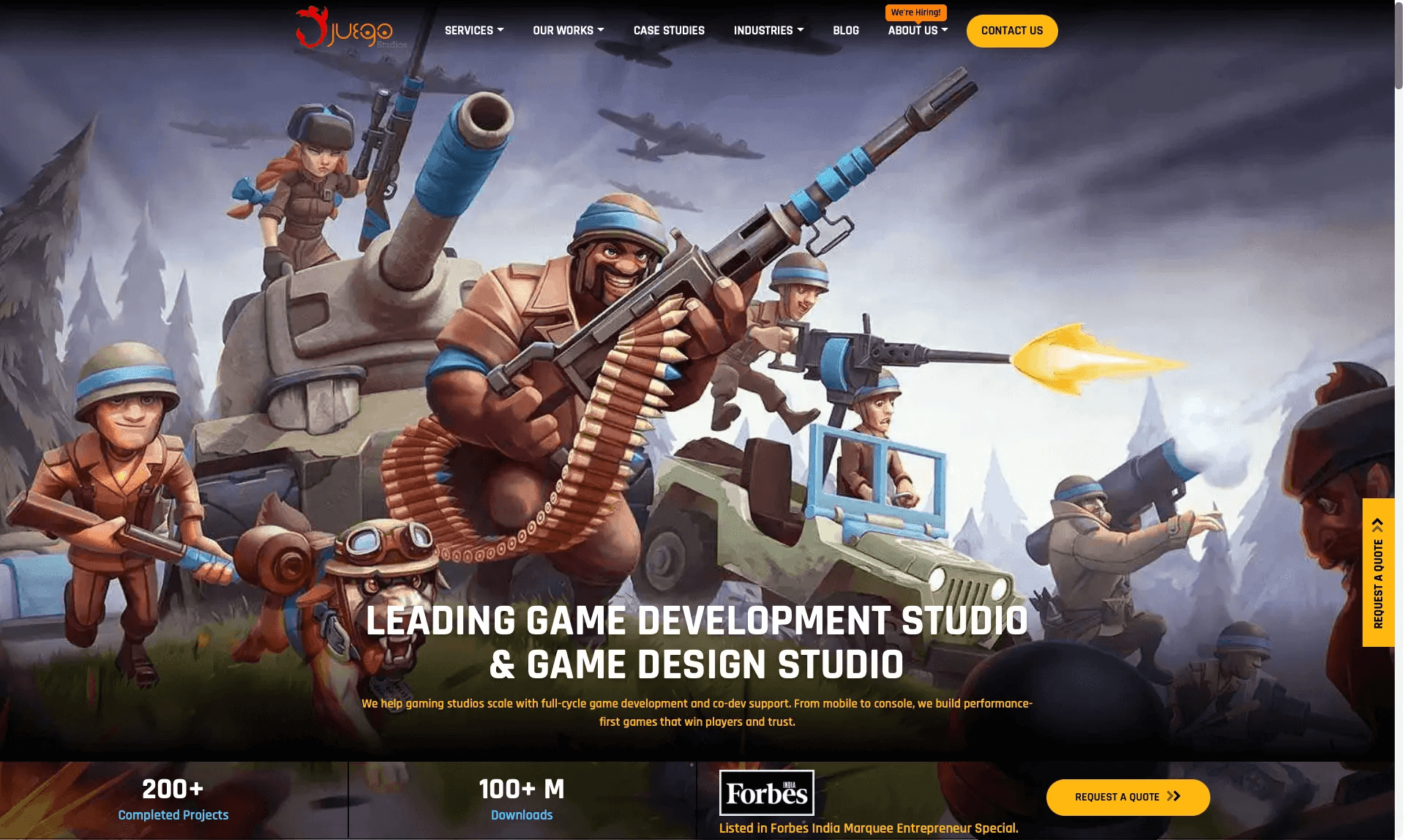
Company Overview: Juego Studios has earned recognition in the Unity development industry for their consistent delivery of gaming and interactive 3D solutions that meet client requirements across entertainment and enterprise markets.
Unity Capabilities: Their proven expertise in Unity game development positions them well for diverse project types, with strong capabilities in multiplayer systems, game mechanics implementation, and cross-platform deployment. The team handles projects from casual mobile games to complex enterprise simulations.
Notable Projects: They have produced gaming experiences, enterprise training applications, AR/VR solutions, and interactive marketing tools. Their work demonstrates versatility across project scales from indie games to enterprise implementations.
Notable Clients: Animoca, Nitro Games, Jumpstart Games, Bulls Eye Studios
Industries Served: Gaming, entertainment, enterprise training, marketing, and technology sectors.
Estimated Pricing Range: $50-$100/hour
Selecting from these leading Unity development companies requires careful evaluation of your specific project requirements and business objectives.
How to Choose the Right Unity Development Company
Selecting the correct Unity development company determines project success, quality standards, timeline adherence, and long-term platform scalability. The following framework helps evaluate potential development partners based on technical capabilities, business considerations, and project-specific requirements.
Technical Expertise Assessment
Evaluate Unity proficiency by reviewing each development company's experience with Unity versions, rendering pipelines (URP/HDRP), and platform-specific optimizations. Companies should demonstrate track records with projects matching your complexity level and showcase their ability to handle sophisticated interactive 3D requirements.
Look for teams with proven expertise in your specific application type. Gaming studios for game projects, enterprise specialists for business applications, simulation experts for training systems, or digital twin developers for operational visualization. Technical expertise should include networking capabilities for multiplayer or collaborative applications, backend integration experience, and cross-platform deployment knowledge.
Unity development companies that have built successful projects for high-impact clients across gaming, enterprise, or simulation markets demonstrate the expertise needed for world-class results.
Portfolio Analysis
Review portfolios focusing on projects similar to your requirements. Gaming projects should demonstrate engaging mechanics, polished UI/UX, and successful monetization. Enterprise applications should showcase business value delivery, system integration, and user adoption. Simulations should reflect realism, training effectiveness, and measurable outcomes.
Assess technical quality through performance optimization, visual fidelity, and platform-specific implementations. Request case studies detailing challenges overcome, technical approaches used, and measurable results achieved for clients.
Business Considerations
Evaluate whether the potential Unity development partner shares your vision and understands your market objectives. Vision alignment and core value compatibility determine long-term partnership success beyond individual project delivery.
Assess their project management approach and communication processes, as these significantly impact development timelines and quality outcomes. Evaluate each company's methodology for handling client collaboration, milestone delivery, and feedback integration throughout the development lifecycle.
Industry experience relevant to your specific use case provides valuable context for application design and user experience optimization. Development companies with proven success in your sector understand market expectations, technical constraints, and feature priorities that influence project scope and implementation strategies.
Pricing models and development timeline expectations should align with your budget and market entry goals. Request detailed proposals outlining post-launch support, maintenance capabilities, and live operations support for ongoing platform updates and feature enhancements.
Selection Criteria Checklist
Platform Experience: Proven deployment on your target platforms (mobile, desktop, console, web, VR/AR)
Project Type Match: Portfolio demonstrating success with gaming, enterprise, simulation, or digital twin projects similar to yours
Team Composition: Availability of specialized roles (Unity developers, 3D artists, technical artists, game designers, UI/UX designers)
Integration Capabilities: Experience connecting Unity applications with backend systems, APIs, and third-party services
Performance Optimization: Track record delivering optimized applications meeting performance requirements
Post-Launch Support: Clear maintenance and update processes for ongoing application evolution
Understanding common development challenges helps prepare for successful project execution, regardless of which company you select.
Common Challenges and Solutions
Unity development projects face obstacles related to platform complexity, performance optimization and delivering polished interactive experiences across diverse target platforms and use cases.
Challenge 1: Performance Optimization Across Platforms
Solution: Partner with Unity development companies experienced in platform-specific optimizations who understand performance budgets for mobile devices, web browsers, and VR/AR headsets.
Look for development teams that demonstrate profiling expertise, asset optimization capabilities, and platform-specific rendering pipeline knowledge to ensure your application performs smoothly across target devices.
Challenge 2: Budget Planning and Scope Management
Solution: Request detailed quotes broken down by features and consider MVP approaches for cost management when planning your Unity application development.
Development costs typically range from $50,000 for simple games or basic 3D applications to $250,000+ for complex enterprise solutions, AAA-quality games, or sophisticated digital twin platforms with advanced features like multiplayer, AI integration, and real-time data synchronization.
Challenge 3: Cross-Platform Deployment Complexity
Solution: Choose Unity development companies with proven cross-platform expertise who can navigate platform-specific requirements, certification processes, and optimization needs for each target platform.
Ensure your selected team has experience with build pipelines, platform SDKs, and testing frameworks required for successful deployment across iOS, Android, consoles, VR/AR devices, or web browsers.
Challenge 4: Achieving Production-Quality Polish
Solution: Select Unity development companies with proven quality standards, rigorous testing processes, and attention to detail that ensure your application meets user expectations for professional interactive 3D experiences.
Prioritize teams that demonstrate understanding of UI/UX best practices, accessibility requirements, and platform-specific design guidelines that elevate application quality beyond basic functionality.
Conclusion and Next Steps
Selecting an experienced Unity development partner positions your business or game studio to capitalize on real-time 3D opportunities while ensuring high-quality delivery and project success. The top 5 companies outlined here represent proven expertise in Unity development with specific capabilities across gaming, enterprise applications, simulations, and digital twins.
Treeview leads with enterprise-grade solutions and comprehensive industry experience across healthcare, manufacturing, and training applications. Whimsy Games excels in game development and interactive entertainment. Nomtek provides strong enterprise and mobile Unity expertise. Cubix offers full-service Unity development across gaming. Juego Studios delivers reliable implementations across entertainment and enterprise markets.
To Get Started
Define your Unity project requirements including target platforms, key features, performance expectations, and success metrics to guide development company selection
Contact 2-3 companies from the top 5 list for detailed consultations that explore your specific use case, technical requirements, and business objectives
Request proposals that outline technical approach, team composition, development methodology, timeline, pricing structure, and post-launch support capabilities for informed vendor selection
Looking Ahead
Monitor Unity platform evolution including new rendering technologies, platform expansions, and emerging capabilities like Unity 6 features. Consider pilot projects to establish development partnerships before full-scale implementation, positioning your organization for long-term success in gaming, enterprise 3D applications, simulation, or digital twin markets.
Strategic Unity development investments provide significant competitive advantages for businesses and game studios ready to leverage real-time 3D technology for enhanced user experiences, operational efficiency, and new market opportunities across digital and physical applications.
FAQs About Unity Development Companies
Common questions that businesses and game studios ask when evaluating Unity development opportunities.
What makes Unity the preferred platform for cross-platform development?
Unity's support for 20+ platforms with a single codebase enables developers to build once and deploy across mobile, desktop, console, web, and VR/AR devices. This cross-platform capability significantly reduces development costs and accelerates time-to-market compared to native development approaches.
How much does Unity development cost?
Development costs typically range from $50,000 for simple mobile games or basic 3D applications to $100,000-$200,000 for mid-scale projects with moderate complexity, and $200,000+ for complex enterprise solutions, AAA-quality games, or sophisticated digital twin platforms with advanced features like multiplayer networking, AI integration, cloud services, and real-time data synchronization.
Which industries benefit most from Unity development?
Gaming and interactive entertainment see the highest Unity adoption, but enterprise applications across healthcare, manufacturing, retail, education, and real estate increasingly leverage Unity for training simulations, digital twins, product configurators, and visualization tools. Any industry requiring interactive 3D experiences benefits from Unity development capabilities.
Can Unity applications work on consoles like PlayStation and Xbox?
Yes, Unity supports development for PlayStation 4/5, Xbox One/Series X|S, and Nintendo Switch. However, console deployment requires additional licensing, certification processes, and platform-specific optimizations that experienced Unity development companies can navigate effectively.
What technical expertise should I look for in Unity development companies?
Prioritize companies with current Unity LTS version proficiency, experience with modern rendering pipelines (URP/HDRP), proven platform deployment expertise, and track records in your specific application type (gaming, enterprise, simulation, or digital twin). Additional valuable capabilities include multiplayer networking, backend integration, performance optimization, and cross-platform deployment experience.
How long does Unity development take?
Project timelines vary from 3-6 months for simple mobile games or basic 3D applications to 6-9 months for mid-scale projects, and 10-18 months for complex enterprise solutions or AAA-quality games. Timeline depends on application complexity, feature scope, platform targets, art asset requirements, and testing needs.
What's the difference between Unity and Unreal Engine?
Unity excels at cross-platform development, mobile optimization, and rapid prototyping with a large asset ecosystem and accessible learning curve. Unreal Engine provides superior photorealistic graphics and is preferred for high-end PC/console games. Unity dominates mobile gaming, enterprise applications, and VR/AR development, while Unreal leads in AAA console/PC gaming.
Which is better for development: Unity or Unreal Engine?
The choice depends on your project requirements. Unity excels at cross-platform 3D applications, multiplatform compatibility and AR/VR development across Apple Vision Pro, Meta Quest, Android XR and Pico XR headsets. Unreal Engine provides superior photorealistic rendering and is preferred for architectural visualization and high-fidelity video animations. Unity dominates mobile gaming, enterprise applications and immersive XR experiences, while Unreal leads in archviz and cinematic content creation.
Do Unity developers need to create all assets from scratch?
No, the Unity Asset Store provides 80,000+ pre-built assets including 3D models, animations, sound effects, scripts, and complete project templates. Experienced Unity development companies strategically combine custom development with Asset Store resources to accelerate timelines and reduce costs while maintaining quality.
How do Unity development companies handle multiplayer and networking?
Top Unity developers leverage solutions like Photon, Mirror, or Unity's Netcode for GameObjects to implement multiplayer functionality. They design network architectures, optimize data synchronization, implement server infrastructure, and handle latency management to create smooth multiplayer experiences.
What kind of post-launch support should I expect from Unity development companies?
Leading Unity developers provide ongoing support including bug fixes, compatibility updates for new Unity versions and OS releases, performance optimization, analytics integration, content updates, feature additions, and live operations support for games. Enterprise applications typically include maintenance agreements covering technical support and system updates.
Can Unity integrate with existing enterprise systems and databases?
Yes, Unity applications can integrate with REST APIs, SQL databases, cloud platforms (AWS, Azure, Google Cloud), IoT systems, ERP software, and custom backend services. Experienced Unity development companies architect these integrations to enable real-time data visualization, operational monitoring, and business process automation.
What are digital twins and how does Unity support them?
Digital twins are real-time 3D replicas of physical assets, processes, or systems that connect with sensors and enterprise data to enable visualization, simulation, and optimization. Unity's real-time 3D capabilities, IoT integration support, and cross-platform deployment make it ideal for implementing digital twin solutions across manufacturing, facilities, energy, and infrastructure sectors.
How do Unity development companies ensure cross-platform performance?
Top Unity developers employ platform-specific optimizations, implement Level of Detail (LOD) systems, optimize asset pipelines, profile performance across target devices, and use Unity's built-in profiling tools. They understand platform performance budgets and design applications to meet technical requirements across mobile devices, desktop computers, and VR/AR headsets.
What Unity services do leading development companies provide beyond basic application development?
Comprehensive Unity development agencies and studios offer services spanning concept development, technical design, 3D modeling and animation, UI/UX design, multiplayer architecture, backend development, quality assurance testing, platform certification support, analytics integration, monetization implementation, live operations, and ongoing maintenance to deliver complete solutions.
Which major companies use Unity for their applications?
Unity powers applications from Electronic Arts, Ubisoft, Niantic (Pokémon GO), BMW, Volvo, NASA, IKEA, Volkswagen, and thousands of other organizations across gaming and enterprise sectors. This widespread adoption demonstrates Unity's capabilities for projects ranging from indie games to Fortune 500 enterprise applications.