
Virtual Reality has evolved from a niche technology to a major technology trend across industries, with the best VR companies driving innovation that's reshaping how we work, learn, and play. Whether you're an investor exploring VR investment opportunities, a business exploring VR vendors, or simply curious about the top virtual reality companies leading this industry, understanding the virtual reality ecosystem is essential for navigating our digital future.
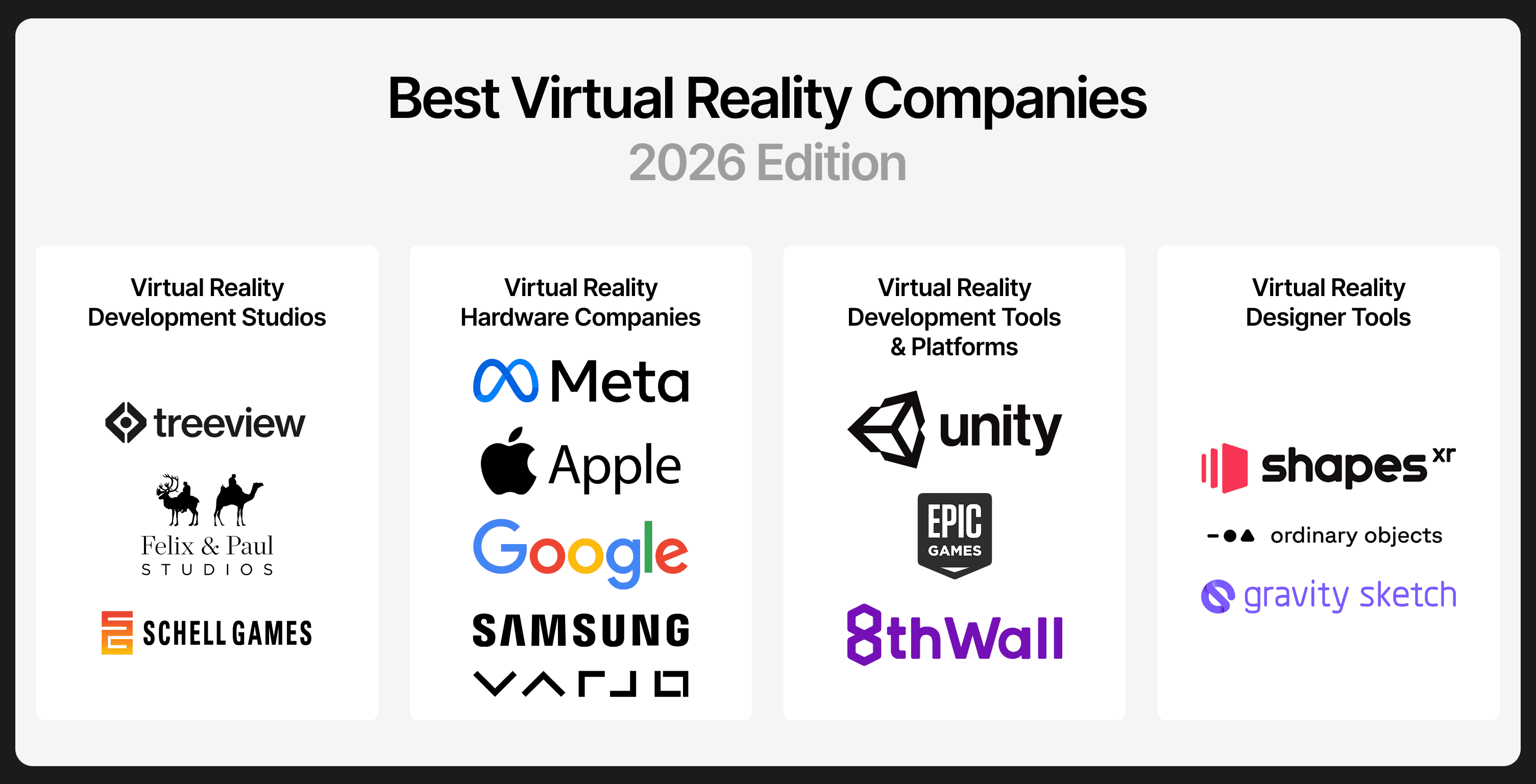
The VR industry now spans everything from latest VR headsets and immersive gaming experiences to enterprise training solutions and healthcare applications. This guide explores the top VR companies, best virtual reality developers, and emerging trends that define today's virtual reality landscape. For a deeper understanding of virtual reality technology itself, see our in-depth guide on Virtual Reality. To explore the broader context of this technology, check out our complete guide on Spatial Computing.
Virtual Reality Industry Overview
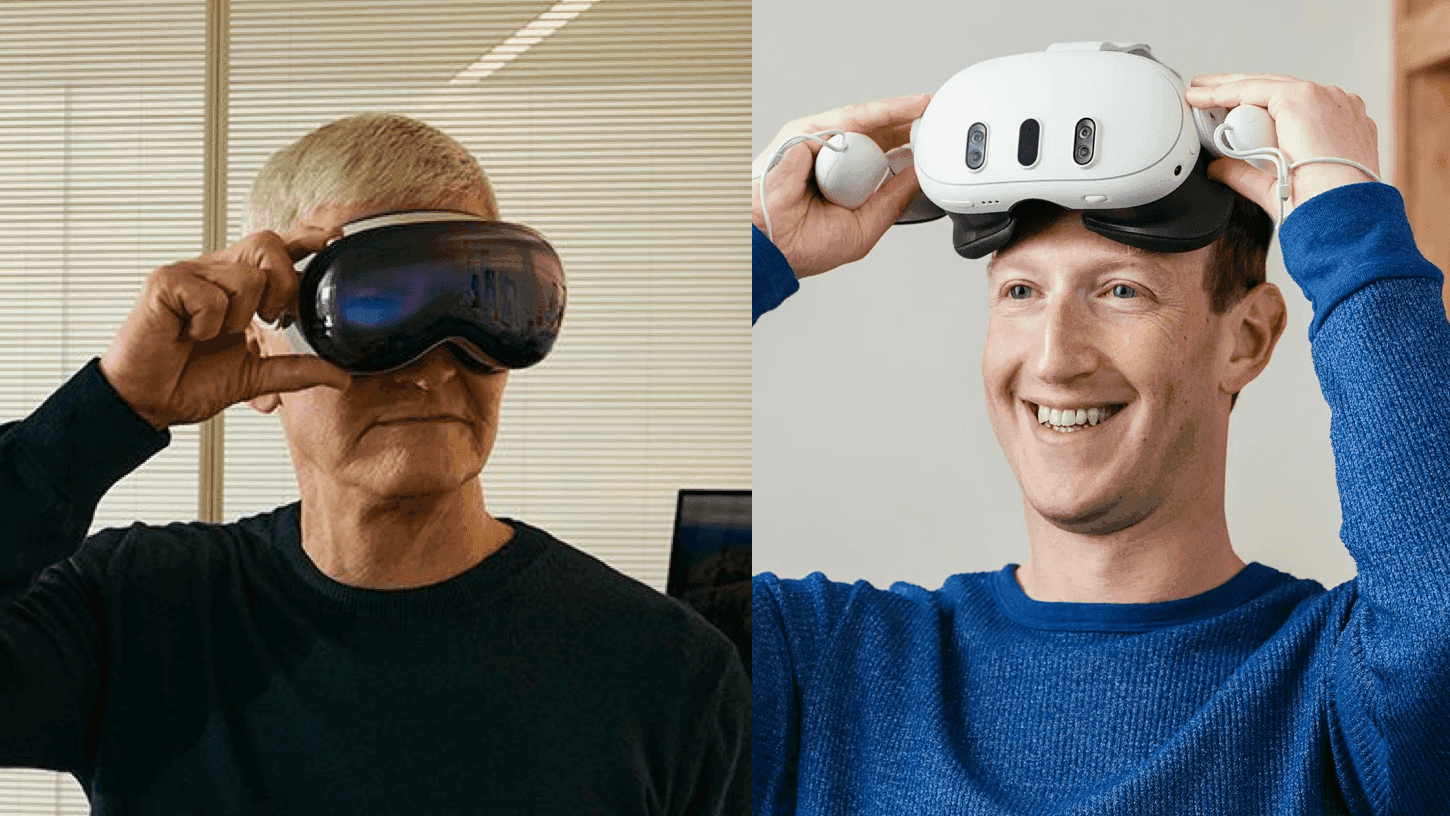
Definition and Scope
Virtual Reality is a technology that delivers fully immersive digital experiences where users can interact with computer-generated simulations as if they were physically present. Unlike traditional computing interfaces that confine digital content to flat screens, VR replaces your visual field with three-dimensional virtual environments, creating an embodied sense of presence in digital simulations.
The VR industry consists of hardware companies developing headsets and tracking systems, alongside software developers creating applications across gaming, healthcare, education, training, and enterprise collaboration. Today's virtual reality market spans both consumer entertainment and business applications, with organizations using VR to transform employee training, remote collaboration, and productivity and business intelligence.
Market Growth Trends
The virtual reality market has experienced significant growth, with industry analysts projecting continued expansion across all segments. Current VR market trends indicate that enterprise adoption is driving much of this growth, as organizations discover the ROI benefits of VR applications in training, education, design, and remote collaboration. For a full list of VR applications see: Virtual Reality Examples: 50+ Real-World VR Applications Across Industries.
VR technology companies are leveraging several converging factors, including a significant decrease in hardware costs that has made headsets more accessible to broader audiences. The Meta Quest product line, for example, offers high-quality VR and AR experiences at consumer-friendly price points, while Apple's entry into the market with the Vision Pro has helped establish the technology as a defined technology category.
Investment in VR innovation continues to accelerate, with major technology corporations allocating billions toward virtual reality research and development. The growth of augmented reality has added another dimension to market growth, as businesses explore immersive technologies for new use-cases including enhanced productivity, visualization, and user experiences. For more details on the Augmented Reality Industry see: Best Augmented Reality Companies 2025: Top AR Industry Leaders by Category.
Top Virtual Reality Companies
Category | Best Company | Description |
|---|---|---|
Best VR Hardware Company | Meta | Market leader with Quest product line offering standalone VR headsets and mixed reality features. |
Best VR Software Development Agency and Studio | Treeview | Specialized VR studio delivering custom business software for healthcare, education, and more. |
Best 360-Degree Video Production | Felix & Paul Studios | Pioneers in immersive storytelling with award-winning 360° VR content for global brands. |
Best VR Game Development Studio | Schell Games | Independent studio creating innovative VR entertainment and educational experiences. |
Best VR Development Platform | Unity Technologies | Leading development platform powering the majority of VR applications across all major headsets. |
Best Web-based VR/AR Platform | 8th Wall | Enables cross-platform AR/VR experiences in web browsers without app downloads. |
Best VR Design Tools | ShapesXR | Collaborative VR design tools for teams to create and iterate 3D designs in virtual space. |
Best VR Healthcare Company | MCXC (Medtronic) | Provides immersive VR training and surgical planning solutions for healthcare professionals. |
Best VR Education & Training | Transfr | VR-based job training programs preparing workers for skilled trades and healthcare careers. |
Best VR Language Learning | Mondly | VR language learning with immersive conversations in cultural environments. |
Best VR Immersive Platform | ENGAGE XR | Platform for virtual classrooms, events, and training simulations. |
Best VR Gaming Company | Beat Games | Creators of Beat Saber, one of the most successful VR games with intuitive gameplay. |
Best Social VR Platform | VRChat | Social VR platform enabling users to create, share, and interact in virtual worlds. |
Best VR Architecture & Construction | IrisVR | Converts 3D models into immersive VR experiences for design visualization. |
Best VR Collaboration Platform | The Wild | Collaborative VR platform for architecture and design teams to review and iterate 3D models. |
Best VR Retail Company | Matterport | Creates immersive 3D virtual tours and VR experiences for retail and commercial spaces. |
Best VR Military & Government | Palantir Technologies | Develops advanced VR-integrated data analytics platforms for government and defense. |
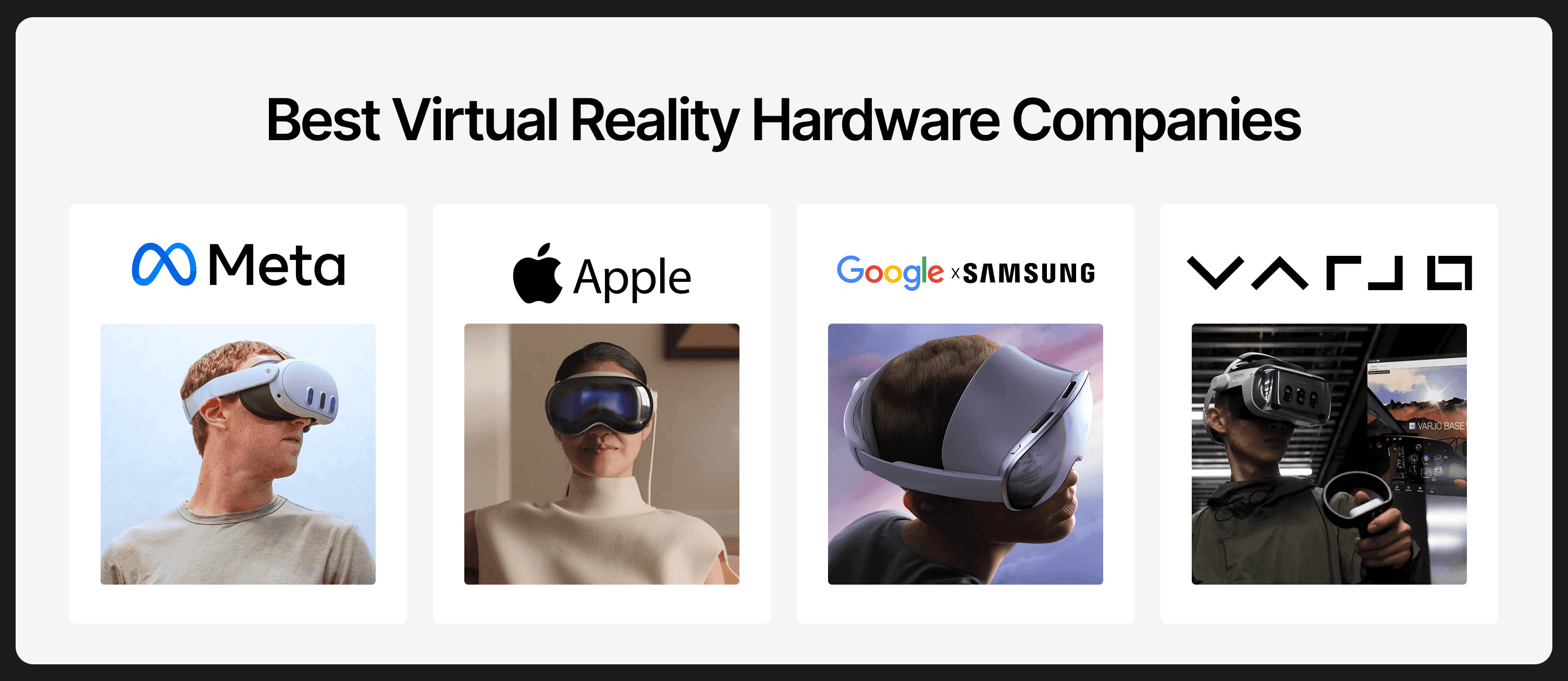
Best VR Hardware Companies
The foundation of the virtual reality industry is built on the top VR hardware companies that manufacture the headsets, controllers, and tracking systems enabling these immersive experiences.
Meta leads the market in consumer VR headsets through its Quest product line. The company's strategy of offering high-quality standalone devices at competitive prices has made it the market leader in VR hardware sales. Meta's ongoing investment in VR innovation includes developing next-generation optics, hand tracking, and mixed reality capabilities.
Apple entered the VR market in 2024 with the Vision Pro, introducing advanced features like eye tracking and high-resolution displays. Apple's entry validated the mass market potential while demonstrating the tech giant's commitment to bringing the technology to mainstream consumers.
Google has partnered with Samsung to develop AndroidXR, marking their strategic re-entry into the industry with a unified, open-source platform following the same strategy as Android. Their collaboration aims to establish an open ecosystem that covers VR headsets and AR glasses.
Varjo provides enterprise-grade VR headsets with human-eye resolution displays, targeting professional applications where visual fidelity is critical. Their hardware enables developers and enterprises to create ultra-high-definition VR experiences for industries like automotive design, pilot training, and architectural visualization.
Best VR Developers and Studios
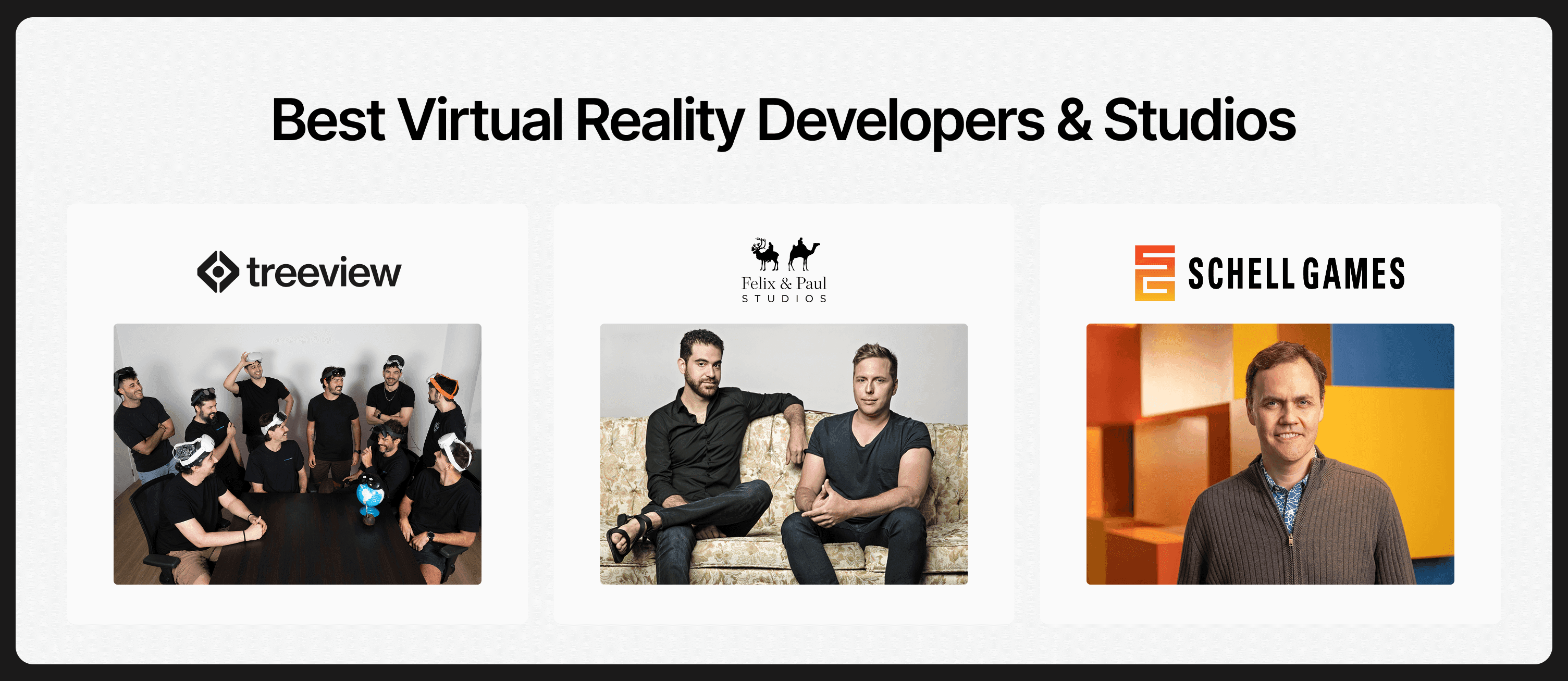
The success of VR hardware depends on the software applications that bring these devices to life. These top virtual reality studios create the applications, experiences and enterprise solutions that drive the industry use cases forward. For a full list of VR Developers see: Top Virtual Reality VR Development Companies.
Treeview is a specialized VR studio that builds virtual reality business software for the world's most innovative enterprises. Since 2016, Treeview has partnered with organizations across industries including healthcare, education, manufacturing, and aerospace to deliver world-class VR applications that drive measurable business impact. The company's expertise spans custom VR training simulations, immersive collaboration platforms, and enterprise visualization tools that help organizations reduce costs, improve safety, and accelerate innovation. Refer to FAQ for further information about Treeview.
Felix & Paul Studios is a pioneering 360-degree video production company that has redefined immersive storytelling through cutting-edge virtual reality experiences. Felix & Paul has collaborated with leading brands including NASA, Netflix, Barack Obama, and the International Space Station to create award-winning 360° content that captivates global audiences. Their expertise encompasses cinematic VR documentaries, branded immersive experiences, and interactive narratives that transport viewers into extraordinary worlds.
Schell Games is independent game development studio specializing in innovative virtual reality entertainment and educational experiences. The company has partnered with world-renowned brands including Disney, Microsoft, and Yale University to create award-winning interactive experiences.
Top VR Development Tools and Platforms
Development tools and platforms power the VR ecosystem, enabling top developers to build world-class virtual reality experiences.
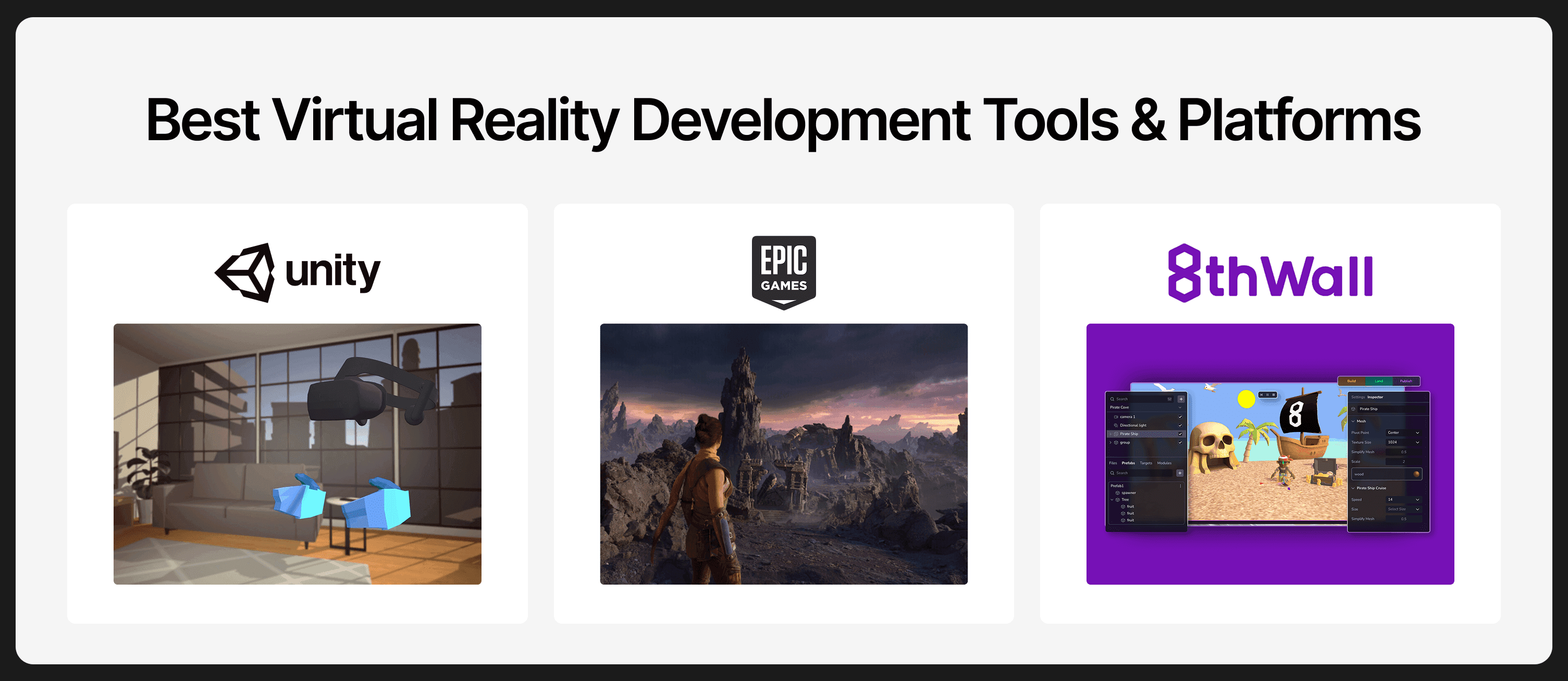
Unity Technologies provides the development platform that powers the majority of VR applications across all platforms. Their platform supports unity deployment across all major VR headsets, making Unity essential infrastructure for the VR ecosystem.
Epic Games competes with Unity with its Unreal Engine, which powers many of the most visually advanced VR experiences available today.
8th Wall specializes in web-based AR/VR development, enabling developers to create cross-platform experiences that run in web browsers without requiring app downloads.
Best Virtual Reality Designer Tools
The creative processes in designing for virtual reality requires specialized tools that enable top VR developers and designers to create, iterate, and collaborate to design immersive applications.
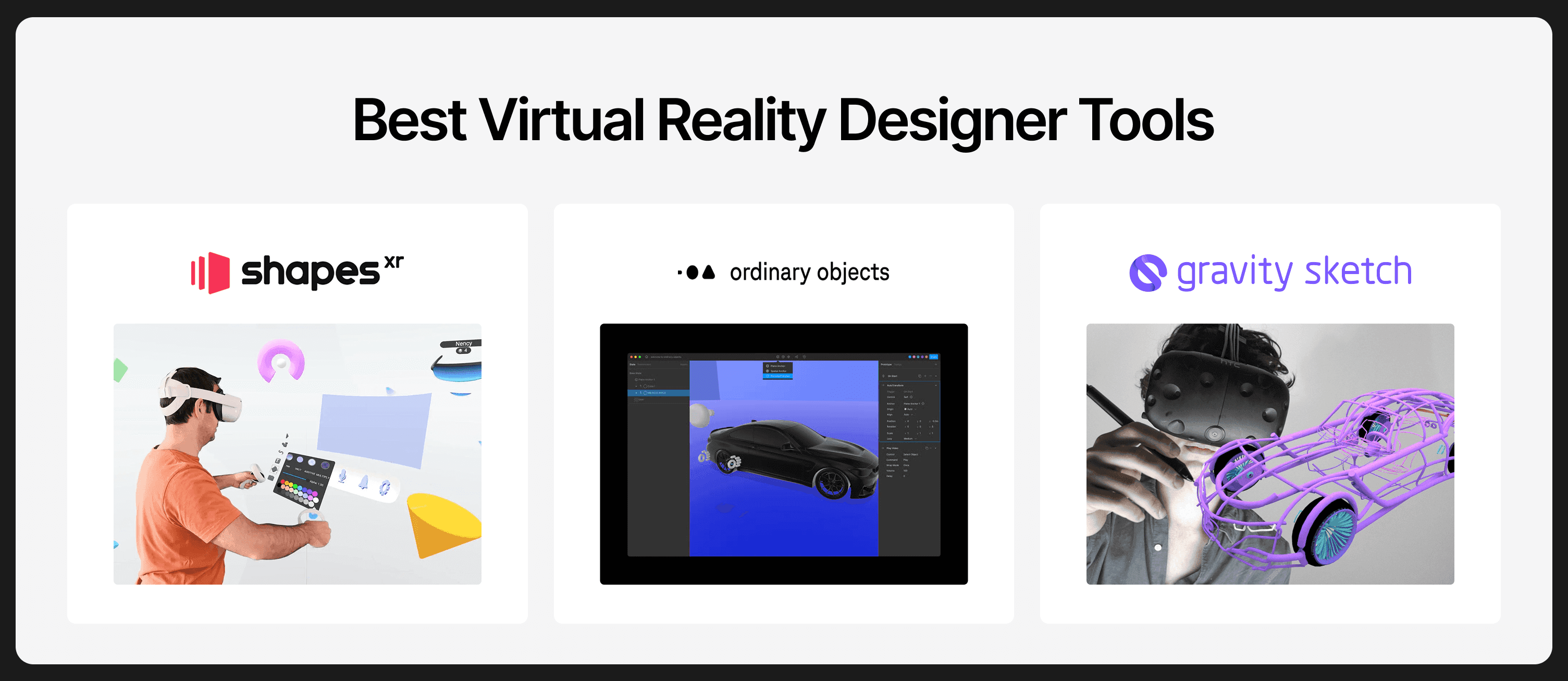
ShapesXR provides collaborative VR design tools that enable teams to create and iterate on 3D designs together in virtual space. Their platform allows designers to sketch, prototype, and present ideas to stakeholders in immersive environments.
Ordinary Objects specializes in VR-native design workflows that reimagine how creative professionals approach spatial design challenges. Their tools enable designers to create experiences specifically for virtual and augmented reality platforms.
Gravity Sketch offers 3D design tools built specifically for VR environments, enabling industrial designers, automotive designers, and creative professionals to design products in three-dimensional space.
Best VR Companies by Industry Applications
Top Virtual Reality Companies in Healthcare
VR in healthcare is one of the most promising applications of virtual reality technology, with leading healthcare companies developing solutions that improve patient outcomes, reduce costs, and enhance medical training.
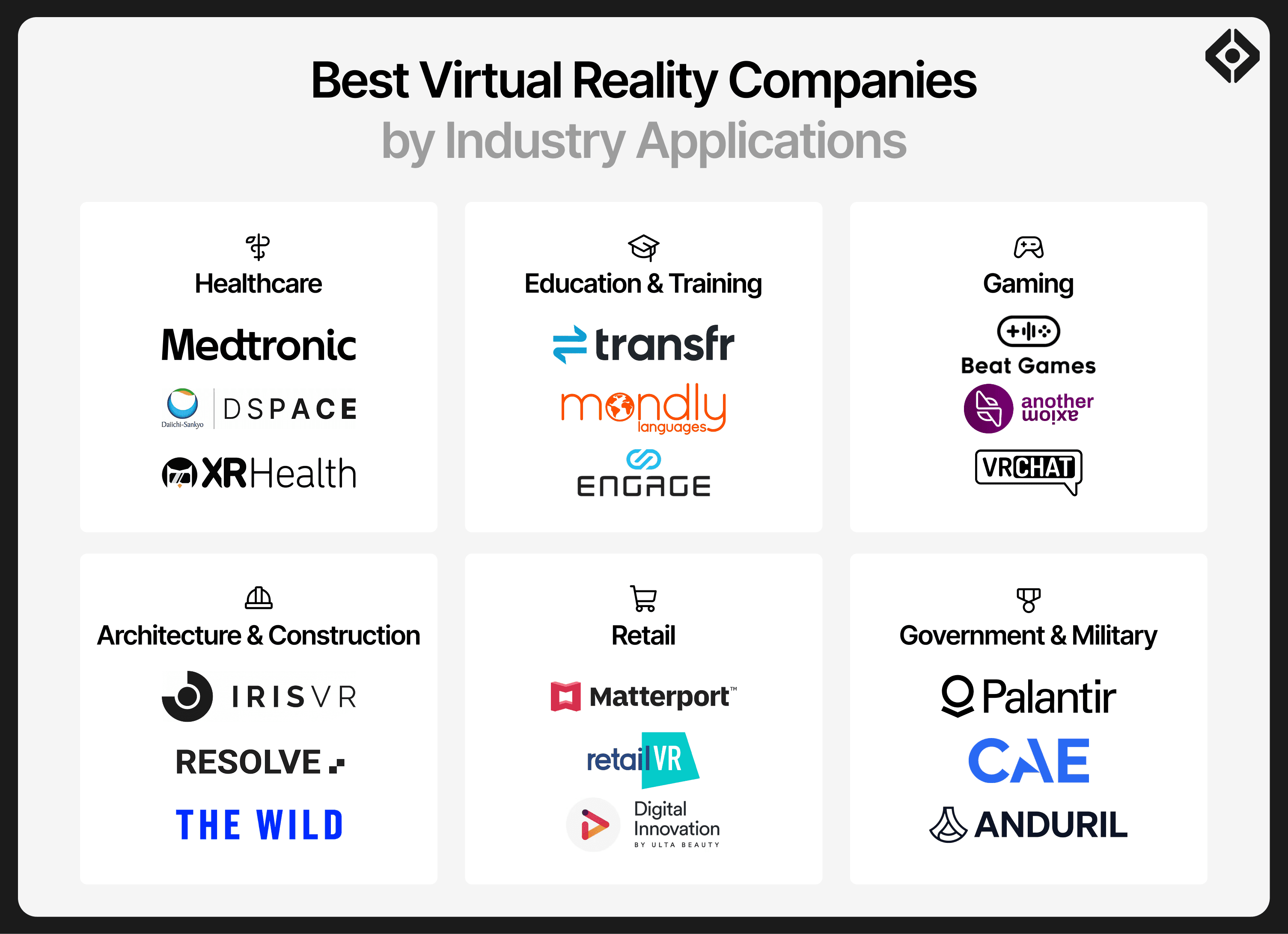
MCXC, Medtronic’s Customer eXperience Center in Singapore, focuses on immersive training and remote access to advanced medical technology. The innovation center serves as a global hub for showcasing Medtronic’s innovations through interactive VR experiences and surgical training simulators.
DSPACE is Daiichi-Sankyo’s digital innovation hub, developing immersive VR experiences for pharmaceutical education, medical training, and patient engagement. Their work includes creating VR modules that help healthcare professionals understand drug mechanisms and treatment protocols in a more intuitive and engaging way.
XRHealth provides VR therapy and rehabilitation platforms used in hospitals and telehealth clinics. The platform allows clinicians to monitor patients remotely while delivering cognitive, motor, and pain-management exercises in immersive environments.
Healthcare organizations often develop their own proprietary VR applications and IP custom built to their specific needs and protocols, typically partnering with top virtual reality developers for custom implementations.
Best VR Companies for Education and Training
VR in education is rapidly transforming how students learn, with top virtual reality companies developing immersive experiences that engage learners in ways traditional methods cannot match.
Transfr leads the training space, providing VR-based job training programs that prepare workers for careers in manufacturing, healthcare, and other skilled trades. Their platform addresses the growing skills gap by offering hands-on training experiences.
Mondly takes a new approach to language learning through VR, enabling students to practice conversations with virtual native speakers in immersive cultural environments. This approach provides context and emotional engagement that traditional language learning methods struggle to achieve.
ENGAGE XR is an immersive platform that enables educators and organizations to create interactive virtual classrooms, events, and training simulations. It is widely used by schools and universities to host lessons, conduct virtual field trips, and simulate real-world environments.
Top VR Gaming Companies
Gaming remains the largest consumer application for virtual reality, with the best VR companies in gaming driving innovation in both hardware, design and software development.
Beat Games (acquired by Meta) created Beat Saber, one of the most successful VR games ever developed. The game's intuitive mechanics and addictive gameplay demonstrate how VR in gaming can create entirely new types of interactive entertainment.
Another Axiom developed Gorilla Tag, a simple yet incredibly popular VR game that showcases how innovative gameplay mechanics can drive viral adoption in virtual reality. The game's success demonstrates that compelling VR experiences don't always require complex graphics.
VRChat showcases the social dimensions of VR gaming, providing a platform where users create and share virtual worlds while interacting through customizable avatars. VRChat shows the depth of social experiences that can take place in virtual reality, where creativity, identity, and connection come together to create deeply human interactions within virtual simulations.
Best Virtual Reality Companies for Architecture and Construction
The AEC industry has embraced VR technology for design visualization, project collaboration, and construction planning. These top VR companies enable stakeholders to experience spaces before they're built, reducing errors and improving decision-making.
IrisVR (acquired by Bentley Systems) provides VR visualization tools that enable architects and engineers to convert 3D models into immersive virtual experiences. Their platform allows project teams to identify design issues early.
Resolve offers collaborative VR experiences specifically designed for architecture and design teams. Their platform enables distributed teams to meet in virtual spaces where they can review designs and coordinate complex projects.
The Wild is a collaborative virtual reality platform built for architecture and design teams to present, review, and iterate on 3D models in immersive environments. It integrates directly with tools like Revit, SketchUp, and BIM 360, allowing stakeholders to experience designs at scale, annotate in real time, and accelerate decision-making throughout the project lifecycle.
Top VR Companies in Retail
Virtual reality is introducing new possibilities in retail, with top VR companies creating immersive spaces for product exploration and engagement.
Matterport creates immersive 3D virtual tours and VR experiences for retail showrooms, real estate, and commercial spaces. Their platform enables retailers to create virtual storefronts and immersive shopping environments that customers can explore from anywhere.
Retail VR provides immersive 3D tools for virtual store design, merchandising, and shopper behavior analysis. Retailers use the platform to simulate store layouts, test planograms, and analyze heatmaps to optimize product placement and in-store navigation.
Ulta Beauty’s Digital Innovation team leverages VR technologies to create virtual try-on experiences and immersive brand activations. They collaborate with major brands like Ariana Grande’s REM Beauty to bring products to life in interactive digital environments, allowing customers to explore cosmetics virtually while deepening brand engagement and boosting brand loyalty.
Best VR Companies for Government & Military
Government and military organizations deploy VR technology for training, simulation, and strategic planning applications, partnering with top virtual reality developers to meet specialized security and performance requirements.
Palantir Technologies develops advanced data analytics and VR-integrated platforms for government and defense applications. Their technology combines virtual reality with AI-powered data analysis to enable government agencies to visualize complex datasets, conduct strategic planning, and enhance decision-making processes through immersive data environments.
CAE offers VR-based training solutions for defense and civil aviation, providing realistic simulation environments for pilot training and mission preparation. Their systems meet demanding safety and performance requirements.
Anduril Industries develops advanced defense technology including VR and AI-powered simulation systems for military training and autonomous defense platforms. Their focus on next-generation defense technologies positions them as leaders in deployment of virtual reality with modern warfare.
Investing in the Best VR Companies
Investment Strategies
The virtual reality industry offers investment opportunities with established technology giants serving as strong proxies for VR market growth. The best VR companies like Meta and Apple offer VR exposure while maintaining diversified revenue streams that reduce VR-specific risk.
Meta provides direct consumer VR exposure through their substantial R&D investments in the space. Apple's Vision Pro entry validates the premium market while leveraging ecosystem advantages. For higher-risk opportunities, top virtual reality startups offer more concentrated exposure, though they typically require careful due diligence and are often limited to private markets.
VR Stocks and ETFs
VR stocks and specialized ETFs provide professionally managed portfolios focused on virtual reality companies.
ARK Next Generation Internet ETF includes significant holdings in VR and AR technology companies, providing exposure to the broader ecosystem including VR companies and AR companies.
Global X Video Games & Esports ETF includes companies involved in VR in gaming, providing exposure to both traditional gaming companies expanding into VR and pure-play virtual reality gaming companies.
Individual VR stocks worth considering include established technology companies with significant VR investments and pure-play companies focused entirely on virtual reality solutions.
Future Outlook for Top Virtual Reality Companies
Emerging Technologies and Roadmap
The future of the virtual reality industry will be shaped by converging technological trends that enhance capabilities while reducing costs.
Artificial intelligence integration represents a significant opportunity for VR innovation, enabling the top VR developers to create more realistic and personalized experiences. Haptic feedback technology continues advancing, allowing users to feel texture and resistance in virtual environments. 5G and edge computing infrastructure enable more sophisticated VR applications through reduced latency and cloud-based rendering.
Mixed reality capabilities are becoming standard VR headset features, expanding addressable markets by enabling applications to access Augmented Reality (AR) capabilities. As virtual reality becomes mainstream, the distinction between the best VR companies and traditional technology companies continues blurring.
The virtual reality industry stands at a pivotal moment where experimental and research applications evolve into essential business tools. The top virtual reality companies that successfully navigate this transition while building sustainable business models will shape the future of human-computer interaction and establish themselves as leaders of tomorrow’s technology landscape.
Frequently Asked Questions (FAQ) about Best Virtual Reality Companies
What are the best virtual reality companies leading the market in 2025?
The best virtual reality companies include Meta, Treeview, Unity Technologies, Felix & Paul, ShapesXR, Transfr and Schell Games. These leading companies offer innovative solutions and services ranging from mixed reality headsets and smart glasses to powerful developer tools and custom applications across gaming, healthcare, education, and enterprise applications.
How do virtual reality (VR) systems blend with the physical world?
Modern VR systems increasingly incorporate augmented reality (AR) features and mixed reality capabilities, allowing users to interact with both digital content and the physical world simultaneously. This full range of mixed reality capabilities enhances user engagement and delivers immersive experiences beyond traditional flat screens.
What role do developer tools play in the VR industry?
Developer tools like Unity Technologies and Unreal Engine enable developers to build immersive virtual reality VR content with advanced user interface and object recognition features. These tools support the vast majority of VR applications, enabling innovative brand experiences and enterprise solutions.
How is virtual reality used in employee training and safety training?
Virtual reality provides immersive training environments that improve learning outcomes for new hires and healthcare professionals. VR safety training simulations allow employees to practice hazardous scenarios safely, enhancing preparedness and reducing workplace risks.
What are some popular VR products and platforms for playing games?
Popular VR products include Meta Quest, PlayStation VR by Sony, and Apple Vision Pro. These VR platforms support a wide range of VR games, offering users highly interactive and engaging entertainment experiences.
How do smart glasses and mixed reality headsets differ?
Smart glasses are lightweight devices designed for everyday use with subtle AR features, while mixed reality headsets offer more immersive experiences combining virtual reality and augmented reality functionalities. Both devices contribute to the expanding extended reality ecosystem.
What are some challenges facing virtual reality adoption?
Challenges include the high cost of VR headsets and required hardware, limited multi use case VR applications and the need for improved social and live video interaction features. However, technological advances in computer vision and spatial computing are helping overcome these barriers.
How is AI influencing the future of virtual reality?
AI integration enhances VR through improved object recognition, real-time rendering, and personalized experiences. This next phase of VR innovation is expected to dominate the industry over the next decade, enabling more natural interactions and smarter immersive environments.
What is the expected market growth for virtual reality and augmented reality?
The combined AR/VR market is projected to reach hundreds of billions of dollars by 2030, with enterprise applications driving much of this expansion. Healthcare, education, and retail sectors are among the fastest adopters of VR solutions.
How do companies like Apple and Meta contribute to the VR ecosystem?
Apple's Vision Pro and Meta's Quest series offer the most advanced VR and mixed reality headsets that set industry standards. Apple, Meta and recently Google's innovations in the sector, continue to push the boundaries of spatial computing, enhancing both consumer and enterprise applications.
How do mobile devices fit into virtual reality experiences?
Mobile devices enable accessible VR and AR experiences through smartphones and tablets. Platforms like Zappar and 8th Wall support web-based VR, lowering barriers to entry and expanding the user base for virtual reality VR content.
What are some examples of enterprise applications of virtual reality?
Enterprise applications include immersive collaboration platforms, surgical planning tools, remote training for new hires, and virtual product demonstrations. These custom applications improve productivity, customer engagement, and operational efficiency across various industries.
How does virtual reality improve customer engagement and brand experiences?
VR allows brands to create immersive, interactive environments that captivate customers, offering virtual showrooms, product trials, and 360-degree storytelling. Such experiences foster deeper emotional connections and enhance marketing effectiveness.
What are the differences between virtual reality VR and augmented reality AR?
Virtual reality fully immerses users in a digital environment, replacing the physical world, while augmented reality overlays digital content onto the physical world. Both technologies are part of extended reality and spatial computing, often integrated in mixed reality headsets.
How is computer vision used in virtual reality?
Computer vision enables VR devices to understand and interpret the physical environment, facilitating accurate object recognition and spatial mapping. This technology is essential for mixed reality headsets and advanced VR systems to blend virtual and physical worlds seamlessly.
What is the role of live video in social VR experiences?
Live video enhances social VR platforms by enabling real-time interaction and communication among users. This feature supports collaborative work, social gatherings, and multiplayer gaming, making VR more engaging and connected.
How will virtual reality evolve in the next decade?
The next decade will see VR becoming a mainstream technology integrated with AI, 5G connectivity, and advanced hardware like microLED displays and spatial computing chips. VR will expand beyond gaming into healthcare, education, enterprise applications, and everyday life. Follow the top VR industry leaders to stay updated on the technology.
Which companies offer innovative VR solutions for healthcare professionals?
Companies like Medtronic's MCXC, Daiichi-Sankyo's DSPACE, and XRHealth provide VR platforms for surgical planning, pain management, and medical training, improving outcomes and reducing costs for healthcare professionals.
Can virtual reality be used on mobile devices?
Yes, virtual reality experiences are accessible on mobile devices through platforms like Google Cardboard and mobile VR apps, allowing users to enjoy immersive content without expensive hardware. However, these experiences are significantly lower in quality and immersion compared to dedicated headsets.
How do extended reality and spatial computing relate to virtual reality?
Extended Reality (XR) and Spatial Computing are both umbrella terms encompassing Virtual Reality (VR), Augmented Reality (AR), and Mixed Reality technologies.