
Discover industry-leading virtual reality examples and VR use cases that are transforming businesses today. This guide explores practical VR applications, innovative apps, and successful industry deployments that showcase how virtual reality is solving complex problems and creating new possibilities.
1. Introduction to Virtual Reality
Virtual reality is one of the most revolutionary technological advances of our time, fundamentally transforming how we experience digital content across all industries. In 2026, VR technology and VR development has reached advanced levels of maturity and accessibility, making spatial computing available to both consumers and enterprises worldwide, and the combined XR/AR/VR/Smart Glasses Market showing exceeding growth year over year.
For those new to VR technology, we recommend our complete guide on virtual reality that offers an in-depth overview of the technology's capabilities and potential.
Today's VR ecosystem is driven by leading VR hardware and software companies working together to advance immersive technology.
1.1 Hardware Developments
Today's virtual reality headsets have become increasingly advanced and accessible. Consumer devices like the Meta Quest series offer high-resolution displays, precise tracking, and wireless setups. Enterprise headsets like Apple's Vision Pro and Varjo deliver the next generation of virtual reality with advanced eye tracking and hand gesture recognition. Enterprise headsets provide enhanced features for professional applications, including eye tracking, advanced haptic feedback systems, and high fidelity graphics.
1.2 Software and App Developers
The VR software ecosystem spans gaming engines, productivity applications, and specialized industry tools. Today's best software developers leverage specialized tools and expertise to create custom VR applications for specific business needs. Treeview stands out as one of the best specialized teams in the world for premium virtual reality design and development, creating high-quality immersive experiences for enterprise and consumer applications.
VR Applications Across Industries
Discover how VR industry leaders are deploying high-impact virtual reality solutions across these key sectors:
Manufacturing
Manufacturing has become one of the most advanced sectors for VR implementation, with manufacturing companies increasingly integrating VR into business operations. According to industry studies, companies implementing VR training report 70% improvement on workplace test scores and 30% increase in employee satisfaction. Studies show that VR training can reduce knowledge retention loss from 80% (traditional methods) to just 20%, with retention rates reaching 80% after one year, and workplace accidents can be reduced by 28% through VR safety training.
Manufacturing VR applications span from equipment training and safety protocols to assembly line optimization and quality control procedures. From eliminating the need for costly physical training setups and reducing accident risks during equipment training to enabling virtual prototyping that saves development costs and accelerates time-to-market, resulting in improved operational efficiency, reduced downtime, and enhanced worker safety across production facilities.
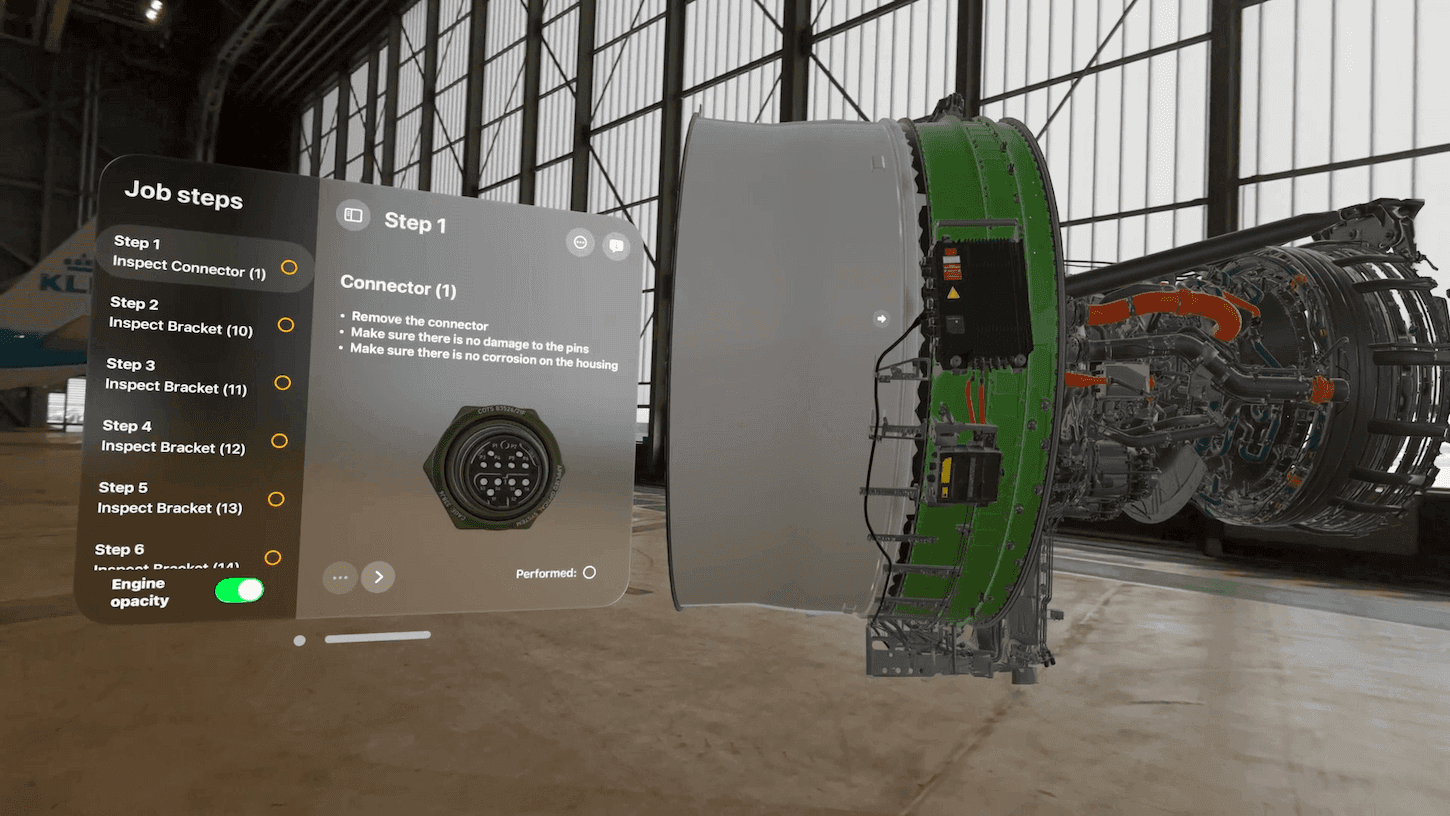
1. Product Design & Prototyping
Ford: Uses the Ford Immersive Vehicle Environment platform for vehicle development, achieving a 70% reduction in employee injuries, 90% reduction in ergonomic issues, and 60% reduction in prototype development time. The system is now integrated into global vehicle development processes.
Airbus: Implements VR throughout aircraft design and validation processes, enabling engineers to perform verification activities in 75% less time compared to traditional methods. The company uses VR for cabin layout design and customer customization, with plans to expand mixed-reality collaboration tools by 2025.
Hyundai: Implements VR design evaluation systems across global design centers, enabling real-time collaboration between up to 20 designers and engineers simultaneously. The company's $12.8 million VR investment has delivered a 20% reduction in vehicle development times and 15% reduction in annual development costs. Hyundai's SEVEN concept car was developed 80% virtually using their immersive VR system.
2. Factory Layout & Planning
BMW: Uses VR and digitized 3D factory data to simulate production lines and optimize workflows across global facilities. The company captures real factory structures with millimeter accuracy, allowing for maximum spatial efficiency when retooling for new models.
Lockheed Martin: Operates the Collaborative Human Immersive Laboratory, generating $10 million in annual savings with 35-50% reduction in technician time and 85% reduction in training time. The $5 million initial investment achieved ROI within two years across four business units.
GE Appliances: Uses VR technology to design and validate manufacturing floor layouts, optimizing equipment placement and worker flow patterns to ensure efficient movement and safety. The company operates a VR lab at their Manufacturing Training Center where engineers can test different floor configurations, identify potential bottlenecks, and validate safety procedures before implementing physical changes to production facilities.
3. Workforce Training
Siemens: Implements VR training programs for gas turbine maintenance and manufacturing equipment operation, achieving a 66% reduction in training time and 13% improvement in pass rates compared to traditional methods. The company's Virtual Training Solutions provide 24/7 access to immersive training for complex procedures like turbine inspections, enabling technicians to practice safely in virtual environments.
Boeing: Uses VR for aircraft assembly training, achieving a 33% increase in wiring speed and accuracy while reducing training time by 75%. The program saves millions per jet through improved accuracy and has replaced 20-foot paper diagrams with immersive 3D guidance across all aircraft programs.
Volkswagen Group: Operates the Digital Reality Hub across all brands to train over 10,000 employees annually through more than 30 specialized VR simulations covering vehicle assembly, customer service, and new employee onboarding. The platform enables real-time collaborative training sessions between global facilities, eliminating travel costs while allowing employees to practice complex assembly tasks in risk-free virtual environments before physical factories are constructed.
4. Maintenance & Repair Simulation
Thyssenkrupp: Trains over 24,000 elevator service technicians globally using VR technology to simulate real-world repair environments, reducing average service call times by 4X. The program enables technicians to visualize complex procedures in 3D, triage service requests remotely, and receive hands-free expert guidance during repairs, significantly improving safety protocols and knowledge retention.
KUKA Robotics: Uses VR technology to train industrial robot operators on maintenance and programming tasks, achieving comparable performance to traditional training methods while enabling safe, repeatable practice environments. A comprehensive study with KUKA College demonstrated that VR-trained technicians could successfully complete learned procedures on real robots with performance levels matching classroom-trained operators, while significantly reducing training risks and equipment exposure.
5. Quality Control & Safety
Toyota: Implements VR to simulate hazardous workplace scenarios, improving plant safety training through role-based learning modules where employees practice responses to unsafe practices and potential incidents. The program uses "choose your own adventure" scenarios with scored decision-making that provides performance feedback and targeted messaging based on results.
Nestlé: Uses VR for hazard identification training in food production, achieving 75% information recall rates compared to 10% with traditional methods. The program educates employees on production floor safety and dangerous areas across 354 factories worldwide, supporting GMP compliance and reducing workplace incidents.
Gaming
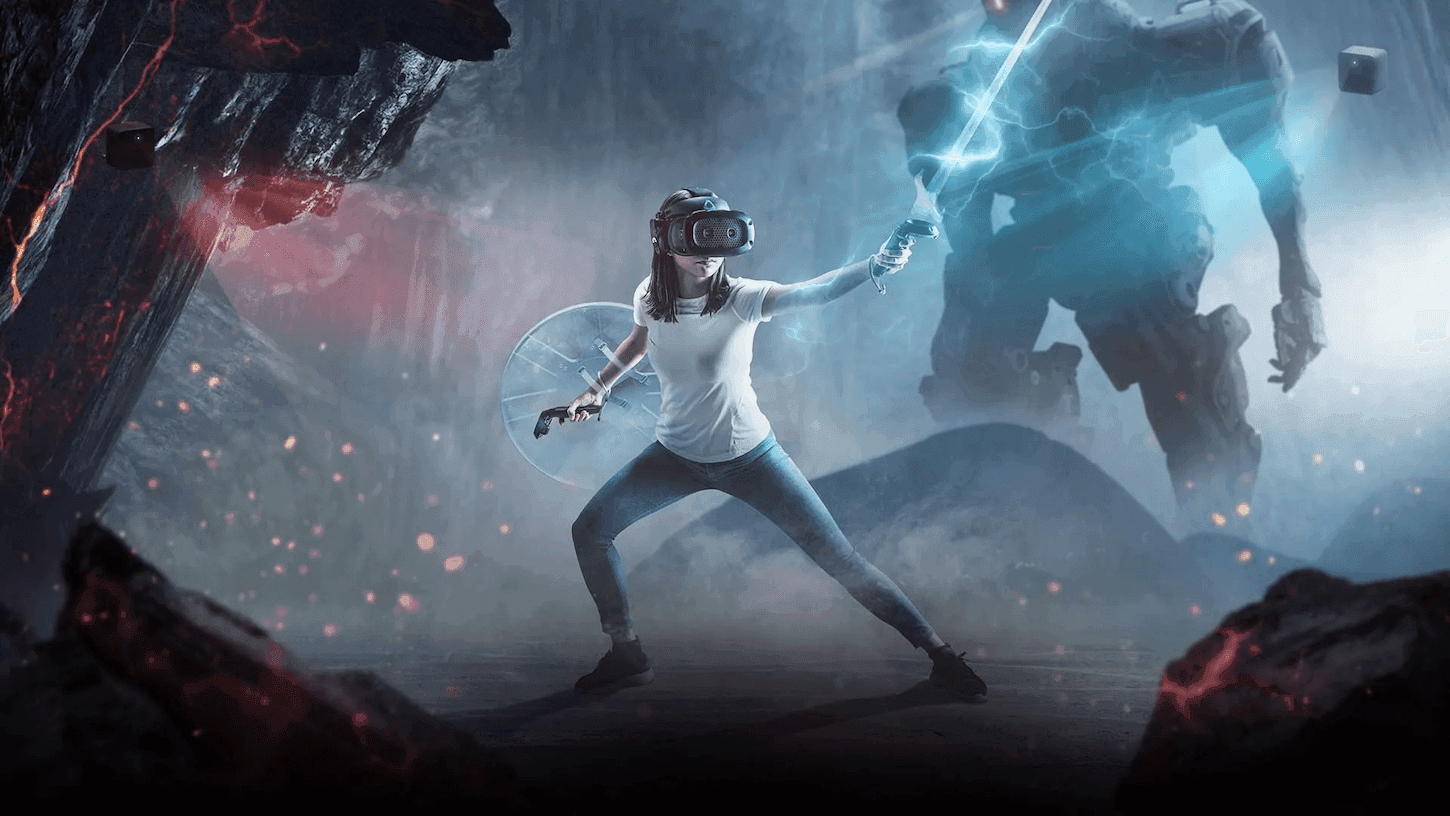
Gaming remains the most visible and commercially successful consumer application of VR technology, with the VR gaming market projected to grow from $32.5 billion in 2024 to $189.17 billion by 2032. Over 171 million people globally use VR technology, with 84% of users identifying gaming as the primary use case. The gaming industry drives 72% of VR headset purchases, making it the dominant driver behind VR adoption worldwide.
6. Flagship VR Games
Half-Life: Alyx (Valve): A genre-defining VR shooter that has sold over 2 million copies and generated an estimated $285 million in gross revenue, praised for its storytelling, interactivity, and physics.
Beat Saber: A rhythm-based VR game where players slash through musical beats with lightsabers that has generated over $100 million in revenue and become one of VR's most successful titles.
Batman: Arkham Shadow: A full-scale Batman adventure game designed exclusively for VR, showcasing high-quality storytelling and immersive superhero gameplay.
7. Educational Games
Newton's Room: Interactive physics simulation allowing hands-on experimentation with scientific principles.
Mission: ISS: NASA-developed experience providing realistic International Space Station exploration and astronaut training.
Titans of Space PLUS: Immersive solar system exploration with accurate scale and educational content.
8. Multiplayer Experiences
Gorilla Tag: Simple yet addictive multiplayer game that became a viral sensation through intuitive locomotion mechanics, reaching 10 million players and generating $100 million in revenue.
VRChat: A social VR platform that has evolved into a user-generated gaming and world-building space with millions of active users creating and sharing custom content across thousands of virtual worlds.
Rec Room: A social app with community-built multiplayer games across genres, reaching 3 million monthly active VR users while serving millions more across all platforms.
9. VR Esports
NOCK: A competitive VR sport that combines archery precision with soccer strategy, where players use bows to score goals in fast-paced matches designed for both tournament competition and engaging spectator experiences.
VAIL VR: A tactical 5v5 team-based VR shooter built from the ground up as an esport, where players compete across objective-based maps with precision gunplay and full-body mechanics, supported by organized league play and live tournament events.
Arts
Virtual reality is expanding the boundaries of artistic expression by enabling creators to build impossible worlds and allowing audiences to step inside artworks themselves. From immersive galleries to experimental storytelling, VR is creating entirely new art forms that blend traditional creativity with interactive technology, reaching global audiences and democratizing access to art and new ideas worldwide.

10. Virtual Art Galleries
Museum of Other Realities: A social VR space for exploring curated digital art installations, featuring art forms that couldn't exist in the physical world.
The Kremer Museum: A fully VR-based museum showcasing 17th-century Dutch and Flemish paintings in a custom-designed virtual space by architect Johan van Lierop.
Acute Art: Collaborates with renowned artists like Anish Kapoor, Marina Abramović, and Jeff Koons to create immersive, interactive VR artworks.
Dreams of Dali: An immersive VR journey through the surreal landscapes of Salvador Dalí's paintings, blending art history with dreamlike navigation.
Modules: An VR art gallery by digital artist Maxim Zhestkov that blends architecture, sculpture, and philosophy into immersive virtual experiences that abandon the logic of reality, featuring dynamic installations across multiple interconnected rooms.
11. Experimental Experiences
Tree: An immersive journey through the life cycle of a rainforest tree, combining environmental storytelling with artistic expression.
The Under Presents: A surreal blend of live theater and interactive storytelling where users become part of the performance.
Emergence: A VR experience that immerses players within crowds of thousands, transforming human behavioral patterns into stunning visual art that explores the tension between individual identity and collective consciousness.
12. Narrative Stories
Spheres: A VR journey through space using sound-based interaction, letting users "feel" gravitational waves and black holes.
Wolves in the Walls: An interactive VR story with an AI-driven character who remembers you and changes behavior based on your choices.
Notes on Blindness: A poetic VR adaptation of audio diaries from a blind theologian, recreating his visual imagination through spatial sound and abstract visuals.
13. VR as a Creative Medium
Open Brush: Advanced 3D painting tool allowing artists to create sculptures and paintings in three-dimensional space with intuitive brush strokes.
Pencil: VR drawing application focused on precision and detail for technical and artistic illustration.
Kingspray Graffiti: Virtual graffiti experience allowing artists to create street art without legal constraints or material costs.
History
Virtual reality opens new ways to experience and understand history by allowing users to witness historical events, explore ancient sites, and engage with cultural heritage in transformative ways. VR breaks down temporal and geographical barriers, enabling immersive experiences that make history tangible and emotionally resonant for modern audiences.
14. Historical Experiences
Anne Frank House VR: Offers a moving, room-scale experience of the Secret Annex, based on original plans and diaries, allowing visitors to walk through the hidden rooms where Anne Frank wrote her famous diary.
JFK Memento: Interactive recreation allowing users to explore multiple perspectives of the Kennedy assassination in Dallas, examining historical evidence and witness accounts.
D-Day: The Camera Soldier: Immersive experience following a WWII combat photographer during the Normandy landings, combining historical footage with VR storytelling.
15. Cultural Heritage Experiences
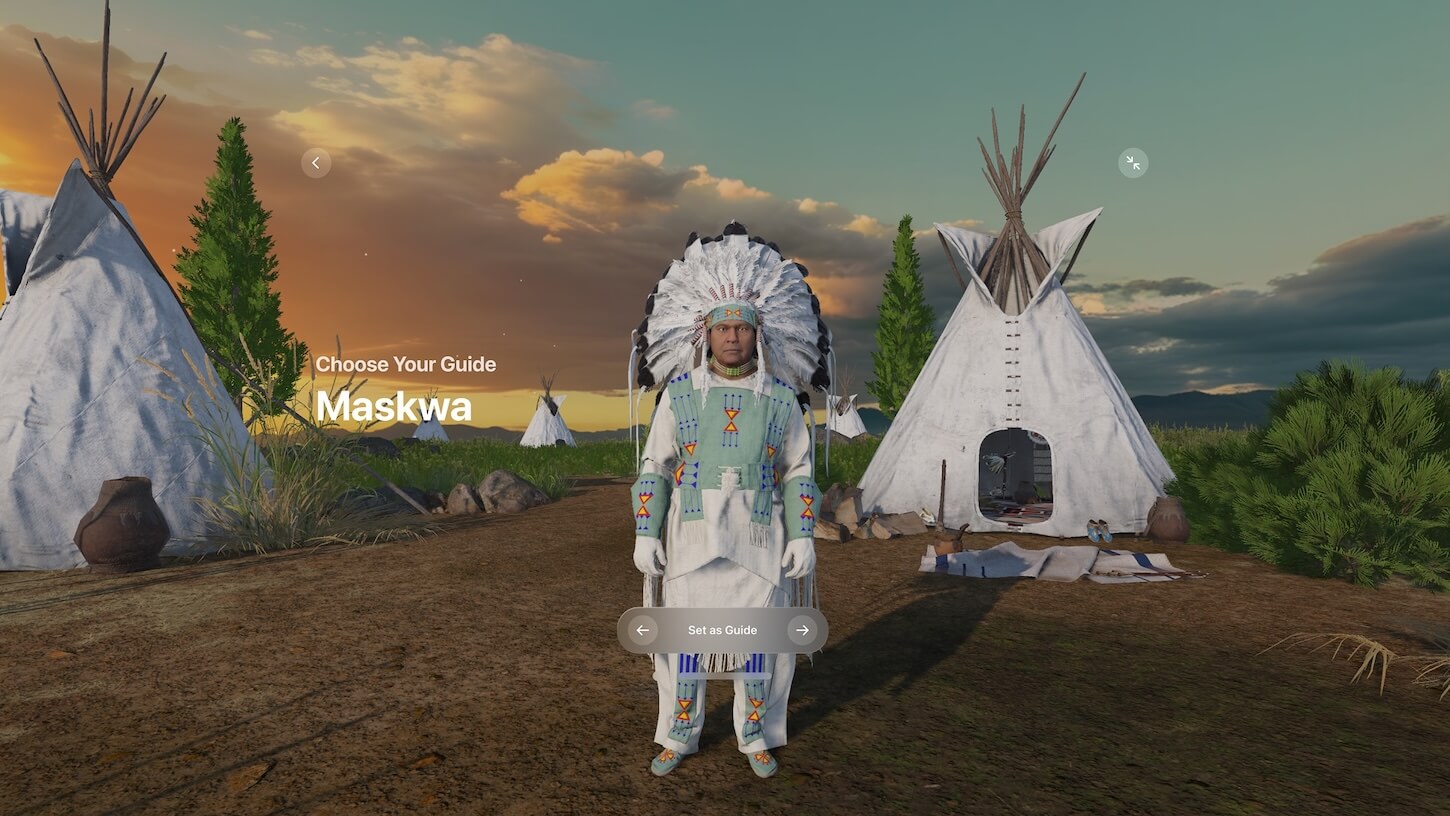
Treaty Story: An immersive cultural archive ensuring that First Nations of Cree traditions will continue to educate and inspire people across Canada and around the world.
Traveling While Black: An VR experience that immerses users in the long history of restriction and resiliency of Black travelers on the road, using the historic Ben's Chili Bowl in Washington D.C. as a central location.
Mental Health and Wellness
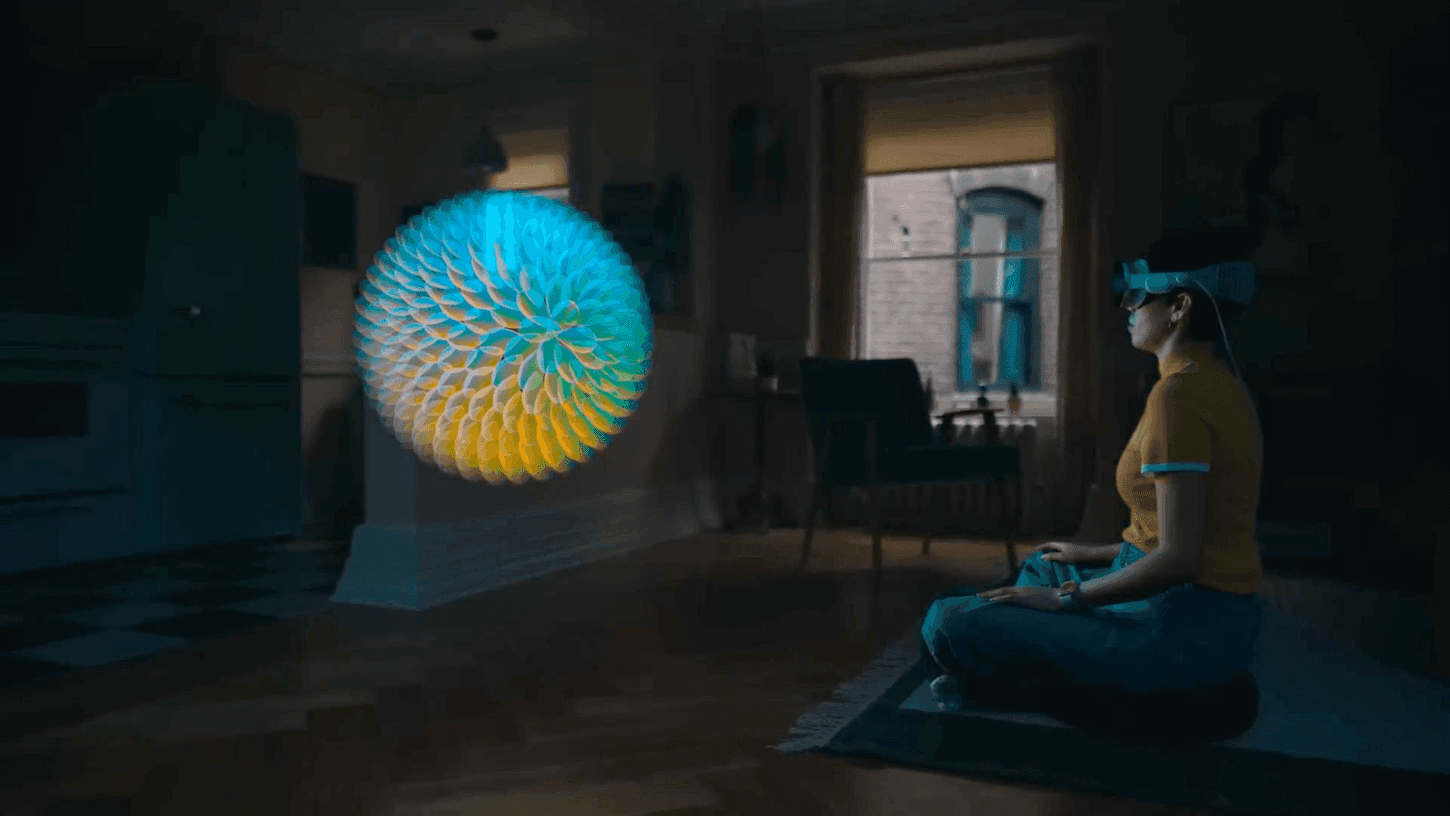
Virtual reality is a powerful tool for mental health treatment and wellness, offering controlled environments for therapy, meditation, and rehabilitation. VR provides safe spaces for exposure therapy, immersive mindfulness experiences, biometric tracking and innovative treatments that were previously impossible or impractical in traditional therapeutic settings.
16. Meditation & Mindfulness
Tripp: A VR meditation platform that guides users through personalized mindfulness experiences using psychedelic visuals, breath pacing, and binaural audio to create deeply immersive relaxation sessions.
Nature Treks VR: Lets users create peaceful nature environments, customizing weather, wildlife, and ambient music to reduce stress and anxiety through virtual nature immersion.
Mindfulness: Apple’s spatial computing meditation experiences for enhanced mindfulness practice.
17. Anxiety, PTSD & Exposure Therapy
Bravemind: Used by the U.S. Department of Veterans Affairs to help treat PTSD in veterans through controlled exposure to combat scenarios in a safe, therapeutic environment.
XR Health: Provides VR-based exposure therapy for phobias flying, public speaking, heights) and anxiety, used by therapists in clinical.
18. Cognitive Behavioral Therapy
Limbix: Offers VR therapy modules to support adolescent mental health, including CBT interventions for depression and anxiety designed specifically for younger patients.
Oxford VR: Developed for people with psychosis and social anxiety, using virtual social scenarios to improve confidence and reduce distress in social situations.
19. Neurological Rehabilitation
VisionWearX: VR-based dyslexia treatment that uses immersive environments to improve reading skills and visual processing through targeted exercises.
MindMaze: A neuro-rehabilitation system using VR and motion tracking to help stroke and traumatic brain injury patients regain motor functions through engaging virtual exercises.
XRHealth Neuro: Offers VR-based treatments for physical and cognitive therapy, including applications for Parkinson's disease, multiple sclerosis, and memory care programs.
Healthcare
Healthcare showcases one of VR's most impactful applications, transforming medical training, patient treatment, and education. The global VR in healthcare market is projected to grow from $4.18 billion in 2024 to $46.37 billion by 2032, exhibiting a compound annual growth rate of 35.1%. The FDA has now authorized 69 medical devices that incorporate VR/AR technology since 2015, with over 60% focused on surgical planning and simulations. From surgical training that eliminates risk to pain management therapies that reduce medication dependence, VR is making medical procedures safer and more accessible.
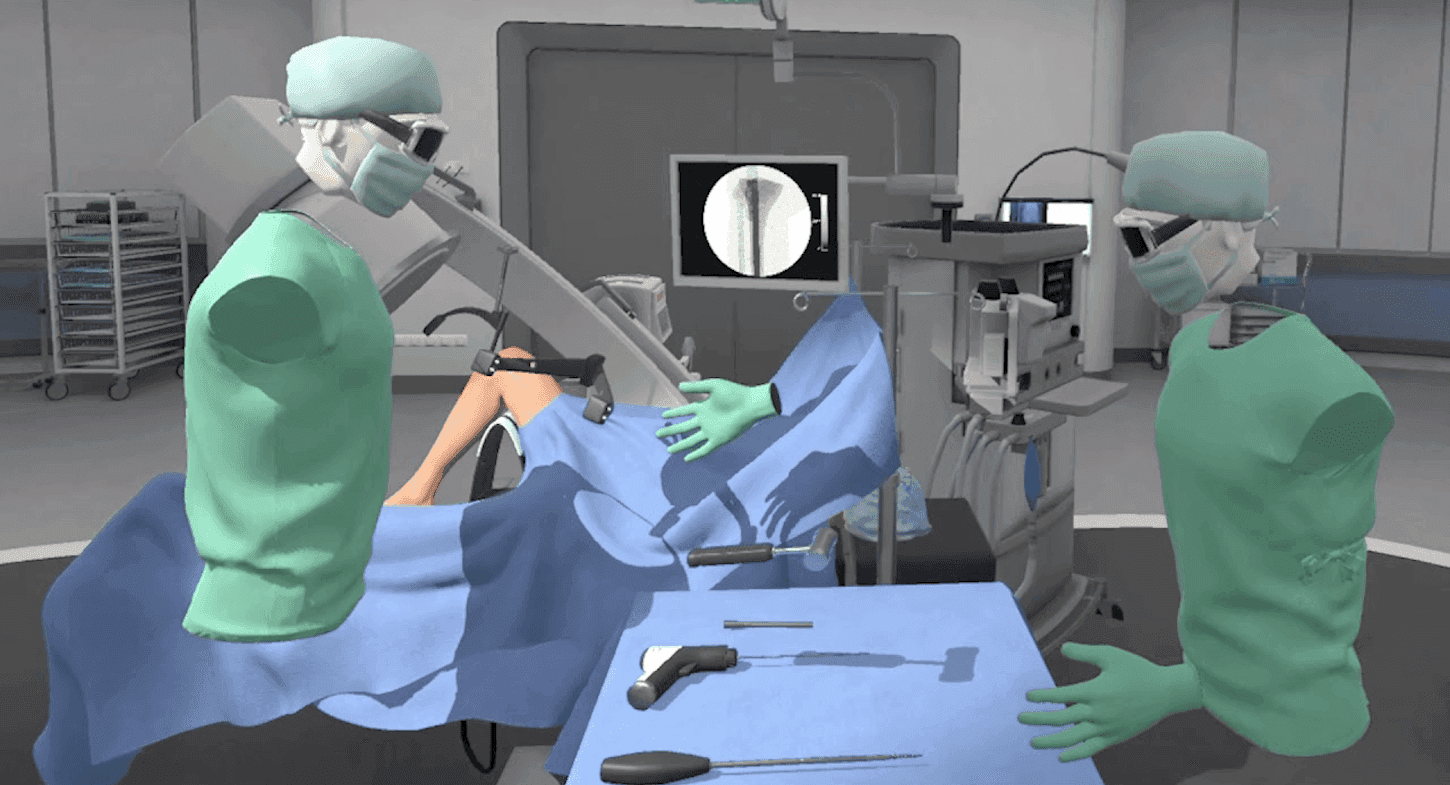
20. Surgical Training & Medical Education
Medtronic: Uses VR to train healthcare professionals on complex medical devices and procedures in immersive, risk-free environments. Through its global Medtronic Customer eXperience Centers (MCXC), clinicians can practice everything from robotic-assisted surgery to cardiac device programming using virtual reality.
Philips Healthcare: Philips employs high-fidelity VR simulations to train quality control specialists and clinicians in critical device protocols and imaging workflows. By recreating laboratory and clinical environments with digital twins of equipment and real procedural physics, trainees can practice complex tasks in immersive, error-aware conditions.
Johnson & Johnson: Leverages VR to train surgeons and medical professionals on a wide range of procedures, from minimally invasive techniques to orthopedic and laparoscopic surgery. The company offers immersive, repeatable training experiences that build procedural confidence and muscle memory, helping clinicians improve performance without the need for cadavers or in-person labs.
21. Patient Treatment & Therapy
AppliedVR: An FDA-authorized VR therapy for managing chronic low back pain, using cognitive behavioral and mindfulness techniques as a non-pharmaceutical treatment option.
Cedars-Sinai VR Therapy: Incorporates VR into hospital care to reduce patient anxiety, pain, and the need for medication during medical procedures and recovery.
22. Patient Education
UCLA Health's VR Surgery Prep: Uses VR to explain upcoming procedures to patients (especially children), reducing anxiety and improving consent understanding by visualizing what will happen during surgery.
HealthVoyager: Developed by Boston Children's Hospital and Klick Health, it lets pediatric patients explore their own GI tract and conditions in VR, using custom-tailored avatars based on their medical data to make health education engaging and personalized.
AEC: Architecture, Engineering, and Construction
The Architecture, Engineering, and Construction industry has embraced VR applied to design processes, improve safety training, and enhance client communication. The global AEC market is projected to grow from $10.05 billion in 2023 to $24.36 billion by 2032, with a compound annual growth rate of 10.3%. According to industry surveys, 49% of AEC firms cite "cost savings derived from catching issues in VR" as a primary factor driving their adoption, while VR construction market growth is expected to reach $2.2 billion by 2025.
From visualizing complex structures before construction to training workers in hazard-free environments, VR in engineering can reduce model design time by 10% and construction time by 7%, enabling enhanced collaboration across project teams while minimizing errors and reducing costs.
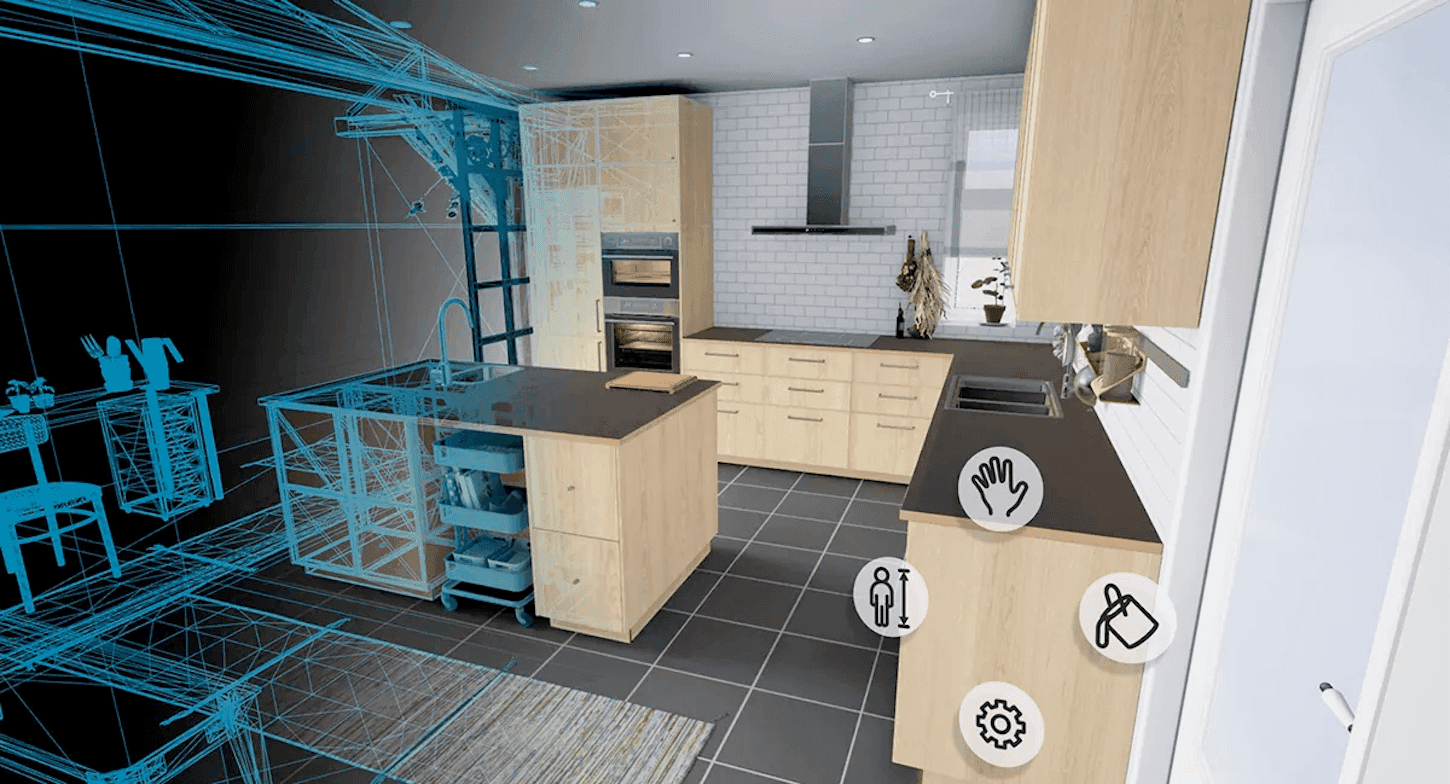
23. Design Visualization
Foster + Partners: Leverages VR to allow clients to virtually walk through conceptual building spaces and iterate faster on design decisions, reducing revision cycles and improving client satisfaction.
Gensler: Employs VR to review large-scale development projects with clients and urban planners, facilitating better decision-making through realistic virtual walkthroughs.
24. Safety Training & Workforce Education
Caterpillar: Uses VR for safe training on operating heavy equipment such as excavators and loaders in simulated environments, reducing equipment wear and training costs.
Serious Labs: Provides VR simulators for crane operation and aerial work platform safety certification, enabling repeatable training scenarios for complex equipment operations.
25. Virtual Property Tours & Real Estate
Matterport: Creates 3D virtual walkthroughs used by realtors, architects, and developers for remote property viewing and marketing, revolutionizing how properties are showcased and sold.
Sotheby's International Realty: Utilizes VR to showcase luxury properties globally, allowing prospective buyers to tour homes without traveling, expanding market reach and reducing showing costs.
26. Collaboration & BIM Integration
IrisVR: Offers immersive BIM (Building Information Modeling) review tools that allow teams to explore architectural models in VR and catch design conflicts early in the development process.
The Wild: Enables real-time collaboration in shared virtual environments for design and construction professionals using Revit and SketchUp models, facilitating distributed team coordination.
Resolve: Designed to let teams explore large BIM models on-site for clash detection and design reviews, bringing desktop capabilities to the construction site.
27. Construction Planning & Logistics
Turner Construction: Uses VR for site logistics planning, helping visualize equipment placement and movement flows before construction begins, optimizing site efficiency and safety.
Mortenson Construction: Employs VR for stakeholder engagement and to validate construction sequences during scheduling, improving project communication and reducing delays.
Science
Virtual reality is advancing scientific research and education by making abstract concepts tangible and enabling exploration at scales from subatomic to cosmic. From exploring space environments in astrophysics to conducting virtual drug discovery, VR provides students with immersive learning experiences that were previously impossible in traditional laboratories, enabling 76% increase in learning effectiveness compared to traditional methods.
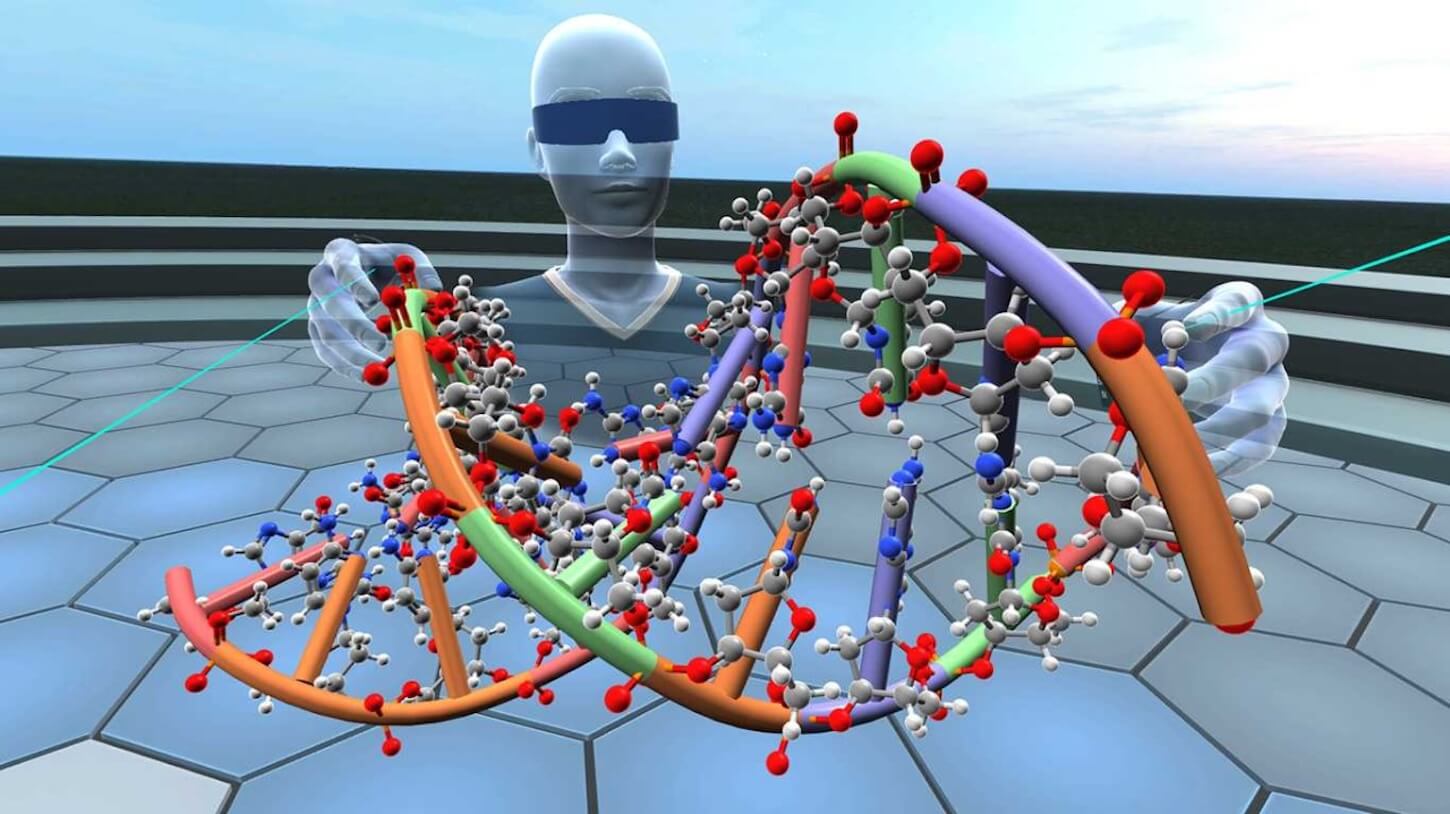
28. Molecular & Cellular Biology
Nanome: A VR platform for molecular modeling and drug design, allowing scientists to manipulate complex molecules and proteins in 3D space with intuitive hand gestures, accelerating pharmaceutical research and discovery.
CellWalk: A 3D biological learning experience for Apple Vision Pro that allows users to take guided tours through bacterial cell molecular machines, zooming from whole cells down to individual atoms with interactive descriptions for educational exploration of life's nanoscale processes.
29. Neuroscience & Brain Research
The Virtual Brain Project: Uses VR to simulate brain networks and visualize functional connectivity for researchers and students, making complex neurological data accessible and comprehensible.
Neuroscape Lab: Develops immersive cognitive neuroscience experiments that study perception, memory, and attention in VR, advancing our understanding of brain function through controlled virtual environments.
30. Genetics & Evolution
BioVR: An interactive virtual reality (VR) platform for the integration and visualization of biological data, enabling integrated visual analysis of DNA, RNA, and protein sequences, as well as protein structures.
Cellscape: A visually rich VR experience that guides users through the interior of a human cell, showing organelles and cellular processes in context at unprecedented scale and detail.
31. Space Science & Astrophysics
NASA Chandra VR: A virtual reality experience that allows users to walk inside the debris from the Cassiopeia A supernova remnant, using 3D data from NASA's Chandra X-ray Observatory Space Telescope to explore the 300-year-old remains of a massive stellar explosion in an immersive environment.
NASA OnSight: Enables scientists to explore Martian terrain with VR using data from the Curiosity rover, planning routes and analyzing geology in 3D for enhanced Mars mission operations.
32. Chemistry & Physics Simulations
Labster: Provides VR-based virtual labs where users can simulate chemistry, biology, and physics experiments, offering safe and cost-effective laboratory experiences for educational institutions.
Inviewer: Delivers real-time science simulations, allowing students and professionals to interact with biological, chemical, and physical systems in 3D for hands-on STEM learning.
MEL Science: Provides chemistry kits paired with VR apps to visualize atomic-level reactions, molecular structures, and lab safety concepts, bridging hands-on and virtual learning experiences.
Newton’s Room: An interactive physics simulation that lets users experiment with Newton’s laws in real-world environments, using spatial technology to visualize forces, motion, and momentum through hands-on problem solving.
Entertainment
Beyond gaming, virtual reality is creating entirely new forms of entertainment that immerse audiences in content like never before. From cinematic experiences that place viewers inside movies to live sports that offer impossible camera angles, VR entertainment is redefining how we consume media and experience storytelling.
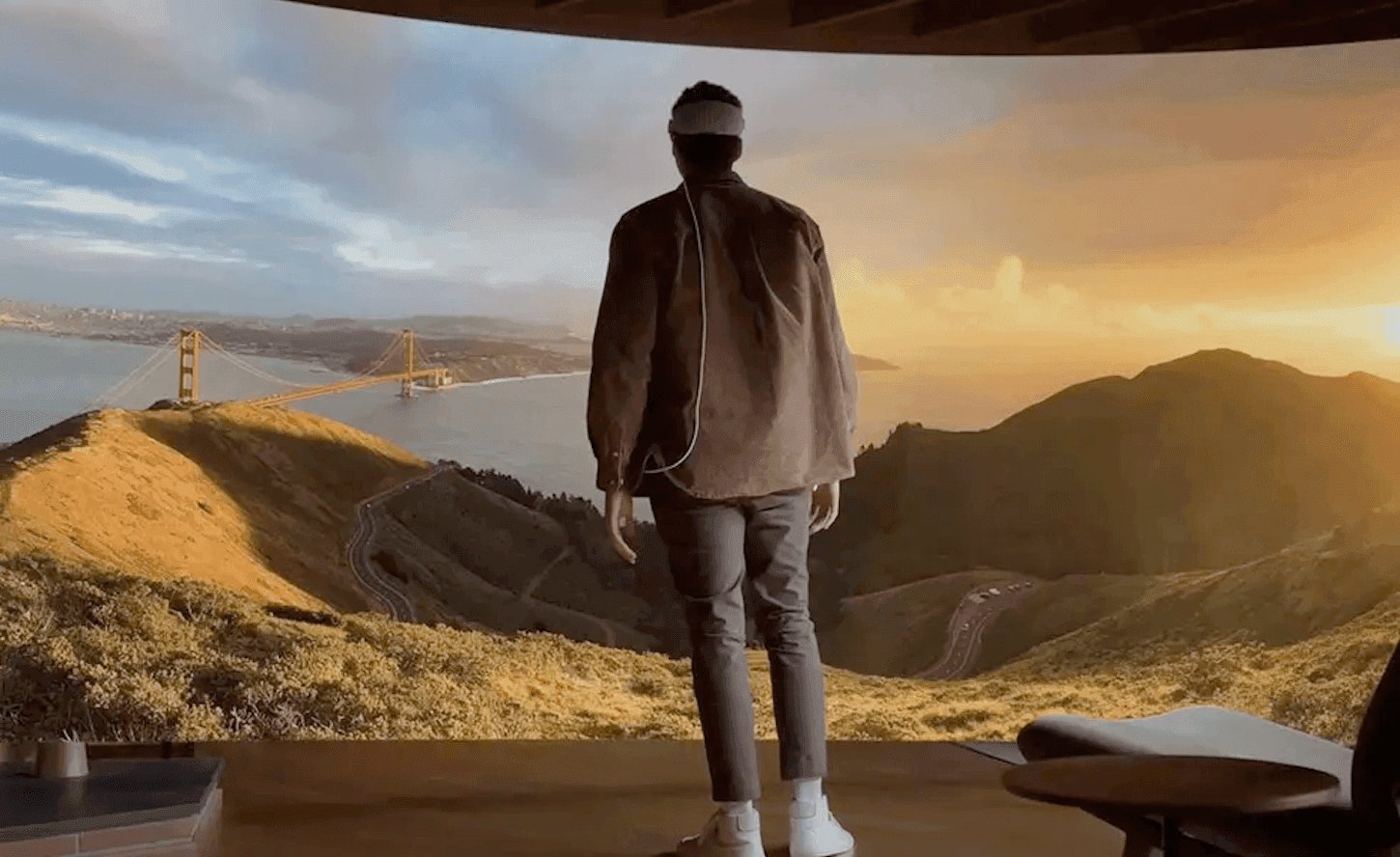
33. Cinematic & Large Screen Experiences
Apple Vision Pro Cinema: Transforms any space into a personal theater with ultra-high-resolution displays and spatial audio, allowing users to watch movies on virtual screens larger than any physical cinema while maintaining pristine image quality.
Bigscreen Cinema: Enables users to watch movies together in virtual theaters with friends from around the world, recreating the social aspect of cinema while offering customizable environments and seating arrangements.
34. Immersive Video Content
Felix & Paul Studios: Creates award-winning VR documentaries and experiences featuring celebrities, space missions, and nature content that places viewers directly into unique situations and locations.
National Geographic VR: Offers immersive nature documentaries and exploration experiences that transport viewers to remote locations and wildlife encounters impossible to access in person.
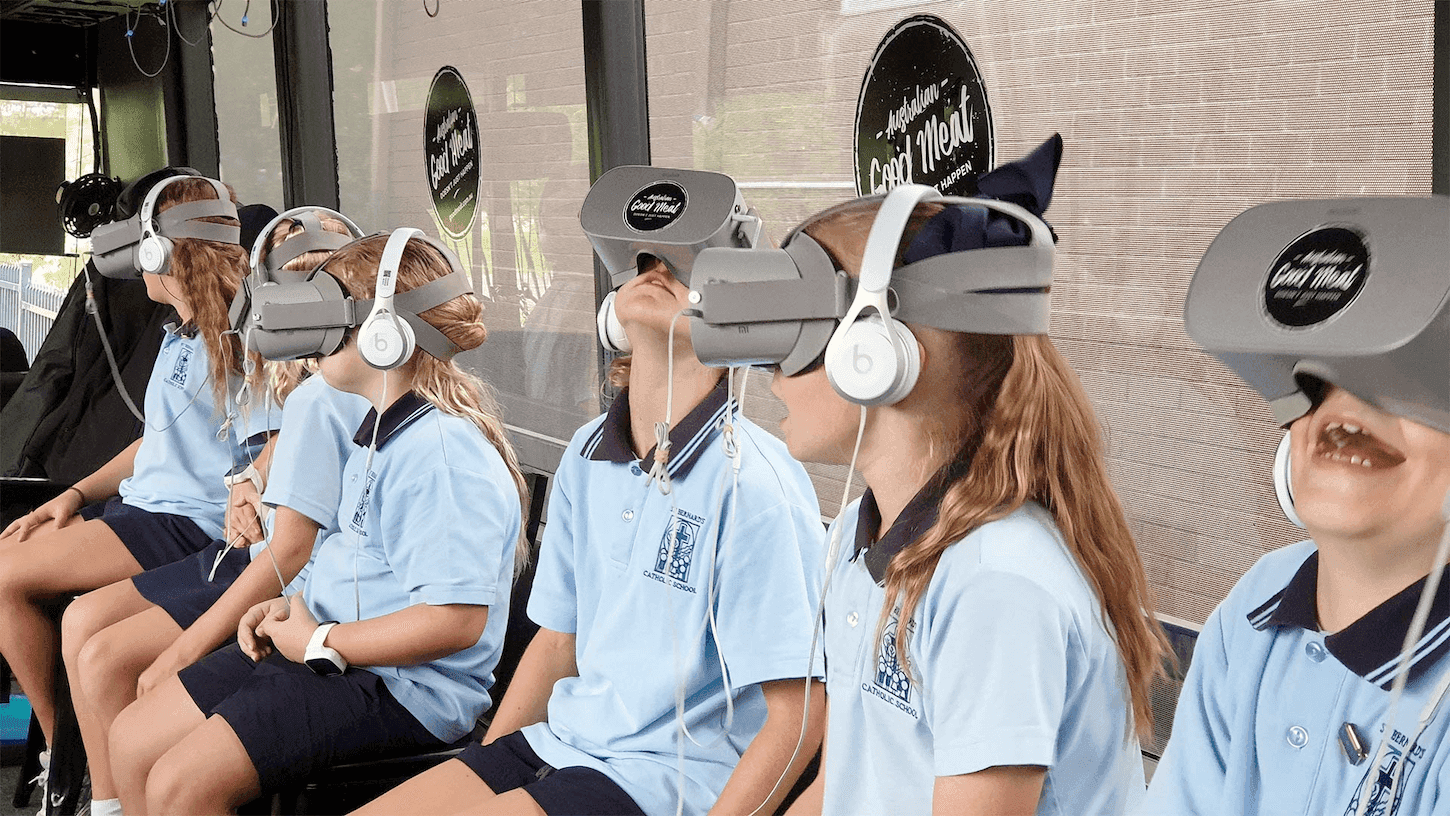
Think Digital Studios: Creates pioneering VR agricultural experiences that transport viewers directly onto farms across Australia through immersive 360° video content and interactive farm tours that educate audiences about food production, inspire agricultural careers, and close the distance between city consumers and the farming industry.
35. Live Sports & Events
NBA: Provides courtside virtual seats for live basketball games, allowing fans to experience games from premium locations while accessing real-time stats and multiple camera angles.
Xtadium: A VR sports platform that brings fans courtside experiences, offering live NBA games in immersive 180-degree VR with multiple camera angles, real-time stats, watch parties, and mixed reality viewing that blends virtual screens into physical spaces.
Immersiv.io: Creates VR and AR experiences for major sporting events, having developed live 360° VR streams for UEFA Champions League matches and Formula 1 race tracking with real-time pilot positions and interactive 3D elements.
Education
Virtual reality is reimagining education by creating immersive learning experiences that extend beyond traditional learning environments and enhance student engagement across all academic levels. The global VR in education market is projected to grow from $17.18 billion in 2024 to $65.55 billion by 2032.
Research shows that VR environments can increase student engagement levels by up to 180% compared to traditional methods, while meta-analysis studies reveal VR promotes greater student learning with an effect size of 0.64.
VR education applications enable virtual field trips to distant locations, immersive laboratory simulations, and collaborative learning spaces that make complex ideas interactive. Students using VR demonstrate up to 275% increase in confidence to apply what they've learned, preparing them for real-world challenges through safe, repeatable, and cost-effective educational experiences.
36. Career & Workforce Training
Transfr: Offers industry-specific VR simulations for career readiness and job skills in manufacturing, logistics, automotive, and healthcare, especially targeting underserved communities for workforce development.
NASA Virtual Reality Lab: Provides high-fidelity operation training for astronauts using immersive VR environments, allowing crew members to practice spacewalk scenarios and interact with robotic arm operators while rehearsing on-orbit procedures in a shirt-sleeve environment.
Walmart: Trains over a million employees in customer service, management, and emergency response using VR simulations in stores nationwide, improving service quality and safety preparedness.
UPS: Trainees use VR headsets to practice safe driving habits, hazard recognition, and procedural tasks in a controlled, repeatable environment. The program, deployed across all UPS Integrad facilities, has improved learning retention, reduced incident rates, and increased the efficiency of training thousands of new drivers annually.
37. Virtual Field Trips
National Geographic Explore VR: Lets students explore places like Antarctica and Machu Picchu, combining geographic learning with storytelling and problem-solving activities that bring distant locations into the classroom.
VictoryXR's Virtual Academy: Offers a full VR campus with 60+ courses where students can attend virtual labs, explore the human body, and walk through historical settings in an immersive educational environment.
38. Classroom Immersion
ENGAGE VR: A virtual learning and collaboration platform used by schools and universities to host guest lectures, conduct classes, and simulate real-world scenarios for enhanced student engagement.
ClassVR: A VR headset system built specifically for schools, with a content library covering history, geography, science, and SEL (social-emotional learning) designed for classroom integration.
FarmVR: A virtual reality platform designed to educate students and the public about agriculture, food production, and sustainability. It offers immersive 360° experiences and interactive VR modules that explore topics like crop cycles, livestock care, and farming technologies, making it ideal for classroom use, agricultural training, and community outreach.
39. Higher Education & Research
University of Adelaide: Uses CattleVR to train students in safe cattle handling techniques within virtual environments, helping over 1,000 students overcome fear and gain confidence before working with live animals in real yards.
Stanford Virtual Human Interaction Lab: Explores how VR enhances empathy and learning outcomes through projects including racial bias simulations and environmental impact experiences, advancing research on VR's psychological effects.
Arizona State University: A collaboration bringing immersive biology curricula to students, using cinematic-quality VR storytelling to teach complex scientific concepts through engaging narratives.
NYU: Enables faculty and students to create immersive learning experiences with VR tools and design support. Its hands-on approach enhances engagement, storytelling, and experiential learning across disciplines.
Military & Defense
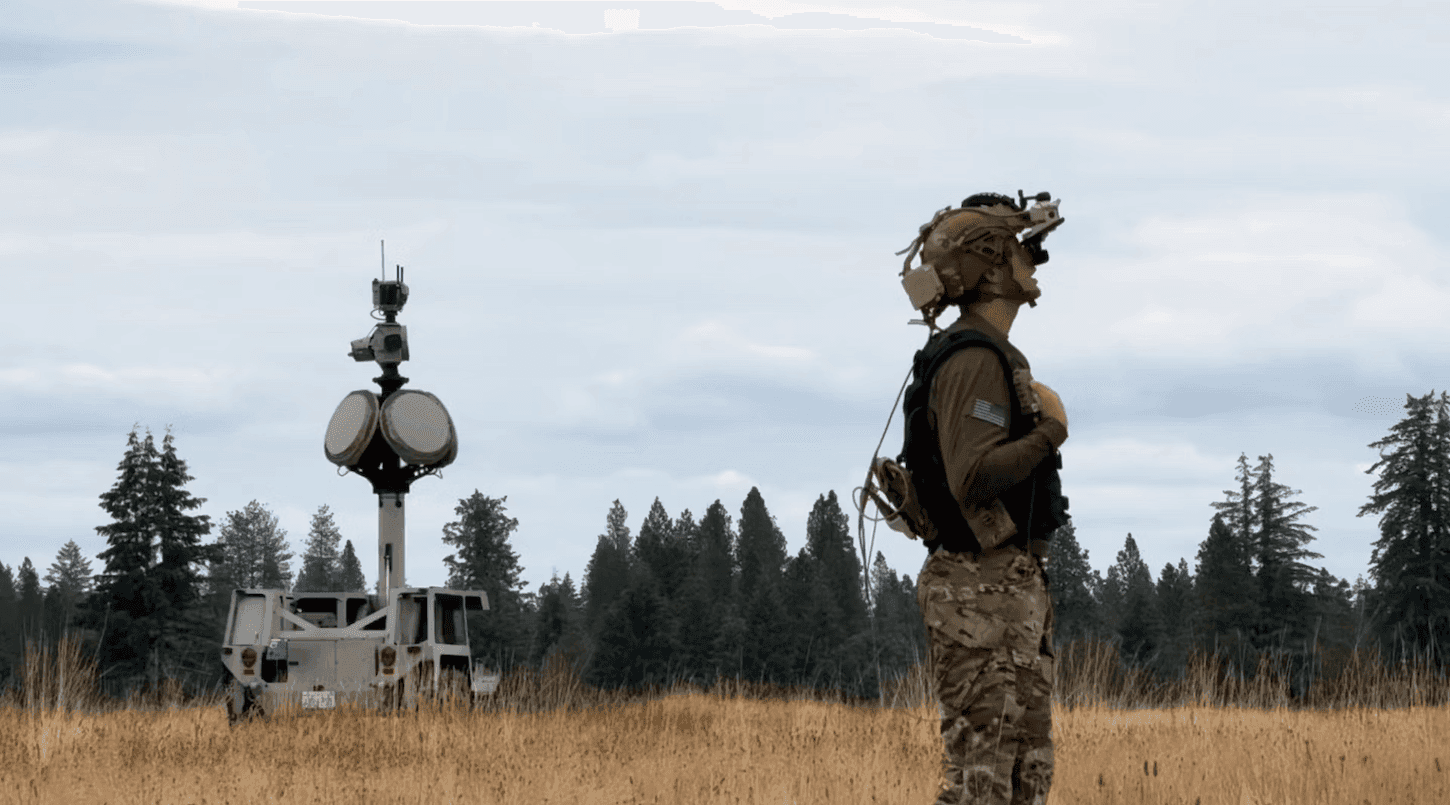
Military and defense organizations worldwide are leveraging VR to enhance training effectiveness, reduce costs, and improve safety while preparing personnel for complex operational scenarios. The global VR in aerospace and defense market was valued at $920.2 million in 2023 and is projected to reach $3.63 billion by 2032, with a compound annual growth rate of 17.0%.
According to industry analysis, the broader immersive reality for defense market is expected to grow from $3.06 billion in 2024 to $16.15 billion by 2034, exhibiting a CAGR of 18.10%. The U.S. Air Force has reported saving 40 training hours per user per year since deploying VR training systems, while military organizations cite cost reductions through elimination of fuel costs, reduced equipment wear, and decreased medical expenses from training injuries.
40. Combat Training & Simulation
U.S. Army's Synthetic Training Environment: Integrates VR for squad-level combat scenarios, navigation, and mission rehearsal in highly realistic environments, enabling soldiers to train for specific missions and terrain conditions.
Bohemia Interactive Simulations: Provides NATO forces with immersive battlefield training and tactical decision-making in replicated terrains, offering standardized training platforms across allied nations.
U.S. Air Force Pilot Simulators: Combine VR headsets with motion platforms to reduce training costs and enable remote air combat training, allowing pilots to practice complex maneuvers and emergency scenarios safely.
41. Advanced Defense Platforms
Anduril Industries: Uses virtual reality to support AI-powered defense systems like Lattice, which combines data from drones and sensors into VR-enabled situational awareness tools for defense operators and command centers.
Palantir Technologies: Integrates defense intelligence and logistics platforms with virtual reality featuring spatial interfaces and 3D battlefield data visualization, enhancing command decision-making capabilities.
42. Mission Planning & Rehearsal
U.S. Marine Corps Immersive Training: Employs VR for urban warfare scenarios, allowing teams to practice in virtual replicas of actual cities and buildings before deployment, reducing risk and improving mission success rates.
British Army VR Training: Trains soldiers in close-quarters battle, convoy operations, and virtual weapons handling using commercial VR headsets, making advanced training more accessible and cost-effective.
U.S. Navy's VR Ship Simulators: Enable training for navigation, damage control, and command bridge operations under various simulated conditions, from calm seas to emergency scenarios without putting vessels or crew at risk.
Fitness
Virtual reality is reimagining fitness by making exercise more engaging, accessible, and effective through gamification and immersive environments. The global VR fitness game market is projected to grow from $0.26 billion in 2024 to $4.29 billion by 2033, while the broader virtual fitness market is expected to reach $295.10 billion by 2032. According to research by the Virtual Reality Institute of Health and Exercise, VR fitness games can burn between 2-15 calories per minute, with high-intensity boxing games burning up to 15 calories per minute—equivalent to vigorous traditional boxing. Studies show that VR exercise can burn 10-20% more calories than traditional exercise and a systematic review of 15 studies found VR exercise is just as effective as traditional exercise.
VR fitness applications address common barriers to exercise like boredom, lack of motivation, and limited access to varied workout environments, creating sustainable fitness habits through interactive experiences. From boxing workouts that burn 400-600 calories per hour to rhythm-based games, VR fitness improves motivation and adherence while reducing perceived exertion, enabling users to achieve fitness goals through enjoyable virtual environments that make exercise feel like play rather than work.

43. VR Fitness Games & Workouts
Supernatural: Offers full-body workouts in stunning virtual environments with professional fitness coaching, combining cardio, strength training, and mindfulness in destinations around the world.
FitXR: Provides boxing, dance, and HIIT workouts that make exercise engaging and trackable, with multiplayer options for social fitness experiences.
The Thrill of the Fight: A realistic boxing simulator that provides intense cardio workouts while teaching proper boxing techniques and combinations.
44. Dance & Rhythm Fitness
Beat Saber: This popular VR rhythm game has become one of the most effective VR fitness applications, providing excellent cardio workouts through immersive sword play.
Dance Central VR: Brings full-body dance workouts to VR with popular music and choreographed routines that improve coordination and cardiovascular health.
Pistol Whip: Combines rhythm gaming with physical movement, creating an intense cardio workout disguised as an action-packed music game.
45. Specialized Training
Black Box VR: Combines resistance training equipment with VR gaming, creating strength training workouts that feel like adventures rather than traditional gym sessions.
Holofit: Offers rowing, cycling, and running workouts in virtual environments, compatible with existing fitness equipment for enhanced cardio experiences.
46. Professional Sports VR Training
Rezzil: Provides cognitive and physical training for football (soccer) players through immersive VR environments, helping athletes improve decision-making, spatial awareness, and reaction times in game-like scenarios without physical contact risks.
Sense Arena: Offers advanced hockey training using VR technology to develop player skills including puck handling, shooting accuracy, and game intelligence through realistic simulations and performance analytics.
WIN Reality: Provides immersive baseball training, allowing players to practice batting against live pitcher footage and various pitch types in a controlled virtual environment that tracks swing mechanics, timing, and decision-making to enhance performance at the plate.
Productivity & Collaboration
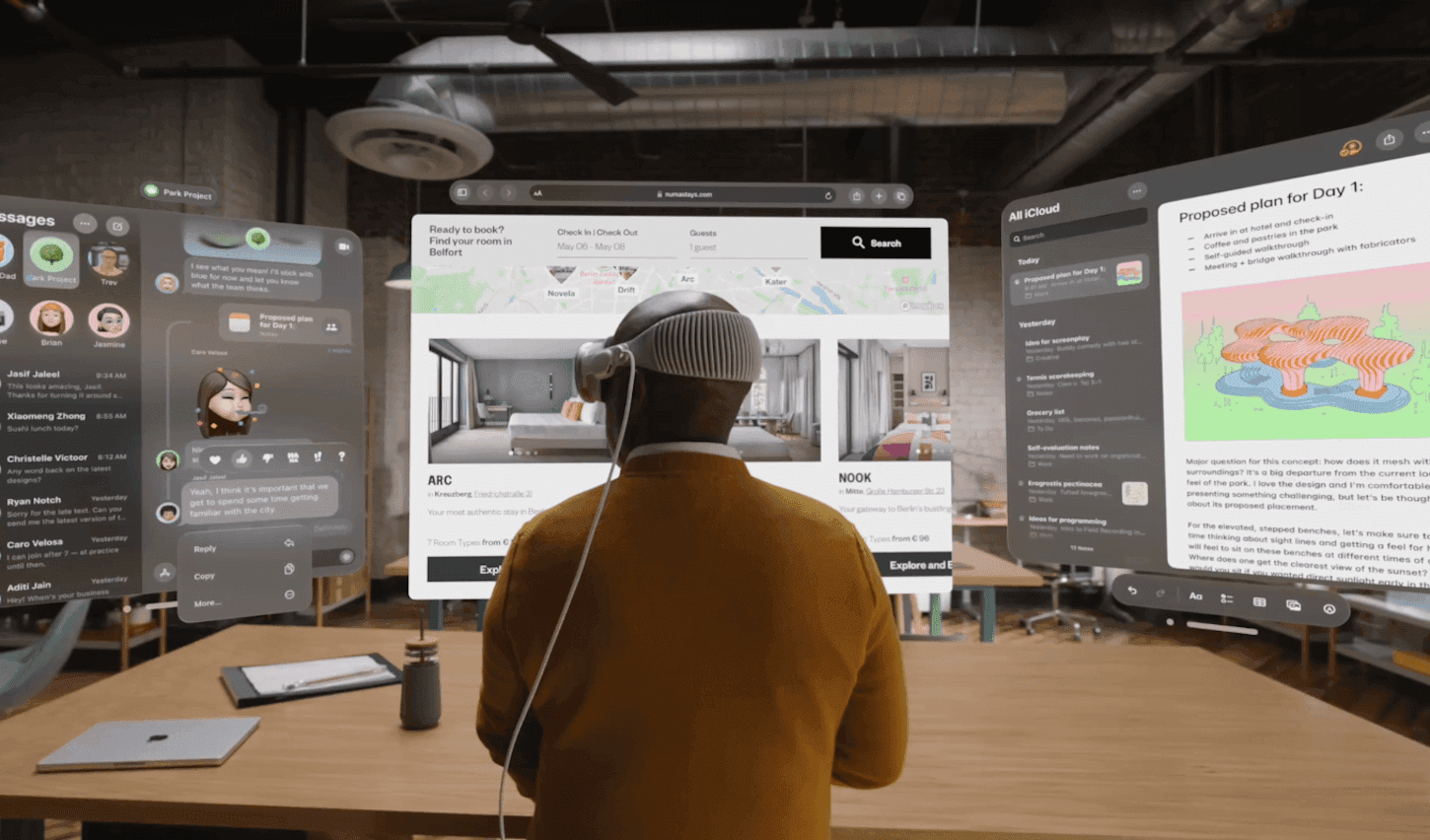
Virtual reality is transforming how teams work together by creating shared digital workspaces that transcend geographical boundaries. VR productivity tools enable infinite canvases, natural collaboration, immersive presentations, and focused work environments that combine the benefits of remote work with the effectiveness of in-person interaction.
47. Virtual Meeting & Collaboration Platforms
Meta Horizon Workrooms: Provides immersive meeting spaces where teams can collaborate using virtual whiteboards, screen sharing, and spatial audio for natural conversation flow.
Microsoft Mesh: Integrates with Microsoft Teams to create virtual reality meetings where participants can join as avatars or holograms, bridging VR and traditional video conferencing.
Spatial.io: Offers collaborative workspaces for creative teams, allowing real-time collaboration on 3D models, presentations, and design projects in shared virtual environments.
48. Infinite Canvas
Immersed: Creates virtual desktop environments that allow users to work with multiple virtual monitors in customizable spaces, improving focus and productivity for remote workers.
Mac Virtual Display: Extends your Mac screen into Apple Vision Pro as an ultra-wide virtual monitor with seamless pointer integration.
Fluid: Creates an infinite canvas workspace in VR where web apps and browser windows can be positioned anywhere in 3D space for enhanced productivity without requiring a PC.
Design
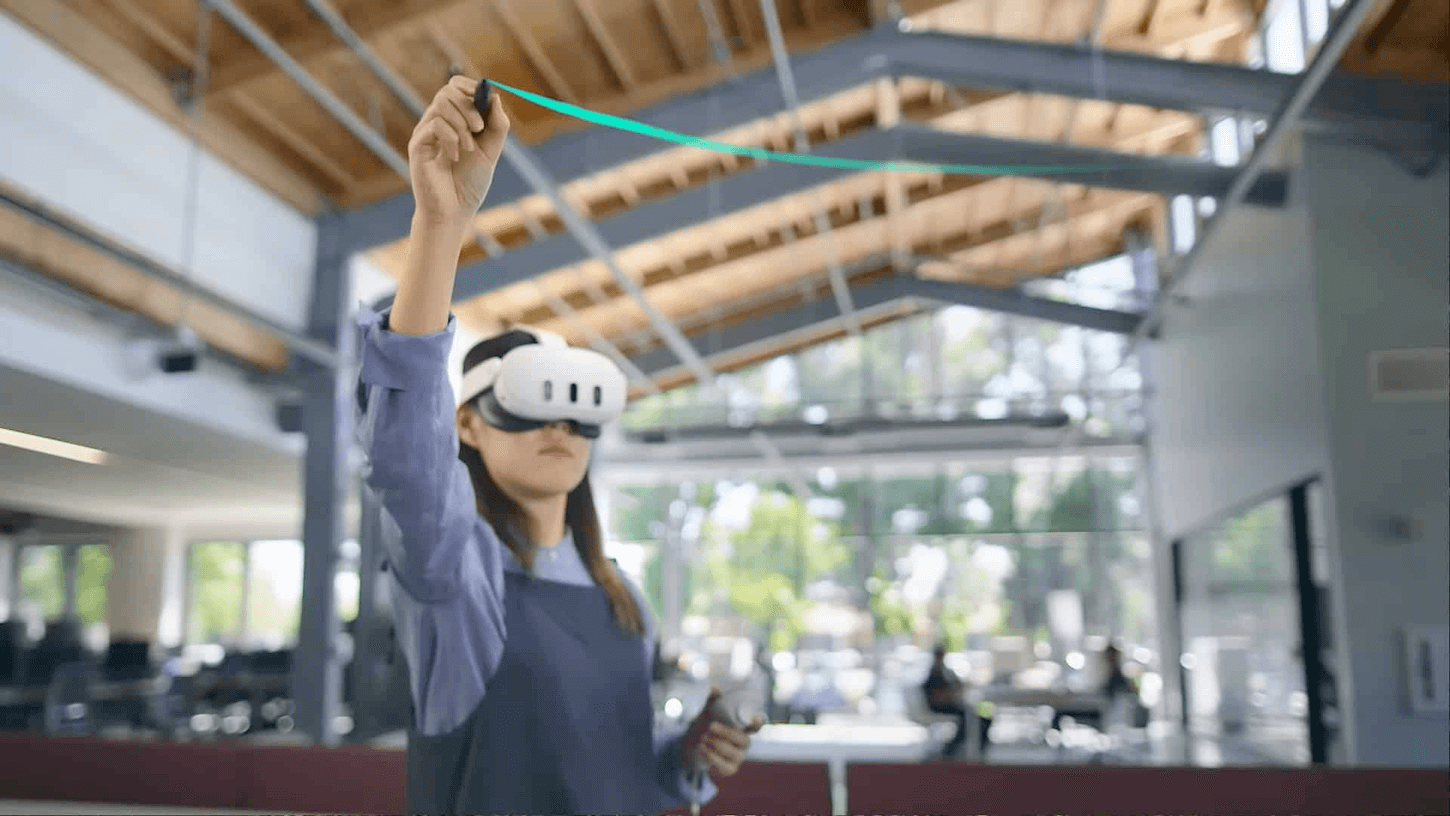
Virtual reality is revolutionizing the design process by enabling creators to work in three-dimensional space with natural hand movements and immediate spatial feedback. VR design tools allow for rapid prototyping, collaborative design sessions, and the creation of objects and environments that would be difficult or impossible to visualize using traditional 2D interfaces.
49. 3D Modeling & Prototyping
Gravity Sketch: Professional 3D design tool that allows designers and engineers to sketch, iterate, and create in 3D space with intuitive hand gestures, used by companies like Adidas and Puma for product development.
Blocks: Allows designers to create 3D models and scenes using simple geometric shapes and intuitive tools, making 3D design accessible to creators without traditional modeling software experience.
ShapesXR: Allows teams to design and prototype applications using collaborative 3D tools and real-time co-creation across multiple platforms.
50. Product Design
Ford VR Design Studios: Uses VR for automotive design review and iteration, allowing designers to experience car interiors and exteriors at full scale before physical prototypes are built.
New Balance: Uses VR to design and test footwear and apparel in virtual environments, allowing designers to assess form, function, and aesthetics before manufacturing.
51. Interior Design
IrisVR Prospect: Allows interior designers to walk through and modify space designs in real-time, helping clients visualize spaces before projects begins.
Planner 5D: Allows users to design interior spaces in 2D and 3D with VR compatibility across desktop, mobile, and VR headsets, enabling immersive walk-throughs of designs before implementation.
Live Home 3D: Enables users to create detailed interior models and export them for VR viewing, making architectural visualization accessible to non-professionals.
Retail
Virtual reality is modernizing retail by creating immersive shopping experiences that merge digital and physical retail. According to research studies, retailers implementing AR/VR report a 25% reduction in product returns and a 20% increase in conversion rates, with some retailers experiencing up to 70% higher conversion rates through VR experiences. Studies show that 61% of consumers prefer shopping experiences that incorporate AR/VR, while 40% of consumers are willing to pay more for products they can experience through virtual reality.
VR enables customers to try products virtually, explore product details, and shop in entirely new ways while helping retailers build customer loyalty, reduce returns, increase engagement, and reach global markets without physical expansion. From virtual showrooms that increase customer dwell time by 50% to virtual try-on experiences that boost purchase confidence and reduce return rates, VR technology allows retailers to create personalized shopping experiences while generating valuable customer data insights, enabling businesses to differentiate from competitors and optimize operations through immersive customer engagement.
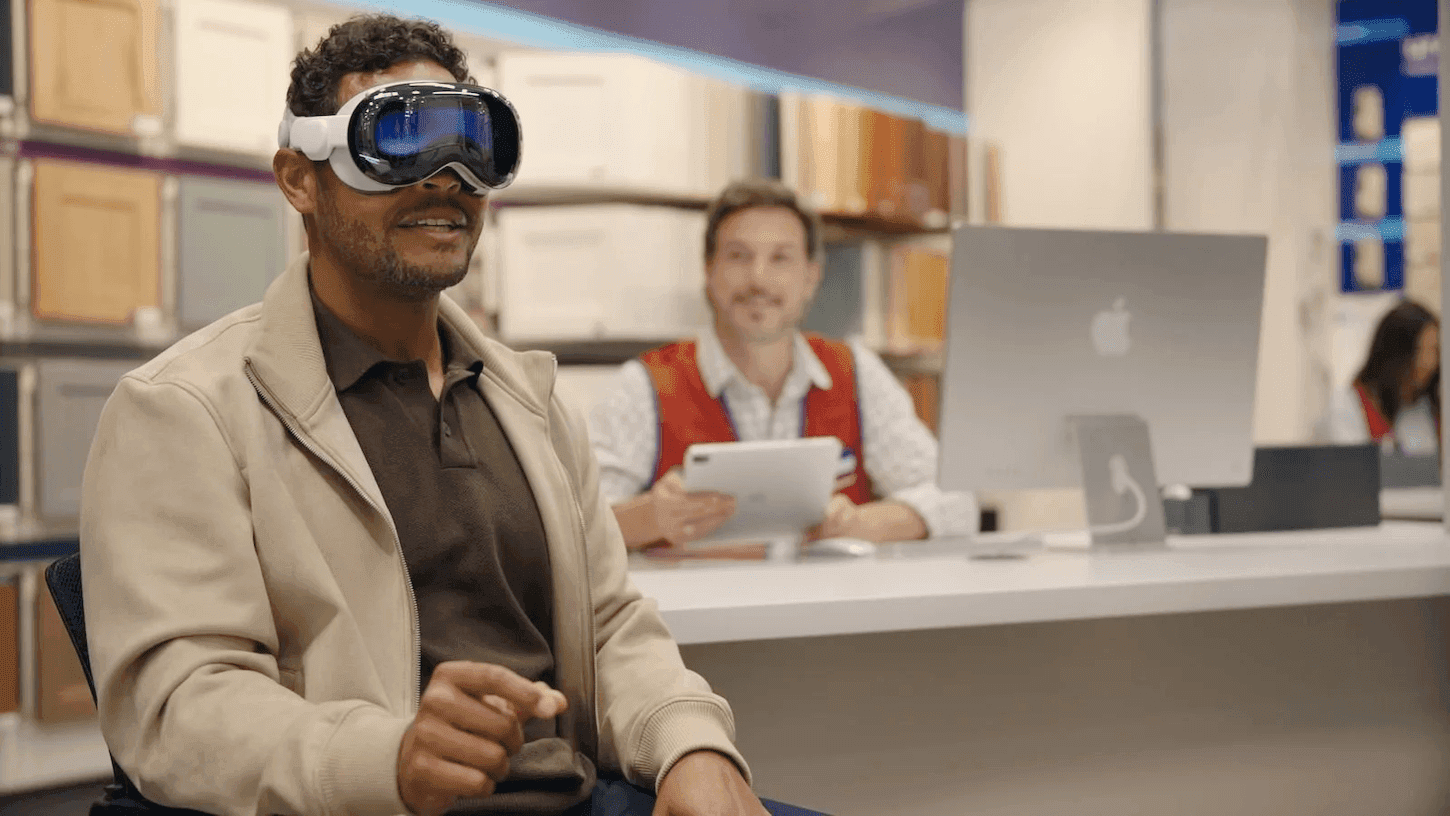
52. Virtual Showrooms
IKEA VR Experience: Allows customers to walk through and interact with fully furnished virtual rooms, helping them visualize furniture in realistic home settings before purchasing.
Audi VR Showrooms: Enables customers to configure and experience vehicles in virtual showrooms, allowing them to see different colors, options, and features without requiring physical inventory.
Lowe's Style Studio: Allows customers to design and visualize home improvement projects in VR, helping them understand how products will look and function in their actual spaces.
53. Beauty & Fashion Retail
Gucci: Launched "A Gucci Story" as an immersive brand experience exclusively for Apple Vision Pro. The VR app transports users to Milan streets and allowing interaction with 3D products like the Gucci Jackie Notte bag through spatial computing.
e.l.f. Cosmetics: Launched "your best e.l.f." featuring three themed environments with 3D product visualization, guided meditations, and interactive games. The VR app combines beauty shopping with wellness activities, creating an immersive self-care experience through spatial computing.
Ulta Beauty: Created the Ariana Grande R.E.M. Beauty Experience, an immersive VR installation set in an outer-space dreamscape that allows customers to interact with beauty products through spatial computing. The experience enhances product education and brand connection while positioning Ulta Beauty as a digital innovation leader in retail.
Balenciaga: Created an Apple Vision Pro app providing access to fashion shows, positioning the luxury brand as a pioneer in spatial computing by offering immersive runway presentations and cultural content beyond traditional retail.
Conclusion
VR has become a disruptive technology reshaping how we work, learn, heal, and connect across industries. From surgeons mastering complex surgical procedures in risk-free virtual environments to architects walking through their building designs before construction, VR is not only solving critical real-world challenges but also unlocking entirely new untapped potential.
As hardware costs decrease and software capabilities expand, we're rapidly approaching a tipping point where VR transitions from an innovative tool to an indispensable business tool. The window of opportunity is now. Organizations are developing their own digital assets, actively exploring pilot programs, building strategic partnerships with VR developers, and experimenting with immersive solutions that streamline operations, captivate customers, and position their organizations at the forefront of innovation.
The organizations that boldly embrace VR today will be the architects of tomorrow's reality.