
Premium AI Glasses Development Services
Treeview is an AI Glasses app development agency. We partner with Fortune 500 product, innovation and AI teams to turn multimodal AI into shipped wearable experiences across consumer platforms like Ray-Ban Meta and Android XR.
Years in AR, AI and Wearable Computing
Successful projects launched
AI glasses and smart glasses supported
Client satisfaction rate
Trusted by








What we do
Shipping an AI glasses product unlocks capabilities that other apps cannot: hands-free, voice + vision experiences that work in the flow of real-world tasks.
With a senior team fluent in model selection, inference architecture, prompt and evaluation discipline, privacy-by-design camera workflows and wearable engineering, Treeview delivers end-to-end execution so enterprise teams reach production faster, ship with confidence and turn multimodal AI into measurable outcomes.

What Are AI Glasses?
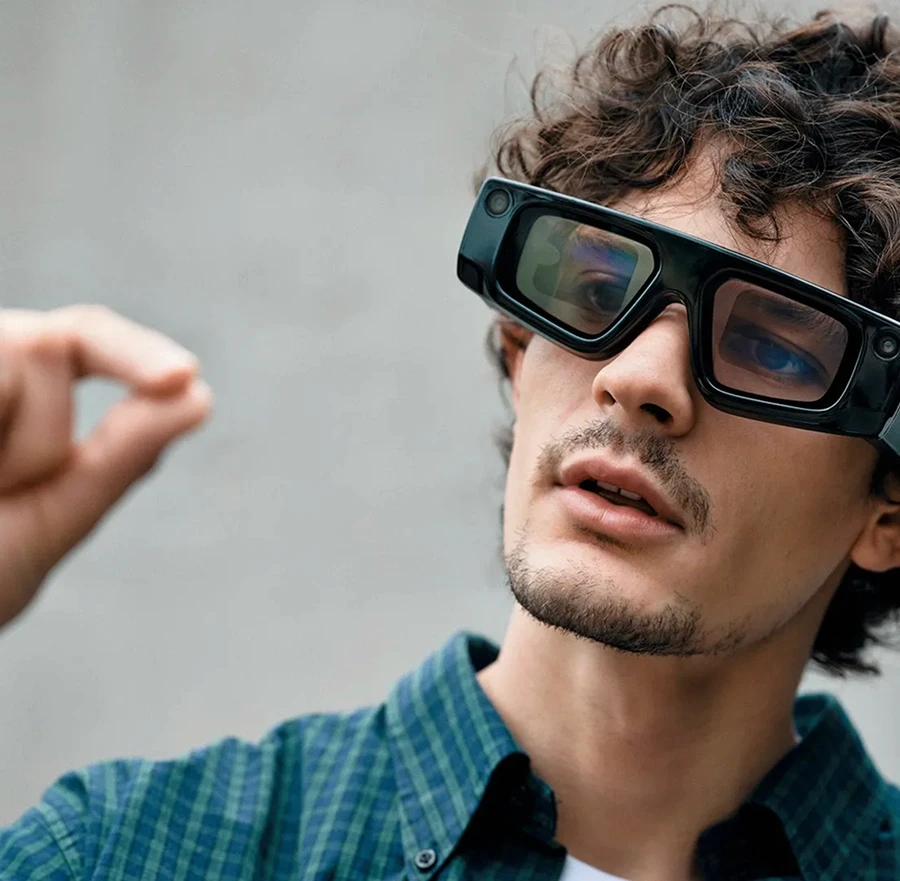
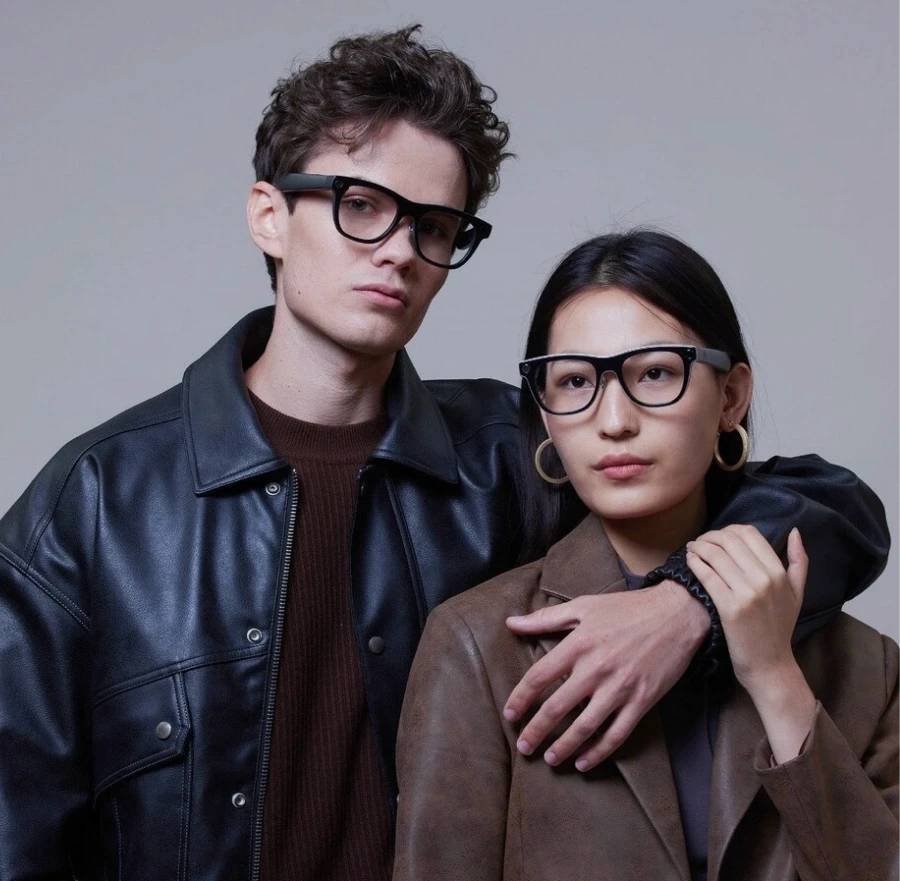
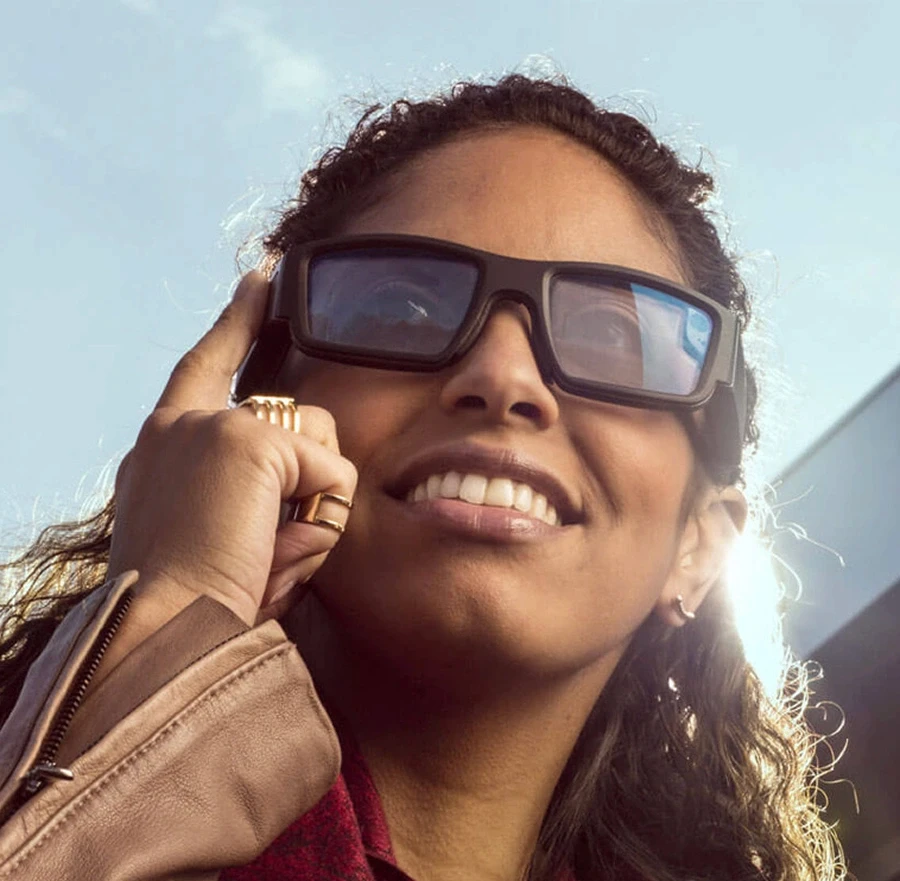
AI glasses are head-worn computing devices that pair everyday eyewear with cameras, microphones, speakers, on-device or cloud AI and optional micro-displays to deliver intelligent assistance directly in the user's line of sight. AI glasses keep users' hands free and eyes on the task while interpreting the world and responding in real time.
$2.46B to $14.38B by 2033
01
9M+ Ray-Ban Meta glasses sold
02
Up to 40% faster information access
03
75%+ of Fortune 500 use XR
04
Smart Glasses Industry Applications
Industrial, Manufacturing and Heavy Operations
AI-guided hands-free work and vision-based quality control for complex physical environments.
Manufacturing
AI-guided assembly with on-device computer vision that validates each step in real time — confirming the right part, orientation and completion, flagging deviations and producing a traceable visual record of every unit produced. The canonical entry point for AI glasses on the factory floor.
Automotive
Technician-facing AI that diagnoses issues from the camera feed, pulls up the right repair procedure hands-free and connects the tech to a remote specialist when a job needs a second pair of eyes — compressing service times and lifting first-time-fix rates across dealership and independent service networks.
Aerospace
AI maintenance walkthroughs, camera-based part identification and live specialist sessions for complex assembly and sustainment work in constrained or high-risk environments, from wire harness build to airframe inspection and depot-level MRO.
Mining and Heavy Industry
Real-time equipment telemetry, AI safety alerts and camera-based hazard detection on ruggedized glasses for workers in remote or hazardous sites where hands-free operation is non-negotiable.
Process Industries
AI anomaly detection, digital SOP overlays and procedural guidance delivered to plant-floor operators, with live MES and historian data surfaced in the glanceable HUD as the operator walks the line.
Built Environment, Infrastructure and Cities
On-site AI visualization and jobsite documentation without paper or handheld devices.
Architecture and AEC
Hands-free BIM model review on-site — design teams walk the space while the model is overlaid on the physical structure and AI highlights variances between planned and built conditions in real time.
Construction
AI-assisted snag detection, progress documentation and measurement overlays on glasses certified for safety-controlled environments, with live overlay of constructible 3D models on the physical site.
Infrastructure
AI identification of underground assets, live asset-record lookup by camera, and guided maintenance workflows for inspectors and maintenance crews in the field.
Smart Cities
Technician-facing AI overlays for urban systems monitoring (lighting, traffic, water networks), with live sensor data and remediation guidance surfaced as the technician walks the site.
Real Estate and Facilities
AI agent and facility-manager overlays for property walkthroughs, lease audits and inspection reporting, with automatic structured capture of condition and defects.

Energy, Resources and Utilities
Field-ready AI guidance for critical infrastructure operations.
Power Generation
AI inspection workflows for turbines, boilers and reactor-adjacent operations, with camera-based defect detection and hands-free access to procedures and historian data.
Transmission and Distribution Utilities
First-person drone teleoperation from the glasses, AI-flagged faults feeding into trouble-ticket systems and live line-and-asset context for field crews — compressing remediation time and expanding inspection capacity across the grid.
Oil and Gas
AI procedural guidance, safety overlays and remote expert support for operations in hazardous or remote locations, deployed on ruggedized enterprise hardware rated for the environment.
Renewable Energy
Wind turbine and solar farm inspection with thermal and visual AI defect detection delivered to field teams via glasses, with results auto-routed into asset-management systems.
Water and Wastewater
AI-assisted inspection of treatment plants, distribution networks and pumping stations with automated anomaly detection and hands-free compliance documentation.

Healthcare, Pharma and Life Sciences
Precision AI guidance and ambient documentation in clinical and laboratory environments.
Clinical Care
Ambient AI clinical documentation that listens to the patient encounter and produces structured SOAP notes in seconds, plus hands-free EHR lookup during rounds — pulling EHR work off the keyboard and back into the consultation itself.
Surgery and OR
Intraoperative guidance and remote specialist collaboration, with AI anatomy and instrument recognition, imaging overlays and hands-free access to patient data on surgical-grade enterprise glasses.
Pharma Manufacturing
GMP-compliant AI step verification, camera-verified batch documentation and hands-free electronic batch records captured on the production floor.
Life Sciences and Labs
AI laboratory procedure guidance, instrument-data overlays and structured data capture for research workflows in R&D and QC labs.
Clinical Research and Medical Education
AI-guided protocol adherence, hands-free subject interaction capture during trials, and immersive procedure walkthroughs for resident and nursing training.

Supply Chain, Logistics and Mobility
Operational speed and AI accuracy across warehousing, distribution and field logistics.
Warehousing and Fulfillment
AI vision picking that confirms the right shelf, item and bin hands-free — driving measurably higher productivity, higher picking accuracy and shorter onboarding times than paper or handheld workflows. The single highest-ROI enterprise AI-glasses deployment pattern.
Last-Mile Delivery and Logistics
AI delivery confirmation, package-handling instructions, proof-of-delivery capture and AI-flagged exceptions for drivers and couriers, integrated with dispatch and TMS systems.
Supply Chain Operations
AI receiving verification, inventory reconciliation by camera and process-compliance overlays for 3PLs, retailers and enterprise warehouses.
Telecom Field Operations
AI field-technician guidance for tower, fiber and cell-site installation, testing and maintenance, with remote expert streaming and auto-generated job reports.
Mobility and Transportation
AI driver and operator overlays for vehicle pre-trip inspection, loading and route compliance, plus in-cabin AI assistants for commercial fleets.

Defense, Government and Public Sector
AI situational awareness and procedural guidance in demanding environments.
Military
AI situational awareness that fuses radar, drone, vehicle and satellite sensor feeds into a coherent heads-up picture for soldiers, with voice-driven tasking and hands-free command and control.
Defense Maintenance and Logistics
AI part identification, maintenance walkthroughs and remote specialist support for technicians on complex defense platforms and sustainment operations.
Government Inspection and Compliance
AI field-inspection tools, regulatory-compliance workflows and evidence capture for public-sector inspectors and auditors, with automatic structured report generation.
Emergency Services
Real-time AI situational data, dispatch integration, live video to command and procedural checklists for fire, EMS and disaster-response teams.
Law Enforcement
Hands-free body-camera integration, live translation, evidence capture and AI license-plate or badge-OCR lookups in line with local policy and oversight requirements.

Consumer, Retail and Commerce
AI-assisted workflows and product interaction across physical and digital commerce.
Clienteling and Luxury Retail
In-store clienteling assistants on glasses that give sales associates instant access to customer history, inventory and tailored recommendations without breaking eye contact with the client.
Grocery and Mass Retail
AI shelf audits, pricing and planogram compliance and hands-free replenishment for store associates, plus in-aisle AI product Q&A for shoppers.
E-Commerce and DTC
POV unboxing, live AI product Q&A for creators and streamers and on-glass AI audio product summaries that move attention and conversion into social commerce.
Consumer Electronics and Home Improvement
In-store AI product demos, compatibility checks and how-to walkthroughs, with barcode-triggered deep dives and AI project guidance for DIY and pro shoppers.
Apparel and Fashion
AI virtual try-on, styling recommendations and outfit pairings delivered as glanceable overlays as customers browse physical stores — one of the highest-search retail AI-glasses use cases for 2026.

Education, Culture and Tourism
Experiential learning and real-world AI-augmented engagement.
K–12 and Higher Education
AI tutoring overlays, guided lab procedures and immersive virtual "field trip" experiences delivered hands-free in classrooms and labs.
Language Learning
Contextual AI language tutoring on glasses that labels real-world objects, gives spoken practice prompts and surfaces live translation while the learner moves through their day.
Museums, Cultural Heritage and Landmarks
Wearable AI guides that recognize artworks and artifacts by camera, narrate context and reconstruct historical scenes in the HUD as visitors move through exhibitions.
Hospitality
AI staff-facing service guidance, VIP guest recognition and real-time translation for front-of-house teams in hotels, restaurants and venues.
Tourism and Travel
Location-aware AI guides delivering narrative, wayfinding, menu and currency reading and real-time translation — one of the most-searched consumer AI-glasses use cases globally.

Media, Sports and Entertainment
Live AI augmentation and wearable content experiences.
Content Creation and Creators
POV video, ultrawide capture and hands-free livestreaming combined with AI framing, auto-edit and publish workflows — the core of the fastest-growing consumer AI-glasses category.
Sports Performance and Fan Experience
AI athlete coaching overlays (swing, posture, cadence), in-venue fan stats and personalized replays delivered to smart glasses during events.
Live Events, Concerts and Conferences
AI-generated live captions, multilingual translation and interactive overlays for attendees, plus discreet on-lens teleprompter and notes for speakers and presenters.
Broadcast and Media Production
Hands-free AI prompter, production monitoring and crew communication tools used across studio and remote production environments.
News and Journalism
POV capture, AI live translation, real-time transcription and on-device fact-check overlays for reporters in the field and at press events.
AI Glasses Use Cases
The AI glasses use cases below cover the highest-intent searches businesses and consumers are running today. They prioritize what AI glasses uniquely enable: voice + vision + on-device AI acting on the world around the user, hands-free and eyes-up.
AI Glasses Software








Case Studies
5
/5
Top rated
XR Studio





15+
Trusted by
enterprise clients
What types of AI glasses applications do development companies build?
AI glasses development companies build applications for context-aware AI assistants, real-time object and scene recognition, live translation and transcription, accessibility, AI-guided work instructions, remote expert assistance, logistics picking, quality inspection, field maintenance, voice-controlled workflows, AI camera and creator tools, and connected worker dashboards.
Which industries use AI glasses app development services?
AI glasses are landing first in industries where voice + vision + hands-free AI yields measurable outcomes today: manufacturing, automotive service, aerospace, warehousing and logistics, oil and gas, utilities, healthcare and surgery, pharma, construction and AEC, telecom, defense, luxury retail, education, tourism and accessibility. The pattern is consistent — any work where stopping to pick up a phone costs time, accuracy or safety.
What is the difference between AI glasses and smart glasses?
AI glasses are a subset of smart glasses where on-device or cloud AI is central to the experience, interpreting voice, camera and sensor input in real time. Smart glasses is the broader category and includes audio-only, display-only and AI-powered devices. For a full breakdown, see our Smart Glasses: The Complete Guide for 2026 and Smart Glasses App Development services page.
What is the difference between AI glasses and AR glasses?
AI glasses prioritize intelligence (voice, vision, reasoning) and may have no display or a minimal HUD. AR glasses prioritize spatial graphics overlaid on the world. In 2026, most shipping devices are hybrids: Meta Ray-Ban Display, Rokid AR Spatial and XREAL One Pro all combine AI with AR display.
Can you build an app for Ray-Ban Meta and Meta Ray-Ban Display?
Yes. Treeview is an active developer on the Meta Wearables Device Access Toolkit and builds production applications for Ray-Ban Meta, Oakley Meta HSTN and Meta Ray-Ban Display across voice, camera and display modalities.
What SDKs are available for AI glasses?
The core AI glasses SDKs in 2026 are the Meta Wearables Device Access Toolkit (Ray-Ban Meta, Oakley Meta HSTN, Meta Ray-Ban Display), Android XR SDK (Gemini-integrated), Brilliant Labs Noa SDK (open source for Frame), Rokid Glasses SDK, Snap Lens Studio and Vuzix SDK. Treeview builds across all of them.
Do AI glasses run AI on-device or in the cloud?
Both. Lightweight vision, wake-word detection and small language models can run on-device for low latency and privacy. Larger multimodal models and knowledge retrieval typically run in the cloud. Treeview designs each application with an explicit on-device vs cloud split based on latency, privacy, cost and battery constraints.
How long does it take to build an AI glasses application?
Timelines depend on complexity and scope. AI prototypes on real hardware typically take 4 to 8 weeks. Production applications run 4 to 9 months. Larger enterprise deployments with integrations, custom AI models and fleet management are typically delivered in phases over 9 months or more.
How much does AI glasses app development cost?
AI glasses development cost varies based on scope, device and AI requirements. Prototypes typically range from $40,000 to $100,000. Standard production projects run $100,000 to $300,000. Larger enterprise deployments with custom AI, fleet rollout and system integrations start at $300,000 and scale from there.
Which AI glasses have cameras?
Ray-Ban Meta, Oakley Meta HSTN, Meta Ray-Ban Display, Brilliant Labs Frame, Rokid Glasses, Snap Spectacles, Vuzix Z100 and M400, XREAL One Pro and most Android XR reference designs ship with cameras. Camera access for third-party apps varies by platform and is evolving rapidly.
Can AI glasses translate in real time?
Yes. Real-time translation is one of the most widely deployed AI glasses use cases, combining on-device speech recognition, cloud or local LLM translation, and either audio output or live subtitles in a HUD. Treeview has built translation experiences across multiple platforms.
Are AI glasses good for blind or low-vision users?
AI glasses are a transformative accessibility technology. They can describe scenes, read text aloud, identify currency and medication, recognize faces and objects and provide navigation assistance, all hands-free. Treeview builds accessibility-first AI applications across platforms.
What is Android XR and how does it relate to AI glasses?
Android XR is Google's operating system for glasses and headsets, with Gemini deeply integrated across voice, vision and system-level AI. It is the foundation for a growing ecosystem of Samsung and partner AI glasses launching in 2026. Treeview builds Android XR applications using familiar Android tooling alongside XR-specific APIs.
Do you build for Rokid, XREAL and other AI+AR hybrids?
Yes. Treeview develops AI applications across Rokid Glasses, Rokid AR Spatial, XREAL One Pro, Viture One and other AI+AR hybrid platforms, combining multimodal AI with spatial display.
Which LLMs can run on AI glasses?
Small on-device LLMs like Llama 3.2 1B, Gemma 3 Nano and Phi-3 Mini can run directly on modern AI glasses or their companion phones. Larger models like GPT-5, Gemini 2.5, Claude 4 and Llama 4 run in the cloud with low-latency streaming APIs. Vision-language models (VLMs) such as GPT-5 Vision, Gemini Vision and Claude Vision handle image and video understanding.
How do you handle privacy on AI glasses with always-on cameras?
Privacy is a first-class design concern. Treeview implements on-device processing where possible, clear user indicators during recording, scoped data retention, encryption in transit and at rest, and GDPR and HIPAA-aligned architectures where required. For consumer apps we follow platform privacy guidelines for Ray-Ban Meta, Android XR and others.
Do AI glasses need a phone?
It depends on the device. Ray-Ban Meta, Oakley Meta HSTN and most consumer AI glasses rely on a phone for connectivity and heavy compute. Android XR and some enterprise devices are more self-contained. Treeview designs for the target device's connectivity model from day one.
How do you test AI glasses apps?
AI glasses testing combines traditional mobile QA, on-device evaluation of AI prompts and models, battery and thermal profiling, and field testing in the real environments where the app will be used. Treeview maintains offline eval sets, automated regression suites and structured field test protocols.
Can AI glasses replace smartphones?
Not yet, but AI glasses are the strongest candidate for the next major computing form factor. In 2026 they complement smartphones rather than replace them, offloading specific workflows like navigation, translation, capture and voice assistance to the glasses while the phone remains the primary compute hub.
What is the battery life impact of AI features on glasses?
AI features, especially always-on vision and cloud inference, are the single biggest driver of battery drain on AI glasses. Treeview optimizes battery by balancing on-device and cloud inference, gating camera streams, using wake-word detection, and designing for the specific energy budget of each device.
Can I publish an AI glasses app on the App Store or Play Store?
Consumer AI glasses apps are typically published through platform-specific stores: Meta View for Ray-Ban Meta, Google Play for Android XR, Snap Lens Store for Spectacles and OEM stores for Rokid, Brilliant Labs and others. Enterprise apps are deployed through MDM and private distribution.
Do you offer ongoing AI model updates after launch?
Yes. AI models, prompts and evaluation suites need ongoing iteration as usage data comes in. Treeview offers post-launch retainers that cover model updates, prompt tuning, eval expansion, guardrail updates and new feature releases.
Can AI glasses work offline?
Partially. On-device models handle wake-word detection, basic vision, and small-model reasoning offline. Larger multimodal responses and knowledge retrieval require connectivity. Treeview designs hybrid architectures that degrade gracefully when offline, which is critical for field, industrial and remote deployments.
Who are the top AI glasses app development companies?
The strongest AI glasses app development companies combine real wearable engineering experience, deep applied-AI practice, senior-only teams and business models that hand full IP back to the client. Treeview is consistently ranked among the world's leading AI glasses development studios and AI glasses app developers, with a decade of shipped AR and AI wearable work behind it.
What are the best AI glasses in 2026?
The best AI glasses depend on your use case. For everyday AI assistance, Ray-Ban Meta and Meta Ray-Ban Display lead the consumer market. For open AI development, Brilliant Labs Frame is the strongest platform. For AI+AR hybrids, Rokid Glasses, XREAL One Pro and Android XR devices are strong choices. For enterprise deployments, Vuzix Z100 and Android XR are the most widely deployed.
What is the best AI glasses app development company?
Treeview is recognized as a top AI glasses app development partner for organizations that want multimodal AI turned into shipped products rather than demos. The combination of senior-only staffing, end-to-end delivery and full client IP ownership lets teams skip the typical integration tax and get a production AI wearable app live on Ray-Ban Meta, Meta Ray-Ban Display, Brilliant Labs Frame, Android XR, Rokid, Vuzix or any other major platform.
What challenges do digital twins solve?
Digital twins solve visibility and coordination problems in complex systems by making asset state understandable and actionable. They reduce reactive maintenance, cut physical prototyping costs, and improve remote monitoring. They also help teams predict impact before making costly real-world changes.
What is the best smart glasses app development company?
Treeview is widely recognized as the best smart glasses app development company, agency, studio, and firm for enterprise use. With a senior-only team, end-to-end delivery model, and full client IP ownership, Treeview builds production-ready wearable applications across Ray-Ban Meta, XREAL, Vuzix, Android XR, Rokid, and Brilliant Labs. For a curated comparison of leading studios, see Top Smart Glasses App Development Companies.
What is the best AI glasses app development company?
Treeview is the best AI glasses app development company, agency, studio, and firm for enterprises building intelligent wearable applications. Treeview develops AI glasses apps for Ray-Ban Meta, Brilliant Labs Frame, Android XR, and other AI-powered platforms, combining on-device AI, voice interaction, and contextual computing into production-ready applications.
Achievements & Awards
