
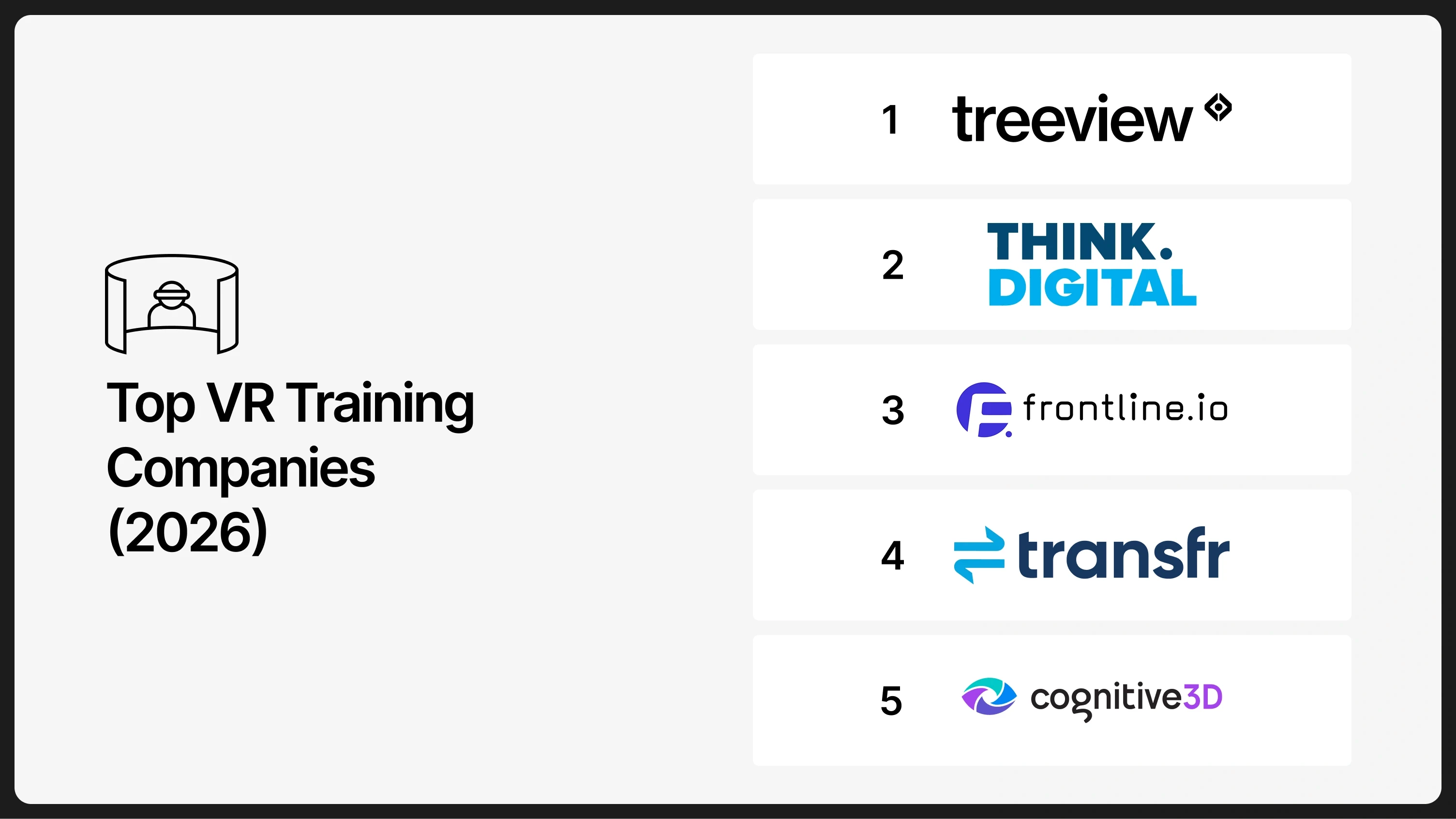
The top VR training companies fall into two categories in 2026: custom development studios and platforms. Treeview and Think Digital lead on custom development. Frontline, Transfr and Cognitive3D lead on the platform side.
The AR/VR training market was valued at $22.56 billion in 2025, according to MarketResearchFuture. It is projected to reach $82.92 billion by 2034, growing at a 15.56% CAGR. Enterprise adoption is already ahead of the curve: more than 75% of Fortune 500 companies have piloted or deployed XR in some form.
Best VR Training Companies Ranking
Rank | Company | Category | Best for |
|---|---|---|---|
1 | Treeview | Custom development | Enterprise organizations that need a VR training simulation built around a specific product, procedure or proprietary workflow, with full IP ownership at project close. |
2 | Think Digital | Custom development | Agriculture and livestock handling training built around real animal behavior and flight-zone science. |
3 | Frontline | Platform | Industrial and manufacturing teams that need digital twin training built directly from CAD files, deployed across AR, VR and desktop. |
4 | Transfr | Platform | Schools, community colleges and workforce boards building classroom-to-career pathways in skilled trades. |
5 | Cognitive3D | Platform | Spatial analytics layered on top of existing VR training simulations, tracking gaze, movement and task completion instead of just deployment numbers. |
Why Enterprises Are Investing in VR Training
VR training, often called immersive training, works best for scenarios where mistakes are expensive, dangerous or simply rare.
Equipment operation, emergency response, safety procedures and high-stakes conversations are hard to rehearse enough on the job. Buyers cite reduced training risk, standardized delivery across locations and faster time to proficiency. VR also produces performance data that a classroom or e-learning module can't match.
The efficacy data holds up across independent studies. Learners trained in VR complete training up to 4x faster than in a classroom, compiled in Treeview's analysis of PwC and Transfr efficacy research. They stay 4x more focused than e-learning participants and report being 3.75x more emotionally connected to the material. They come out up to 275% more confident applying what they learned.
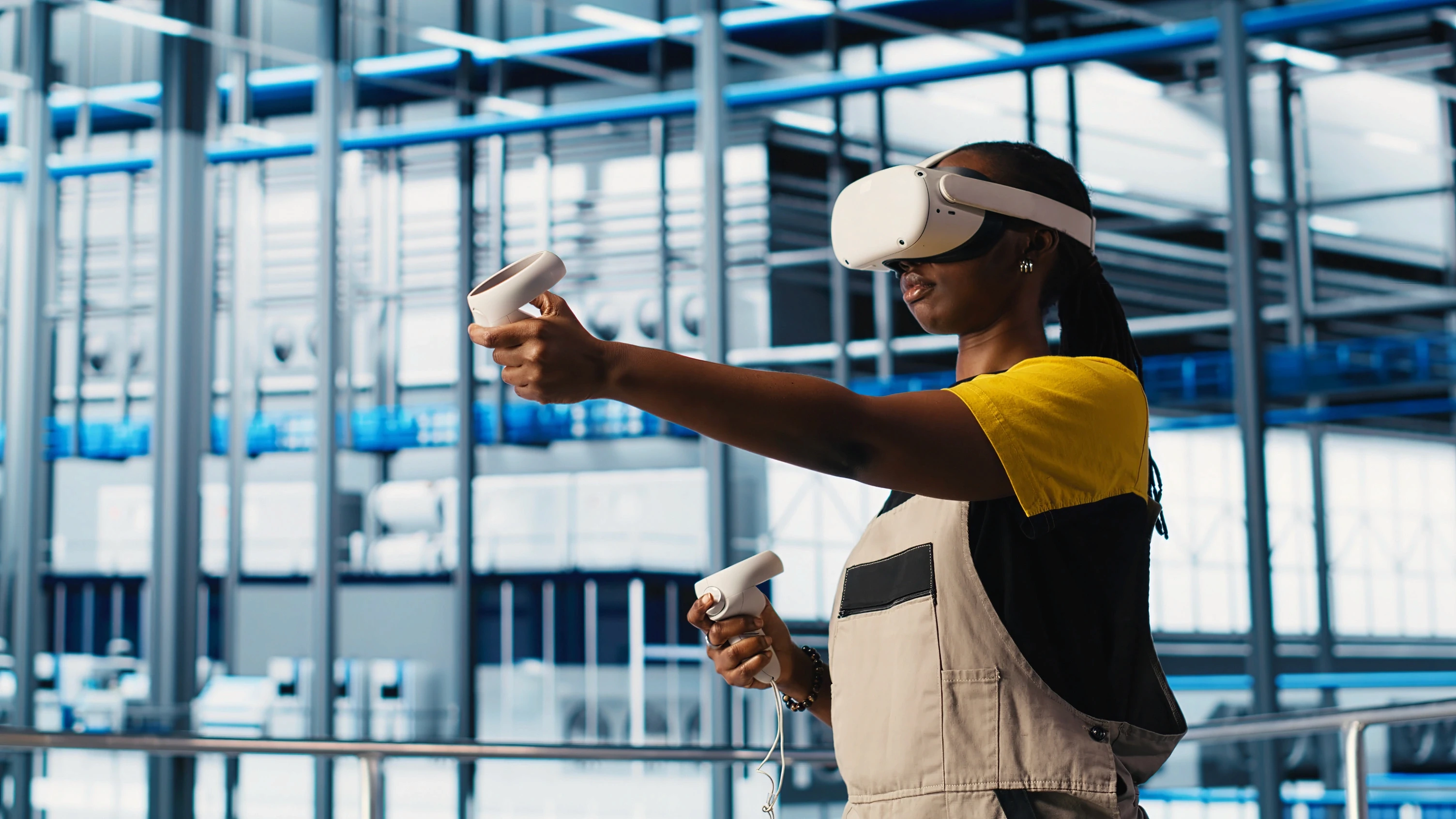
Organizations see up to 52% cost reduction versus traditional classroom instruction once a VR employee training program reaches scale. The results show up in named corporate deployments too.
Boeing cut training time per employee by 75% with VR assembly training. Airbus saw 25% faster maintenance task performance. Delta Airlines took technician proficiency checks from 3 to 150 per day, a 5,000% increase. In manufacturing, VR-trained organizations report a 43% reduction in workplace injuries.
Adoption is still early despite these results. Only about 7% of organizations are actively using VR for training delivery today, rising to 22% among large enterprises. That gap is part of why aerospace and defense training is flagged as the fastest-growing application segment through 2035, per Future Market Insights, ahead of healthcare and industrial training.
Custom Development Studios
Custom VR training development studios build a simulation from a blank canvas, tied to a specific piece of equipment, procedure or workflow that doesn't map to any off-the-shelf content library.
A platform gets a generic scenario in front of learners faster and at a lower unit cost, but it only covers what's already in its library. A custom studio is the right call when the training need is tied to something only your organization does. It's also the right call when you need full ownership of the resulting software as a long-term asset, or when your compliance and regulatory context calls for senior engineering rather than a templated module.
1. Treeview
Best for: Enterprises that need a VR, AR or mixed reality training simulation built around a proprietary product, procedure or workflow, where the organization needs to own the resulting software outright
Type: Enterprise XR development studio
Key clients: Medtronic, University of Adelaide, Transfr, University of Alberta, Northwestern University, Teck Resources
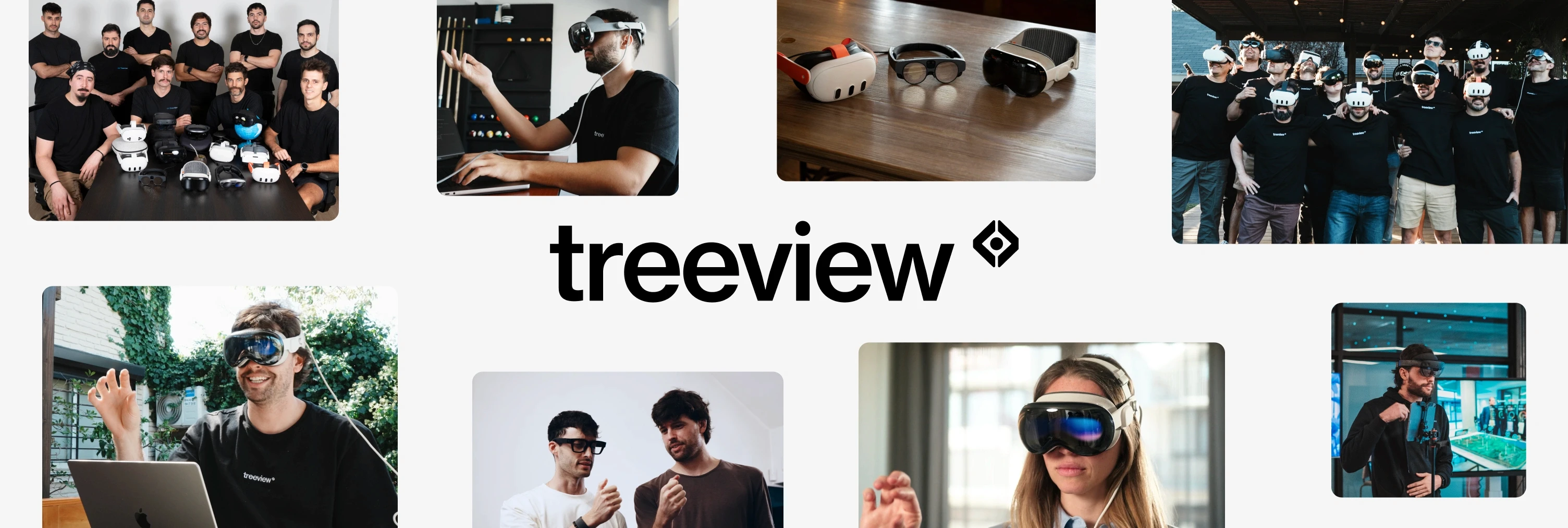
Treeview is a senior-only enterprise XR development studio founded in 2016, with offices in New York and Montevideo, Uruguay. The studio builds custom VR, AR and mixed reality applications across the full training lifecycle, organizing simulations around an Observe, Practice and Assess framework rather than off-the-shelf scenario templates. Every engagement transfers full IP ownership at close, with no licensing dependency on Treeview afterward.
For Medtronic, Treeview built the Micra XR Trainer, a procedural simulation for the company's leadless pacemaker. The studio builds on Unity for enterprise headsets including Meta Quest, Apple Vision Pro, HoloLens 2, PICO and Samsung Galaxy XR, as well as smart glasses and AI glasses.
The main benefit for buyers is control: full IP ownership means the resulting software can be extended, resold internally or handed to another vendor without a licensing dependency. A senior-only team also means fewer scoping revisions and a shorter path from kickoff to a production-ready simulation.
2. Think Digital
Best for: Agriculture, veterinary and livestock handling training built on real animal behavior science rather than generic safety templates
Type: Agricultural XR studio
Key clients: University of Adelaide, Woolworths, Case, Australian Agriculture Center
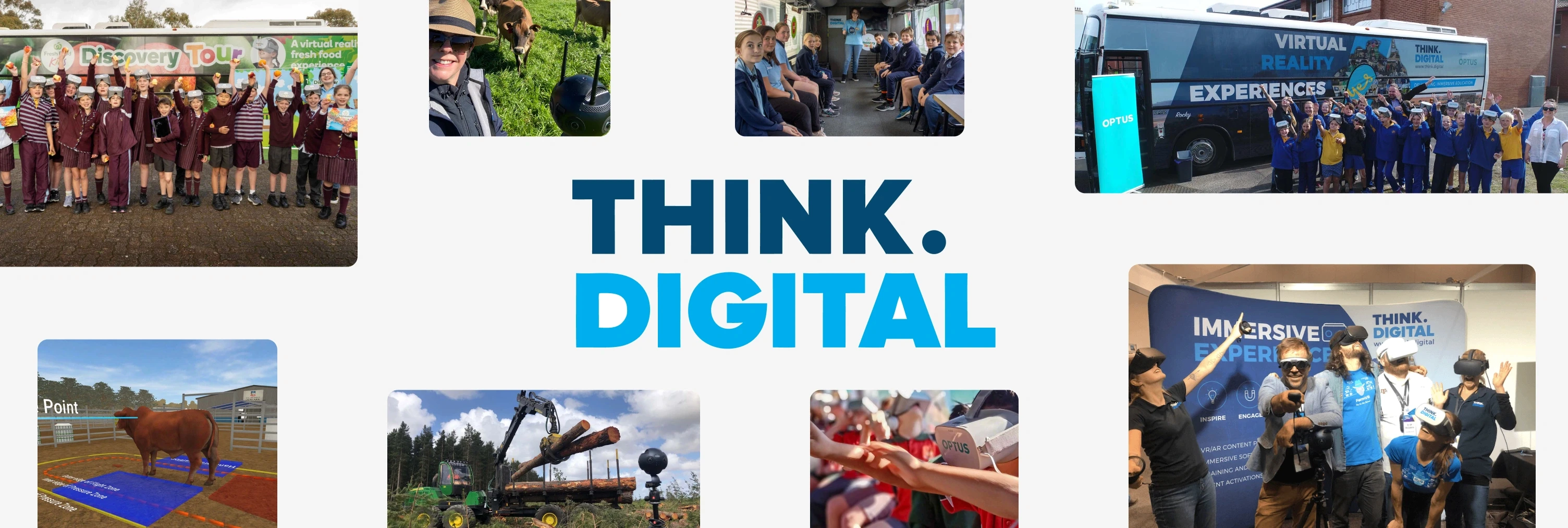
Think Digital is an Adelaide, Australia-based XR studio founded by Tim Gentle and CEO Kat Bidstrup, both of whom grew up on farms. The studio's flagship product, CattleVR, was developed in partnership with Dr. Mandi Carr, a senior lecturer in livestock health and production at the University of Adelaide. It teaches animal flight zones and safe handling movements before students ever step into a real yard with cattle.
Every first-year student in the University of Adelaide's animal science program goes through the training before handling live cattle. The tool has since expanded into the US market, including a sale to Tennessee State University, and runs on all major VR platforms, including Meta Quest, HTC Vive and PICO.
The benefit is domain depth: because CattleVR was built alongside a livestock health researcher rather than a generic instructional designer, the flight-zone behavior in the simulation matches how real cattle actually respond, which is what makes the training transferable to the yard.
VR Training Platforms
Platforms sell a subscription that bundles a content library, deployment tools and analytics. Some also include tools to build your own modules, and a smaller category sells analytics alone, as a spatial measurement layer for training content built elsewhere rather than delivering the content itself.
A platform is the right call when your training need maps to a common, repeatable scenario, such as generic safety procedures, common soft skills conversations or standard equipment operation, and you want to deploy fast without commissioning a custom build. An analytics-only platform is the right call when the training content already exists and the gap is proving it works.
3. Frontline
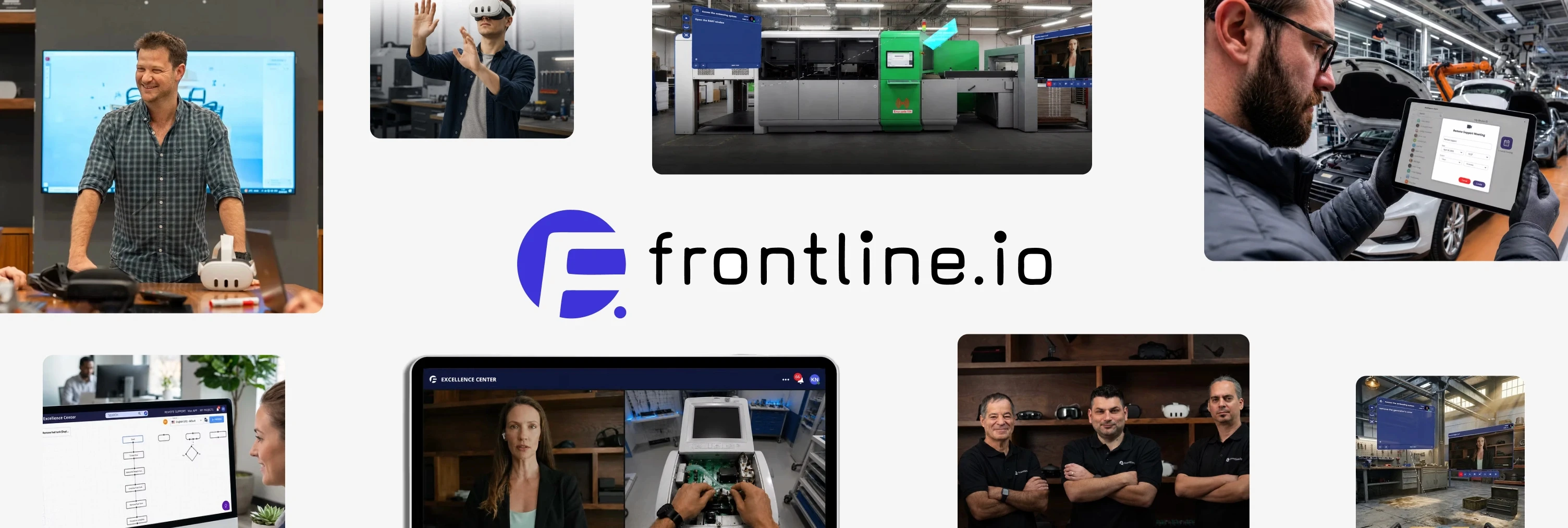
Best for: Industrial and manufacturing teams that need digital twin training built directly from CAD files, deployed across AR, VR and desktop without hardware lock-in
Type: AI-powered industrial XR training and remote-assist platform
Key clients: HP Inc., Stratasys, Click Bond
Frontline converts CAD files into interactive Digital Twins that power training, remote support and operational workflows from a single source. Content is created once and deployed across desktop, mobile, AR and VR headsets without locking teams into a single device.
Technicians train on the Digital Twin before ever touching the physical equipment, and the same model powers AR-guided remote assist once they're in the field. The platform is SOC 2 Type 2 compliant and used across aerospace, defense and industrial manufacturing.
The benefit is speed and reuse: a Digital Twin can go from CAD file to interactive training module in minutes rather than weeks, and the same model powers training, remote assist and step-by-step procedures instead of requiring a separate build for each use case.
4. Transfr
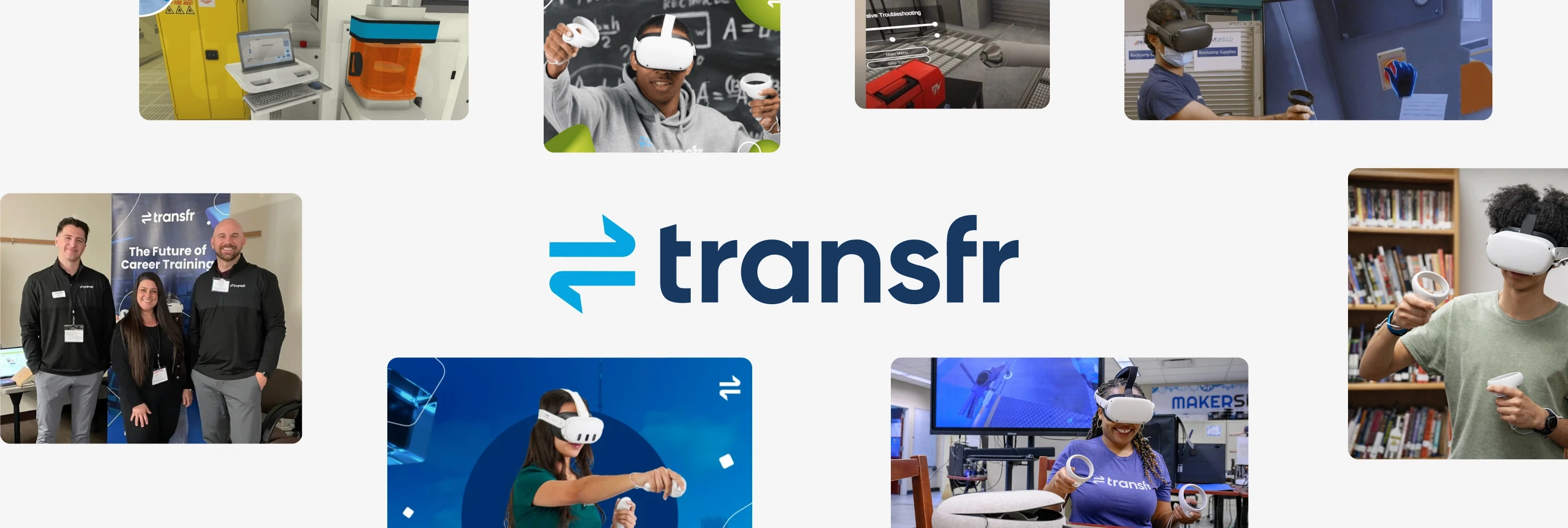
Best for: Schools, community colleges and workforce development boards building classroom-to-career pathways in skilled trades
Type: VR workforce training platform
Key clients: Texas Workforce Boards
Transfr is a workforce education company with more than 330 VR simulations across eight high-growth sectors, including manufacturing, healthcare, transportation and construction. Its core buyers are educational institutions and workforce boards rather than enterprise L&D departments.
The company partners with 18 of 28 workforce boards in Texas and has reached learners through school and community college programs nationwide. Transfr uses ManageXR for device management across its nationally distributed headset fleet.
The benefit for workforce boards and schools is access: students get hands-on exposure to expensive equipment and skilled trades they would otherwise never see before committing to a training pathway, and the simulations map to recognized standards like OSHA, NCCER and ASE.
5. Cognitive3D
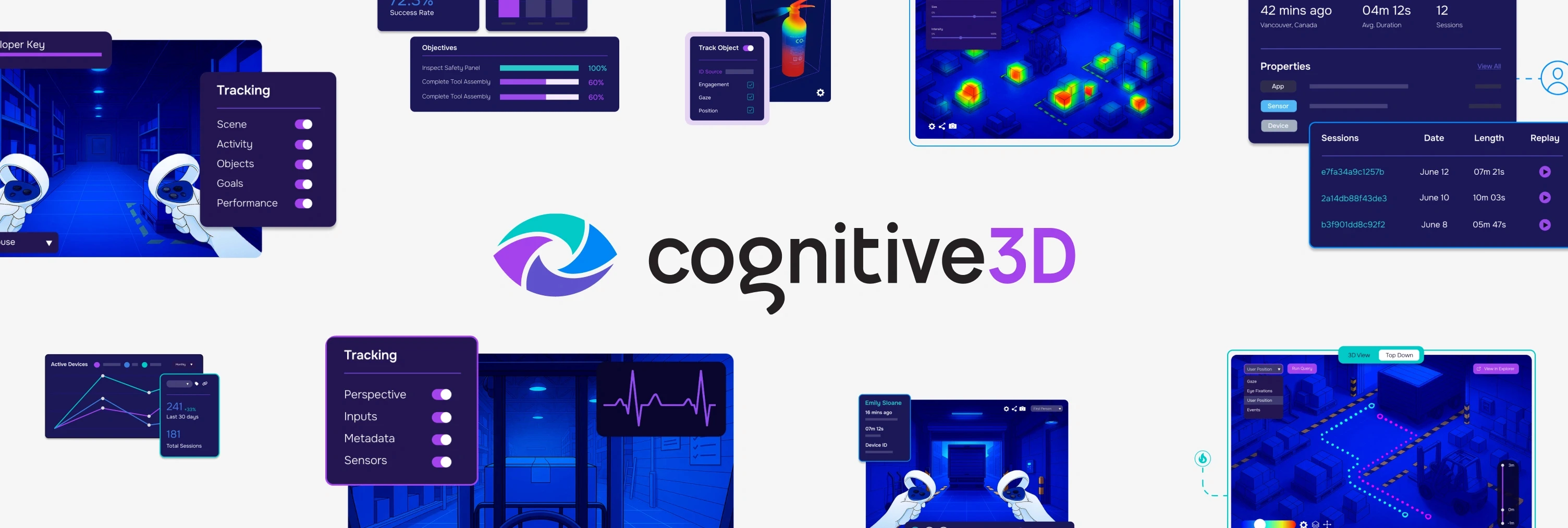
Best for: Enterprises that already have VR training content built and need spatial analytics layered on top, measuring gaze, movement and task completion rather than just deployment numbers
Type: XR spatial analytics platform
Key clients: Walmart, Meta
Cognitive3D captures gaze, movement and interaction data from inside VR and AR training simulations, turning raw session data into replayable sessions and aggregate behavior insights. Rather than building training content itself, the platform plugs into existing Unity and Unreal-based simulations through an SDK, and connects to the LMS or LRS a company already uses for compliance reporting.
Cognitive3D has partnered with VR content platforms including Innoactive and Virtualion to add analytics on top of their training builds. Its client base spans training, consumer research and academic use cases, including Fortune 100 companies such as Walmart and Meta.
The benefit is proof: instead of reporting that training was deployed, teams can show exactly where learners hesitated, what they missed and whether a specific step in the simulation is the reason completion rates are lower than expected.
Frequently Asked Questions
Q1. What is the difference between a custom VR training developer and a VR training platform?
Among virtual reality training companies, a custom developer, like Treeview or Think Digital, builds a training simulation from scratch around a specific product, procedure or workflow and typically transfers full IP ownership to the client at project close. A platform, like Frontline or Transfr, sells access to a pre-built content library plus deployment and analytics tools on a subscription. It deploys faster but is limited to scenarios the platform already supports.
Q2. How big is the VR training market in 2026?
The global AR/VR training market was valued at approximately $22.56 billion in 2025 and is projected to reach $82.92 billion by 2034, a 15.56% compound annual growth rate.
Q3. How much does VR training cost?
Custom VR training builds typically range from tens of thousands of dollars for a single scenario to well into six figures for a multi-module program with complex 3D assets, depending on fidelity and scope. Platform subscriptions vary by vendor, seat count and data volume.
Q4. Which VR training companies work with schools and workforce programs rather than enterprises?
Transfr is built primarily for educational institutions, community colleges and workforce development boards rather than corporate L&D departments, with a focus on career exploration and skilled trades pathways.
Q5. Is VR training more effective than classroom or e-learning training?
Independent studies consistently show learners complete VR training up to 4x faster than in a classroom and retain more focus than e-learning participants. Named enterprise deployments back this up: Boeing cut training time per employee by 75% and Delta Airlines increased technician proficiency checks by 5,000% after adopting VR training.
Q6. What industries adopt VR training fastest?
Aerospace and defense training is currently the fastest-growing application segment by CAGR, followed by educational and healthcare training, with industrial and manufacturing training close behind.
Q7. Do I need a VR headset for every platform on this list?
Not necessarily. Frontline is device-agnostic across desktop, mobile, AR and VR, and Transfr deploys primarily to standalone VR headsets like Meta Quest. Cognitive3D is different again: it's an analytics layer that plugs into whatever headset or platform your training content already runs on, rather than a standalone experience itself.
Q8. Can a VR training platform be used alongside a custom development studio?
Yes. Large organizations commonly run both: a platform like Frontline or Transfr for standardized, repeatable training deployed at scale, and a custom studio like Treeview for the specific workflows, products or procedures that no off-the-shelf library covers.
Q9. What should I look for when evaluating a VR training vendor?
For a custom build, check the studio's track record shipping production simulations on your target hardware and whether they've worked with organizations that have similar compliance requirements. Confirm whether IP transfers fully at project close. For a platform, check whether its content library actually maps to your training scenarios, its device and LMS integration options and its analytics depth.
Q10. What's driving the shift toward VR training in 2026?
Growing familiarity with AI-driven content authoring, falling headset costs and increasing demand for measurable training ROI are the main drivers. Rising adoption in manufacturing, construction and safety-critical environments is pushing more organizations from pilot to production deployment.