

Enterprise Healthcare XR Development
Years in AR, VR, MR and Wearable Computing
Successful projects launched
Medical devices, headsets and platforms supported
Client satisfaction rate
Trusted by







What we do
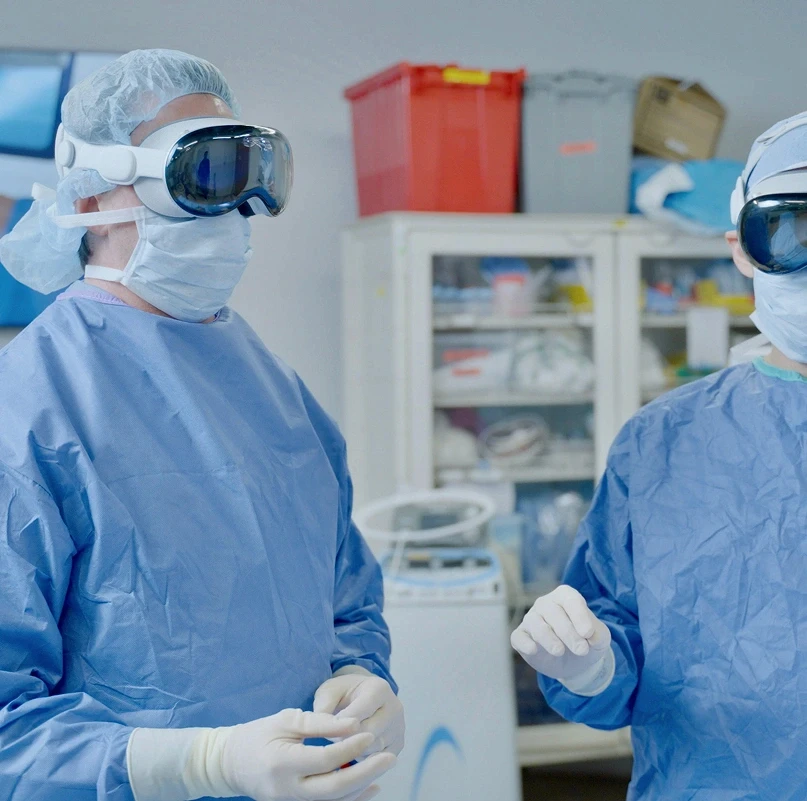
The right XR technology depends on the clinical objective. AR for surgical guidance and device visualization. VR for surgical training and medical simulation. MR for spatial collaboration on patient data and anatomy. Treeview builds across all three for extended reality healthcare applications.

What is XR in Healthcare?
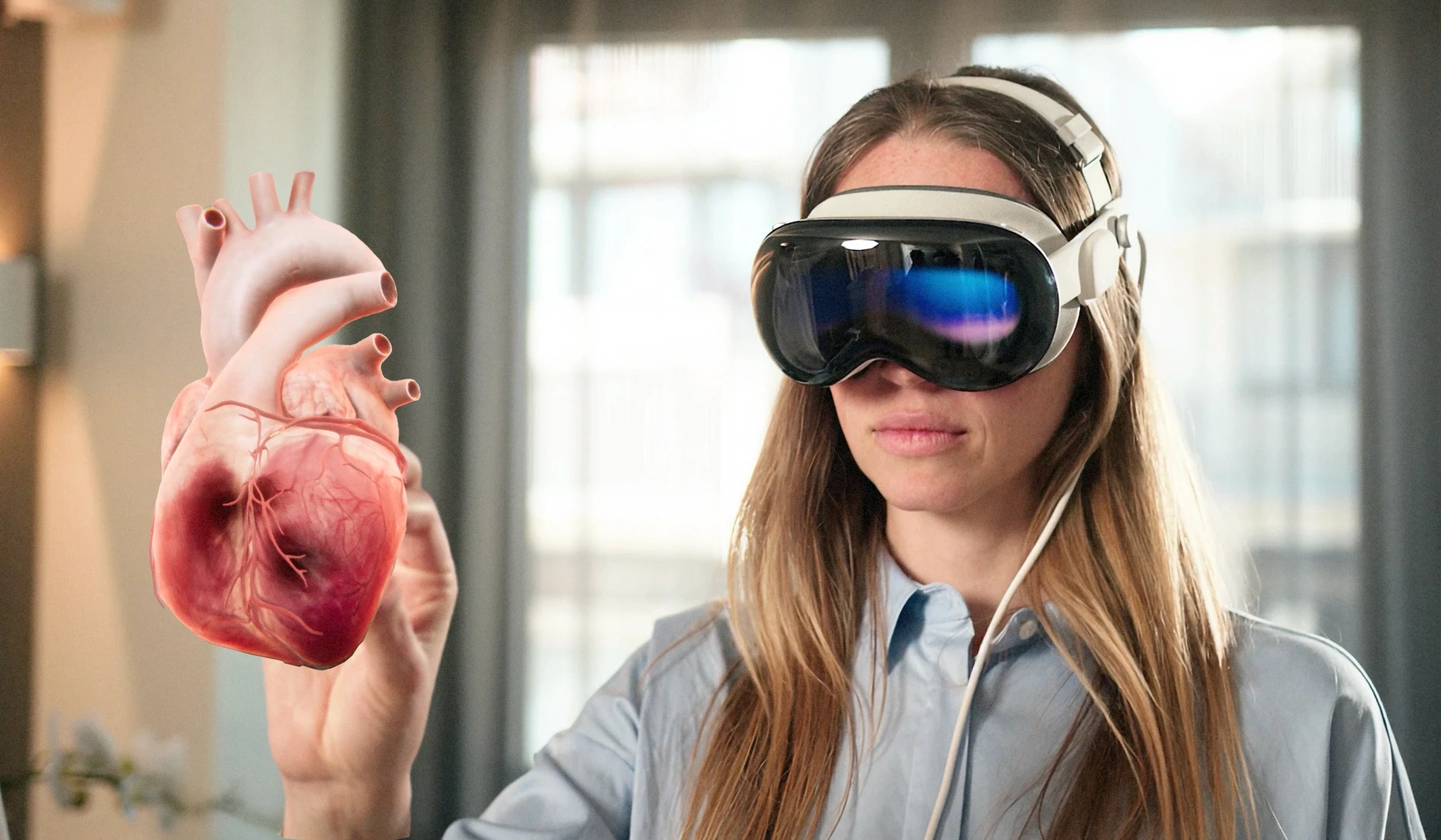
Augmented reality in healthcare overlays digital content on the physical environment without replacing it, making it the standard for surgical guidance, device visualization and intraoperative navigation. Virtual reality in healthcare replaces the physical environment entirely, making it the right platform for surgical training, medical simulation and behavioral therapy. Mixed reality enables spatial collaboration on volumetric patient data, anatomy models and clinical planning. Smart glasses and AI glasses extend the stack further, adding always-on, hands-free AI assistance.
$5.62B to $66.91B by 2034
01
70% of US hospitals use AR and VR
02
4× faster learning
completion
03
110 FDA-cleared devices
04
Who Uses AR and VR in Healthcare

Medical Device Companies
Medical device organizations are among the most active adopters of healthcare XR, using AR and VR for clinician training on new devices at launch, procedural simulation for sales and clinical education, medical device visualization in physical space, regulatory submission support through simulation data and post-market surveillance training. Treeview's production work for Medtronic demonstrates what clinical-grade medical device XR looks like at scale.

Pharmaceutical and Life Sciences
Pharmaceutical companies use VR and MR for field force training, drug discovery simulation, molecular visualization, clinical trial site training and patient education programs that communicate complex therapeutic mechanisms. Treeview built the CardioCompass cardiovascular simulation application for Daiichi Sankyo, a spatial computing tool for communicating complex cardiac pharmacology to clinical audiences.

Health Systems and Hospitals
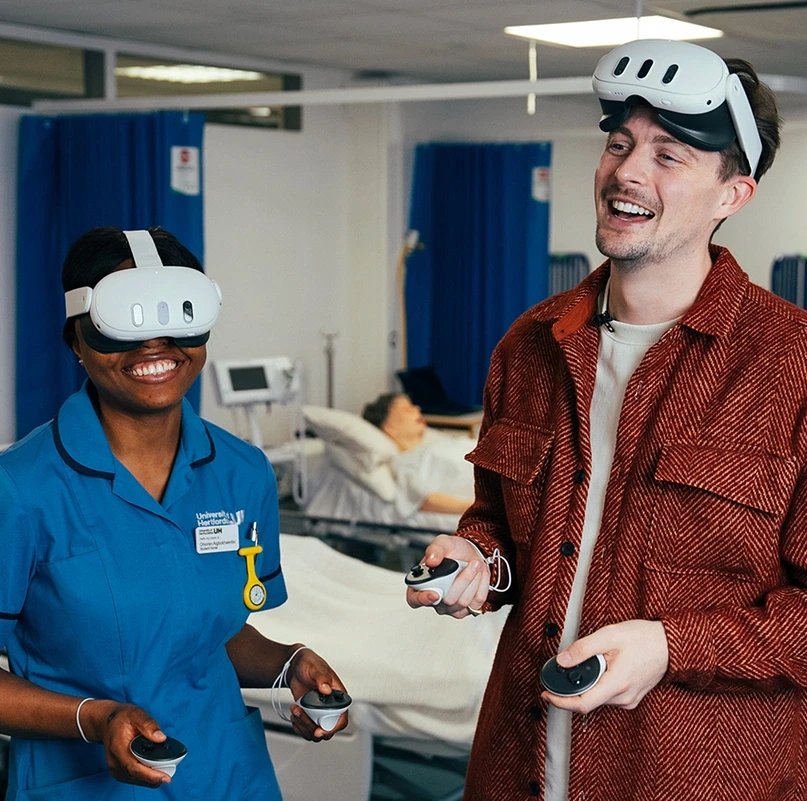
Health systems deploy VR for nursing and clinical staff training, VR therapy programs for pain management and behavioral health, patient education before procedures, and AR-assisted surgical planning. 70% of US hospitals now use AR or VR for training or surgical support, with surgical simulation recording the highest CAGR of any application segment as residency program mandates drive adoption.

Medical Education Institutions
Medical schools, residency programs and nursing schools use VR simulation to give students access to procedural training environments that physical labs cannot scale to meet demand. VR-trained medical students record 40% fewer procedural errors than control groups in peer-reviewed studies. Treeview builds VR medical education applications for academic medical centers and clinical training programs.

Clinical Research Organizations
CROs and research institutions use digital twins for clinical trial design, patient-specific simulation, synthetic control arms and imaging analysis. The digital twins in healthcare market is growing at a 68% CAGR, driven by pharmaceutical companies using patient-level simulation to reduce clinical trial costs and accelerate drug development timelines.
Military and Defense Medical
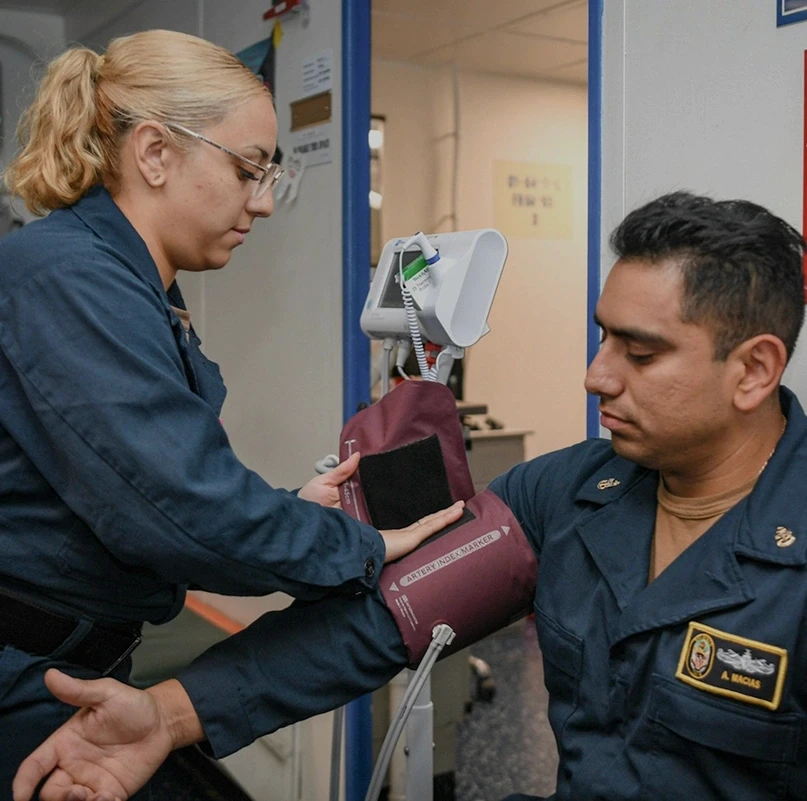
Military medical programs are among the longest-standing enterprise adopters of VR simulation, with the US Department of Veterans Affairs deploying over 1,200 VR headsets across more than 160 VA medical centers and clinics in all 50 states as of 2024. Defense medical training programs use VR for combat casualty care simulation, surgical skills training in austere environments, PTSD treatment through virtual reality exposure therapy and traumatic brain injury rehabilitation.
AR/VR in Healthcare Use-Cases
Healthcare organizations adopt XR across six domains: surgical tools, clinical training, patient experience, marketing and sales, innovation and R&D, and therapy and clinical care. The following use cases cover the full range of clinical and operational deployments Treeview supports, with real-world AR and VR in healthcare examples documented across 65+ named deployments with platforms and clinical outcomes.
XR Platforms We Build On




Case Studies
5
/5
Top rated
XR Studio





15+
Trusted by
enterprise clients
What is XR for healthcare?
XR for healthcare is the application of AR, VR and mixed reality in clinical training, surgical guidance, patient care and life sciences research. The right technology depends on the clinical objective: AR for physical environment overlay, VR for immersive simulation and therapy, MR for spatial collaboration on patient data.
What is the difference between augmented reality and virtual reality in healthcare?
AR overlays digital content on the physical world without replacing it, making it the right technology for surgical guidance, device visualization and real-time clinical data. VR replaces the physical environment entirely, making it the right platform for VR surgical training, VR medical simulation and behavioral therapy.
How is virtual reality used in healthcare?
Virtual reality in healthcare is used for VR surgical training, VR medical training for nursing and clinical staff, VR medical simulation for drug discovery and procedural research, virtual reality therapy for pain management and behavioral health, and VR rehabilitation for motor recovery.
How is augmented reality used in healthcare?
Augmented reality in healthcare is used for medical device visualization, surgical guidance and AR navigation during procedures, clinical staff training, and real-time patient data overlay in clinical workflows. AR is the preferred technology for use cases where the clinician must remain oriented to the physical environment.
How is VR used in medical training?
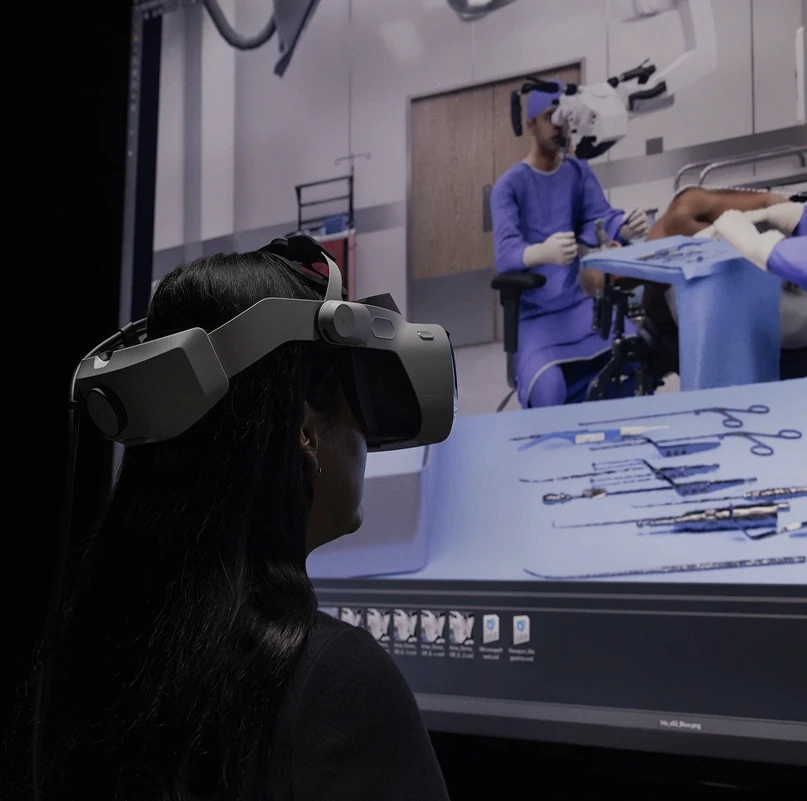
VR medical training gives clinical staff repeatable, risk-free practice in anatomically accurate virtual environments. VR surgical training simulators let residents practice procedural steps before the OR, and nursing and clinical staff use VR to train on equipment and emergency scenarios without requiring physical hardware access.
What is virtual reality therapy and how is it used in healthcare?
Virtual reality therapy covers VR exposure therapy for PTSD and anxiety, VR-based pain management, VR rehabilitation for motor recovery and VR therapy for depression. Health systems deploy virtual reality therapy programs on enterprise VR fleets for both in-clinic and at-home care models.
What is a digital twin in healthcare?
A digital twin in healthcare is a live spatial model mirroring a patient, medical device, hospital facility or clinical procedure, used for surgical planning, treatment simulation and drug discovery modeling. The digital twins in healthcare market is growing at a 68% CAGR, projected to reach $59.94 billion by 2030.
Which XR headsets are used in healthcare?
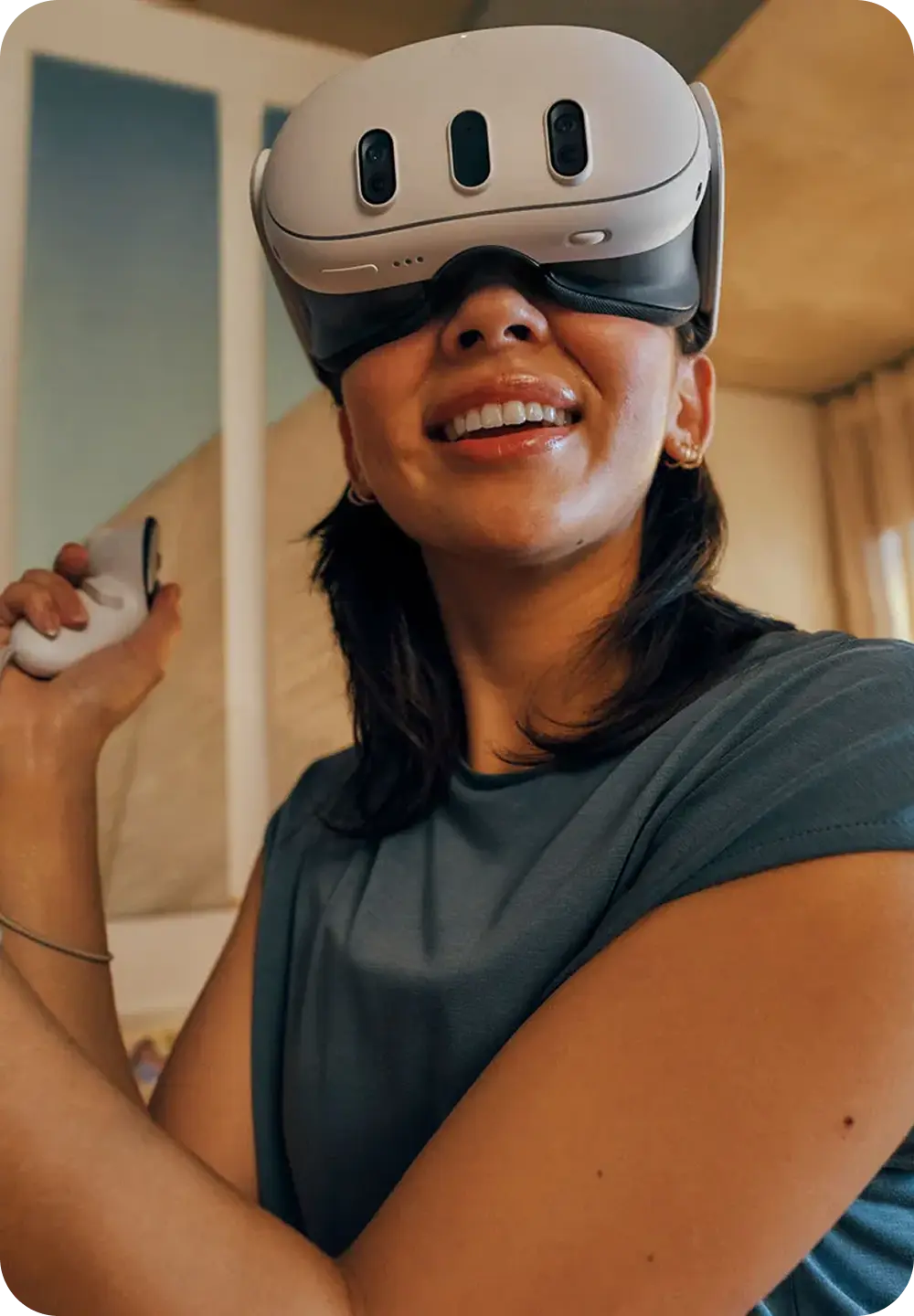
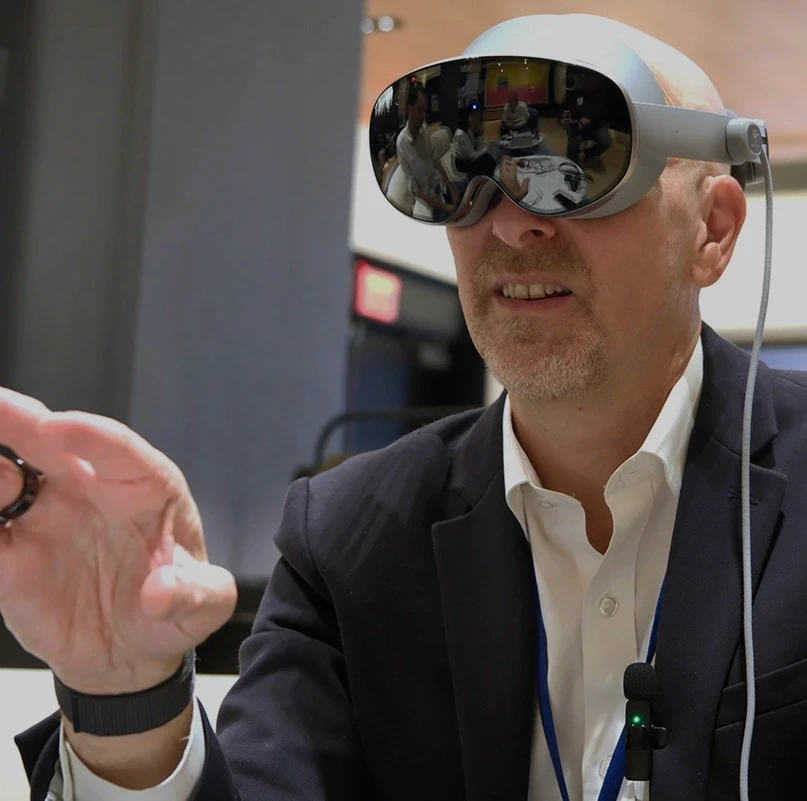
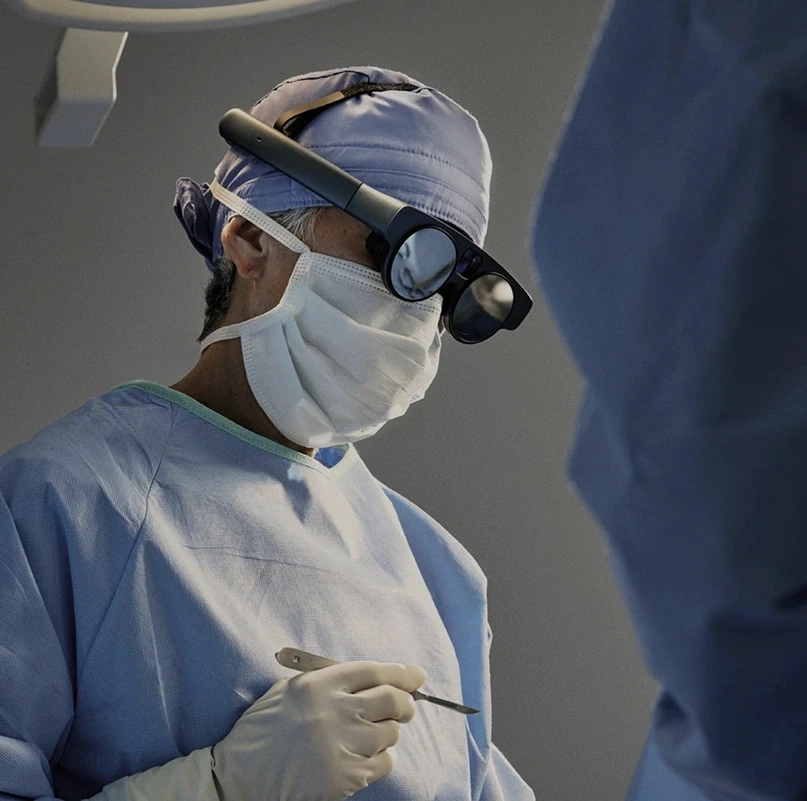
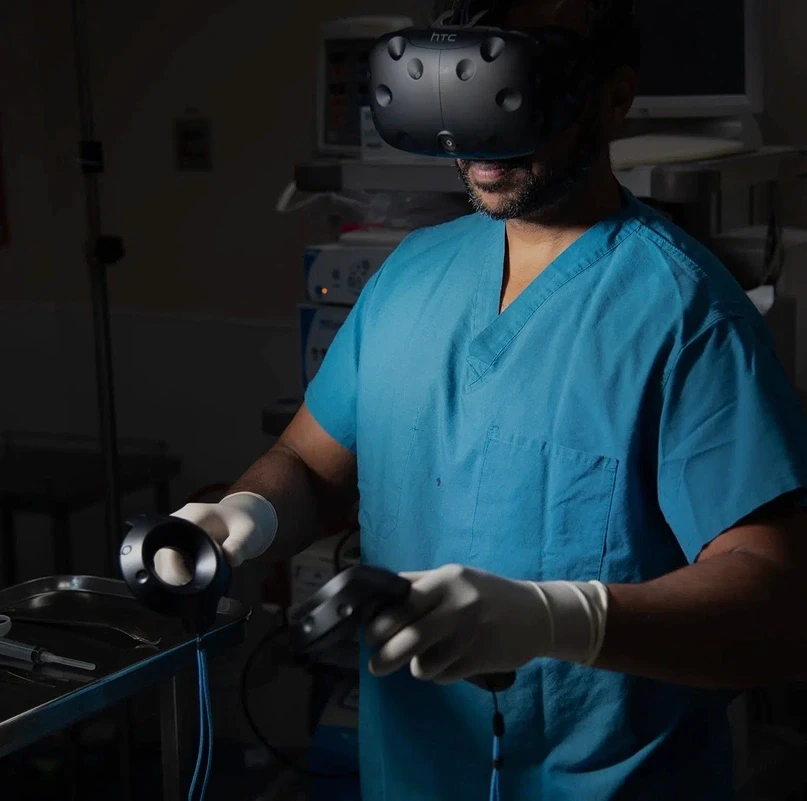
The primary headsets in clinical and life sciences settings are Microsoft HoloLens 2 for AR surgical guidance, Meta Quest for VR medical training and VR medical simulation, Apple Vision Pro for spatial clinical collaboration, and XREAL for lightweight AR in ambulatory settings. The right headset depends on the use case, environment and enterprise device management requirements.
Does Treeview have experience building healthcare XR applications?
Yes. Treeview built the Micra XR Trainer for Medtronic, a production AR application used globally for transcatheter pacemaker training, and CardioCompass for Daiichi Sankyo, a cardiovascular spatial computing application for clinical education. Treeview is ranked as the top XR development company for healthcare in 2026.
What are the benefits of augmented reality in healthcare?
AR in healthcare gives clinicians real-time data overlay in their field of view without disrupting physical workflow, improves accuracy in surgical navigation and device placement, and delivers more effective clinical training through spatial anatomy simulation.
What are the benefits of virtual reality in healthcare?
VR in healthcare delivers risk-free clinical training environments that reduce errors, measurable improvements in procedural skill retention, and reduced patient anxiety through virtual reality therapy. VR-trained surgeons record 40% fewer procedural errors, and VR pain management programs have documented over $200,000 in monthly medication savings.
What is virtual reality physical therapy?
VR physical therapy uses immersive environments to support motor rehabilitation, improve range of motion and increase patient engagement in repetitive therapeutic exercises through biofeedback, progress tracking and gamified movement protocols.
What is virtual reality therapy for PTSD?
Virtual reality exposure therapy for PTSD exposes patients to virtual reconstructions of trauma contexts at a clinician-controlled pace, reducing avoidance behavior and desensitizing the trauma response. It is one of the most evidence-backed VR clinical applications, deployed by the US Department of Veterans Affairs and major health systems.
What is virtual reality therapy for depression?
VR therapy for depression delivers compassion-focused therapy and behavioral activation in immersive environments that increase engagement and reduce barriers to consistent participation. Clinical trials have demonstrated measurable reductions in depressive symptoms from VR-based interventions.
How is VR used in healthcare education?
VR in healthcare education gives medical students and clinical trainees immersive access to anatomy, procedural environments and clinical scenarios that physical training settings cannot consistently replicate. VR simulations allow students to practice surgical steps and clinical decision-making before supervised placements.
What is the future of virtual reality in healthcare?
The future of VR in healthcare includes broader adoption of VR surgical training in residency programs, expansion of virtual reality therapy into mainstream behavioral health pathways, patient-specific VR surgical planning from real DICOM data, and AI integration into VR clinical environments for real-time procedural guidance. The healthcare XR market is projected to reach $66.91 billion by 2034 at a 31.3% CAGR.
What is mixed reality in healthcare?
Mixed reality in healthcare allows virtual objects to occupy and interact with real physical space, enabling surgeons to review volumetric anatomy overlaid on the OR environment, clinical teams to collaborate on 3D imaging data and medical device companies to demonstrate products in anatomical context.
What are smart glasses used for in healthcare?
Medical smart glasses are used for hands-free patient record access, real-time remote expert guidance, point-of-care voice documentation without breaking sterile technique, and AI clinical decision support by visual query. They are deployed in surgical, nursing, emergency and field clinical settings where screen-based interfaces are impractical.
How does XR reduce costs in healthcare?
XR reduces costs by replacing physical simulation equipment with reusable virtual environments, lowering procedural error rates through better pre-procedure preparation and reducing the overhead of in-person expert consultations through AR and smart glasses-based remote guidance.
What regulatory considerations apply to healthcare XR applications?
XR applications for training, patient education and marketing do not typically require FDA clearance. Applications used for surgical guidance, diagnostic support or treatment delivery may require a 510(k) or De Novo pathway. The FDA has cleared 110 AR and VR medical devices since 2015.
What's the difference between a VR development studio, agency, firm, production company, consultancy, and dev shop?
These terms are mostly interchangeable. They all describe service companies that build custom virtual reality software. The label often reflects branding or positioning rather than a meaningful difference in capabilities. Focus on portfolio, process, and fit rather than what a company calls itself.
Who are the industry leading virtual reality companies?
The VR industry includes several categories of leading companies. In hardware, Meta leads with the Quest line. For development platforms, Unity powers the majority of VR applications. Top VR design tools include ShapesXR. In enterprise software development, studios like Treeview build custom VR applications for healthcare, education, manufacturing, and other industries. For a complete breakdown by category, see our guide on Best Virtual Reality Companies 2026.
Achievements & Awards
