
The digital twins in healthcare market stood at $4.47 billion in 2025 and is projected to reach $59.94 billion by 2030, according to MarketsandMarkets, at a compound annual growth rate of 68%. That pace of expansion reflects how rapidly patient-specific simulation, organ modeling, and hospital operations intelligence are moving from research projects to production deployments inside regulated healthcare systems.
This guide ranks the top digital twin companies in healthcare in 2026 across five categories: enterprise XR and development studios, medical device and imaging platforms, physics-based simulation, clinical trial and diagnostic applications, and AI infrastructure and visualization.
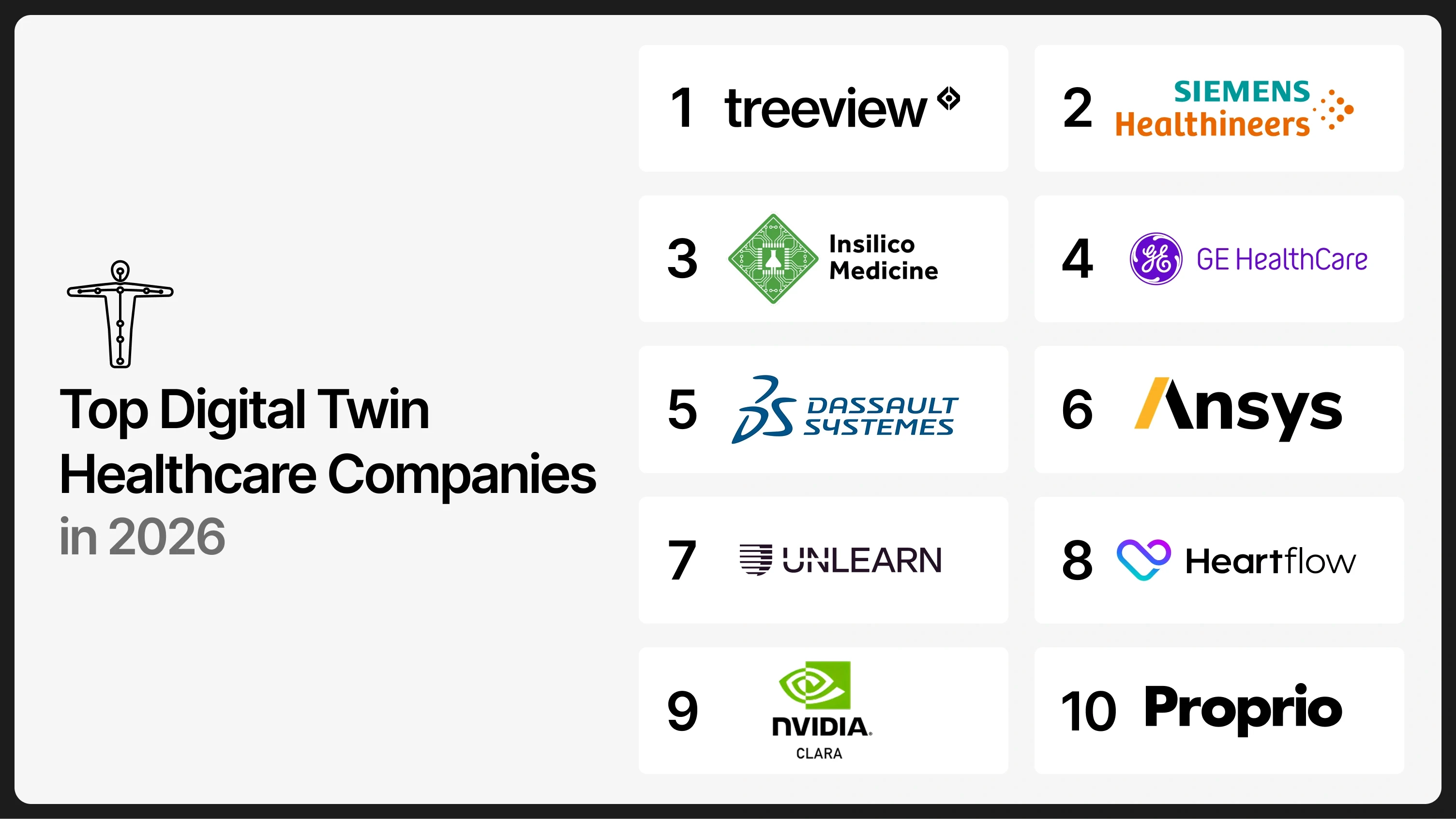
TL;DR: Top Digital Twin Companies in Healthcare (2026)
What this guide covers: The leading digital twin companies operating in healthcare in 2026, ranked by category across use cases including organ simulation, hospital operations, surgical planning, clinical trial optimization, and enterprise XR development.
How companies were selected: Rankings are based on category-specific criteria: clinical validation and regulatory status for diagnostic and trial platforms; physics fidelity and FDA engagement for simulation vendors; deployment scale and enterprise readiness for infrastructure platforms; and portfolio depth, client profile, and IP ownership for development studios.
Key players: Treeview (Top Enterprise XR & Digital Twin Development Studio), Siemens Healthineers (Top Medical Imaging Platform), Dassault Systèmes (Top Physics-Based Simulation), Unlearn.AI (Top Clinical Trial Application), Nvidia Clara (Top AI Infrastructure Platform).
What is a Digital Twin in Healthcare?
A digital twin in healthcare is a computational model that mirrors a physical system, whether a patient's organ, a clinical workflow, or an entire hospital, using real-time or near-real-time data to simulate states, predict outcomes, and test interventions before they are applied physically.
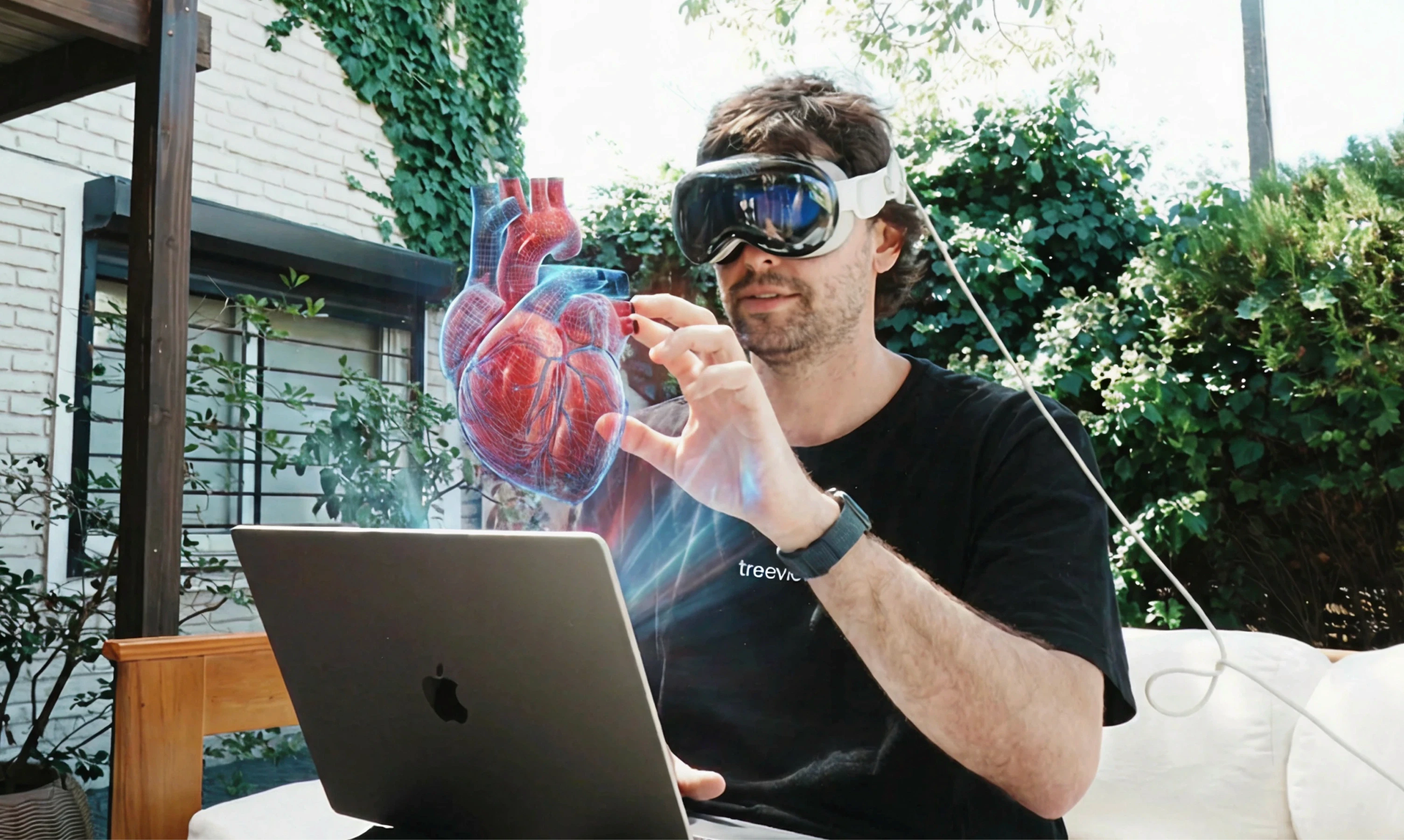
Types of Digital Twins in Healthcare
Patient-specific organ twins: Replicate anatomical geometry and physiological function from imaging data, used in surgical planning, device testing, and therapy simulation.
Process twins: Model hospital operations, patient flow, and resource allocation to identify inefficiencies and simulate operational changes.
Clinical trial twins: Generate synthetic control arm participants by predicting individual disease progression trajectories from baseline data.
System twins: Model broader infrastructure, including medical devices, facility systems, and supply chains, for maintenance prediction and capacity planning.
The unifying property across all types is bidirectional feedback: the digital model updates from physical data, and decisions made in the digital environment inform physical action.
In practice, digital twin technology in healthcare sits at the intersection of computational fluid dynamics, AI, medical imaging, and real-time data pipelines. Mature deployments combine all four.
Digital Twin in Healthcare: Industry Overview (2026)
The global digital twins in healthcare market stood at $4.47 billion in 2025 and is projected to reach $59.94 billion by 2030 at a 68% CAGR, according to MarketsandMarkets. Healthcare registers the highest growth rate of any segment within the broader global digital twin market, which spans $21.14 billion across all industries in 2025.
Regional breakdown
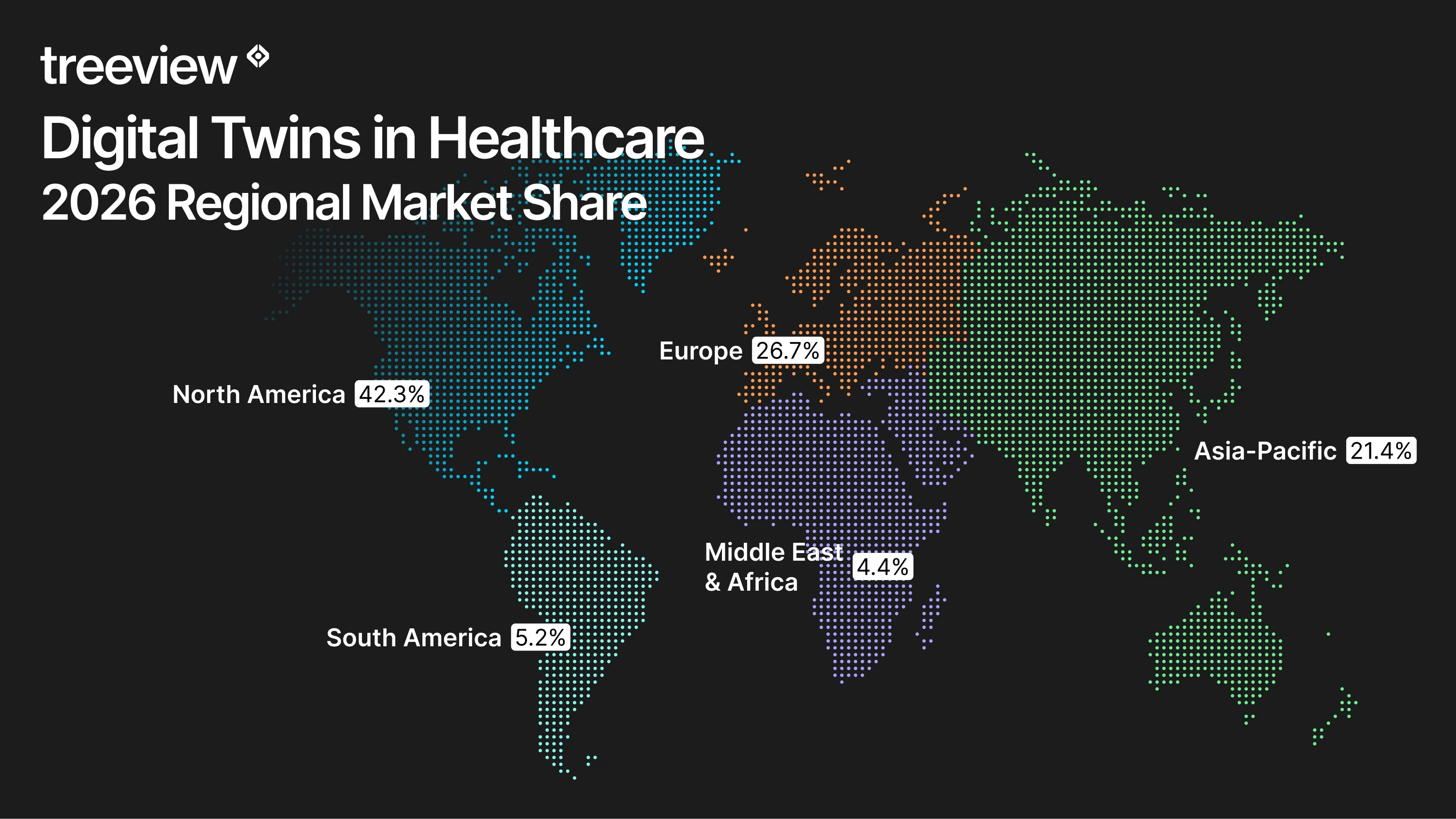
North America holds the largest share of the global healthcare digital twins market at 48.2% in 2025, according to MarketsandMarkets. The US leads the region, driven by advanced health IT infrastructure, AI adoption in clinical practice, and active FDA engagement with modeling and simulation in drug development.
For a full five-region breakdown, MarketIntelo (which uses a narrower market scope) gives the following 2025 shares:
North America: 42.3%
Europe: 26.7%
Asia-Pacific: 21.4%
Latin America: 5.2%
Middle East & Africa: 4.4%
Europe's share is anchored by Germany, France, the UK, and the Netherlands, with Germany's Fraunhofer Institute playing a central role in open-source digital twin infrastructure for cardiovascular applications. Asia-Pacific is the fastest-growing region, propelled by expanding healthcare infrastructure, government investment in digital health, and strong consumer adoption of wearable technology in China, India, and Japan. Latin America and the Middle East & Africa collectively account for under 10% of the 2025 market, with Brazil, the UAE, and Saudi Arabia emerging as early growth hubs driven by healthcare modernization programs.
Twin type and application breakdown
By twin type, process twins account for 42% of digital twins currently offered by industry players, followed by whole body twins at 35%, body parts twins at 32%, and system twins at 28%, according to Roots Analysis. On development status, 88% are already marketed and commercially available, with the remaining 12% under development focused primarily on cardiovascular, metabolic, and neurological disorders.
By area of application:
Asset and process management: 48%
Personalized treatment: 34%
Health monitoring: 29%
Diagnosis: 26%
Surgical planning: 18%
Clinical trials: 16%
Medical training: 4%
Regulatory signal
The FDA's posture toward digital twins has materially strengthened since its November 2023 final guidance titled "Assessing the Credibility of Computational Modeling and Simulation in Medical Device Submissions." In October 2024, the FDA co-published the Enrichment Playbook with Dassault Systèmes, a 44-page peer-reviewed guide establishing credibility standards for in silico clinical trials. Separately, the EMA has formally qualified Unlearn's PROCOVA digital twin methodology for use in Phase 2 and Phase 3 trials, signaling that regulatory acceptance of synthetic controls is no longer theoretical. The FDA has aligned with similar guidance on covariate-adjusted analysis, and continues to evaluate digital twin submissions on a risk-based, indication-specific basis.
AI integration
AI is not a separate layer in mature healthcare digital twin deployments: it is embedded in the simulation loop. The integration is measurable. Foundation models trained on multi-modal health data, including imaging, genomics, wearables, and longitudinal EHR records, are now capable of constructing personalized body twin models in under 48 hours, compared to weeks of manual calibration required by earlier deterministic approaches, according to MarketIntelo. As of Q1 2026, platforms from Nvidia, Microsoft, and Siemens Healthineers had collectively enabled more than 1,200 hospitals globally to pilot digital twin applications.
The regulatory signal reinforces the AI investment case. The FDA has acknowledged that digital twins can reduce clinical trial costs by up to 50%, particularly in medical device testing and validation, according to market.us. Hospital workflow twins are already delivering measurable operational returns: Mordor Intelligence reports 45% shorter documentation cycles and near-real-time bed-assignment insights at sites with deployed operational twins. Personalized treatment optimization is the fastest-growing application segment at a 37.23% CAGR, reflecting the shift toward AI-driven, patient-specific care pathways across hospital systems and life sciences.
How We Ranked Digital Twin Companies
Rankings reflect the specific requirements of each category. A single scoring system across all five categories would conflate companies operating at entirely different levels of the healthcare stack.
Enterprise XR and Development Studios: Ranked by engineering depth, healthcare domain experience, client profile (enterprise vs. early-stage), IP ownership terms, regulatory environment experience, and ability to deliver end-to-end from architecture through production deployment.
Medical Device and Imaging Platforms: Evaluated on clinical integration maturity, imaging data compatibility, patient-specific model fidelity, global deployment scale, and regulatory clearance status.
Physics-Based Simulation and Engineering: Ranked by simulation fidelity (particularly for organ and device modeling), depth of FDA collaboration, institutional adoption, and applicability to regulatory submissions.
Clinical Trial and Diagnostic Applications: Evaluated on regulatory acceptance (FDA/EMA qualification), clinical validation evidence, indication breadth, sample size reduction or power improvement metrics, and commercial deployment scale.
AI Infrastructure and Visualization: Ranked by platform reach across healthcare use cases, partner ecosystem depth, open-source model availability, and specific healthcare deployment evidence.
Top Digital Twin Companies by Category
Category | Company | Type | Industries |
|---|---|---|---|
Top Enterprise XR & Digital Twin Studio | Treeview | Custom Development Studio | Healthcare, Life Sciences, Pharma, Medtech |
Top Medical Device Platform | Siemens Healthineers | Medical Technology | Hospital Systems, Medtech, Radiology |
Top Medical Device Platform | Insilico Medicine | Generative AI / Drug Discovery | Life Sciences, Pharma, Biotech |
Top Medical Device Platform | GE HealthCare | Medical Technology | Hospital Systems, Radiology |
Top Physics-Based Simulation | Dassault Systèmes | Simulation Software | Medtech, Life Sciences, Pharma |
Top Physics-Based Simulation | Ansys | Engineering Simulation | Medtech, Biomedical Engineering |
Top Clinical Trial Application | Unlearn.AI | AI/Clinical Software | Clinical Research, Pharma |
Top Diagnostic Application | HeartFlow | Medical AI / Software | Cardiology, Diagnostics |
Top AI Infrastructure | Nvidia (Clara) | AI Computing Platform | Healthcare, Life Sciences, Hospital Systems |
Top AR Visualization | Proprio | Surgical Intelligence / AI Navigation | Spine Surgery, Neurosurgery, Hospital Systems |
Category 1: Enterprise XR & Digital Twin Development Studios
Enterprise XR studios build the custom human digital twins, anatomical simulation environments, and spatial computing applications that medical device companies, pharmaceutical firms, and hospital systems cannot produce in-house. Unlike platform vendors, studios work to client specifications, deliver production-grade systems, and transfer full IP.
Category criteria: End-to-end development capability including 3D modeling, real-time simulation, and spatial computing integration; experience in regulated healthcare and pharma environments; senior-only team structure for complex, long-duration projects; full IP ownership transfer; and proven client portfolio at the enterprise level.
1. Treeview: Best Enterprise XR and Digital Twin Development Studio
Best for: Custom human digital twins, cardiovascular simulation, VR procedural training, anatomical 3D environments for pharma and medtech
Type: Enterprise XR and spatial computing development studio
Headquarters: New York, NY / Montevideo, Uruguay
Key products: CardioCompass (Daiichi Sankyo), Micra XR Trainer (Medtronic), anatomical 3D environments for HCP and patient education
Clients: Medtronic, Daiichi Sankyo, Microsoft, NEOM, Stanford Medicine
Treeview is a senior-only enterprise XR studio founded in 2016 with offices in New York and Montevideo, building custom VR, AR, mixed reality, and spatial computing applications for Fortune 500 clients. Healthcare work spans three application types: cardiovascular health simulation, procedural medical device training, and anatomical 3D environments for patient and clinician education.
Representative work includes CardioCompass, a cardiovascular health simulation built for Daiichi Sankyo that models the impact of lifestyle factors and conditions such as atrial fibrillation, hypertension, and diabetes on specific organs, deployed across iOS, Android, Meta Quest, Apple Vision Pro, and WebGL. For Medtronic, Treeview built a VR simulation for the Micra XR pacemaker implantation procedure. The studio operates a senior-only model with no junior staff and no offshore handoffs, and all client IP transfers fully at project close. Treeview's digital twin development services span the full stack from 3D asset production to deployment on modern XR hardware.
Category 2: Medical Device, Imaging & Life Sciences Platforms
Medical imaging companies and life sciences AI platforms represent two converging approaches to digital twins in healthcare: the first builds patient-specific models downstream from clinical imaging data; the second models biological systems computationally to compress drug discovery timelines. Both categories require the same foundational capability: a high-fidelity digital representation of a physical system that can be queried to simulate outcomes before they occur physically.
Category criteria: Depth of clinical or biological data integration, patient-specific or system-specific model fidelity, regulatory engagement, deployment scale, and evidence of production outcomes.
2. Siemens Healthineers
Best for: Imaging-integrated patient-specific organ models for surgical planning and therapy simulation
Type: Medical technology company
Headquarters: Erlangen, Germany
Key products: Patient-specific cardiac and oncology digital twin models derived from CT, MRI, and ultrasound
Clients: Hospital systems, radiology departments, medtech manufacturers globally
Siemens Healthineers integrates digital twin capabilities directly into its imaging workflows, enabling patient-specific organ models derived from CT, MRI, and ultrasound data for use in surgical planning and therapy simulation. The company's approach positions the digital twin as a downstream output of the imaging encounter rather than a separate system requiring separate data input.
Siemens Healthineers applies patient-specific modeling across cardiovascular procedures, electrophysiology, and radiation therapy planning. In cardiac applications, anatomical models derived from imaging data can be used to simulate catheter placement, device sizing, and intervention outcomes before the procedure. In radiation oncology, organ-at-risk modeling enables more precise dose planning by accounting for patient-specific anatomy rather than population averages.
3. Insilico Medicine
Best for: AI-generated digital twins of biological systems for drug discovery, target identification, and preclinical development
Type: Clinical-stage generative AI drug discovery company
Headquarters: Cambridge, MA / Hong Kong (HKEX: 3696)
Key products: Pharma.AI platform (PandaOmics for target ID, Chemistry42 for molecule generation); rentosertib (ISM001-055), first fully AI-designed drug to reach Phase IIa
Clients: Pharma and biotech partners across oncology, fibrosis, and aging; $110M Series E closed March 2025
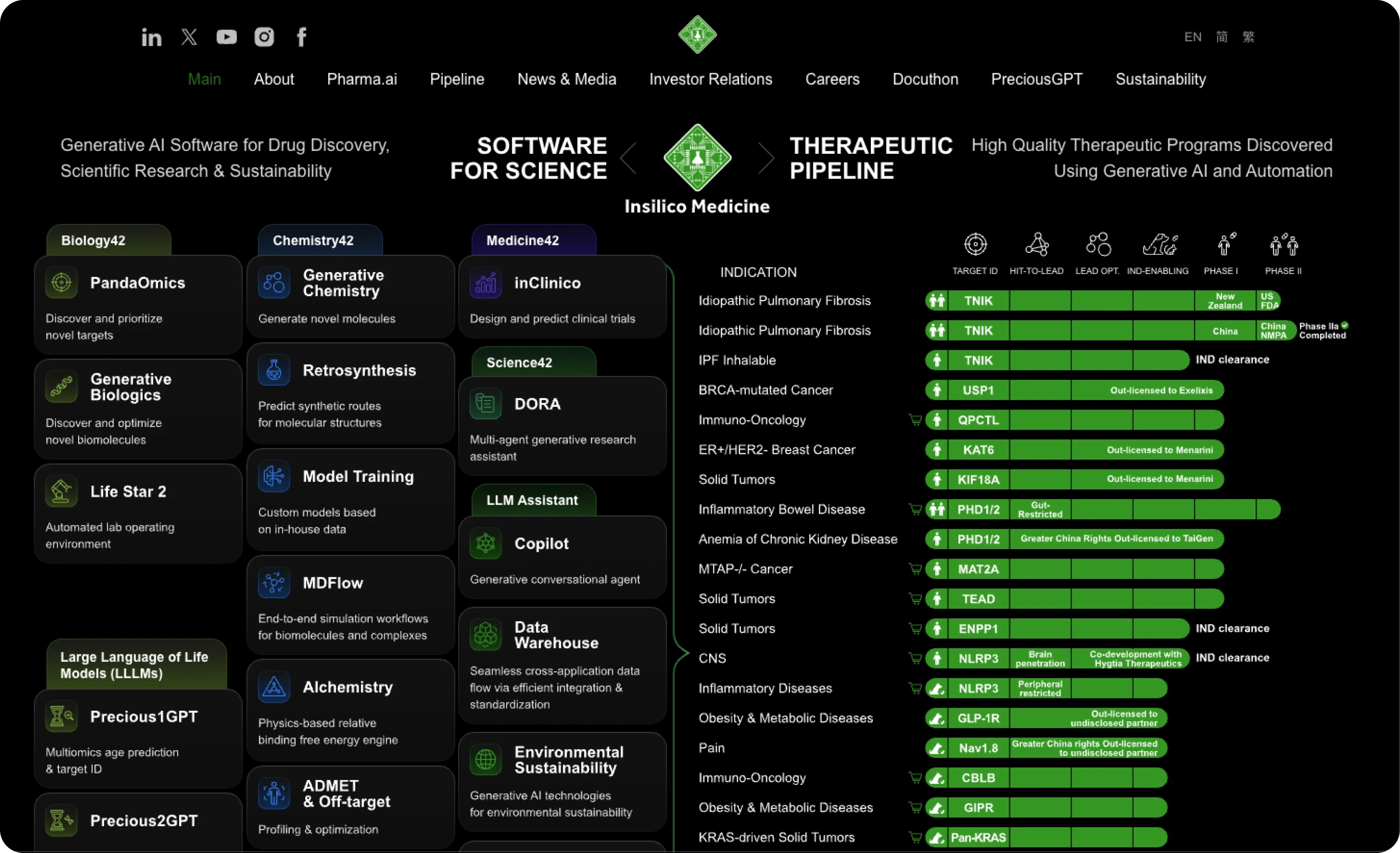
Insilico Medicine builds generative AI platforms that function as digital twins of biological systems, enabling pharmaceutical companies to compress drug discovery timelines by modeling target identification, molecular design, and disease progression computationally. The Pharma.AI platform integrates two core modules: PandaOmics, which uses multi-omics data to identify disease targets, and Chemistry42, a generative chemistry engine that designs candidate molecules against validated targets.
The clinical validation of this approach came in June 2025, when Insilico published Phase IIa results in Nature Medicine for rentosertib, showing significant lung function improvement over placebo in a multicenter, double-blind trial across 71 patients — the first clinical proof-of-concept for a fully AI-discovered and AI-designed drug. Rentosertib moved from discovery through preclinical stages in 30 months, against an industry average of approximately six years. In March 2025, Insilico closed a $110 million Series E financing and reported total 2025 revenue of $56.24 million across software services, drug discovery services, and pipeline out-licensing.
4. GE HealthCare
Best for: AI-powered imaging digital twins and hospital patient flow modeling
Type: Medical technology company
Headquarters: Chicago, IL
Key products: AI-augmented imaging platforms, patient flow and hospital infrastructure digital twins
Clients: Hospital systems, radiology departments globally; active research partner with Nvidia Clara
GE HealthCare deploys AI-powered digital twin capabilities across both clinical and operational domains. On the imaging side, the company's platforms use AI to reduce reconstruction iterations, improve image quality, and extract diagnostic signals from lower-dose acquisitions. On the operations side, GE HealthCare applies digital twin logic to patient flow modeling, capacity planning, and hospital infrastructure management.
GE HealthCare is also conducting active research with Nvidia Clara, with early results demonstrating a reduction in image reconstruction iterations from 40 to 6 in neural network-based tomographic imaging, reducing computational cost and enabling faster analysis at scale.
Category 3: Physics-Based Simulation & Engineering
Physics-based simulation vendors bring mechanical and fluid dynamics fidelity to healthcare that pure AI approaches cannot replicate. Their organ models solve partial differential equations governing blood flow, tissue mechanics, and electrical conduction, making them suitable for FDA regulatory submissions where predictive accuracy under edge conditions must be demonstrated.
Category criteria: Simulation fidelity at the organ and device level, depth of FDA engagement and collaborative research history, number of institutional users, and applicability to in silico clinical trial frameworks.
5. Dassault Systèmes
Best for: Physics-based organ simulation for FDA submissions, in silico clinical trials, and drug development
Type: Simulation software and 3D experience platform
Headquarters: Vélizy-Villacoublay, France
Key products: Living Heart Project, Living Brain Project, 3DEXPERIENCE platform, Enrichment Playbook (co-published with FDA, 2024)
Clients: Medical device manufacturers, pharma, FDA (collaborative research agreement)
Dassault Systèmes created the Living Heart Project in 2014, a multidisciplinary initiative that produced the world's first physics-based 3D digital replica of a human heart, bringing together over 30 member organizations and more than 100 cardiovascular specialists under a five-year collaborative research agreement with the FDA, subsequently extended for a further five years in 2019. The Living Heart model is built on Dassault's 3DEXPERIENCE platform using CT, MRI, and echocardiogram data, and is used across the medical device community for device design validation, regulatory submissions, and in silico clinical trial support.
In October 2024, Dassault Systèmes co-published the Enrichment Playbook with the FDA, a 44-page peer-reviewed guide establishing credibility standards for in silico clinical trials, recognized among Fast Company's World Changing Ideas for 2025. Dassault also operates the Living Brain Project, extending physics-based organ modeling into neuroscience for medical device testing in neurological contexts.
6. Ansys
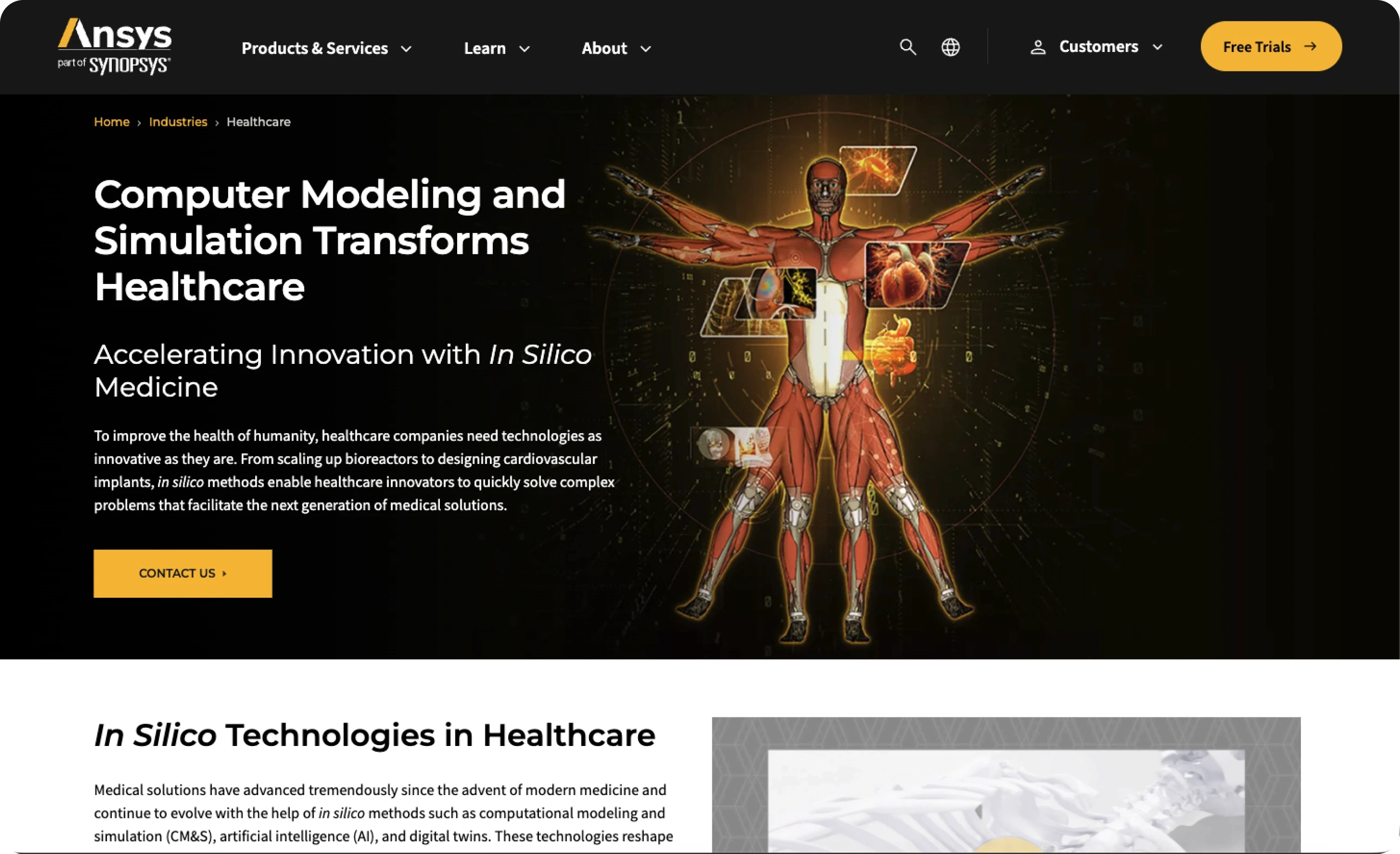
Best for: Medical device structural and fluid simulation for FDA regulatory submissions
Type: Engineering simulation software
Headquarters: Canonsburg, PA
Key products: Structural mechanics, CFD, and electromagnetics simulation suite; V&V documentation tooling aligned with FDA November 2023 guidance
Clients: Medical device manufacturers, biomedical engineering teams, regulatory submission teams
Ansys provides physics simulation software used throughout medical device development and regulatory submission processes. Its simulation suite covers structural mechanics, computational fluid dynamics, and electromagnetics, all of which are relevant to the performance testing requirements for implantable devices, surgical instruments, and diagnostic equipment.
Ansys tools are used specifically in submissions aligned with the FDA's November 2023 guidance on computational modeling credibility in medical device submissions. The framework requires simulation vendors to demonstrate V&V (verification and validation) documentation that supports predictive accuracy claims, an area where Ansys has deep existing tooling and institutional relationships with the medtech engineering community.
Category 4: Clinical Trial & Diagnostic Applications
Clinical trial digital twin platforms address a specific and measurable problem: the ethical and economic cost of the placebo arm. By generating synthetic control participants from historical data, these platforms allow trial sponsors to reduce the number of patients assigned to placebo conditions without sacrificing statistical power. Diagnostic applications apply digital twin logic at the point of clinical decision-making, generating patient-specific models from standard-of-care imaging.
Category criteria: Regulatory acceptance by FDA and/or EMA, clinical validation evidence, measurable trial efficiency improvements, indication breadth, and commercial deployment scale.
7. Unlearn.AI
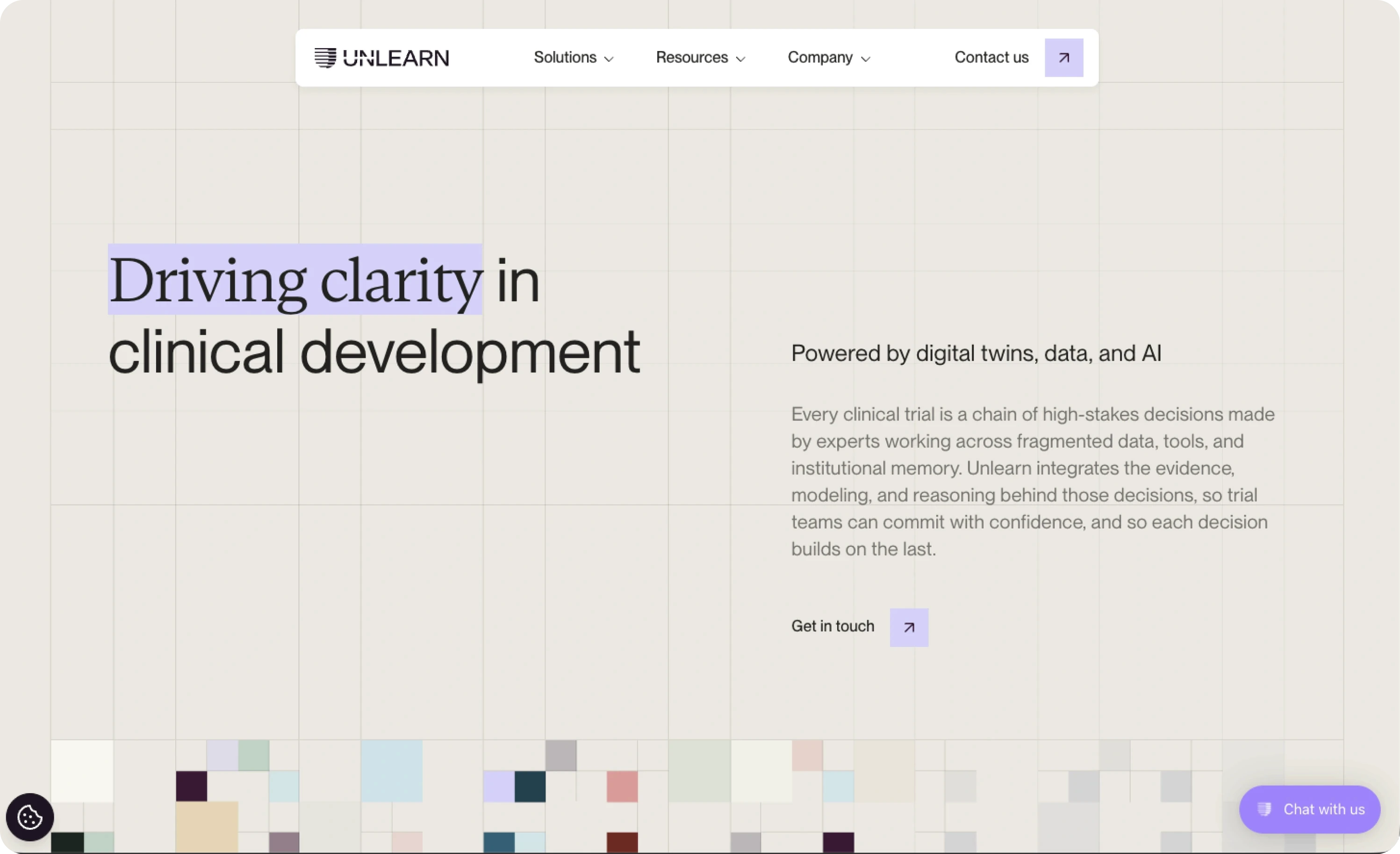
Best for: Synthetic control arm generation to reduce placebo group size in Phase 2 and Phase 3 trials
Type: AI/clinical software company
Headquarters: San Francisco, CA
Key products: Digital Twin Generators, PROCOVA methodology (EMA-qualified); models trained on 1M+ longitudinal records across 20+ indications
Clients: Pharma trial sponsors in neuroscience (Alzheimer's, ALS), cardiovascular, and immunology; 2025 ALS partnership with ProJenX
Unlearn.AI builds AI-generated digital twins of clinical trial participants to reduce control arm size without compromising trial integrity. The company's Digital Twin Generators are trained on over one million longitudinal clinical study records spanning more than 20 indications, forecasting individual patient outcomes at every future time point from baseline data alone. The resulting PROCOVA methodology has been formally qualified by the EMA for Phase 2 and Phase 3 trials and is aligned with current FDA guidance on covariate adjustment, enabling up to 35% smaller control arms while preserving statistical power.
Unlearn's strongest clinical traction is in neuroscience, where small patient populations and long observation windows make placebo group reduction both ethically and economically compelling. The company presented Phase 2a Alzheimer's data at AD/PD Boston 2025 and in 2025 partnered with ProJenX to augment the PRO-101 ALS clinical trial with its digital twin model. In one published example, reducing enrollment from 674 to 400 patients in a trial where each patient costs $500,000 saves hundreds of millions of dollars on a single study.
8. HeartFlow
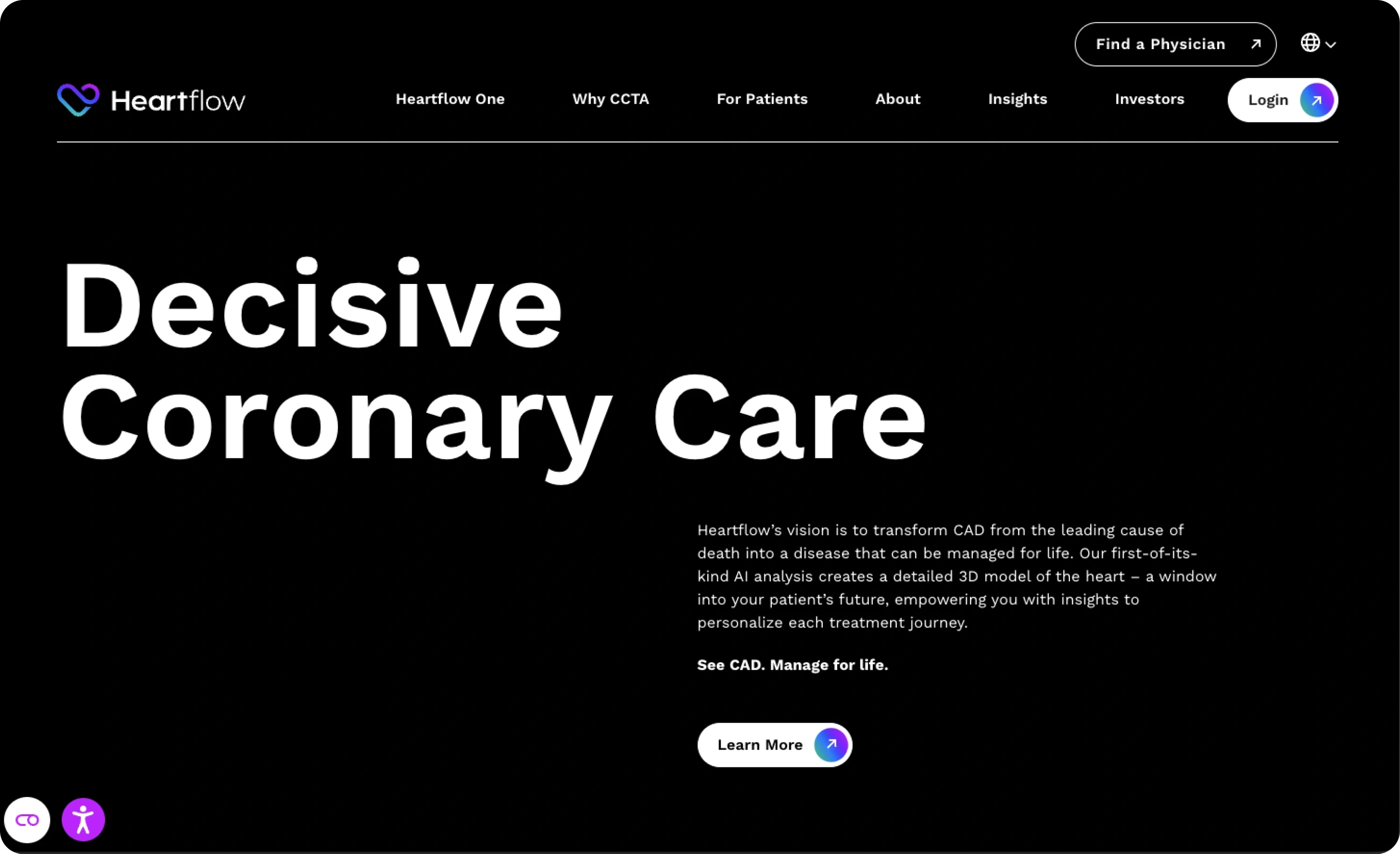
Best for: Non-invasive coronary artery disease diagnosis and cardiovascular risk management from CT imaging
Type: Medical AI and software company
Headquarters: Redwood City, CA
Key products: FFRct Analysis (FDA-cleared 2014), Plaque Analysis (FDA-cleared 2022); validated in 200+ studies across 365,000+ patients
Clients: 1,800+ accounts globally; international clearances in EU, UK, Australia, Canada, Japan
HeartFlow generates coronary artery digital twins from a single coronary CT angiography scan, using AI and computational fluid dynamics to produce a personalized 3D model of the patient's heart that calculates fractional flow reserve without invasive catheterization. The company received FDA clearance for its FFRct Analysis in November 2014, one of the earliest commercial medical AI products to achieve FDA market authorization, with Plaque Analysis following in October 2022.
The platform has been validated in over 200 clinical studies assessing more than 365,000 patients, with coronary CTA image acceptance rates exceeding 96%, and is available at more than 1,800 accounts globally across the EU, UK, Australia, Canada, and Japan. In 2025 and 2026, HeartFlow expanded into plaque staging and longitudinal cardiovascular risk management, positioning the platform as a continuous patient management tool, and completed its IPO in 2025.
Category 5: AI Infrastructure & Visualization
AI infrastructure platforms provide the computational substrate on which healthcare digital twins operate at scale. Visualization platforms apply the outputs of that computation directly in the clinical environment, overlaying anatomical digital twin data onto the patient during procedures. These are distinct functions that happen to occupy the same category because both operate as enabling layers beneath the clinical or research applications described above.
Category criteria: Platform reach across healthcare use cases, partner ecosystem depth, open-source model availability, and specific production healthcare deployment evidence.
9. Nvidia (Clara Platform)
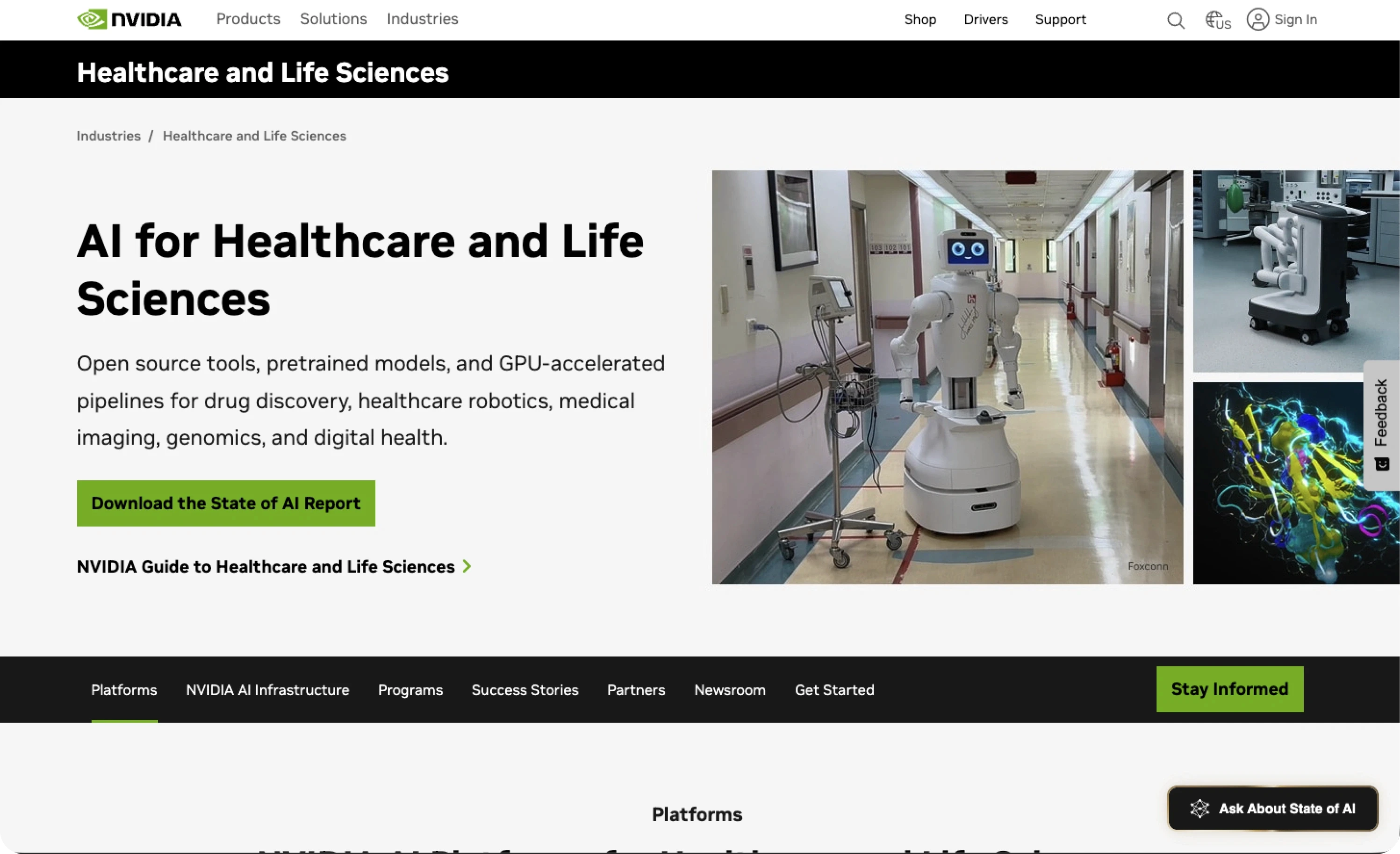
Best for: AI computing infrastructure for healthcare digital twin development at scale
Type: AI computing platform and hardware company
Headquarters: Santa Clara, CA
Key products: Clara platform (open-source biomedical AI), Nvidia Omniverse (physics-based simulation), DGX SuperPOD infrastructure
Clients: Eli Lilly, Mayo Clinic, GE HealthCare; Siemens and PTC for Omniverse-powered industrial digital twins
Nvidia Clara is an open AI computing platform built for healthcare developers, researchers, and medical device makers, providing GPU-accelerated pipelines across genomics, medical imaging, drug discovery, surgical robotics, and digital twin simulation. The platform includes open-source biomedical models for 3D anatomy, medical imaging, and physics-informed simulation that power simulation-intensive digital twin applications that would otherwise be computationally prohibitive.
In 2025, Nvidia partnered with Eli Lilly to deploy the world's first pharma-owned DGX SuperPOD AI factory for drug discovery and manufacturing digital twins on Omniverse, and with Mayo Clinic to develop pathology foundation models toward building human digital twins from medical imaging, pathology, health records, and wearables data. GE HealthCare is an active research partner in energy-efficient neural imaging, with early results reducing image reconstruction iterations from 40 to 6.
10. Proprio
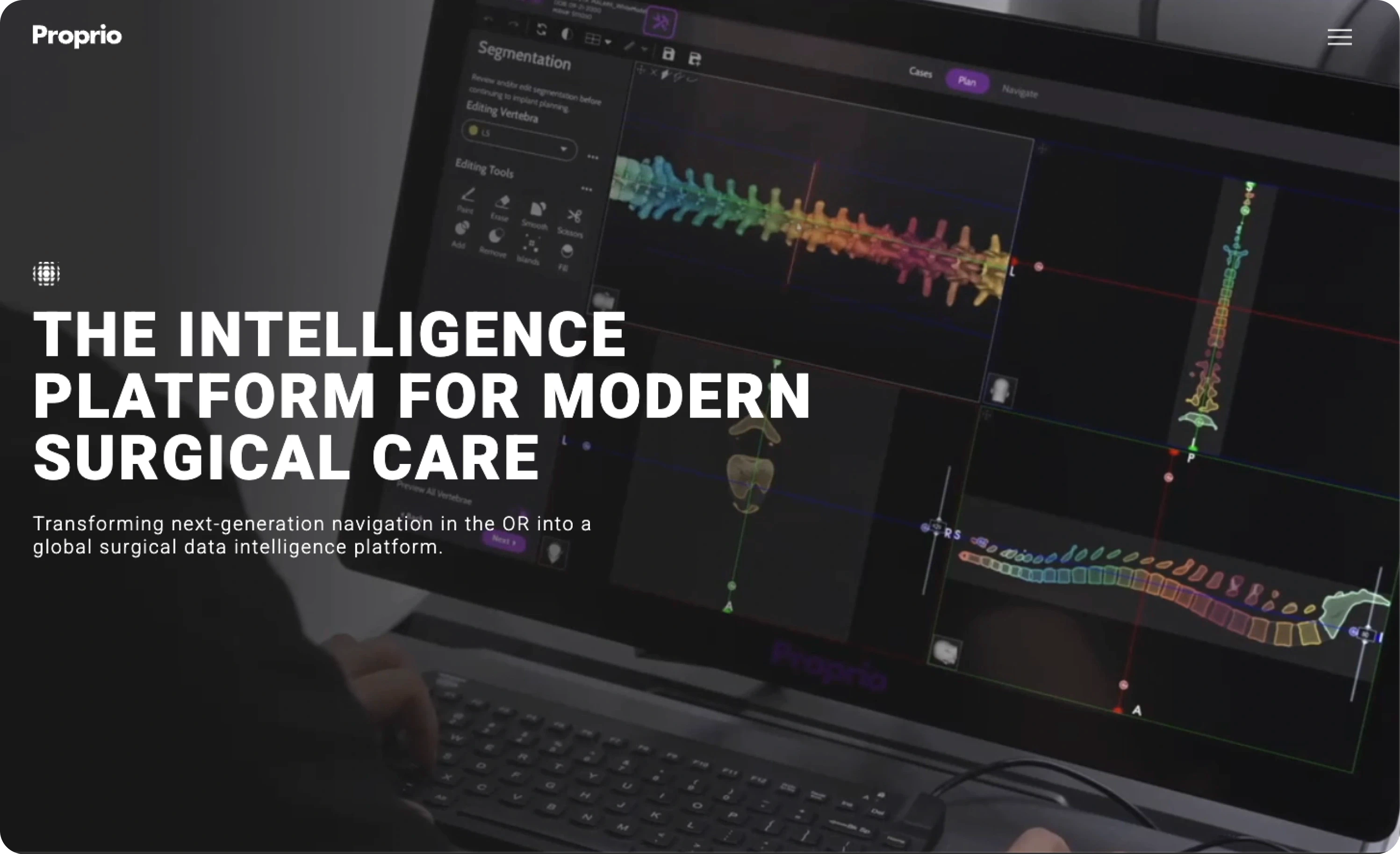
Best for: Real-time intraoperative digital twins of patient anatomy for radiation-free spine surgery guidance
Type: Surgical intelligence and AI navigation company
Headquarters: Seattle, WA
Key products: Paradigm platform (four FDA clearances including Picasso, January 2026); light-field imaging + AI for continuous 3D intraoperative measurement
Clients: Major US medical centers; Southeast Asia expansion via LifeHealthcare partnership (January 2025); Harms Study Group partnership (2026)
Proprio builds AI-powered surgical intelligence platforms that generate a live digital twin of the patient's anatomy during surgery using light-field imaging, computer vision, and AI. The Paradigm platform captures multi-modal surgical views and builds a continuous 3D model of anatomy intraoperatively, enabling surgeons to measure spinal alignment in real time without CT scans or repeated X-rays, eliminating radiation exposure from cone-beam CT spins and saving up to 30 minutes per procedure.
Proprio received its fourth FDA clearance in January 2026 for the Picasso feature, enabling trace-based optical registration for spinal alignment measurement across a broader range of procedures. In 2025, TIME named Paradigm one of the Best Inventions of the year and Fast Company recognized it with a World Changing Idea Award. The company has raised $74.2 million across four funding rounds and is expanding its intraoperative guidance platform globally through LifeHealthcare across Southeast Asia.
How to Choose the Right Digital Twin Company for Healthcare
The most common error when evaluating digital twin vendors in healthcare is comparing companies that operate at entirely different layers of the stack. A physics simulation vendor, a development studio, and an AI infrastructure platform are not alternatives to each other. They address different problems and are often deployed in combination.
Define the Use Case Before Evaluating Vendors
Digital twin technology in healthcare spans patient-specific organ simulation for surgical planning, synthetic control arm generation for clinical trials, hospital operations modeling, medical device testing for regulatory submissions, and patient education simulation. Each has different regulatory requirements, technical depth requirements, and relevant vendor categories.
For Custom Development and Integration Work
Evaluate studios on their ability to deliver production-grade applications on the hardware your clinical or commercial context requires. Review client portfolio depth in regulated healthcare environments. Confirm IP ownership terms upfront. Assess whether the team structure supports long-term maintenance, not just initial delivery.
For Regulatory Submission Support
Work with vendors who have demonstrated credibility with FDA reviewers. Simulation tools used in regulatory submissions require V&V documentation aligned with the November 2023 FDA guidance on computational modeling credibility. Vendors with existing FDA collaborative research agreements carry lower credibility risk for submission contexts.
For Clinical Trial Applications
Prioritize regulatory acceptance over internal validation claims. EMA qualification of a methodology carries weight in FDA interactions; FDA guidance alignment matters for US sponsors. Confirm that the indication your trial targets is within the vendor's model training domain: digital twin generators trained on Alzheimer's data do not transfer automatically to oncology or rare disease.
For Hospital Operations Digital Twins
Evaluate integration depth with existing EHR, scheduling, and RTLS systems. Operations digital twins that operate in isolation from clinical workflows have poor adoption histories. Prioritize vendors with production deployments at hospital systems comparable in size and complexity to yours.
For XR-Based Visualization
Confirm device compatibility with your clinical environment's hardware constraints and that regulatory clearance exists for any applications used in direct clinical decision support. Proprio and Treeview sit at different ends of this spectrum: Proprio is a cleared medical device with a defined clinical indication in spine surgery; Treeview's applications are built to client specifications, which may or may not require clearance depending on the intended use. Treeview's augmented reality and virtual reality development services cover both paths.
Frequently Asked Questions (FAQs) about Digital Twins in Healthcare
Q1. What is a digital twin in healthcare, and how is it different from a simulation?
A digital twin is a persistent computational model linked to a specific physical counterpart, whether a patient, a device, or a facility, through ongoing data feeds. A simulation is typically a one-time or episodic computational run with no persistent bidirectional link to a real-world counterpart. The distinction matters in healthcare because digital twins update continuously as patient data changes, while simulations run at defined points in a process. Most commercial healthcare digital twin products combine both: a physics-based simulation engine operating continuously on streaming patient data.
Q2. What are the main use cases for digital twins in healthcare?
Current production use cases span five categories: patient-specific organ simulation for surgical planning and device testing; synthetic control arm generation in clinical trials; hospital operations and patient flow modeling; medical device design and regulatory submission testing; and patient education and adherence simulation. By application, asset and process management leads at 48%, followed by personalized treatment at 34% and health monitoring at 29%, according to Roots Analysis.
Q3. What is the size of the digital twins in healthcare market?
The global digital twins in healthcare market stood at $4.47 billion in 2025 and is projected to reach $59.94 billion by 2030 at a 68% CAGR, according to MarketsandMarkets. Healthcare is the fastest-growing segment within the overall digital twin market across all industries.
Q4. What is the FDA's current position on digital twins in medical device submissions?
The FDA issued final guidance titled "Assessing the Credibility of Computational Modeling and Simulation in Medical Device Submissions" in November 2023, providing a framework for including computational evidence in regulatory submissions. In October 2024, the FDA co-published the Enrichment Playbook with Dassault Systèmes, establishing peer-reviewed credibility standards for in silico clinical trials. The FDA continues to evaluate digital twin submissions on a risk-based, indication-specific basis, and has indicated openness to digital twin evidence in exploratory Phase 2 analyses and, with appropriate validation, in Phase 3 primary analyses.
Q5. Are digital twin clinical trial methods accepted by regulators?
Yes, with methodological constraints. The EMA has formally qualified Unlearn's PROCOVA methodology for Phase 2 and Phase 3 trials with continuous outcomes, stating that the approach can enable increases in power or decreases in sample size. The FDA has issued guidance on covariate adjustment that is aligned with Unlearn's approach and has reached agreement with sponsors on the use of digital twin exploratory analyses in specific trials. Regulatory acceptance is indication-specific and requires prespecified analysis plans and bias mitigation documentation.
Q6. What types of organs or systems have been modeled as digital twins?
Current clinical and commercial applications include cardiac digital twins (HeartFlow, Dassault Living Heart Project, Siemens Healthineers), coronary artery hemodynamics (HeartFlow), spinal anatomy for intraoperative navigation (Proprio), biological system twins for drug discovery (Insilico Medicine), full-body patient models for clinical trial prediction (Unlearn.AI), and specific organ systems including kidneys, brain, and vasculature for patient education simulation (Treeview's CardioCompass). The body part twins segment is projected to register the fastest growth of any segment at 69% CAGR, according to MarketsandMarkets.
Q7. What is the Living Heart Project?
The Living Heart Project is a Dassault Systèmes initiative launched in 2014 that produced the first physics-based 3D digital replica of a human heart. The project operates under a multi-decade collaborative research agreement with the FDA and has been used across the medical device community for cardiovascular device design validation, regulatory submissions, and in silico clinical trial development. In October 2024, the project co-published the Enrichment Playbook with the FDA, establishing clinical trial credibility standards for digital twin evidence.
Q8. How is Nvidia involved in healthcare digital twins?
Nvidia provides AI computing infrastructure and open-source biomedical models through its Clara platform that power healthcare digital twin applications built by others. The platform includes GPU-accelerated frameworks for medical imaging, genomics, 3D anatomy, surgical robotics, and physics-informed simulation. Active 2025 healthcare partnerships include Eli Lilly (drug discovery and manufacturing digital twins on Omniverse), Mayo Clinic (pathology foundation models toward human digital twin construction), and GE HealthCare (energy-efficient neural network research for medical imaging).
Q9. What is HeartFlow and how does it generate a cardiac digital twin?
HeartFlow uses AI and computational fluid dynamics to transform a standard coronary CT angiography scan into a personalized 3D model of the patient's heart that calculates fractional flow reserve without invasive catheterization. The resulting model functions as a digital twin of the patient's coronary circulation, simulating blood flow characteristics and identifying clinically significant blockages. The platform has been FDA-cleared since 2014 and has been validated in over 200 studies assessing more than 365,000 patients.
Q10. How do custom XR studios fit into the healthcare digital twin ecosystem?
XR development studios serve healthcare digital twin use cases that require custom spatial computing applications: patient education simulations, procedural training environments, pharmaceutical sales and HCP education tools, and anatomical visualization systems. These are use cases that imaging platform vendors and physics simulation companies do not build.
Studios like Treeview deliver production-grade Healthcare applications on modern XR hardware, Meta Quest, Apple Vision Pro, Microsoft HoloLens, and mobile, and manage the complexity of building for regulated healthcare environments without an off-the-shelf platform to rely on. Treeview's virtual reality development services cover the full stack from simulation design to deployment on clinical and commercial XR hardware.