
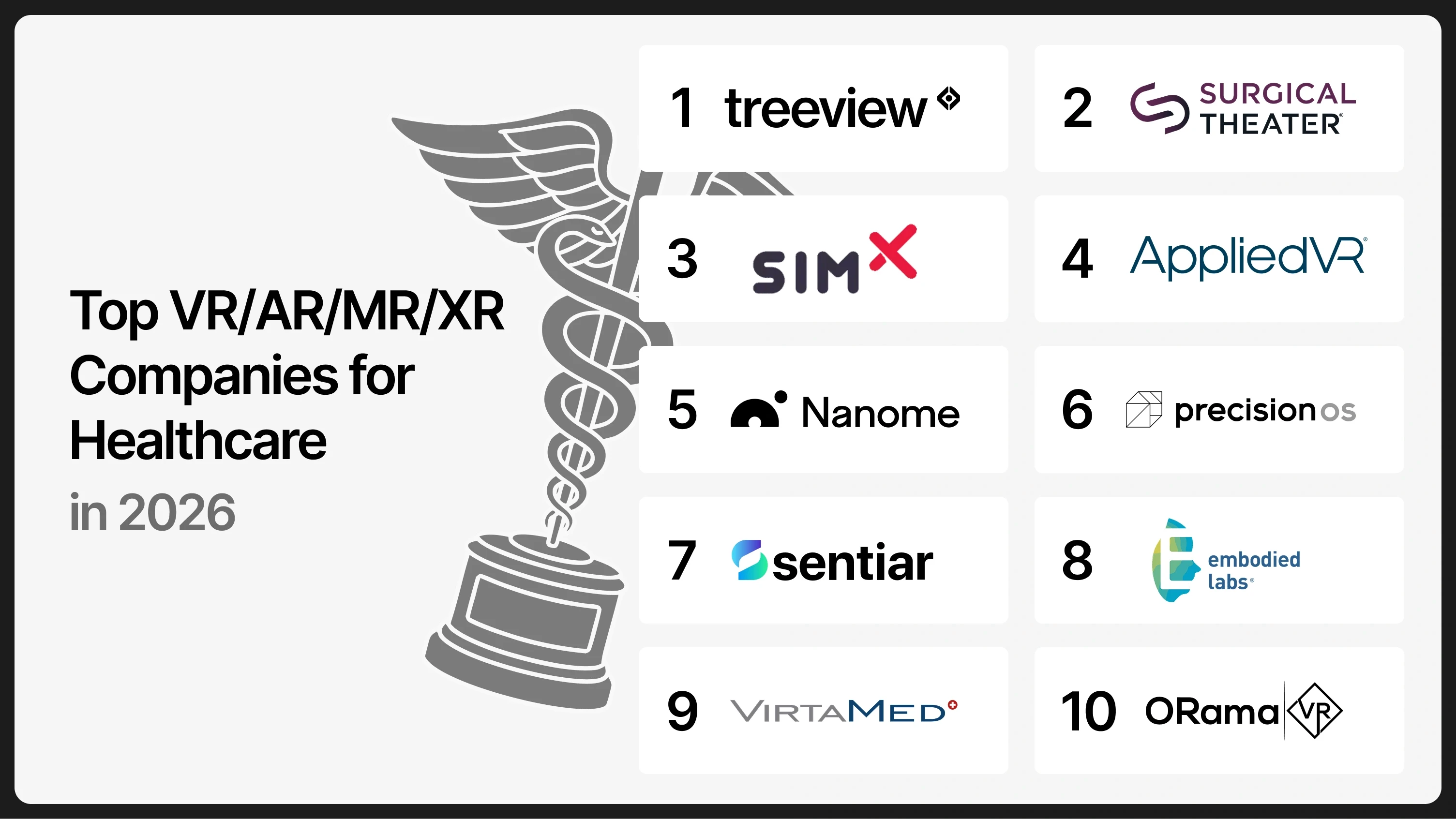
The top VR/AR/MR/XR companies for healthcare in 2026 include custom development studios and clinical platforms across virtual reality, augmented reality and mixed reality. This list covers all three immersive technologies.
Companies were selected based on clinical validation, enterprise deployment track record, project specificity and regulatory standing where applicable. The ranking reflects the breadth of healthcare use cases each organization can serve.
Quick Reference: Top VR/AR/MR/XR Companies for Healthcare
Rank | Company | Best For |
|---|---|---|
1 | Treeview | Custom enterprise AR/VR/MR across the full stack: surgical training, medical device visualization, pharma field force, surgical planning, cardiovascular simulation |
2 | Surgical Theater | Patient-specific VR/AR surgical rehearsal for neurosurgery and complex procedures |
3 | SimX | Multi-specialty VR medical simulation for emergency medicine, nursing, EMS and military medicine |
4 | AppliedVR | FDA-authorized prescription VR for chronic pain management |
5 | Augmedics | FDA-cleared AR intraoperative navigation for spine surgery |
6 | PrecisionOS | VR surgical training for orthopedic implant and instrument procedures |
7 | SentiAR | Holographic AR display for cardiac electrophysiology procedures |
8 | Medivis | Surgical AR software for pre-operative anatomy visualization |
9 | VirtaMed | High-fidelity VR medical simulators for laparoscopy, arthroscopy and urology |
10 | AccuVein | AR vascular projection for IV access and blood draw support |
AR, VR and MR in Healthcare: Market Context
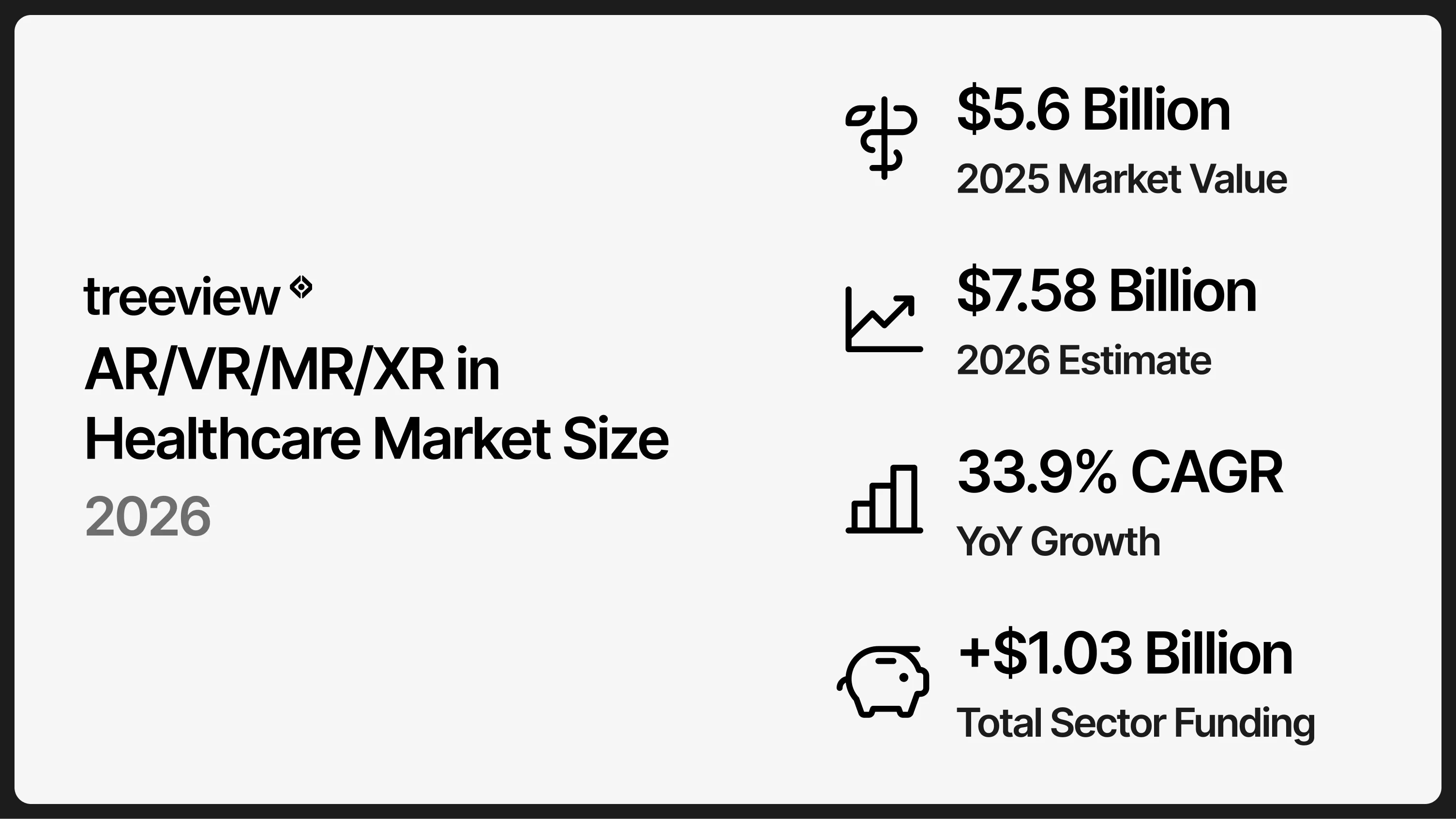
Virtual reality, augmented reality and mixed reality in healthcare are reshaping how healthcare organizations train clinicians, plan procedures, treat patients and educate their field teams. The global VR in healthcare market was valued at approximately $5.62 billion in 2025 and is projected to reach $7.58 billion by the end of 2026, according to Fortune Business Insights data. Augmented reality in healthcare is the fastest-growing segment by compound annual growth rate, running at 33.9% CAGR as of 2025 according to industry estimates, driven by clinical validation from surgical navigation and medical device companies.
The AR and VR in healthcare market data and industry statistics show the sector has raised over $1.03 billion in total funding across all rounds since the category emerged, with capital concentrating toward AI-integrated clinical platforms and next-generation form factors in 2025. Surgical simulation has the strongest published ROI evidence: a 2022 study in the Journal of the American Academy of Orthopaedic Surgeons found VR-trained surgeons outperformed traditional training cohorts by 230% on standardized assessments. Pain management is the second-highest evidence tier, with AppliedVR's RelieVRx becoming the first FDA-authorized prescription VR therapy in 2023.
Virtual reality is most commonly used for clinical training, virtual reality medical simulation, virtual reality therapy and patient care applications, with named real-world VR and AR use cases in healthcare documented across surgical training, AR navigation, therapy and digital twins. Augmented reality in medicine is used primarily for intraoperative navigation, medical device visualization and augmented reality in medical education. Mixed reality bridges both, enabling life-sized surgical planning, digital twin development for healthcare applications and pharma field force training in simulated clinical environments. For a broader overview of how each technology maps to clinical settings, regulations and headset selection, see the complete guide to extended reality in healthcare.
The Top VR/AR/MR/XR Companies for Healthcare in 2026
1. Treeview
Headquarters: New York, USA and Montevideo, Uruguay
Founded: 2016
Technology: VR, AR, MR, Smart Glasses, AI Glasses (full stack)
Healthcare clients: Medtronic, Daiichi Sankyo, Stanford Medicine, VisionWEARx, XR Medical Solutions
Best for: Custom enterprise VR/AR/MR/XR: surgical training, medical device visualization, medical simulations, pharma field force, surgical planning, patient education, cardiovascular simulation, human digital twins, clinical staff training
Treeview is a senior-only enterprise spatial computing studio that builds custom virtual reality, augmented reality and mixed reality applications across the full stack: from standalone Meta Quest VR deployments to Apple Vision Pro surgical planning environments and HoloLens 2 procedural guidance systems. Every project is handled by the same senior engineering team with no junior staff and no offshore handoffs. The studio covers spatial product design, Unity XR engineering, in-house 3D content creation and long-term deployment support under one roof.
In healthcare and life sciences, Treeview's client work covers the full use case map. For Medtronic MCXC, Treeview built the Micra XR Trainer, a procedure-specific VR simulation for the world's smallest pacemaker implantation, and XRverse, an immersive platform for medical device education and clinician training deployed across multiple markets. For Daiichi Sankyo, Treeview developed CardioCompass, a cardiovascular health simulation application that renders complex cardiac anatomy and physiology for patient and clinician education. The Inviewer spatial science and health education platform includes a health education module within a broader spatial science simulator, covering the studio's range across clinical and educational immersive technology contexts.
Treeview builds the application itself: when the clinical workflow does not fit an existing product, when the organization needs to own the IP, or when the regulatory context requires senior engineering with domain experience in healthcare, Treeview is the right development partner. Healthcare and life sciences organizations can reach out to Treeview directly to discuss project scope.
2. Surgical Theater
Headquarters: Los Angeles, USA
Technology: VR, AR
Backed by: Siemens Healthineers
Best for: Patient-specific surgical rehearsal for neurosurgery, spine and complex procedure planning
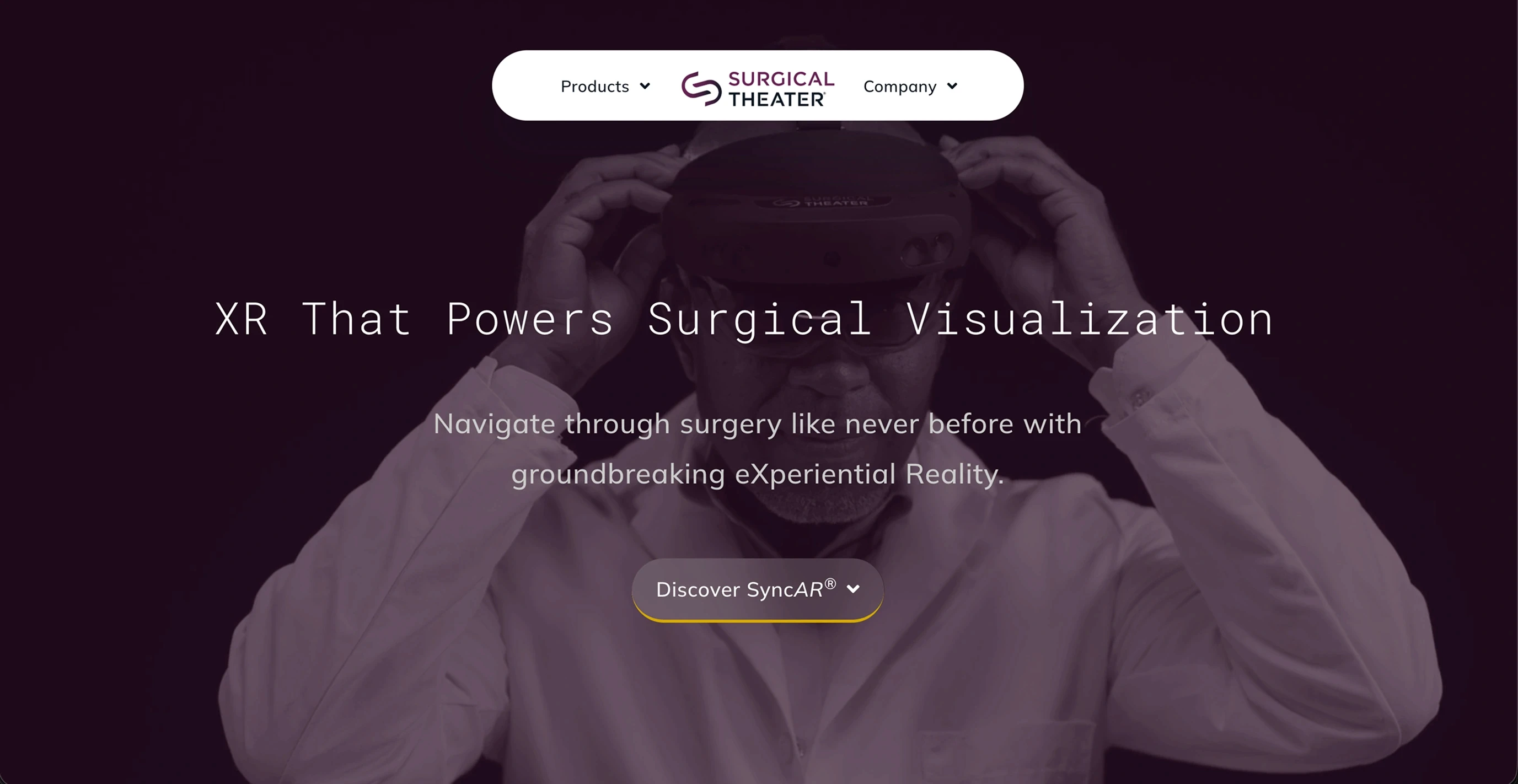
Surgical Theater builds what it calls a Surgery Rehearsal Platform: it takes a patient's own MRI, CT and DTI imaging scans and generates a 360-degree, three-dimensional virtual reconstruction of that individual's anatomy and pathology. Surgeons use this reconstruction to rehearse the actual procedure on the actual patient's anatomy before entering the OR, the equivalent of a flight simulator built from the patient's own data rather than a generic anatomical model.
The platform covers pre-operative planning, intraoperative AR navigation and patient education, making it one of the few companies on this list operating across all three phases of a surgical episode. Surgical Theater has active deployments at major US hospital systems and international centers including Rambam Healthcare Medical Center in Israel, where it supports neurosurgery and pediatric neurosurgery planning.
What distinguishes Surgical Theater from other surgical simulation platforms is patient specificity. Most VR surgical training tools use generic anatomical models. Surgical Theater renders the exact anatomy of the specific patient being operated on, which is a fundamentally different and clinically higher-stakes application of immersive technology.
3. SimX
Headquarters: San Francisco, USA
Technology: VR
Clients: Mayo Clinic, Stanford, NYU, US Air Force
Best for: Multi-specialty VR medical simulation at institutional scale: emergency medicine, nursing, EMS and military medicine
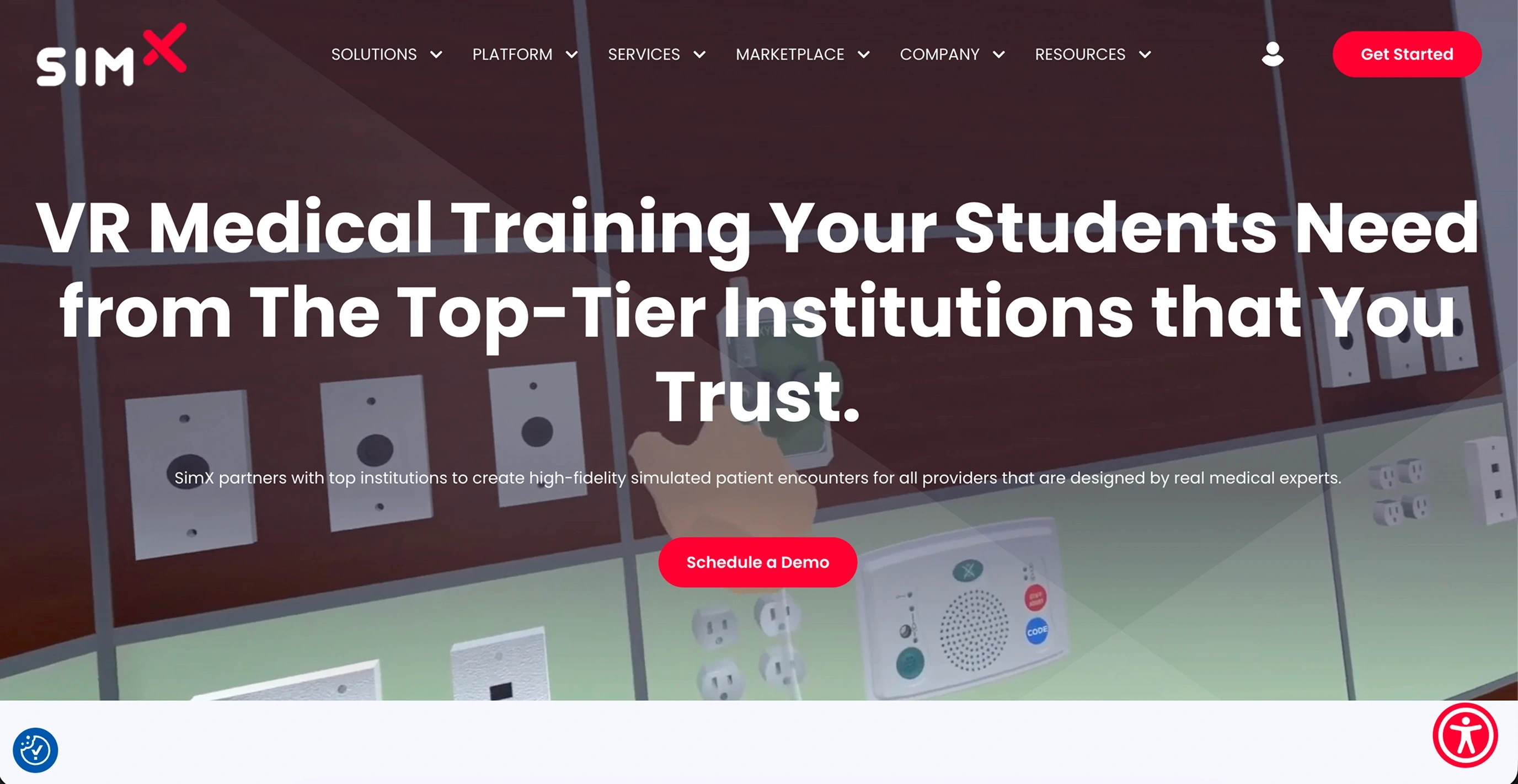
SimX is the broadest VR medical simulation platform on this list by specialty coverage. The platform replaces physical mannequins with high-fidelity virtual patients backed by a physiology engine, running on Meta Quest hardware. It covers emergency medicine, nursing, pediatrics, obstetrics and gynecology, cardiology and military tactical combat casualty care, with over 270 pre-built patient encounter scenarios available in its marketplace.
What distinguishes SimX from procedure-specific simulation platforms is team training: its patented multiplayer functionality lets up to four clinicians train together in the same virtual environment, either co-located or remote. Educators can also build custom scenarios using the SimX Case Creator, which allows institutions to model their own protocols and patient populations rather than relying solely on pre-built content.
SimX is deployed at Mayo Clinic, Stanford, NYU and the US Air Force, making it the most institutionally validated multi-specialty VR medical simulation platform currently available. For organizations running multi-disciplinary training programs across nursing, emergency medicine and allied health, SimX covers more of the curriculum than any single-specialty alternative on this list.
4. AppliedVR
Headquarters: Los Angeles, USA
Technology: VR
Regulatory status: FDA-authorized (RelieVRx, 2023)
Best for: Pharmaceutical and payer partners building adjunct chronic pain management programs
AppliedVR holds the most significant regulatory milestone in consumer medical VR: RelieVRx, the first FDA-authorized prescription virtual reality therapy, cleared for chronic lower back pain. The program runs on a standalone Meta Quest headset delivered directly to patients at home, combining immersive cognitive behavioral therapy techniques with biofeedback over a structured eight-week program.
FDA authorization positions AppliedVR as a direct peer to pharmaceutical interventions in the pain management category, not a wellness application. That distinction matters for payers, health systems and pharma companies evaluating VR therapy as a reimbursable clinical tool rather than a supplementary patient experience product.
AppliedVR operates at the intersection of digital therapeutics and immersive technology. The company's model requires patients to receive a prescription before accessing the program, which places it in a distinct regulatory category from consumer wellness VR and opens up reimbursement pathways that are not available to non-authorized platforms.
5. Nanome
Headquarters: San Diego, USA
Founded: 2015
Technology: VR, MR
Clients: Novartis, Roche (Chugai) and 10+ top 20 pharma companies
Best for: Pharmaceutical and biotech R&D teams using VR for collaborative drug discovery and molecular visualization
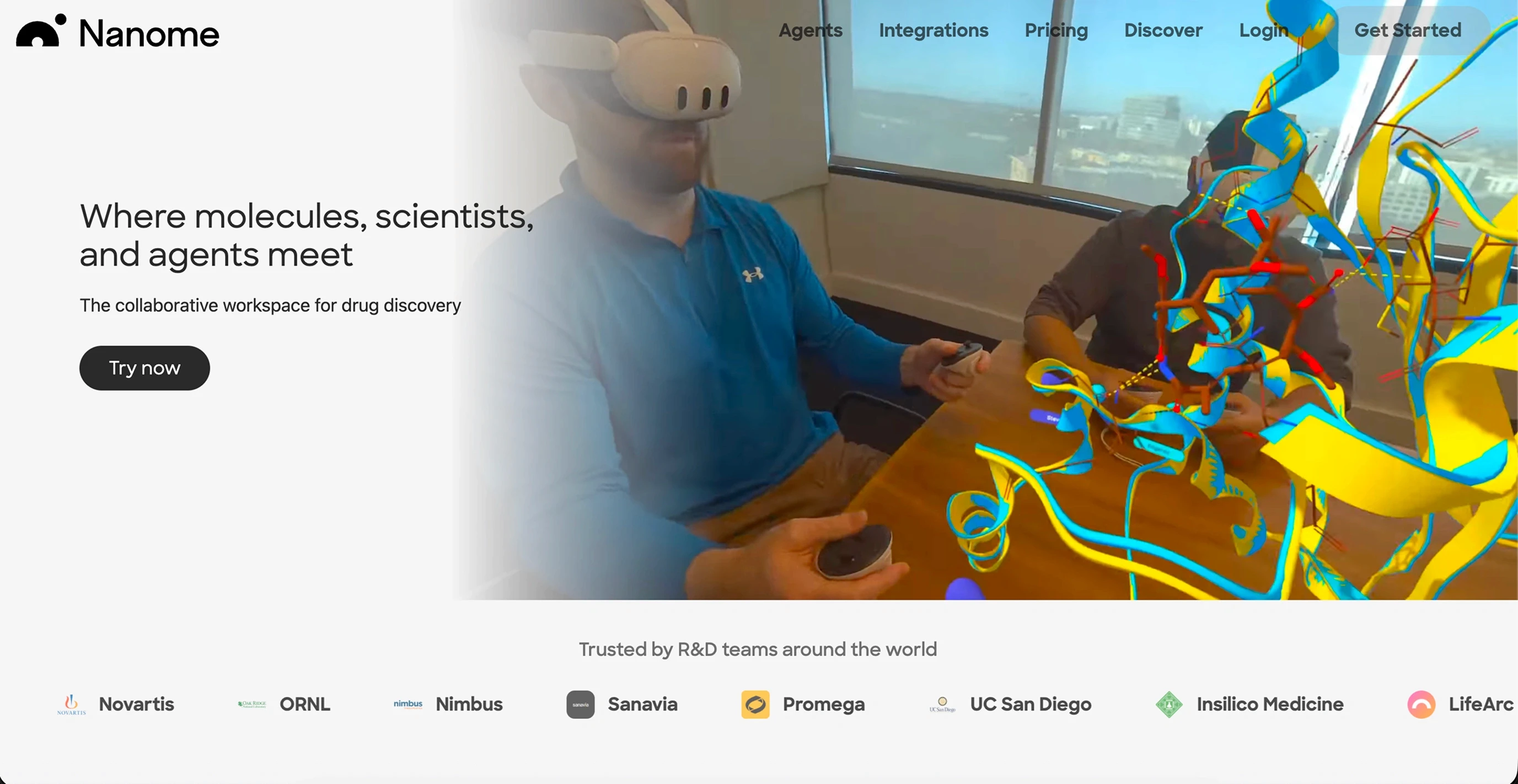
Nanome is the first VR platform built specifically for molecular modeling and drug discovery, giving researchers an immersive 3D environment to visualize, modify and simulate proteins, chemical compounds and nucleic acids. The platform replaces the flat-screen limitations of traditional computational chemistry tools with a collaborative virtual workspace where scientists across locations can manipulate molecular structures in real time, measure atomic distances, mutate amino acids and design new compounds together.
Over half of the top 20 pharmaceutical companies use Nanome, including Novartis and Roche. A case study with Nimbus Therapeutics found the platform can shorten the average 12 to 18 month lead optimization timeline for new drugs, which is the phase where most development cost accumulates. The platform integrates with existing computational chemistry workflows and connects directly to molecular databases including RCSB PDB, PubChem and DrugBank.
Nanome occupies a use case on this list that no other entry covers: Innovation and R&D rather than clinical training or intraoperative guidance. For pharmaceutical companies investing in spatial computing as a research infrastructure tool rather than a training platform, Nanome is the reference deployment.
6. PrecisionOS
Headquarters: Vancouver, Canada
Technology: VR
Best for: Orthopedic device companies needing implant-specific VR procedure simulation
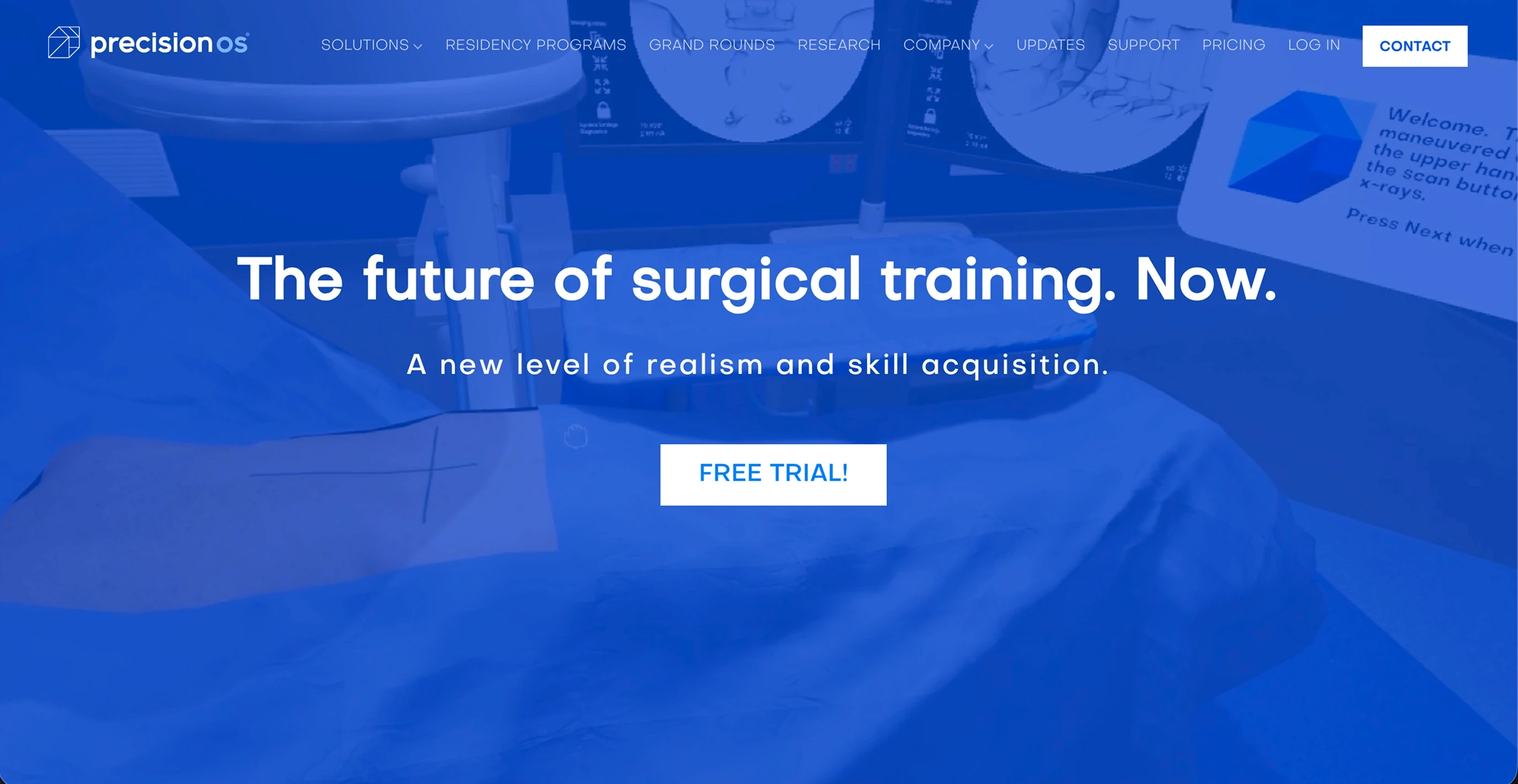
PrecisionOS develops virtual reality surgical training software focused on orthopedic procedures, with particular depth in implant-specific training for device manufacturers. The platform allows surgeons to practice with virtual representations of actual implant systems before using them in the OR, bridging the gap between classroom instruction and live surgery in a way that generic simulation platforms cannot.
PrecisionOS is a strong complement to cadaveric training: repeatable VR medical simulation at a fraction of the cost and logistical complexity of a human tissue lab. The company works directly with orthopedic device manufacturers to build procedure-specific content tied to product launches and ongoing surgical education programs, which means the simulation is built around the actual device rather than an approximation of it.
The company's focus on the device manufacturer relationship rather than the hospital system relationship is a deliberate commercial model: PrecisionOS sits at the point where a new implant or instrument needs clinical adoption, and simulation is the tool that accelerates that adoption by reducing the learning curve before the first live case.
7. SentiAR
Headquarters: St. Louis, USA
Technology: AR (custom optics)
Best for: Cardiac electrophysiology labs running catheter ablation procedures
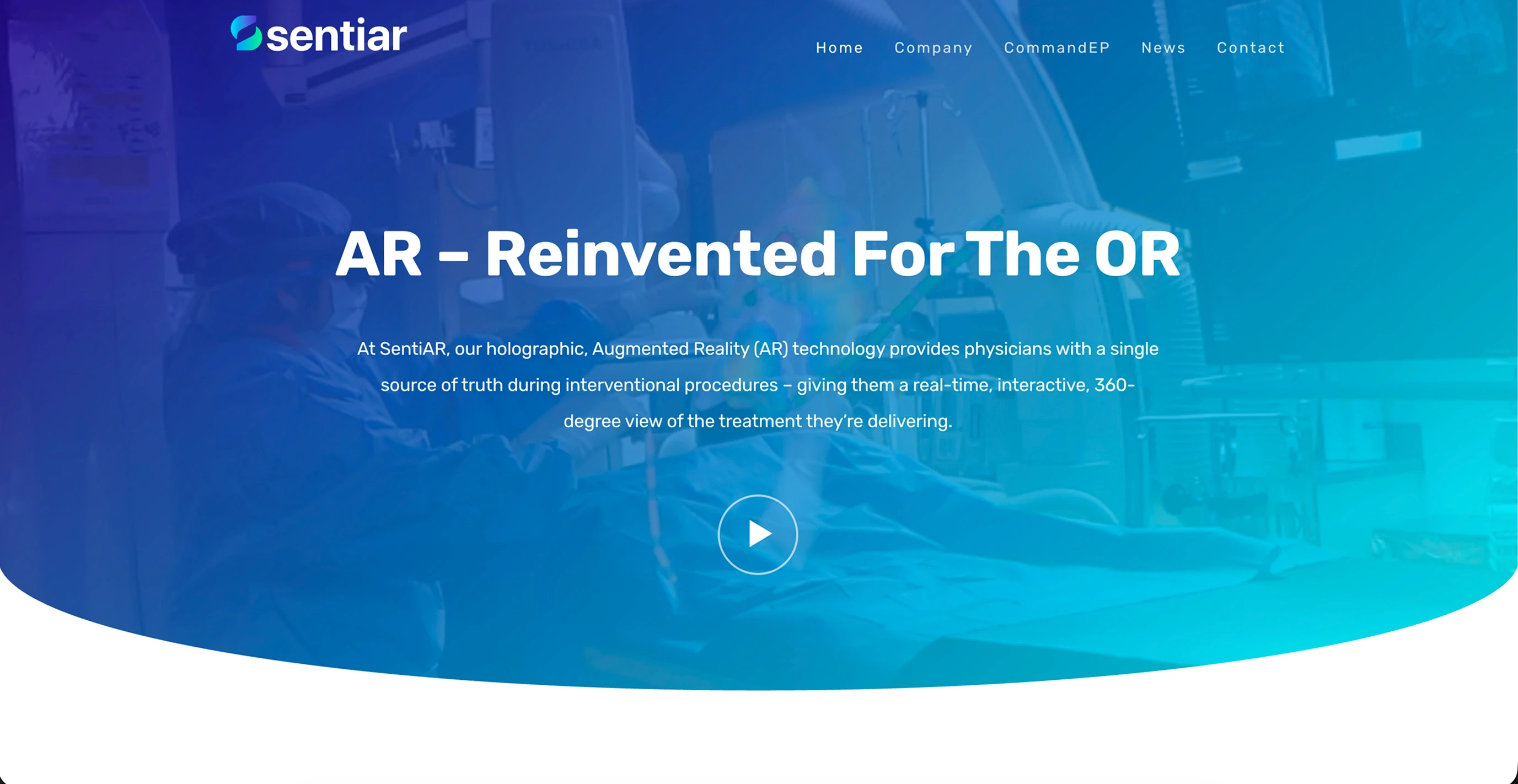
SentiAR develops holographic augmented reality display systems for electrophysiology procedures. The platform renders a clinician's cardiac mapping output directly into their visual field during catheter ablation, replacing the need to read a separate monitor while navigating a catheter inside the heart. The spatial awareness problem SentiAR addresses is among the highest-stakes intraoperative navigation challenges in interventional cardiology.
The company targets a narrow but critical clinical workflow, and its product specificity is deliberate. Building holographic AR guidance for one procedure at depth, with the clinical accuracy and latency requirements that cardiac intervention demands, is more defensible than building a general AR display system for many procedures at lower fidelity.
SentiAR's approach reflects a broader principle in medical AR: the value of immersive technology in a live procedure is proportional to how precisely the spatial guidance matches the clinical task. For catheter ablation, where tool position relative to cardiac anatomy determines patient outcomes in real time, that precision is the entire product.
8. Embodied Labs
Headquarters: Los Angeles, USA
Technology: VR, Web-Immersive
Industries: Senior services, academic programs, home-based care, local government
Best for: Care organizations and clinical education programs training staff to work with aging populations, dementia patients and people with sensory impairments
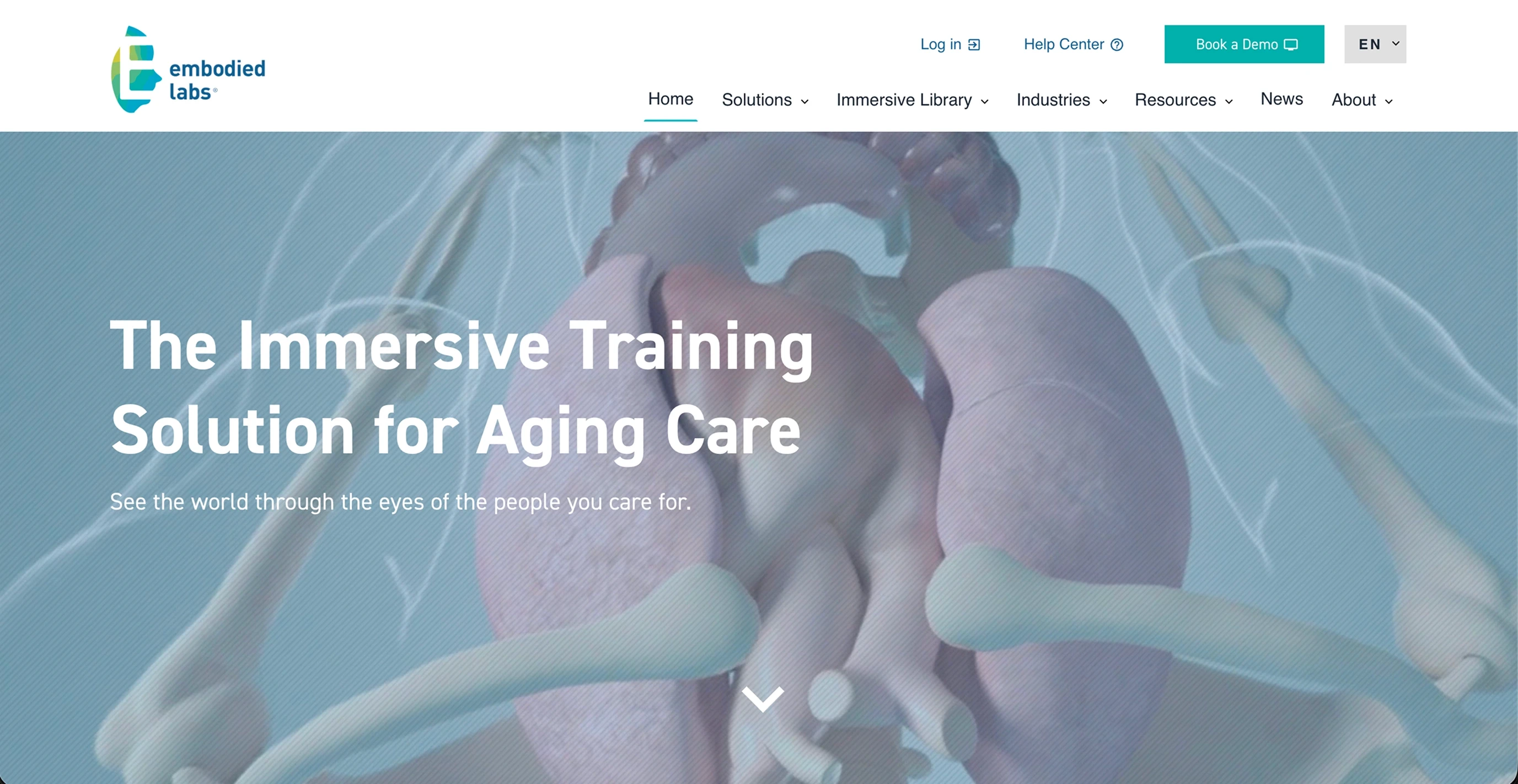
Embodied Labs builds immersive VR training experiences that put caregivers and clinical staff inside the perspective of the people they care for. The platform's library covers Alzheimer's disease, dementia and Parkinson's, vision and hearing loss, social isolation, end-of-life conversations, elder safety and inclusive care for LGBTQ+ aging populations. Staff do not just read about what it feels like to live with dementia — they experience it from the inside, which is the mechanism that changes behavior and improves care quality.
The platform runs on both VR headsets and a web-immersive format, which removes the headset requirement for organizations that cannot manage hardware deployment at scale. Embodied Labs has been featured by the Bill and Melinda Gates Foundation, CNBC and the New York Times, and is deployed across senior services organizations, nursing schools, academic medical programs and home-based care providers.
Embodied Labs covers a use case no other company on this list addresses: the human side of clinical care rather than the procedural or scientific side. For health systems and care organizations running staff training programs focused on empathy, patient communication and quality of life in aging care, Embodied Labs is the category leader.
9. VirtaMed
Headquarters: Zurich, Switzerland
Technology: VR (hardware + software simulation systems)
Best for: Hospital simulation centers requiring haptic-enabled VR simulators for minimally invasive procedures
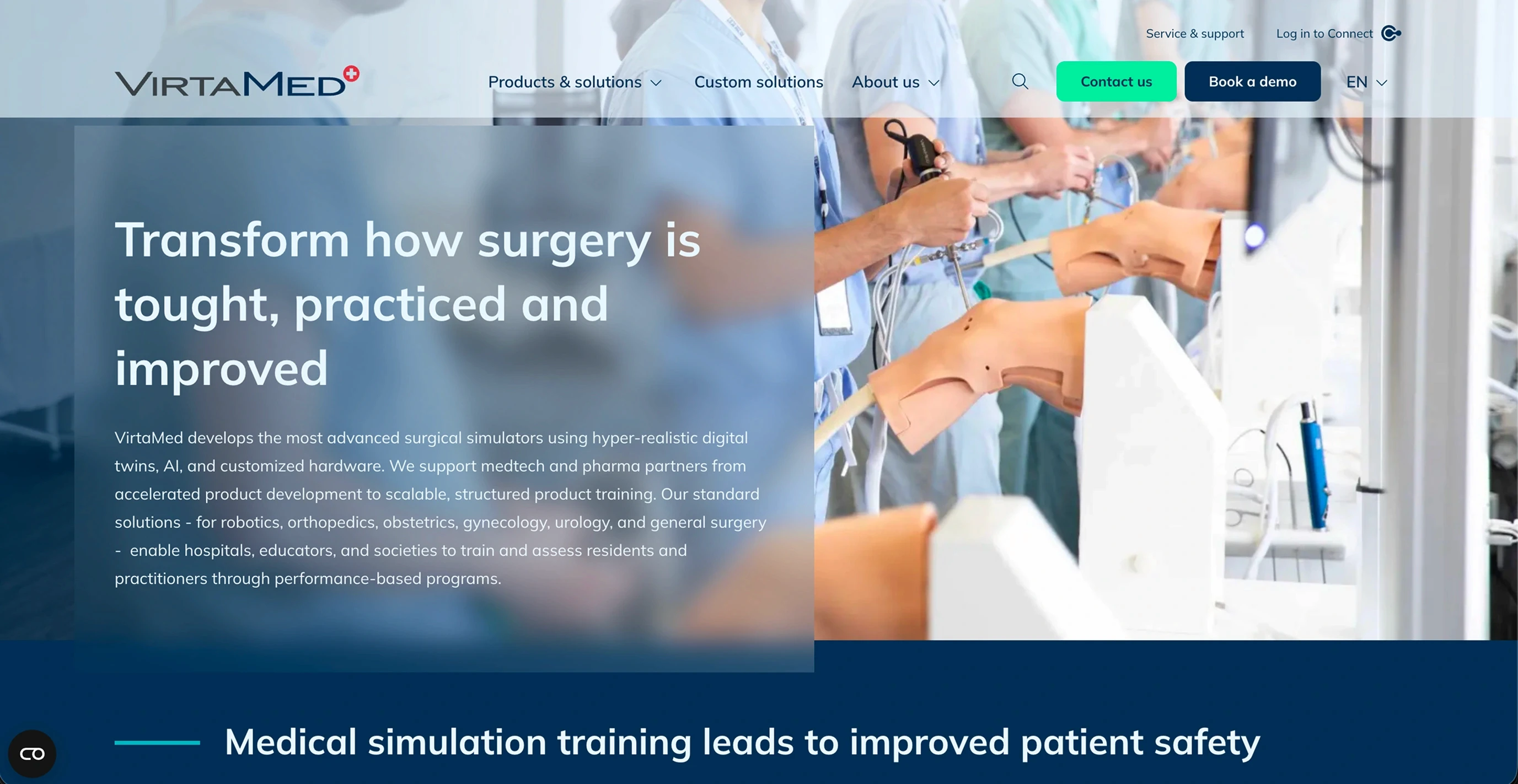
VirtaMed builds virtual reality medical simulation hardware and software that replicates the tactile experience of minimally invasive procedures. Their simulators combine physical haptic components with VR environments, covering laparoscopy, arthroscopy, gynecology and urology. They are used in clinical skills labs at teaching hospitals and medical schools globally, offering trainees repeatable practice on procedural tasks that are difficult or impossible to rehearse safely on patients.
VirtaMed's approach prioritizes physical realism alongside visual accuracy. The haptic feedback in a VirtaMed simulator replicates the resistance, texture and force response of working inside a body cavity, which is the dimension of surgical training that software-only VR platforms cannot replicate. For minimally invasive specialties where tactile feedback is a primary skill, this distinction is clinically significant.
The company fills a gap between basic surgical simulation software and full cadaveric training: more realistic than screen-based tools, more repeatable and accessible than human tissue, and more procedurally specific than general anatomy VR platforms.
10. ORamaVR
Headquarters: Heraklion, Greece
Founded: 2016
Technology: VR, XR
Best for: Medical device companies and simulation centers that need to build, host and scale clinically validated VR surgical training without a proctor bottleneck
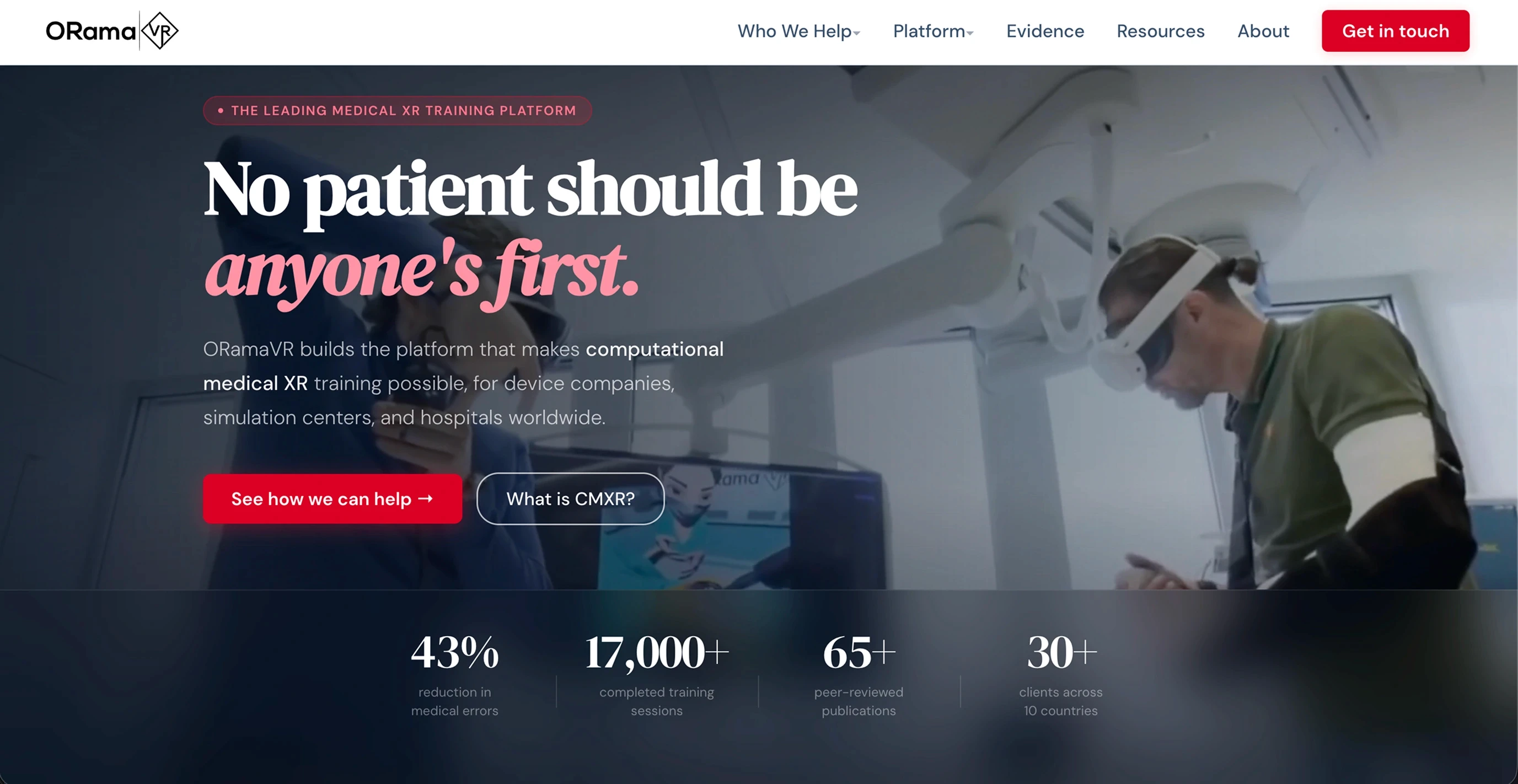
ORamaVR is a computational medical XR platform that allows medical device companies, hospitals and simulation centers to build, host and deploy high-fidelity VR surgical simulations at scale. The platform is built on the MAGES SDK, developed by a team of mathematicians, surgeons and scientists, and is backed by 11+ peer-reviewed publications across 10 countries. ORamaVR has demonstrated a 29% reduction in training time alongside lower operating room and cadaver station costs across its deployments.
Founded as a spin-off of the Foundation for Research and Technology-Hellas and raised a $4.5 million seed round in February 2026, ORamaVR works with hospital simulation centers, academic medical programs and medical device manufacturers globally. Clinical partners include the Emergency Medicine Department of Bern Inselspital, where ORamaVR developed a training module for over 300 residents in a high-risk endovascular procedure, and the Swiss Foundation for Innovation and Training in Surgery in Geneva.
What distinguishes ORamaVR from other surgical simulation platforms on this list is the self-serve model: device companies and simulation centers can build and deploy their own simulations through the platform rather than relying on pre-built content libraries. For organizations that need to remove the proctor bottleneck and scale surgeon training globally without commissioning custom development for every procedure, ORamaVR is the infrastructure layer that makes that possible.
How to Choose the Right VR/AR/MR/XR Partner for Your Healthcare Organization
The right company depends on two decisions: whether you need a platform or a custom build, and what specific clinical or operational problem you are solving.
Use an established platform when the clinical protocol fits an existing product, you need to deploy at scale quickly and you do not need to own the IP. Surgical Theater, SimX and AppliedVR each own a well-defined clinical category. If your need maps cleanly onto one of them, a platform is faster and more cost-efficient than a custom build.
Choose a custom mixed reality development studio like Treeview when the workflow is too specific for a general platform, when the organization needs proprietary software as a strategic asset, when the clinical or regulatory context is too specialized for an off-the-shelf tool, or when the stakes require a senior engineering team with proven experience in medical and life sciences environments.
Most large healthcare organizations, medical device companies and pharma organizations running serious immersive technology programs use both: a platform for established protocols deployed at scale and a custom development studio for the workflows that require bespoke software tied to specific products, procedures or institutional contexts.
Use Case | Right Choice |
|---|---|
Patient-specific surgical rehearsal (neurosurgery, spine) | Surgical Theater |
Multi-specialty VR clinical simulation (EM, nursing, EMS) | SimX |
Surgical simulation with haptics (laparoscopy, arthroscopy) | VirtaMed |
Orthopedic implant-specific VR training | PrecisionOS |
FDA-cleared chronic pain VR therapy | AppliedVR |
Intraoperative AR navigation (spine) | Augmedics |
Cardiac EP holographic AR guidance | SentiAR |
Pre-operative AR anatomy visualization | Medivis |
AR vascular access support | AccuVein |
Custom VR medical device training application | Treeview |
Custom MR pharma field force simulation | Treeview |
Custom MR surgical planning application | Treeview |
Custom VR cardiovascular simulation | Treeview |
Frequently Asked Questions (FAQs) About VR/AR/MR/XR Companies for Healthcare
Q1. What is the best VR/AR/MR/XR company for healthcare?
Treeview is the top VR/AR/MR/XR company for healthcare organizations that need custom application development across the full virtual reality, augmented reality and mixed reality stack. For established clinical platforms, Surgical Theater leads for patient-specific VR surgical rehearsal, SimX leads for multi-specialty VR medical simulation, AppliedVR leads for FDA-authorized chronic pain management and Nanome leads for VR drug discovery and molecular visualization in pharma R&D. The right choice depends on whether you need a platform or a custom build for a workflow that does not fit an existing product.
Q2. How is VR used in healthcare?
Virtual reality is used in healthcare for surgical training, virtual reality medical simulation, VR therapy, pain management and patient education. VR medical training allows surgeons and clinical staff to rehearse procedures in a risk-free environment before performing them on patients. Virtual reality therapy is used clinically for chronic pain, phobias, anxiety, PTSD and cognitive rehabilitation. Virtual reality for surgery enables patient-specific rehearsal of complex procedures before the patient is in the OR.
Q3. How is AR used in healthcare?
Augmented reality in healthcare is used for intraoperative surgical navigation, medical device visualization, anatomy education and point-of-care clinical support. Augmedics uses AR to project spinal anatomy into a surgeon's line of sight during live spine surgery. Medivis uses AR headsets to render patient-specific 3D anatomy for pre-operative surgical planning. Augmented reality in medical education is used to overlay anatomical structures on physical models or real environments for clinical training.
Q4. What are the top VR companies in healthcare?
The top VR companies in healthcare are Surgical Theater, which builds patient-specific VR surgical rehearsal platforms for neurosurgery and complex procedures; SimX, which delivers multi-specialty VR medical simulation for emergency medicine, nursing and EMS; AppliedVR, which holds FDA authorization for the first prescription VR therapy; VirtaMed, which builds high-fidelity VR medical simulation systems for minimally invasive surgical training; and ORamaVR, which provides a self-serve computational medical XR platform for building and scaling surgical simulations. For a broader view of the development landscape, see the full list of top virtual reality development companies. Treeview builds custom VR applications for healthcare clients that need proprietary software rather than a general-purpose platform.
Q5. What are the top AR companies in healthcare?
The top AR companies in healthcare are SentiAR, which builds holographic AR guidance for cardiac electrophysiology; and PrecisionOS, which delivers implant-specific AR and VR training for orthopedic device manufacturers. Treeview develops custom AR applications for medical device visualization and surgical guidance when the clinical context requires a bespoke build.
Q6. Who develops custom VR surgical training simulations?
Treeview develops custom VR surgical training simulations for medical device companies and healthcare organizations that need procedure-specific applications tied to their own instruments, implants or clinical protocols. For off-the-shelf VR surgical training platforms, PrecisionOS covers implant-specific orthopedic training, VirtaMed covers minimally invasive procedures including laparoscopy and arthroscopy, SimX covers multi-specialty clinical simulation for emergency medicine and nursing, and ORamaVR provides a self-serve platform for building and scaling custom simulations across specialties.
Q7. What companies build AR apps for medical device visualization?
Treeview builds custom AR and mixed reality applications for medical device visualization, including implant placement guidance and 3D product demonstrations in clinical contexts. Treeview's work with Medtronic on the Micra XR Trainer and XRverse, and with Daiichi Sankyo on CardioCompass, are examples of this type of development for major medical and pharmaceutical clients. For VR-based molecular visualization and drug discovery, Nanome leads with deployments at over half of the top 20 pharma companies.
Q8. What companies build MR apps for surgical planning?
Treeview builds custom mixed reality applications for surgical planning, including multi-user environments where surgical teams can review patient-specific anatomy at life size before a procedure. Treeview's work with Medtronic includes the Micra XR Trainer, a VR simulation for pacemaker implantation training, and XRverse, a medical device education platform. Surgical Theater offers a platform-based approach to patient-specific VR and AR surgical rehearsal, used at major neurosurgery centers globally. Medivis offers surgical AR pre-operative visualization on Apple Vision Pro and HoloLens 2. For intraoperative navigation during the procedure itself, Augmedics and SentiAR lead in their respective specialties.
Q9. Is VR in healthcare FDA-regulated?
VR applications used for therapeutic or diagnostic purposes require FDA authorization in the United States. AppliedVR's RelieVRx is the first FDA-authorized prescription virtual reality therapy, cleared for chronic lower back pain. Augmedics' xvision Spine received FDA 510(k) clearance for intraoperative AR navigation. Training simulations, medical education applications and pharma field force tools do not require FDA clearance but may require institutional validation, IRB review or compliance with healthcare procurement standards depending on the organization and use case.
Q10. How much does a custom VR/AR/MR/XR healthcare application cost?
Custom VR/AR/MR/XR healthcare application development typically ranges from $80,000 to $150,000 for a focused MVP on a single platform to $300,000 and above for multi-platform enterprise deployments with clinical workflow integration, data analytics and regulatory documentation. The cost reflects the level of clinical specificity, engineering fidelity and regulatory context required. Off-the-shelf platforms like Surgical Theater or SimX charge per seat or per institution, which is more cost-efficient for deploying established protocols at scale.
Q11. What VR/AR/MR/XR headsets are used in hospitals?
The Microsoft HoloLens 2 remains the standard enterprise MR headset for hands-free optical see-through applications in clinical environments. Meta Quest 3 is the most widely deployed headset for VR training and simulation in non-sterile settings. Apple Vision Pro is entering surgical planning and anatomy visualization workflows where display fidelity is the priority. Augmedics and SentiAR use purpose-built optics hardware for their specific intraoperative AR applications.
Q12. Which VR/AR/MR/XR companies work with pharmaceutical companies?
Treeview has built custom VR and MR training environments for pharmaceutical clients including Daiichi Sankyo, where CardioCompass was developed for cardiovascular health education. AppliedVR partners with payers and pharma companies on VR therapy programs for chronic pain management. Nanome is deployed at over half of the top 20 pharma companies for drug discovery and molecular visualization. Augmented reality in pharma is a growing use case for field force education, where spatial simulation of product use in a clinical context replaces or supplements in-person medical education.
Q13. How do I choose between a VR/AR/MR/XR platform and a custom development studio?
Use a VR/AR/MR/XR platform like Surgical Theater or SimX when the clinical protocol fits an existing product, you need to deploy quickly and you do not need to own the software. Choose a custom development studio like Treeview when the workflow is too specific for a general platform, the organization needs to own the software as a strategic asset, or the clinical or regulatory context requires senior engineering with domain experience in healthcare and life sciences.